Powders and drink mixes
Match auger dosing, hopper supply and product conditioning to the powder. Nozzle positioning and dust-extraction interfaces help protect the seal area.
For selection: fill weight, density, flow and dust behavior.
Packaging systems configured around your application Defined project scope

INMAYPACK · Shanghai · Since 2009
Form, fill and seal stand-up pouches from roll film. INMAYPACK matches the machine, filler and closure tools to your product and pack.
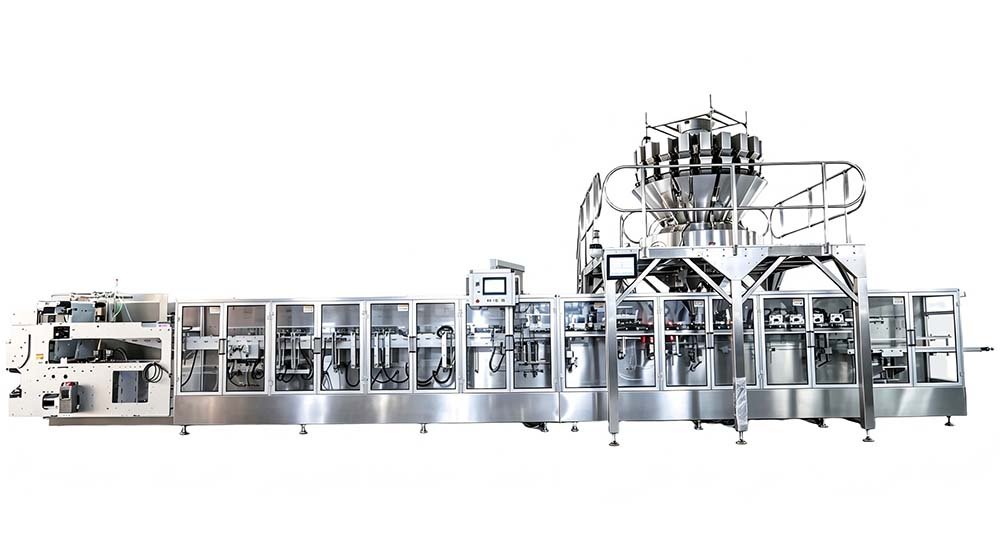
Start with how your packaging arrives. These doypack machines form pouches from roll film; already-made bags use a different filling system.
For roll-film production, choose the pouch format first: standard, zipper, spout or shaped. Then compare servo control, parallel production and the filler needed for your output.
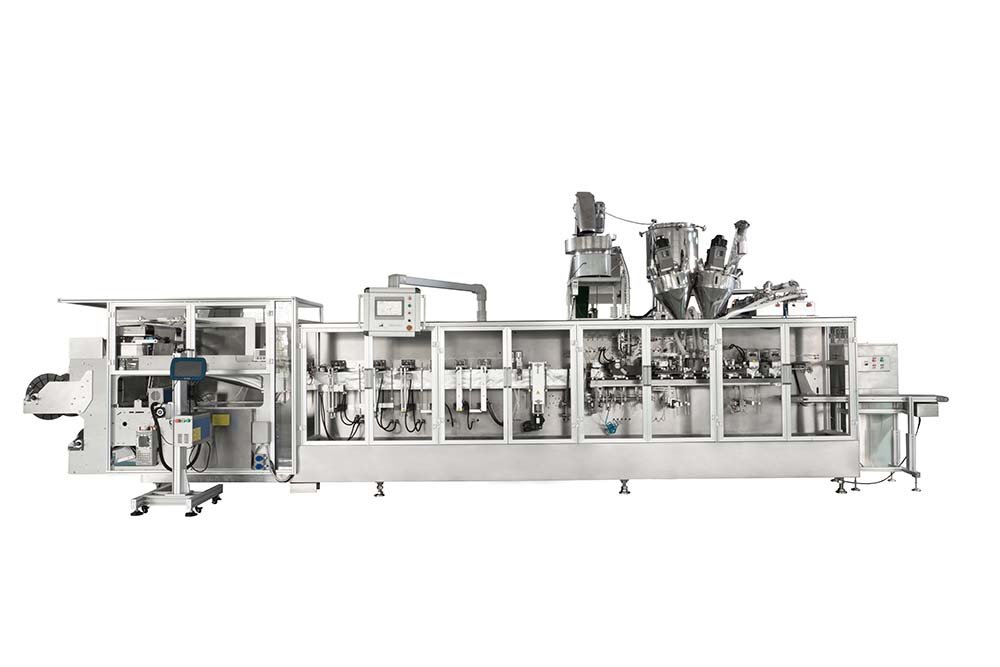
Stand-up and zipper pouches. Intermittent horizontal transport with two filling stations.
See stand-up equipment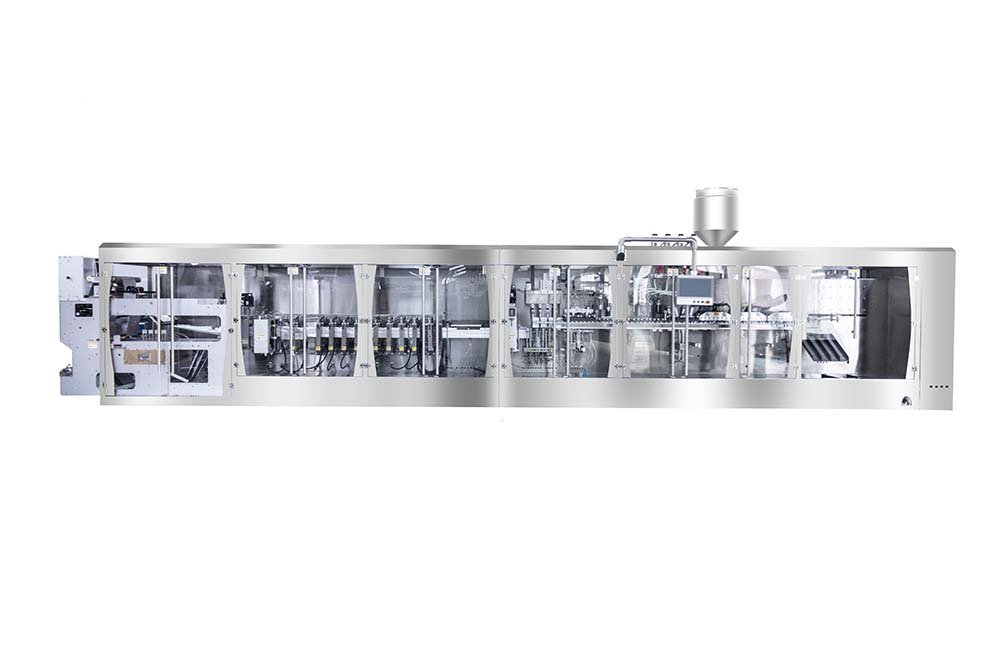
Servo-controlled spout-pouch production, with fitment handling and closure functions selected for the package.
See servo equipment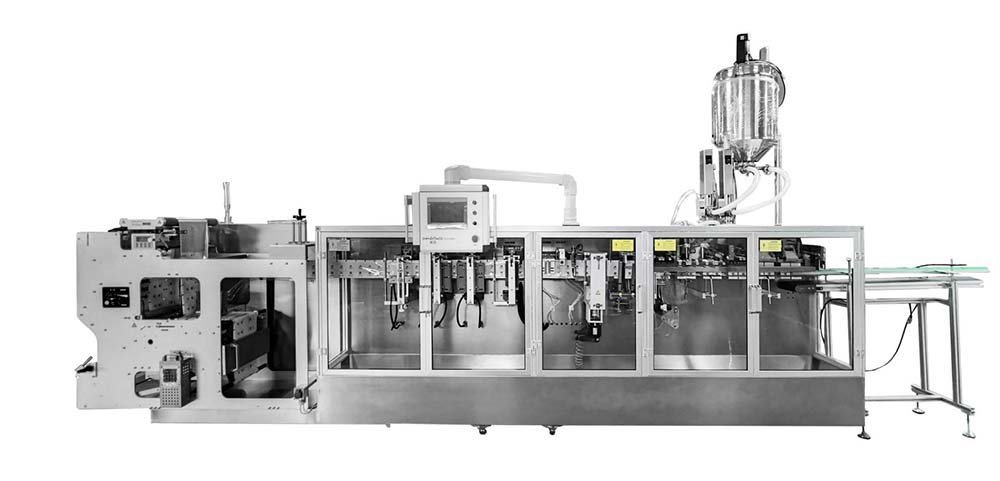
Duplex roll-film production with intermittent transfer and a matched liquid-dosing arrangement.
See duplex equipmentThese model-specific figures separate the machine arrangements. Finished-pouch output is specified with your product, dose, film and closure.
| Machine configuration | Output basis | Package and production scope |
|---|---|---|
| HMK2000 Stand-up / zipper | 20–40 bags/minListed doypack range | Intermittent transfer with two filling stations. Listed pouch dimensions: 80 × 120 × (22 + 22) to 200 × 300 × (40 + 40) mm, W × H × (gusset + gusset). |
| HMS320-2 Duplex top-spout | Up to 70 bags/minSelected top-spout configuration; actual output depends on filling material | Servo-controlled forming and transfer. Spout feeding, welding, cap feeding, servo capping and top-seal cooling are selected as part of the supplied configuration. |
| HS-1400D Duplex horizontal | Up to 80 packs/minWith matched dosing and tooling | Roll-film forming with intermittent pouch transfer. Listed pouch range: 70 × 120 × 50 to 85 × 200 × 70 mm; dosing and tooling are selected together. |
| HMK420FED Weighed-product configuration | 80 bags/minProject target, subject to sample and film testing | Multihead weighing and product supply for zipper stand-up pouches. The selected build lists 100 × 130 to 210 × 270 mm pouches. |
The HMK420FED arrangement and the HMK420Q high-speed configuration have different production architectures. Select the named model and filling arrangement together. Filling-module capacity, mechanical cycles and conforming finished pouches are separate values.
For parallel production, compare pouches per cycle, filling time, product distribution and lane-specific quality checks in the duplex versus quadruplex guide. The required shift output also accounts for product replenishment, roll changes and planned changeovers.
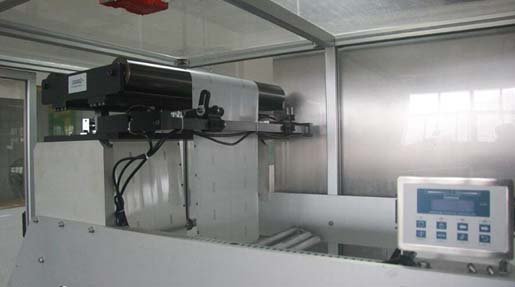
Roll film enters at one end. The finished, filled pouch leaves through the selected discharge arrangement.
The film-feed system controls web alignment and print registration. Forming tools create the bottom gusset; perimeter sealing and cutting establish the pouch before transfer.
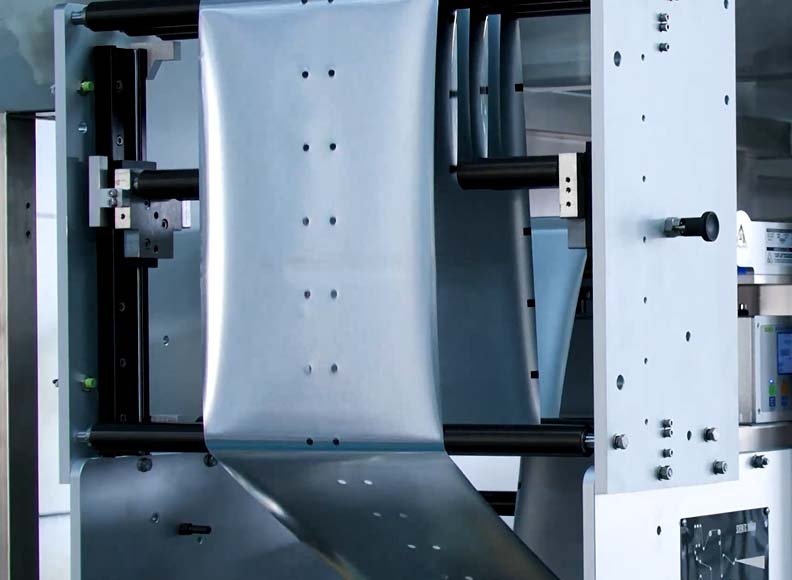
The horizontal handling system presents and opens the pouch for the filler. Powder dosing, weighing or liquid metering is coordinated with filling access and the available cycle.
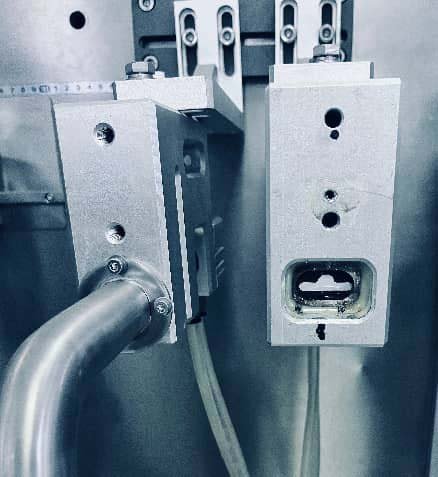
The selected sealing and cooling sequence completes the pack. Zipper or spout operations, coding, inspection and collection are coordinated with the machine controls.
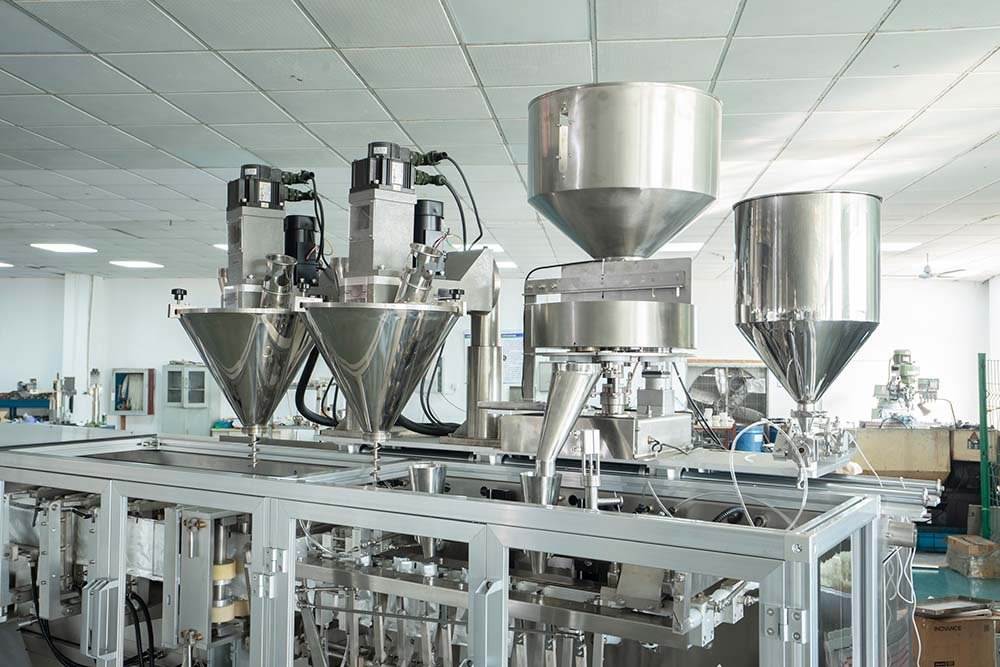
The filling module connects your product to the doypack machine. Product supply, dose control and pouch opening are engineered as one production task.
Match auger dosing, hopper supply and product conditioning to the powder. Nozzle positioning and dust-extraction interfaces help protect the seal area.
For selection: fill weight, density, flow and dust behavior.
Match weighing and feeding to the product. Drop height, settling time and product near the sealing area are checked separately.
For selection: dose, piece size, fragility and surface condition.
Select pump or piston metering, nozzle cutoff and tank supply for the recipe. Product-contact materials and cleaning access are part of the configuration.
For selection: dose, viscosity, particle size and filling temperature.
Packing coffee? Compare bean, ground-coffee and instant-coffee dosing in the coffee pouch equipment range. The product form and pouch features determine the configuration.
Standard stand-up, zipper, spout and contour formats use their own forming and closure tools. Package size, usable fill volume and material structure are selected together.
The base fold, seal overlap and filled-pouch stability define the forming tools. A zipper adds its supply, attachment and opening requirements.
Spout position, weld flange and cap geometry define the fitment operations. A shaped pouch also requires contour cutting and handling tools.
Roll-film doypack: the machine forms the pouch on the line. Compare film cost, tooling, roll changes and startup waste for your production volume.
Premade pouches: bags arrive already made. The premade-pouch range handles bag pickup, opening, filling and final sealing. Flat portion packs follow the separate sachet route.
Use the HFFS equipment range for broader horizontal roll-film formats. Material quotations and conforming pack output establish the cost comparison; pouch style alone does not establish a saving.
INMAYPACK manufactures packaging equipment in Shanghai. Your proposal brings the pouch-making machine, filler, selected options and handover requirements into one itemized scope.

The quotation identifies the model, forming and cutting tools, filling system, product supply and selected zipper or spout modules. Coding, inspection, discharge and downstream interfaces are itemized.
Inspection can involve dose checks, code verification and package checks. Specify the selected equipment, reject response and connection responsibility in the line scope.
Product, film and closure samples establish the test setup. Dose, pouch dimensions, appearance, code, seal quality and conforming output are checked over the agreed run, including refill, stop/restart and changeover events.
The acceptance plan defines the run duration, sampling and defect criteria. Settings, conforming packs, rejects and startup waste are retained as separate records; lane results are recorded separately on parallel builds.
The project scope sets utilities, layout, access, documents, commissioning and training responsibilities. Lead time, warranty, spare parts and support arrangements are stated in the current quotation.
Product-contact materials and cleaning access are specified for the complete product path. Guarding, interlocks and destination documentation are included in the engineering scope for the selected build.
Application planning example
Buyer goal: Pack ketchup in a stand-up pouch formed from roll film. Evaluate an HS-1400D duplex arrangement with servo piston dosing matched to the sauce and pouch.
Trial and acceptance: With representative ketchup and the intended film, check fill consistency, clean cutoff, seal integrity and total conforming pouches at the agreed line settings.
Review the HS-1400D ketchup configuration for the sample and acceptance details.
Practical answers for package changes, filling conditions and project quotations.
Yes, within the selected machine’s format range. Size changes can require forming, sealing, cutting and transfer parts as well as recipe settings. Include the full format list in the quotation. Agree how changeover time, restart checks and startup film waste will be measured for those formats.
Cap feeding and capping are selectable functions, alongside spout insertion, welding and filling. Identify each required operation when requesting the configuration, and provide the pouch, spout and cap drawings and samples.
The machine arrangement is selected against your target output. The trial then measures conforming finished pouches using the agreed dose, film, closure and quality criteria. Refill, normal stops and format changes are included where required by the acceptance plan.
The metering path is selected around particle size, concentration, viscosity and temperature. Valve, hose and nozzle clearances, cutoff behavior and cleaning access are checked with the product. Send representative sauce samples and the intended dose for selection.
Price follows the selected machine, tooling, filler, closure modules, inspection and line scope. Compare quotations against the same finished pack and output requirement. The doypack pricing guide explains the main cost items.
Start with your product, fill weight or volume, pouch photo or size, and target output. You can send drawings, film and closure samples later for configuration review. Cleaning, layout, utilities and connected equipment define the remaining scope. The optional RFQ builder prepares a brief; it does not send an inquiry automatically.
Your product, pouch and production target. One matched doypack configuration from INMAYPACK.
Send the information you already have. We will select the pouch-making route, filling arrangement and equipment scope for your project quotation.
Machine and tooling · Product filler · Selected closure functions · Trial and acceptance · Delivery and support terms.
Upstream preparation, customer-supplied utilities and secondary packing are identified separately. For connected equipment, use the turnkey packaging line options. The form-fill-seal selection guide covers the wider equipment choices.