
INMAYPACK · Roll-film portion packaging
Sachet Packing Machine Systems
Small packs. Product-matched filling. A clear equipment choice.
Compare flat sachets, narrow stick packs and selected flat-bag configurations for powders, liquids and granules. Choose the finished pack, dosing system and single or parallel-lane route together.
- Powder portions
- Liquid & paste portions
- Granule portions
- Single & multi-lane routes
Send your product, target dose, pack drawing, film details and required accepted output.
Sachet packing machine selection
Form the small pack. Fill and seal the right portion.
A sachet packing machine makes a small package from roll film, receives the selected product dose, seals the package and separates or collects finished packs. Horizontal flat-sachet and vertical multi-lane routes use different film paths and tooling.
Use this page to choose the format and machine family. Powder, liquid, granule, stick and special flat-bag projects then continue to their dedicated pages for the configuration review.
Define the portion pack
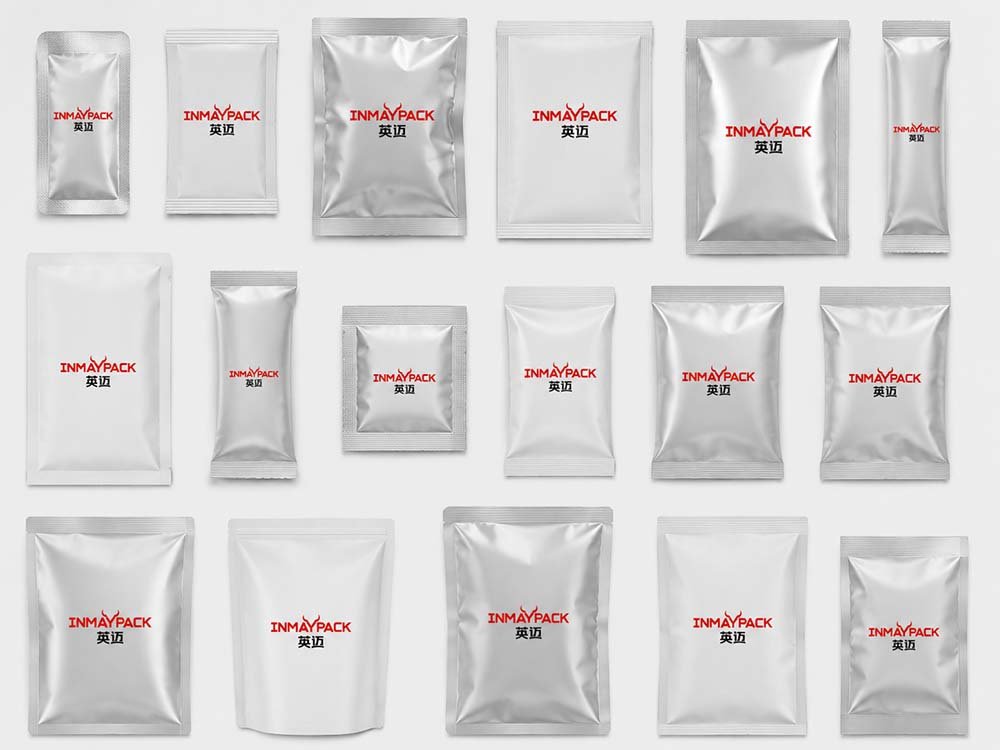
Four package layouts to review with your product.
Concept drawings show format families, not dimensional tooling drawings.
Folded edge + sealed sides
3-side seal sachets
Show the folded edge, opening feature and finished seal layout. Approve the actual film and tooling.
Defined sealed perimeter
4-side seal sachets
Show all perimeter seals, pack dimensions, tear feature, graphic position and required presentation.
Slim portion format
Narrow stick packs
Submit the stick width, length, back-seal drawing and dose. Review its web and lane layout separately from wider sachets.
Two-compartment reference
Twin flat-bag formats
Submit the connected-pack drawing, both product doses and separation or opening requirements. A twin format is distinct from producing separate duplex bags.
Compare 3-side vs 4-side seal sachets and stick packs vs sachets before fixing the package drawing.
See the equipment behind the pack
Six sachet machine routes for your project.
Photos are machine-family references; final fillers, guarding, tooling and included functions follow the approved build.
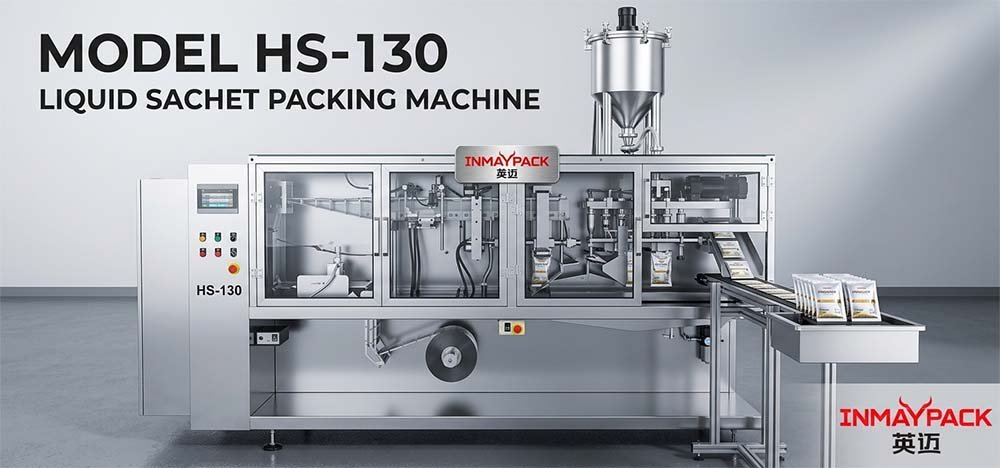
HS-130 horizontal reference
Liquid & Paste Sachets
Match the liquid filling arrangement, pouch forming and sealing to the viscosity, temperature and target portion.
Review Liquid Sachet Machines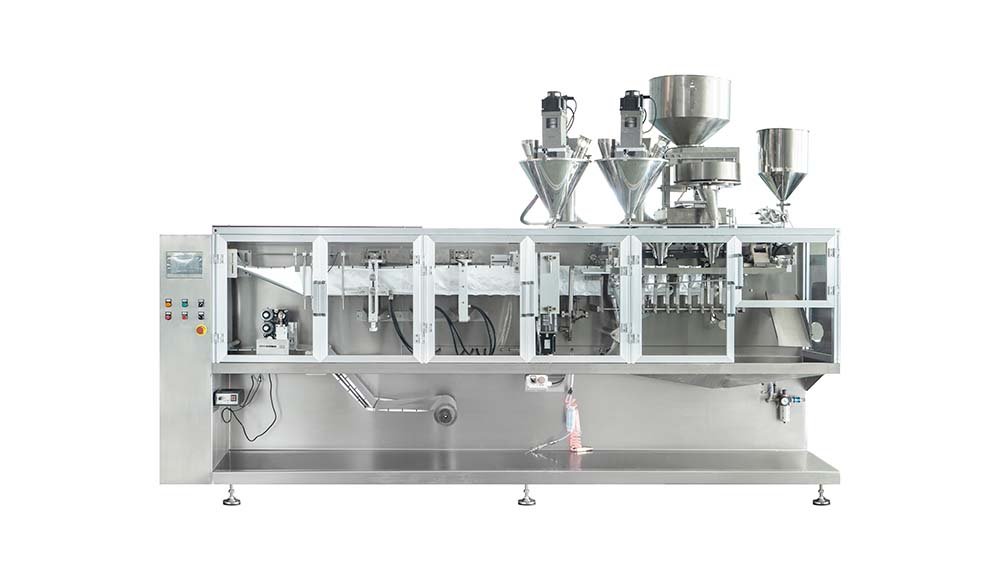
HS-180 horizontal reference
Powder Sachets
Review the powder dosing, feed and seal-area cleanliness with the selected flat-sachet format.
Review Powder Sachet Machines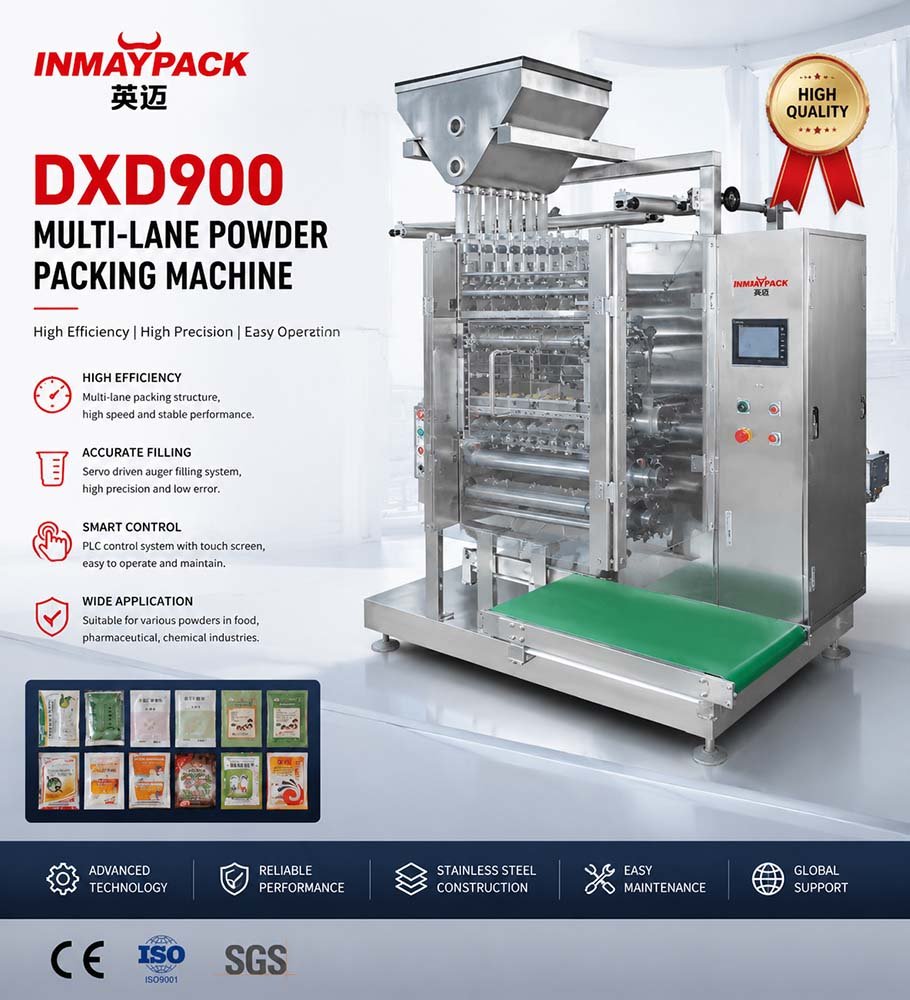
DXD-900 sachet reference
Multi-Lane Flat Sachets
Review wider sachets across parallel lanes. Match dose distribution, web layout, lane count and collection to the product.
Compare Multi-Lane Sachets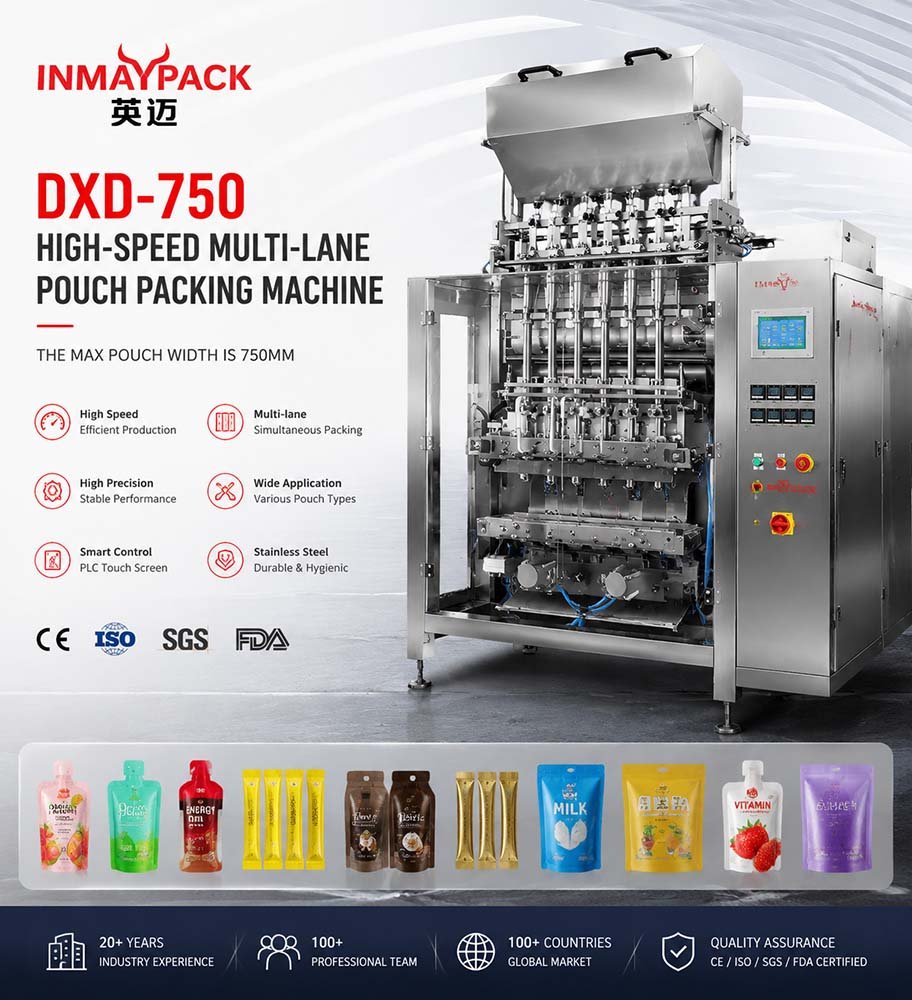
DXD-750 stick reference
Narrow Stick Packs
Review slim sticks using their own lane and film layout. DXD-750 is identified as stick-bag equipment in the supplied DXD table.
Explore Stick Pack Machines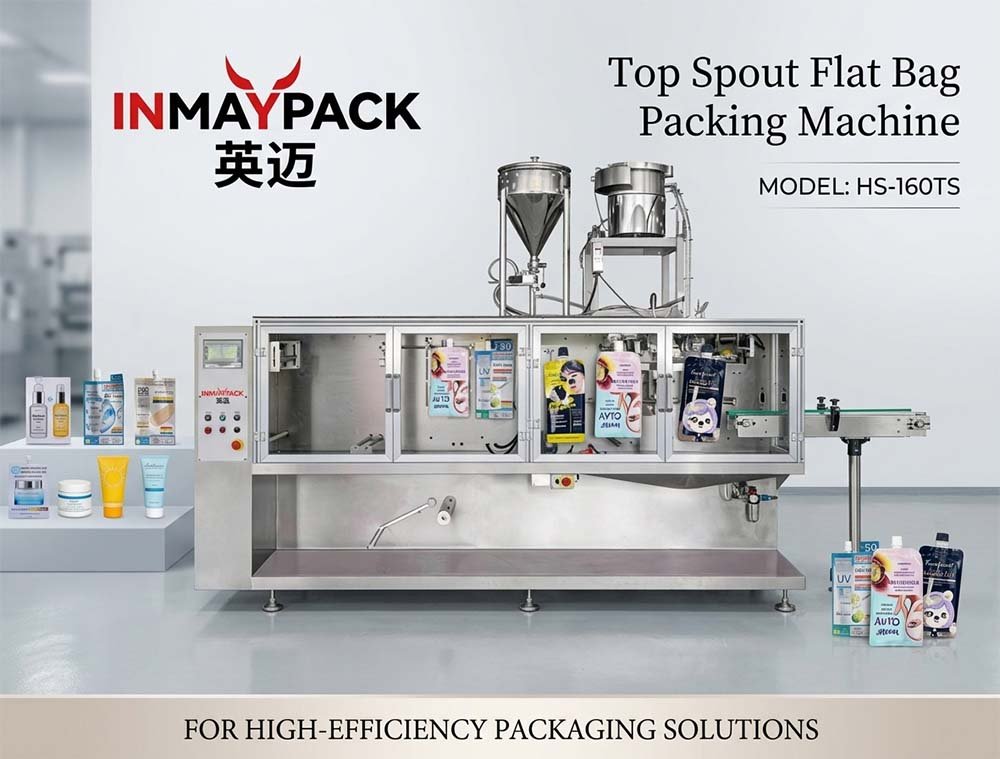
Spout configuration reference
Top-Spout Flat Bags
Review package forming and the selected fitment functions. Define filling access, fitment insertion and any cap handling in the proposal.
Review Top-Spout Flat Bags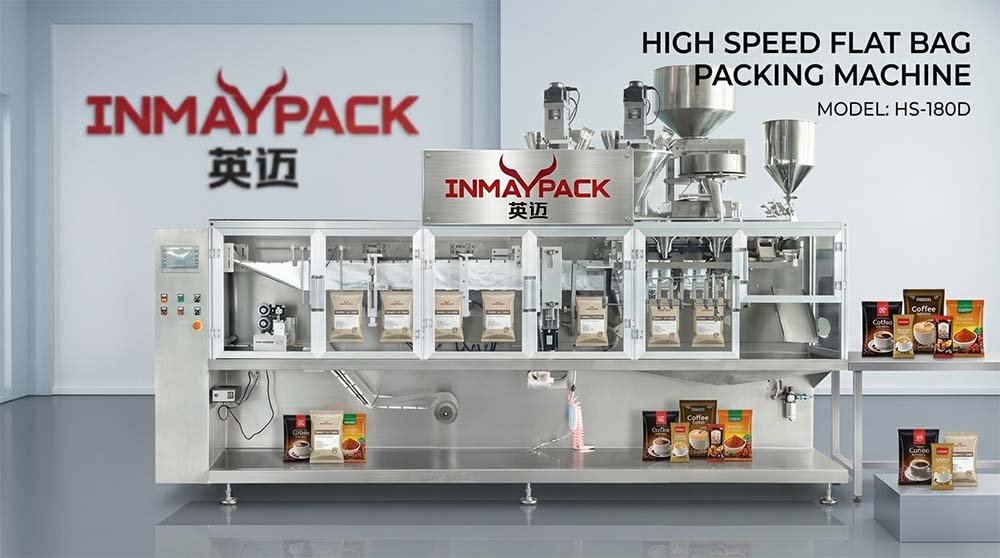
HS-180D reference
Duplex Flat Bags
Review both bag paths, filling, sealing and finished-pack collection as one approved configuration.
Review Duplex Flat-Bag MachinesStill choosing the flat-sachet configuration?
Review 3-side and 4-side seal machines or multifunction sachet and pouch equipment with the product and controlled drawing. Format capability follows the selected model.
Documented model references
Compare each machine on its own format and filling basis.
Values come from the supplied documents. Listed speeds and maxima are planning references, subject to the actual product, dose, film, package and agreed test.
| Reference model | Packing route | Listed speed | Package / lane reference | Configuration review |
|---|---|---|---|---|
| HS-130 | Horizontal liquid sachet reference | 50–90 bags/min | Listed formats: 60 × 80 to 140 × 180 mm | 1 filling station; max listed volume 160 ml. |
| HS-180 | Horizontal powder sachet reference | 40–70 bags/min | Listed formats: 60 × 80 to 180 × 220 mm | 1 filling station; max listed volume 400 ml. |
| DXD-900 | Multi-lane sachets | Up to 500 bags/min | 4–10 lanes; W35–80 × L55–165 mm; max web 900 mm | The document lists sachets. Volume references are not guaranteed gram doses. |
| DXD-750 | Multi-lane stick bags | 280–480 bags/min | 6–10 lanes; min W15 × L80 mm; max web 750 mm | Confirm upper pack dimensions and selected dosing; do not use DXD-900 sachet dimensions. |
| HS-180D | Duplex flat bags | Listed 100 bags/min | Listed duplex formats: 60 × 80 to 90 × 220 mm | 2 filling stations; max listed volume 150 ml; sample/film/test review required. |
| HS-180T | Twin flat-bag reference | Listed 40 bags/min | Listed twin formats: 60 × 80 to 90 × 200 mm | 2 filling stations; max listed volume 150 ml; confirm whether output counts twin packs or compartments. |
Dimension order is retained from each document where not explicitly labeled. Confirm the production drawing. HS-180D duplex and HS-180T twin have different pack and counting references; do not double a twin rate or treat filler cycles as accepted finished-pack output.
Sachet filling systems
Select the filler for the real product condition.
Product-matched powder dosing
Powders
Send flow, density, dust, aeration, dose and refill information. Review the auger or other selected feeder with clean filling and sealing. Powder sachet route →
Matched liquid path
Liquids & pastes
Send viscosity at filling temperature, foaming, particles and cutoff needs. Review the tank, pump, valve and nozzle with the seal area. Liquid sachet route →
Feeding and portion control
Granules & pieces
Send particle size, fragility, flow, dose and any count requirement. Review volumetric, weighing or another confirmed feeding method for the selected machine.
Specify the filler separately from the package machine.
List all recipes, portions, product temperatures and cleaning requirements. Agree dosing, product-contact scope and refill behavior in the proposal. Millilitres cannot be converted into a guaranteed gram dose without product density and test conditions.
From roll film to finished sachet
Connect six stages in the selected process.
Unwind & guide
Supply the intended film with the approved roll direction, web alignment and change method.
Register the print
Coordinate print marks, repeat length, seal positions and cutting references.
Form the pack
Fold or divide the web for the approved sachet, stick or special flat-bag layout.
Release the dose
Match product transfer to the filling time and protect the closing area.
Seal & separate
Use the agreed sealing and cooling settings, cut style and opening features.
Inspect & collect
Define code, dose, seal, reject and downstream collection requirements.
Drawing & production film
Approve the package before making the tooling.
Record finished dimensions, seal layout and width, cut style, tear feature, print repeat, registration mark, code area and any connected or perforated presentation.
- Laminate structure, thickness and seal layer
- Web width, roll diameter, core and winding
- Print repeat, mark and graphic location
- Production samples for all planned formats
Use the stick-pack film specification guide for narrow portion-pack web planning.
Single, duplex or multi-lane
Choose the architecture around product and pack output.
| Selection point | Horizontal single / duplex route | Vertical multi-lane sachet / stick route |
|---|---|---|
| Package review | Flat-bag tooling, pouch transfer and accessible filling | Web division, lane layout and each finished pack |
| Dose and quality | Each filling path, refill, seal and accepted-pack check | Lane-to-lane dose, seal, registration and reject identity |
| Changeover | Format tools, film path, filler setup and first-off approval | All active lanes, web setup, distribution and lane release |
| Output check | Conforming packs under the agreed operating conditions | Conforming packs across active lanes with stable collection |
Read how multi-lane stick packing works for the lane process and continuous vs intermittent VFFS for a separate vertical-motion comparison. Choose the package first.
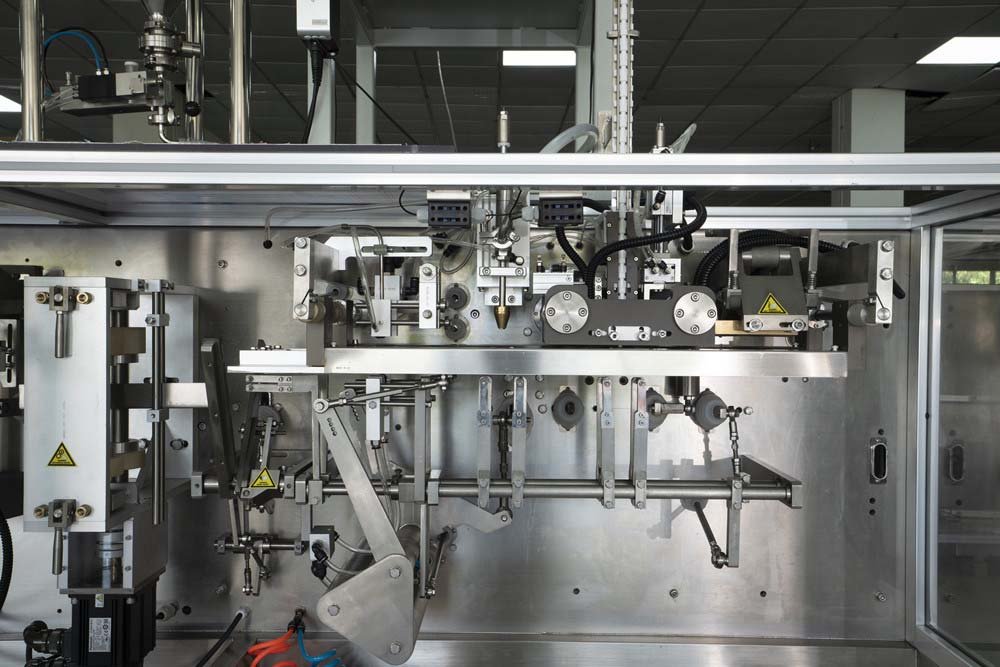
Sachet sealing & product cutoff
Protect the seal area through filling and closing.
Review the laminate seal window with the actual product. Powder dust, liquid residue, particles and the closing geometry affect the checks needed for a conforming pack.
- Product cutoff and fill timing
- Seal temperature, pressure and dwell
- Cooling, appearance and seal-integrity checks
- Coding, rejection and retained pack samples
Use the flexible-pack seal integrity guide to prepare the agreed material and closure checks.
Complete sachet packaging scope
Name the equipment around the primary packer.
Upstream modules
Product supply & dosing
Define storage, refill, feeding, hopper or tank, the filler and product-level response.
Primary-pack functions
Film, coding & inspection
Define web handling, print registration, coding, selected dose or pack inspection and reject handling.
Downstream modules
Collection & line handoff
Define counting, batching, conveying, accumulation, secondary packing and stop signals.
Use turnkey packaging solutions when the inquiry includes equipment beyond the sachet machine. List supplied modules and buyer-supplied utilities separately.
Trial & factory acceptance
Test the finished portion with your product and film.
Approve the inputs
Name product batch, dose, film, drawing, active lanes and test duration.
Run production events
Include startup, refill, selected film changes, stops, restarts and required format changes.
Check each pack route
Agree dose, seal, dimensions, print and code checks. Preserve lane identity where applicable.
Count accepted output
Separate conforming packs, rejects, samples and startup waste in the evidence.
Sachet packing machine price
Request a matched quote with a clear equipment list.
Price follows the pack format, selected model, lane count, dosing, tooling, inspection and collection scope.
Machine configuration
Primary sachet equipment
- Named model and approved pack formats
- Selected filler, product supply and tooling
- Film forming, sealing and cut functions
- Required coding, guarding and change parts
Project requirements
Options and handover
- Selected inspection, reject and collection
- Connected conveyors or secondary packaging
- Utilities, layout, cleaning and changeover
- Testing, documents, training and installation scope
Send one brief for a comparable proposal.
Product · all doses · pack drawing · film specification · required output · changes · coding and inspection · collection · utilities · destination.
Use the RFQ brief builder or sachet packing machine price guide to organize the inquiry.
Before choosing your equipment
Sachet packing machine FAQ.
What is a sachet packing machine?
Which products can be reviewed?
What is the difference between sachets and stick packs?
Is DXD-900 a narrow stick-pack machine?
What does the HS-130 reference list?
What does the HS-180 reference list?
Are duplex and twin flat bags the same configuration?
How do I choose single or multi-lane equipment?
Which film information is needed?
Does a top-spout flat-bag machine include capping?
Does a filler rate guarantee the finished sachet output?
What do I need for a current sachet machine quote?
Build your portion-pack project
Send your product and small pack. Get a matched proposal.
INMAYPACK can review the package format, selected dosing, machine route and line scope for your inquiry.