
INMAYPACK · Supplied-pouch packaging systems
Premade Pouch Packing Machine
Compact · Rotary · Side-spout · SG-series
Find the filling and sealing route for your product and finished pouch. Compare TRC compact machines, ZP rotary models, the SG260 side-spout application and SG-series references with a product-matched dosing system.
- Finished empty pouches
- Product-matched filling
- Defined complete-line scope
Model values are references. The approved pouch, product, selected filler and production test determine the accepted configuration and output.
From supplied pouch to finished pack
What is a premade pouch packing machine?
A premade pouch packing machine receives finished empty bags, presents and opens each pouch, introduces a measured product dose, seals the package and releases the finished pack. A selected weigher, auger, pump or other dosing device works with the pouch handler.
The supplied pouch and filling system are selected together. Material, dimensions, zipper or spout features, product behavior and required output define the approved handling and sealing process.
When the packaging supply route is still open, use the HFFS vs premade pouch machine comparison to review supplied pouches and packages formed from roll film.
Start with what you pack
Find the filling route for your premade pouch.
The product determines the dosing system. The supplied pouch determines handling and sealing. Review both before comparing machine size and output.
Powder pouch filling machines
Review the auger or selected dosing device together with pouch opening, powder settling, dust around the filling point and a clean sealing area.
Bring your powder, fill weight and pouch sample.Explore Powder Pouch Filling Coffee + pouch formatCoffee beans or ground coffee?
Compare weighing for beans and auger dosing for ground coffee. Define the pouch, fill weight, valve or gas requirements and changeover needs.
Start with the coffee type and finished pack.Explore Coffee Pouch PackingMachine selection
Compare the premade pouch machine range
Choose an initial route using the pouch, product, dose and required production result. Open each machine page for its own configuration, parameters and inquiry inputs.
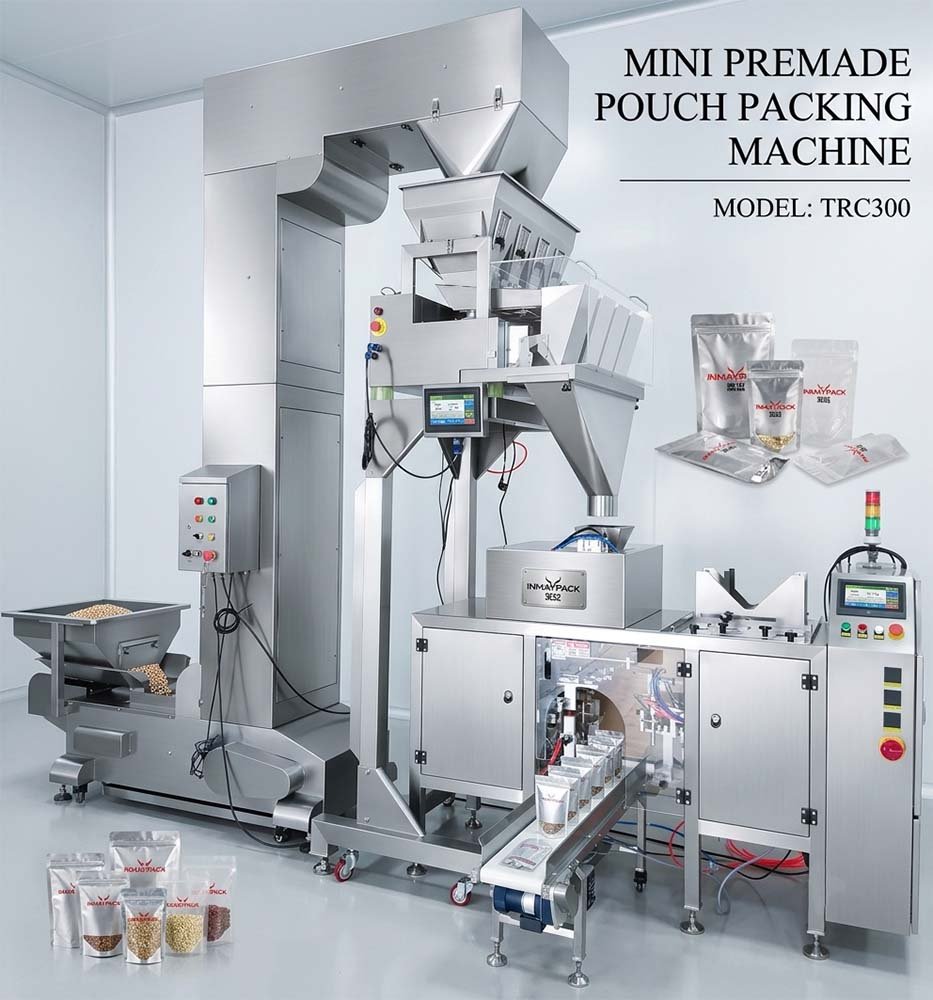
TRC-300 / TRC-430
Mini Premade Pouch Packing Machine
Compact pouch handling for a selected weigher, auger or liquid-filling route. Compare the two pouch-length windows and confirm the complete cell layout.
- Reference speed
- 6–15 bags/min
- TRC-300 pouch reference
- 90–300 × 100–300 mm
- TRC-430 pouch reference
- 100–300 × 100–430 mm
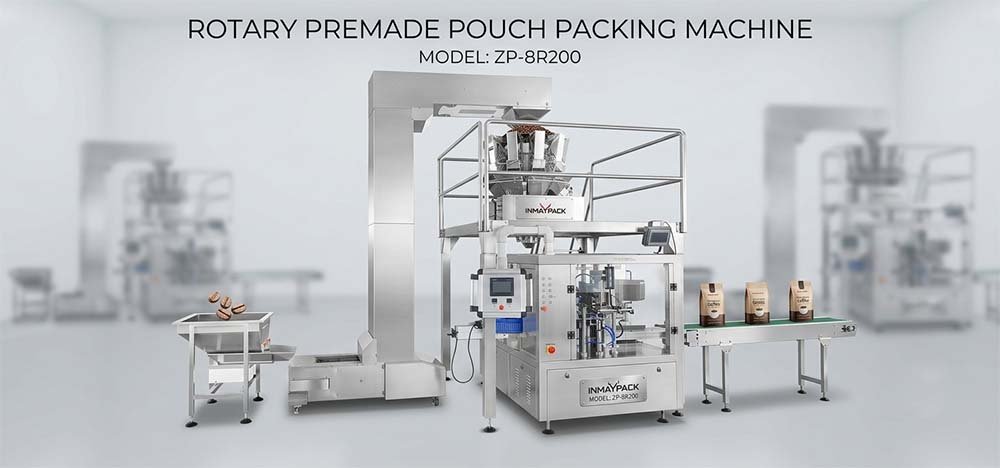
ZP-8R200 / 10R200 / 8R260 / 8R300
Rotary Premade Pouch Packing Machine
Compare four rotary models and select the dosing device for granules, powders or another approved product. Pouch dimensions and model-specific output belong in the same review.
- Four model speed references
- 10–80 pouches/min across models
- Pouch-size references
- Model-specific width; 100–400 mm length
- Filling reference
- 10–2,500 g; product/filler dependent
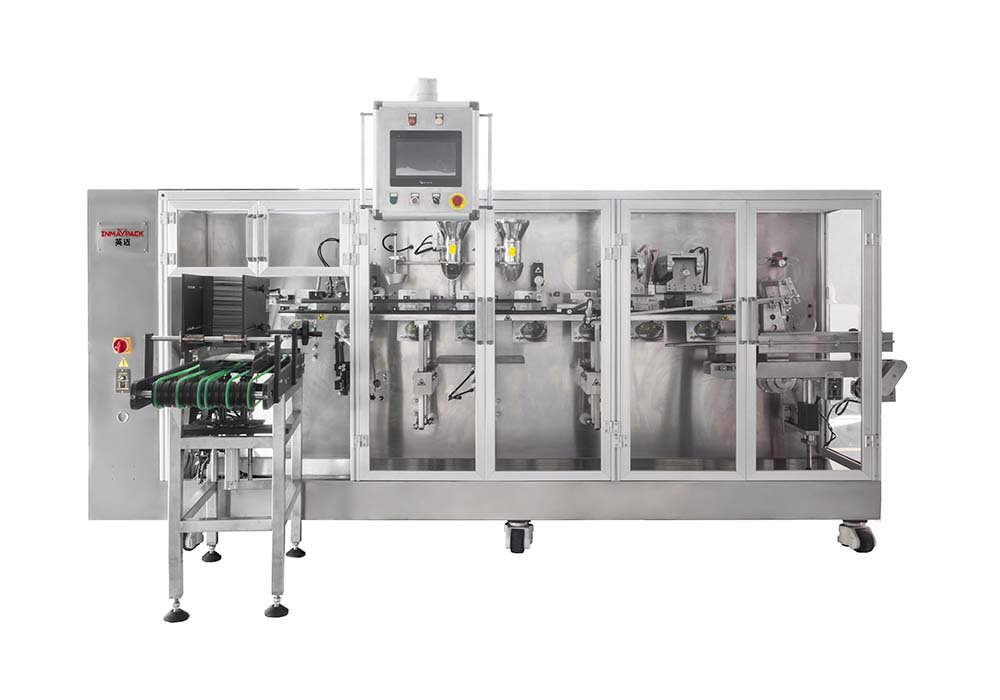
SG260 · Side-spout application
Premade Pouch Filling & Sealing Machine
Review the separately defined side-spout liquid and smooth-paste application. Coordinate the product path, pouch, spout, cap and sealing requirements.
- Motion reference
- 11-servo complete-line configuration
- Filling reference
- 2 rotor pumps and 100 L tank listed
- Pouch, dose & output
- Confirmed for the approved application
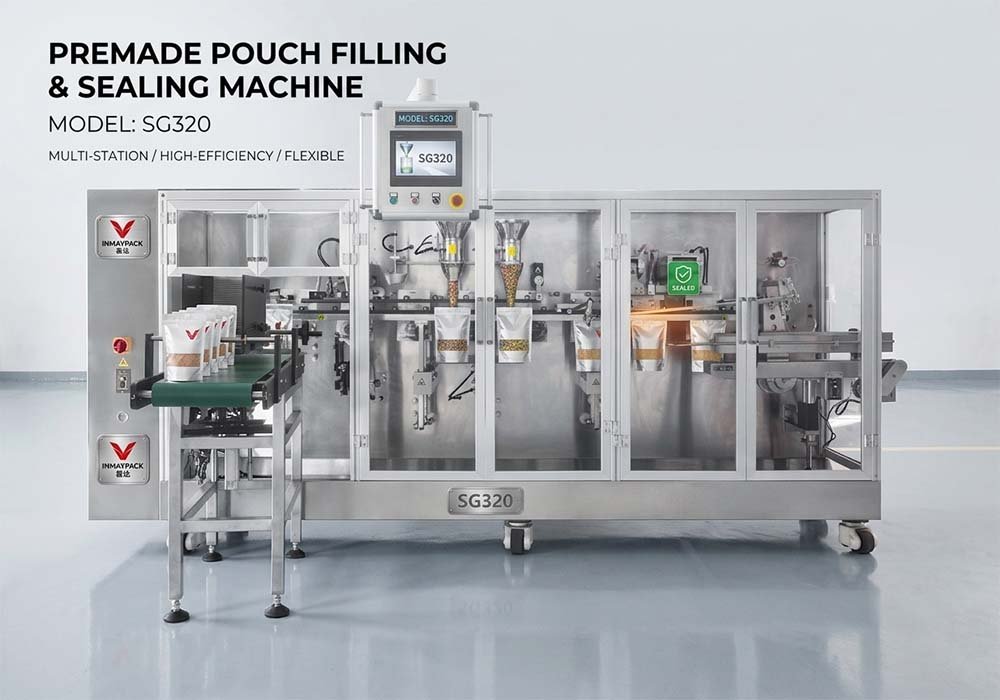
SG210 / SG320 / SG320D
High Speed Premade Pouch Packing Machine
Compare the separate SG model references by pouch size, fill volume, speed and power. Confirm the paired-format notation and layout for SG320D.
- SG210 speed reference
- 50 pouches/min
- SG320 speed reference
- 40 pouches/min
- SG320D speed reference
- 100 pouches/min; paired-format review
Already buying pouches with a fitted spout?
Compare the separate spout pouch filling and capping route for the supplied pouch opening and cap arrangement. The spout pouch project guide explains configuration and test boundaries to review for that application.
Compare the complete powder pouch system, then use the auger filling guide for screw, hopper and powder-path selection.
Model references & selection boundaries
Compare ten model entries
The rows below keep each model and application separate. Width × length references and the SG paired-format notation must be matched to the approved production drawing.
| Model | Route | Packing-speed reference | Pouch-size reference | Filling reference / selected device | Power reference |
|---|---|---|---|---|---|
| TRC-300 | Compact premade | 6–15 bags/min | 90–300 × 100–300 mm | Selected weigher / auger / liquid filler | Confirm in configuration |
| TRC-430 | Compact premade | 6–15 bags/min | 100–300 × 100–430 mm | Selected weigher / auger / liquid filler | Confirm in configuration |
| ZP-8R200 | Rotary premade | 20–60 pouches/min | 80–200 × 100–400 mm | 10–2,500 g; product and filler dependent | 3.3 kW |
| ZP-10R200 | Rotary premade | 20–80 pouches/min | 80–200 × 100–400 mm | 10–2,500 g; product and filler dependent | 3.3 kW |
| ZP-8R260 | Rotary premade | 20–50 pouches/min | 130–260 × 100–400 mm | 10–2,500 g; product and filler dependent | 3.3 kW |
| ZP-8R300 | Rotary premade | 10–35 pouches/min | 180–300 × 100–400 mm | 10–2,500 g; product and filler dependent | 3 kW |
| SG260 | Side-spout application | Confirm with production samples | Confirm pouch / spout drawings | 2 rotor pumps and 100 L tank in listed application | Confirm final installed load |
| SG210 | SG family reference | 50 pouches/min | 120×150 to 210×300 mm | 1500 mL volume reference | 16 kW |
| SG320 | SG family reference | 40 pouches/min | 120×150 to 320×350 mm | 3000 mL volume reference | 16 kW |
| SG320D | SG family reference | 100 pouches/min | 120+120×150 to 160+160×350 mm | 1000 mL volume reference | 18 kW |
TRC and ZP sizes show width × length ranges. SG values preserve the minimum-to-maximum size notation. SG320D retains 120+120×150 to 160+160×350 mm; confirm individual pouch dimensions and paired layout. Its 100 pouches/min reference is not a per-lane figure.
Read the dose, power, layout and output boundaries
Filling ranges belong to the selected device
The ZP platform lists 10–2,500 g depending on the product. A selected weigher, auger or pump has its own range and tolerance. SG fill-volume figures are model references; the SG260 dose is confirmed for its application.
Machine dimensions are part of the layout
TRC references are 1,750 × 510 × 1,300 mm for TRC-300 and 1,750 × 510 × 1,650 mm for TRC-430. Include filler, feed, platform, downstream equipment, access and service clearance in the complete cell.
Utilities require the installed equipment list
TRC references list 0.5 m³/min at 0.65 MPa; ZP references list at least 0.6 m³/min compressed-air flow. Confirm supply pressure, quality, electrical interface, cooling and total load for the chosen system.
Measure accepted finished packs
Define product/pouch lots, dose, equipment, run conditions, staffing and inspection criteria. Count accepted finished pouches separately from empty cycles, rejects, stops and rework.
Pouch formats
Select the pouch and its handling functions
Start with the finished package drawing and actual material. Format features require corresponding tooling, opening access and sealing conditions.
Stand-up pouch
Review gusset opening and filled-pack support
Zipper pouch
Confirm zipper position and selected opening device
Flat / 3-side-seal
Confirm the finished opening and seal area
Spouted pouch
Distinguish insertion from already-fitted spout supply
Schematic package illustrations. The ZP reference lists stand-up, zipper, 3-side-seal and flat pouches; TRC additionally lists box and gusset formats. Confirm all features and materials per selected configuration. For four-corner packages, use the quad-seal pouch format guide with the actual drawing.
Prepare the complete pouch-material and tooling review
| Package input | Confirm |
|---|---|
| Drawing & dimensions | Minimum/maximum finished size, gusset, zipper, spout/fitment, corners, holes and safe gripping zones |
| Material & condition | Converter, layer structure, thickness, sealant, coating, curl, static, blocking and storage |
| Opening & transfer | Pouch separation, usable opening, feature clearance, refill and restart behavior |
| Sealing | Approved seal area, material settings, contamination, appearance and integrity criteria |
| SKU changes | Each product/pouch combination, tooling, recipes, adjustment and first-off checks |
Products & application guides
Match the product to its dosing system
Use representative production product to review flow, dose, pouch opening, contamination risk, cleaning and the required output.
Snacks, nuts & candy
Review weighing, fragility, coating, bridging and the product drop. Compare snack routes, candy packaging and gummy handling.
Coffee beans & ground coffee
Beans and powder need different dosing reviews. Use the coffee pouch packing routes for product condition, weight, pouch, valve or gas requirements.
Powders & spices
Use the powder pouch filling machine guide to select the dosing and pouch-handling process together.
Review auger or other selected dosing, refill, aeration, settling and dust near the seal. For dairy powders, use the milk powder application guide.
Liquids & smooth pastes
Review viscosity, temperature, foam, cutoff, product-contact parts and cleaning. The SG260 side-spout application lists a particle-free rotor-pump reference.
Pet food & treats
Review kibble, treats, powders or a wet-product formulation separately. Use the dog food packing guide to define product supply and metering.
Frozen products
Disclose clumping, surface moisture, temperature, fragile pieces and storage condition. Compare the frozen food packaging route with production samples.
Rice, grains & pulses
Compare the actual granular-product dose, feeding and package requirement in the granule machine guide. A vacuum requirement needs a separately specified process.
Non-food products
Review particle dimensions, counts or weight, abrasiveness, corrosivity, moisture and compatibility. Define the selected filler, containment, contact parts and cleaning for the actual material.
Application examples are selection inputs, rather than evidence that every product runs on every model. For broader food applications, compare the food packaging equipment routes.
Pouch handling & production review
Confirm the pouch opening before product release
Pouch presentation, gripping, sensing and usable opening affect the complete filling and sealing cycle.
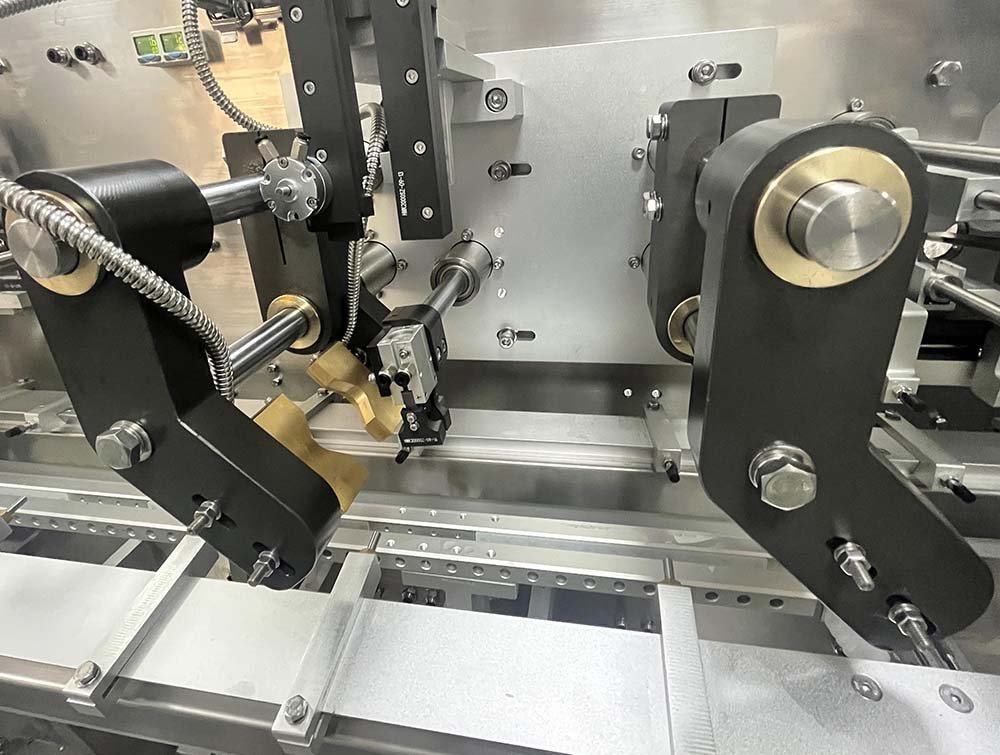
Test the normal production conditions
- Normal laminate curl, static, blocking and sample variation
- Pouch pickup, gripping position and mouth opening
- Missing pouch and unsuccessful-opening response
- Filler timing, cutoff, settling and clean seal area
- Replenishment, alarms, stops and agreed restart procedure
Working references
Watch rotary and linear pouch handling
These existing working videos illustrate two premade-pouch architectures. The delivered model, filler and accepted product output are confirmed for the project.
Rotary pouch-handling reference
Observe pouch presentation, opening, filling access, sealing and discharge.
Watch on YouTube →Review the machine configuration →Linear pouch-handling reference
Review the linear handoffs and station interfaces with the actual product and pouch.
Watch on YouTube →Review the machine configuration →Public process demonstrations, rather than product-specific acceptance tests or confirmation that every shown station is included. Agree production samples, equipment and acceptance conditions before the trial.
Price & complete system scope
What determines the premade pouch machine price?
Request an itemized quotation around the product and pack you need to produce. Select the machine, dosing device and connected line equipment on the same application basis.
Machine, filler & package
- Named TRC, ZP or SG model / application
- Selected weigher, auger, pump or dosing route
- Product feed, buffer, platform and change parts
- Pouch features, code and required process options
- Contact materials, cleaning and condition requirements
Test, delivery & line interfaces
- Required accepted output and production samples
- Inspection, rejects, conveying and downstream duties
- Layout, installed loads and available utilities
- FAT records, documents, training and commissioning
- Destination, delivery terms, warranty and support
Define the complete packing-line and handover boundary
| System boundary | Agree before pricing |
|---|---|
| Product supply | Feeding/refill, buffer, level/conditioning requirements and stop/restart interfaces |
| Primary packer & filler | Named machine, selected dosing, format tooling, controls, guards and contact parts |
| Coding & inspection | Printer, weight/volume check, seal/leak checks, rejects and records as required |
| Downstream equipment | Discharge, accumulation, cartoning/case packing and responsibility for integration |
| Layout & utilities | Equipment envelopes, operating access, maintenance clearance and utility interfaces |
| Trial & handover | Materials, run basis, acceptance, documents, spares, training and commissioning |
Review the flexible packaging system route and turnkey packaging solutions for connected equipment and project responsibilities.
Prepare your inquiry
Send your product and pouch. Get a machine recommendation.
Send the details you already have. Start with four essentials; drawings, samples and detailed line requirements can follow during the equipment review.
Product
What you pack, with a photo or brief description.
Fill weight or volume
Your target dose and any additional pack sizes.
Premade pouch
Bag type and size; a photo or drawing if available.
Output & destination
Required finished pouches per minute and delivery country.
Detailed product and project checklist
Product & finished pouch
- Product name, photos and representative sample
- Density/flow or viscosity/temperature, particles, foam or dust
- Minimum / nominal / maximum dose and tolerance
- Pouch drawing, material, features and physical samples
- Launch SKU list and expected format changes
Production & project
- Required accepted finished pouches/min and shift pattern
- Selected filler or dosing requirement still to review
- Upstream supply, inspection and downstream scope
- Layout, available utilities and cleaning method
- Destination, trial records, installation and support requirements
Agree sample testing, cleaning, changeover and handover
Approve materials and the run
Freeze product condition, pouch lot, dose, machine, filler, tooling, installed options, utilities and agreed duration.
Measure the complete packing result
Record dose variation, opening failures, contamination, seal/leak results, inspection, accepted output, rejects and minor stops.
Confirm changeover and cleaning
List recipes, tooling, contact parts, cleaning duties, drainage, maintenance and first-off checks for the launch SKU matrix.
Close the supply and support scope
Agree equipment list, drawings, manuals, backups, test records, deviations, training, spare parts and commissioning duties.
Premade pouch packing machine FAQ
Direct answers about machine routes, formats, speed, dosing, pricing and sample tests.
How does a premade pouch packing machine work?
How do rotary and linear premade pouch routes differ?
Which machine route should I review first?
How fast are the referenced premade pouch machines?
What pouch formats can be reviewed?
Is SG260 the same application as SG320?
Does 10–2,500 g apply to every filler?
Can a premade pouch packing machine fill powders?
Can these systems be reviewed for coffee beans and ground coffee?
Are gas flushing, vacuum and CIP standard?
How much does a premade pouch packing system cost?
Can my product and pouches be used in a sample test?
What installation, warranty and support are included?
Review related package and process routes
Use the package supply condition and required product process to decide which equipment family to compare.
Vacuum-process requirements
Compare the vacuum package route and food vacuum selection guide. Define supplied-pouch versus roll-film supply, evacuation, pack shape, sealing and required acceptance evidence.
Pouches formed from roll film
Use the doypack machine range when package forming belongs in the process. Compare the drawing, material sourcing, dosing, changeover and complete layout.
Small sachets and stick packs
Review the sachet packing machines for small-format powder, liquid or granule packages and the required film-forming and sealing process.
A back-seal machine that forms bags from roll film belongs to a different material-supply route from a supplied premade pouch handler. Do not select either from a “vacuum” label alone.
INMAYPACK · Your premade pouch project
Request the machine configuration for your pack
Send the product, dose range, pouch drawing and samples, required output and destination. Define the machine, filler and complete-line scope together.