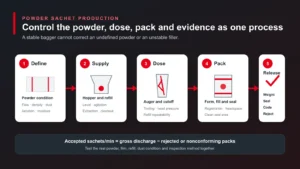
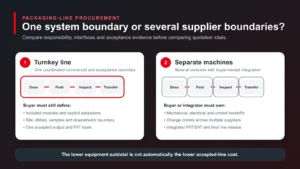
HFFS and premade-pouch machines can fill similar products into similar-looking pouches, but they create two different factory operating models. HFFS forms the pouch from roll stock inside the line. A premade-pouch machine receives finished bags, opens them, fills them and seals them. The right platform depends on packaging supply, SKU volatility, changeover loss, product handling, maintenance capability and validated output—not on a generic speed claim.
Quick answer: HFFS or premade pouch machine?
Choose HFFS when the factory has stable pouch specifications, repeatable volumes, qualified roll stock and the technical capability to control forming, registration and sealing in-house. Choose a premade-pouch machine when frequent design changes, short campaigns, complex ready-made bags or simpler pouch-format changeovers outweigh the higher dependence on purchased bags. Compare both platforms with the same product, pouch, shift plan and FAT acceptance criteria.
Procurement rule: do not ask which machine is “better” in isolation. Ask which platform produces the required number of accepted pouches at the lowest controlled lifecycle cost while meeting the factory’s packaging, quality, sanitation and staffing constraints.
A wrong platform decision creates costs that are hard to reverse. A factory may buy HFFS for lower roll-stock handling cost, then discover that its marketing team changes pouch artwork and geometry every quarter. Another plant may select premade pouches for flexibility, then face storage pressure, long bag lead times and a large cost penalty at sustained volume. Both machines can perform well. The mismatch between platform and operating model causes the loss.
This guide gives the purchasing team a common comparison method. It avoids unqualified market-price and speed ranges because those figures are rarely comparable across products, pouch sizes, fillers and acceptance tests. Use the framework to prepare a URS, request equivalent supplier proposals and run a controlled FAT.
1. Define the two platforms correctly
HFFS pouch system
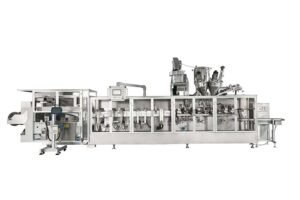
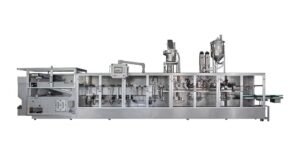
A horizontal form-fill-seal pouch machine starts with a roll of heat-sealable laminate. It unwinds and guides the web, creates the pouch geometry, controls the print registration, seals the pouch edges, opens the formed pouch, fills the product and completes the final seal. Depending on the design, the line may also add a zipper, spout, tear notch or shaped cut.
PMMI ProSource defines horizontal form/fill/seal equipment as machinery that forms bags or pouches from roll-stock film in a horizontal orientation before filling and sealing. That definition matters because “HFFS” is also used loosely for horizontal flow wrappers and for machines that handle premade bags. Procurement documents should say whether the supplier must form the pouch from roll stock or feed a finished pouch.
Premade-pouch system
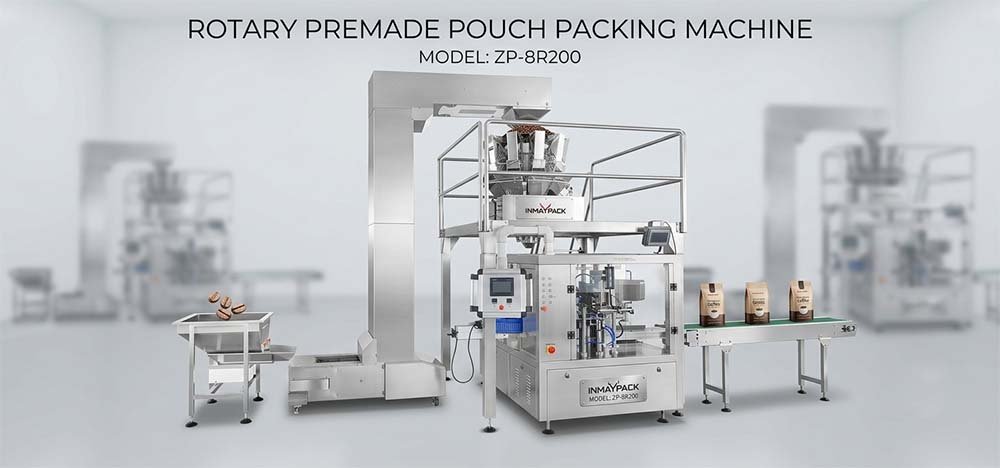
A premade-pouch machine starts with finished bags supplied in stacks, magazines or another feeding format. The machine picks a bag, confirms its presence, opens it, presents it to the filler and seals the top. Rotary machines move pouches through stations around an indexing carousel; inline machines transfer them along a straight path.
The package converter, rather than the packaging machine, has already produced the body seals, gusset, zipper and any shaped features. The factory still controls pouch feeding, opening, filling and final sealing, but it does not form the pouch body during production.

2. Use one procurement comparison table
| Decision factor | HFFS from roll stock | Premade pouch | Evidence to request |
|---|---|---|---|
| Pouch supply | Printed roll stock; pouch is formed on the machine. | Finished pouches supplied to the line. | Approved material specification, supplier tolerances and incoming QC plan. |
| Format control | Machine settings and change parts control pouch length, width, gusset and added features. | Converter controls most pouch-body geometry; machine handles the finished bag. | Controlled pouch drawing and production-intent samples. |
| Changeover | May require film, forming, registration, zipper/spout and seal adjustments. | May require magazine, gripper, opener, filler and top-seal adjustments. | Timed changeover demonstration with first-good-pouch criteria. |
| Artwork changes | New roll stock must run within the qualified web and seal window. | New finished bags must run within feeder, gripper and opener limits. | SKU matrix and worst-case printed material. |
| Factory skills | Web handling, forming and sealing knowledge is important. | Pouch feeding, opening and top-seal control are central. | Training matrix, troubleshooting guide and maintenance plan. |
| Storage and logistics | Rolls are stored and moved; roll dimensions and splice rules matter. | Finished pouches need protected storage and controlled stacking. | Annual packaging volume, pallet count, lead time and safety stock. |
| Quality risk | Factory controls pouch formation and final seal. | Factory receives pouch-body quality and controls opening, filling and final seal. | Defect catalogue, sampling plan and responsibility matrix. |
| FAT basis | Production-intent roll stock and actual product. | Production-intent finished pouches and actual product. | Defined test duration, output, rejects, stops and quality criteria. |
This table does not assign a universal winner. Each row becomes a scored requirement for the factory. A high-volume plant with a stable pouch may give packaging-material economics and sustained output the highest weight. A contract packer with many short campaigns may give changeover time, pouch flexibility and low startup waste more weight.
3. Compare the complete pouch supply chain
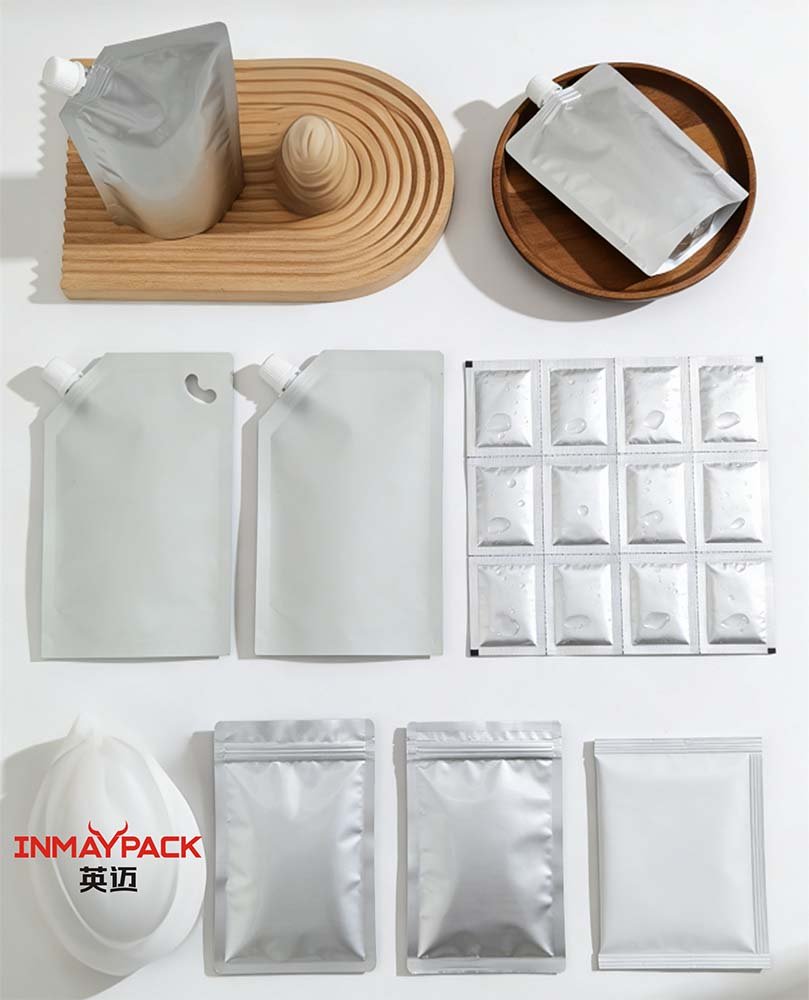
The most visible difference is the purchased packaging format. HFFS requires roll stock. Premade equipment requires finished pouches. The commercial comparison must cover more than the unit price of film or bags.
For HFFS roll stock, document:
- film structure, thickness and sealing layer;
- roll width, maximum roll diameter, core diameter and winding direction;
- print pitch, eye-mark position and registration tolerance;
- coefficient of friction and web-flatness expectations;
- splice type, number of splices allowed and roll-change method;
- seal-temperature window and supplier test method;
- zipper, spout or valve material when applied on the machine;
- minimum order, lead time, safety stock and artwork-change process.
For premade pouches, document:
- finished width, height, gusset, mouth opening and top-seal allowance;
- pouch flatness, curl, blocking and stack-orientation limits;
- zipper position, spout position, tear notch and hang-hole geometry;
- bag-to-bag dimensional tolerance;
- pouch-body seal quality supplied by the converter;
- magazine quantity, refill frequency and operator handling;
- incoming inspection, quarantine and defect-return procedure;
- minimum order, lead time, storage volume and obsolescence exposure.
Premade pouches can transfer forming complexity away from the packaging line, but they do not remove packaging-material risk. Poor flatness, inconsistent mouth opening or excess static can reduce pickup and opening success. HFFS gives the plant more direct control over pouch formation, but roll variation can affect tracking, seals and appearance. In both cases, the pouch supplier and machine supplier must work from one controlled drawing and material specification.
4. Build a total-cost model before comparing quotations
Purchase price is only one line in the decision. The factory should model the same production horizon for both platforms—normally by SKU, annual demand and expected operating years. Keep assumptions visible so procurement, finance and production can challenge them.
The model should include the filler, inspection devices, conveyors, coding, checkweighing, guarding, dust extraction or product-temperature controls required for the real line. A low base-machine quotation is not comparable with a proposal that includes product handling and acceptance testing.
For HFFS, include forming parts, web-guiding components, roll handling, zipper or spout application and the cost of startup film during changeover. For premade pouches, include magazine loading labor, unused-bag handling, finished-pouch storage, converter minimum orders and obsolete printed inventory after artwork changes.
Do not insert a generic “material saving percentage.” Obtain current quotations from qualified packaging suppliers using the same barrier structure, print specification, annual volume and quality level. The bag and roll-stock offers must be technically equivalent before finance compares them.
5. Measure accepted output under equivalent conditions
Published pouches per minute cannot decide the platform. HFFS speed can be limited by web handling, forming, registration, zipper or spout application, filling time and seal dwell. Premade-pouch speed can be limited by bag pickup, opening success, fill time, top-seal dwell and magazine replenishment.
Write output as accepted pouches per minute for a named product, fill, pouch and test duration. The supplier should record:
- total pouches attempted;
- accepted pouches;
- material rejects by cause;
- machine stops by cause and duration;
- fill results and out-of-tolerance count;
- seal and leak-test results;
- pouch-opening or web-registration faults;
- operator interventions and replenishment events.
If two suppliers test different products or packaging materials, the speed figures are not equivalent. Use the factory’s production-intent material and representative product. Include the hardest qualified SKU, not only the easiest sample.
6. Time the complete changeover
Changeover begins with the last accepted pouch of the previous SKU and ends with the first accepted pouch of the next SKU at the agreed stable rate. It includes material removal, cleaning, change parts, recipe selection, adjustments, verification and quality release.
HFFS changeover may involve film threading, web centering, forming geometry, print registration, seal position, zipper or spout settings and pouch cut length. Premade-pouch changeover may involve magazine width, bag guides, gripper opening, vacuum-cup position, filler height and top-seal settings.
A premade platform is not automatically faster to change, and HFFS is not automatically slower. The difference depends on the machine design and how far the next SKU moves from the current operating window. Ask the supplier to demonstrate a representative change—not a recipe recall with the same pouch.
7. Allocate quality responsibility by process step
HFFS puts pouch-body formation inside the factory process. Quality must control web tracking, dimensions, gusset formation, zipper or spout placement, body seals, final seal and cut. Premade-pouch production shifts body-seal and geometry control to the converter, while the factory controls incoming bag quality, pickup, opening, filling and the final top seal.
Create a responsibility matrix covering each defect. A leaking body seal on a premade pouch may originate at the converter. A contaminated top seal may originate from filling or handling at the factory. On HFFS, both can originate within the line. The matrix should state who investigates, what sample is retained and which process data is available.
The factory’s acceptance plan should define pouch dimensions, print registration, fill tolerance, seal appearance, seal strength or integrity method, code readability and contamination limits. Visual approval alone is not enough for a food, beverage, pet food or household product line.
8. Match sanitation to the product and plant program
The customer factory’s HACCP, allergen-control, hygiene-audit and sanitation procedures determine the machine specification. For food operations in the United States, 21 CFR 117.40 requires plant equipment and utensils to be designed and maintained so they are adequately cleanable and do not adulterate food. This is a factory compliance requirement translated into the URS—not a blanket machine certification claim.
Evaluate product-contact materials, surface finish where required, access, drainage, retained product, tool-free removal, gasket identification and verification points. HFFS adds film-path and forming areas; premade equipment adds pouch magazines, pickup cups and opening stations. Neither platform is hygienic merely because it uses stainless steel.
Run a cleaning demonstration for the actual filler and product path. Record disassembly time, cleaning time, inspection access, reassembly checks and the first acceptable post-cleaning production. For allergen changeovers, involve the quality team before the PO, not after installation.
9. Audit maintenance capability and spare-parts exposure
HFFS technicians need competence in film tracking, tension, forming, sealing, registration and any zipper or spout system. Premade-pouch technicians need competence in bag feeding, vacuum pickup, gripper timing, opening detection and top sealing. Both platforms require filler, pneumatic, servo, sensor and safety-system knowledge.
Ask for a preventive-maintenance schedule that identifies task, interval, skill, tools and downtime. Separate critical spares from consumables. The spare-parts list should cover at least:
- seal heaters, temperature sensors and wear surfaces;
- vacuum cups, filters and opening components;
- gripper wear parts and product-contact seals;
- film-path or magazine adjustment components;
- sensors, cables and common pneumatic valves;
- filler-specific seals, valves, nozzles or auger parts;
- backups for recipes, PLC/HMI programs and parameter records.
Confirm response times, remote-support method, documentation language and the process for ordering parts after warranty. A technically strong machine with an undefined service path creates avoidable production risk.
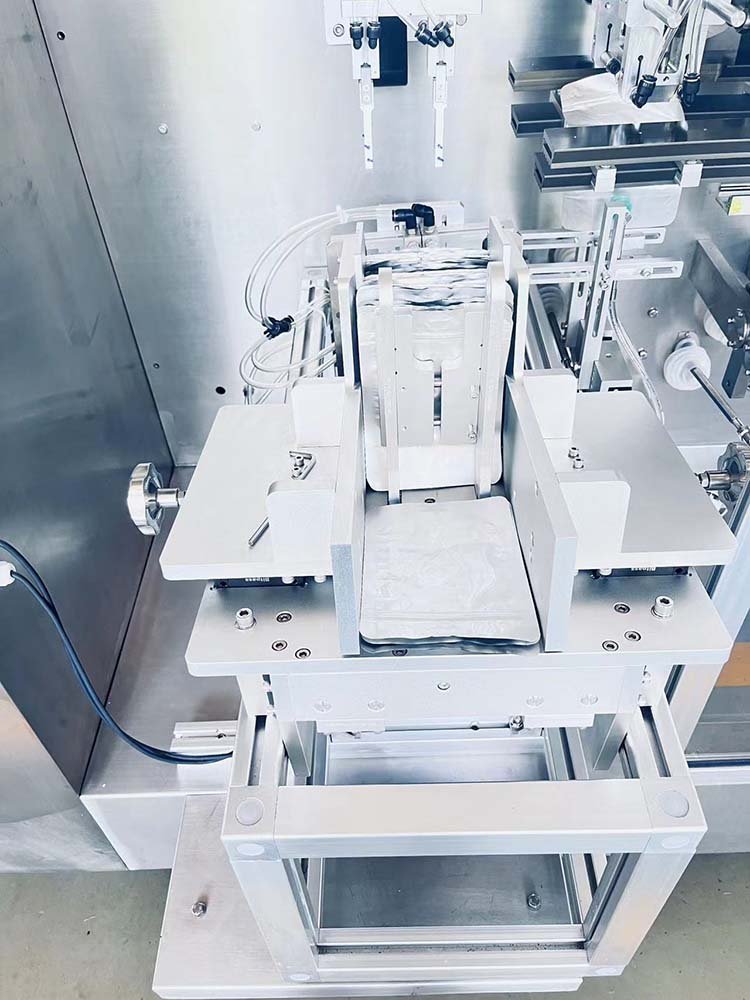
Bring packaging, production, purchasing and marketing into the same comparison. Production may prefer the platform with the fastest demonstrated rate, purchasing sees roll or pouch prices, and marketing sees format freedom. A defensible decision requires one SKU forecast and one acceptance test. If the package-supply assumptions are missing, the machine comparison is incomplete.
10. Choose by operating scenario
HFFS is usually the stronger candidate when:
- one or several stable SKUs carry sustained volume;
- the factory can qualify and control printed roll stock;
- pouch geometry fits a proven forming platform;
- the team can manage web, registration and sealing controls;
- packaging inventory and storage favor rolls;
- the project benefits from forming, filling and sealing in one integrated line.
For roll-stock stand-up pouches, review the stand-up pouch packing machine platform with the actual pouch drawing, roll data and product sample.
Premade pouches are usually the stronger candidate when:
- the plant runs frequent short campaigns or many pouch designs;
- the pouch contains features better controlled by a specialist converter;
- the factory prefers to receive completed pouch geometry;
- the SKU mix makes rapid bag-format changes valuable;
- finished-pouch storage and lead time are manageable;
- the line team is stronger in feeding, filling and sealing than in pouch forming.
Compare available premade pouch packing machine formats only after the finished-bag tolerances and SKU matrix are controlled.
Need a higher-output supplied-pouch route? Compare the SG-series high-speed premade pouch machine by pouch size, fill volume, dosing interface and FAT-defined accepted output. Keep this decision separate from HFFS roll-stock capacity because the pouch supply method and process ownership are different.
A pilot or phased approach is justified when:
- annual volume is uncertain;
- the pouch design is still changing;
- the product is difficult to fill or contaminates the seal area;
- the factory lacks reliable material-supplier data;
- several co-packers or production sites will share volume;
- the business case depends on an untested output assumption.
11. Put the decision into the URS and FAT
A comparable request for quotation gives both platforms the same product and commercial boundary. Send:
- product description, density, viscosity, particulates, temperature and flow behavior;
- fill range and allowable fill tolerance;
- controlled pouch drawing and packaging-material specification;
- SKU matrix with annual volume, batch length and changeover frequency;
- required accepted output per SKU;
- quality tests and sampling plan;
- cleaning, allergen and product-contact requirements;
- utilities, floor plan, access and environmental conditions;
- coding, inspection, reject, conveying and downstream scope;
- documentation, training, spares, installation and SAT requirements.
Minimum FAT comparison
- Use the same representative product and production-intent packaging.
- Test the main SKU and the defined worst-case SKU.
- Measure accepted output, not empty-machine cycles.
- Record stops, rejects and interventions by cause.
- Verify fill, seal, code and pouch dimensions against agreed limits.
- Demonstrate one representative changeover and restart.
- Check cleaning access and product-contact disassembly.
- Approve deviations in writing before shipment.
For a rotary option, the rotary premade pouch packing machine page shows the process architecture to evaluate. Do not copy a model’s headline speed into the URS. Define the required result for your product and bag.
12. Score suppliers on evidence, not presentation
Use a weighted scorecard after all suppliers respond to the same URS. Suggested categories are technical fit, accepted output, packaging-material control, changeover, quality, sanitation, maintenance, documentation, service and lifecycle cost. Set the weights before opening commercial offers.
A supplier should lose points when it excludes the filler, avoids a production-intent material test, quotes only maximum mechanical speed or leaves acceptance criteria undefined. A higher quotation may carry less project risk if the scope includes controlled testing, change parts, training and critical spares.
The final recommendation should state why the selected platform fits the factory’s operating model and which assumptions still require validation. That record prevents the decision from being reduced later to “HFFS is cheaper” or “premade bags are more flexible.”
Create one supplier-comparison brief
Use the same inputs for every HFFS and premade-pouch proposal. The summary is generated in your browser and is not uploaded.
Procurement FAQ
Is HFFS always cheaper than a premade-pouch machine?
No. Roll stock may offer a different packaging cost structure, but HFFS also adds forming, registration, changeover and technical-support requirements. Compare lifecycle cost per accepted pouch using equivalent materials, products and output.
Which platform is better for frequent SKU changes?
Premade pouches can be attractive when finished bags vary frequently, but actual changeover depends on magazine, gripper, filler and seal adjustments. Time a representative SKU-to-SKU change on both proposed machines.
Which samples should we send before the supplier confirms a configuration?
Send representative product, production-intent roll stock or finished pouches, controlled drawings, print files or registration details, the full fill range and the factory’s quality criteria. Include the most difficult SKU.
Can one HFFS machine replace several premade-pouch formats?
Only if the pouch widths, lengths, gussets, closures, forming tools, fillers and sealing windows fit the machine’s qualified range. Require a change-parts matrix and sample test for every promised format.
What should the quotation include?
It should identify the base machine, filler, material-handling equipment, coding and inspection, conveyors, guards, change parts, documentation, FAT, installation, training, spares, warranty and exclusions. Undefined scope prevents a fair price comparison.
How long should the FAT run?
There is no universal duration. Set a period long enough to include normal replenishment, stable production and meaningful reject data. Define the duration, sampling intervals, stop rules and restart method in the PO.
Technical references
- PMMI ProSource: Horizontal Form/Fill/Seal — industry definition and equipment-selection factors.
- 21 CFR 117.40: Equipment and utensils — cleanability and food-protection requirements for the customer factory’s compliance program.
Compare both pouch platforms against one URS
Send your product sample, roll-film or premade-pouch specification, SKU matrix, target accepted output and changeover plan. INMAYPACK will review whether an HFFS line, a premade-pouch system or a phased solution fits the factory requirement.
Send Your URS / Request a Platform Review sales@ewpackmachinery.com · WhatsApp: +86 18658799162