
An auger filler and a weigh-based filler answer different process problems. The useful comparison starts with powder flow, bulk-density stability, aeration, dust, dose and refill behavior—not with a generic claim that one technology is always more accurate.
Quick answer
Choose the dosing principle after the powder condition is defined. Evaluate an auger route when controlled screw metering may help present a fine, cohesive or non-free-flowing powder. Evaluate a weigh-based route when the product can be released into a weighing system repeatably and direct mass feedback is useful. Neither route should be approved from the product name alone.
The final choice should come from a representative product trial using the intended dose, refill method, package opening, run condition and acceptance method. The best filler is the one that delivers acceptable finished packs inside the buyer's agreed process window.
Define the two routes
Auger metering controls screw displacement; weighing measures delivered mass
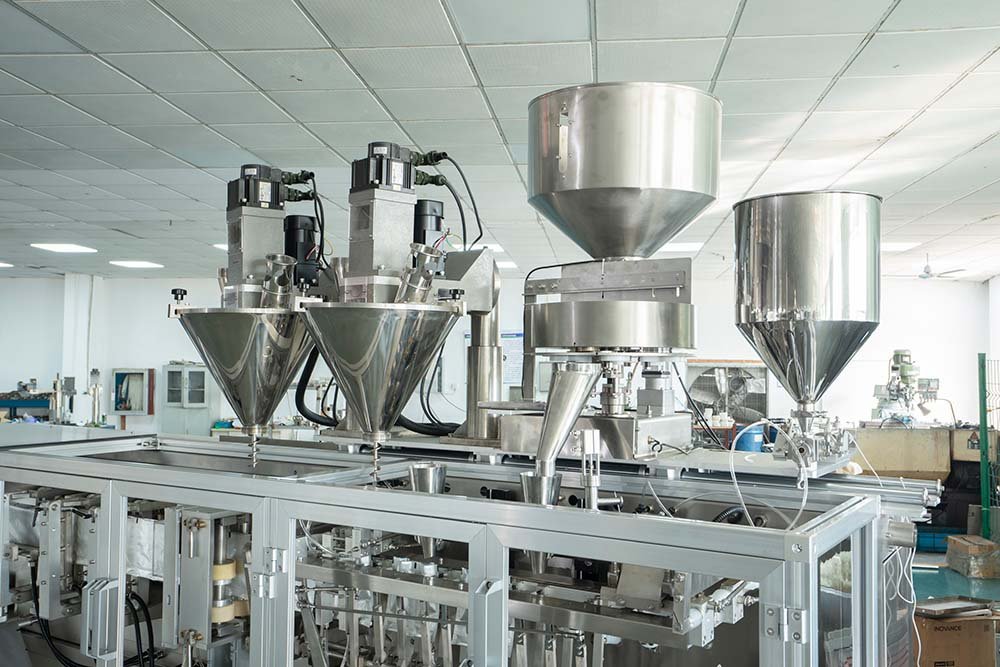
Auger filling route
A screw rotates inside a controlled powder path. Tooling geometry, screw revolutions, hopper condition, agitation, product presentation, cutoff and refill behavior all influence the delivered dose.
- Commonly evaluated for fine, cohesive or less free-flowing powders
- Needs a stable relationship between displaced volume and actual product condition
- Requires dust, dribble, compaction and package-mouth control
Weigh-based filling route
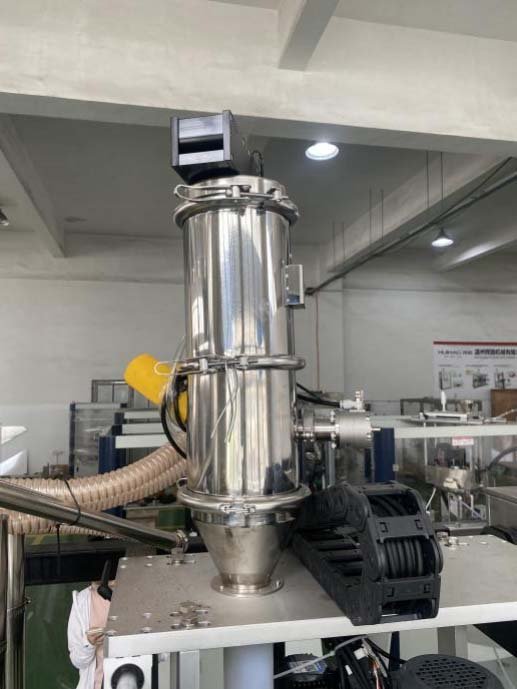
Product is fed into a weighing arrangement and released after the measured mass reaches its control target. The exact feeder and weighing architecture must match the powder and package process.
- Often evaluated for free-flowing or coarser products that release predictably
- Uses mass feedback, but still depends on stable feeding and cutoff
- Requires control of dust, settling, residual product and refill disturbances
Decision matrix
Compare product behavior before comparing machine quotations
The table is a trial-planning framework, not a universal suitability promise. A representative sample can overturn a preliminary assumption.
| Decision factor | What to review for an auger | What to review for weighing |
|---|---|---|
| Flow and cohesion | Can the hopper and agitation present powder consistently to the screw without bridging, rat-holing or uncontrolled compaction? | Can the feeder move and stop the product predictably without sticking, flooding or leaving unstable residual material? |
| Bulk density and aeration | Does mass per screw revolution change after transfer, refill, settling or continued agitation? | Does the feed behavior or settling time delay a stable weight result or disturb discharge into the pack? |
| Particle condition | Does the screw compact, shear or separate the approved blend? | Does staged feeding, vibration or discharge damage fragile pieces or separate a blend? |
| Dust and cutoff | Observe dust, tailing and dribble after the screw stops, then protect the seal area. | Observe airborne dust, feed cutoff, product retained in the weighing path and discharge spread. |
| Dose and SKU range | Confirm which auger, tube, recipe and change parts cover the priority doses. | Confirm the weighing range, feeder control, discharge amount and package timing across priority SKUs. |
| Refill behavior | Record the first doses after low-level recovery or hopper replenishment. | Record feeding and weight recovery while the supply system is replenished under normal operation. |
| Cleaning and changeover | Review access to hopper, auger, tube, agitation and product-contact interfaces. | Review feeder, weigh container, gates, discharge surfaces and retained-product points. |
| Acceptance evidence | Use the same approved powder lot, dose, package, run duration, refill events, sample method, defect rules and accepted-output calculation. | |
Preliminary route
Use product risk to decide which trial to run first
The powder needs controlled screw presentation
Fine or cohesive behavior, limited gravity flow, repeatable screw metering potential, compact machine integration or a proven product-specific auger route may justify an auger trial. Verify bulk-density change, compaction, dust and cutoff instead of assuming suitability.
The powder can be fed and released repeatably
Free-flowing or coarser behavior, a broad target-weight discussion or a need for direct mass feedback may justify a weigh-based trial. Verify staged feeding, cutoff, retained material, settling, dust and packaging-cycle coordination.
There is no automatic winner. Some products can be tested on more than one route. Compare them under one written acceptance basis and retain the reasons for the selected configuration.
Representative material trial
How to compare both fillers in a representative trial
Freeze the test material
Identify product lot, temperature, moisture-sensitive handling, bulk-density condition, particle range, blend state and sample preparation.
Freeze the dose and package
State minimum, nominal and maximum priority doses, permitted result, package drawing, opening dimensions and sealing boundary.
Include normal replenishment
Run the approved transfer and refill method. Record the first results after refill and any settling, aeration, bridging or feed-recovery behavior.
Measure more than average weight
Retain individual results and note dust, dribble, contamination, damaged product, rejects, interruptions and corrective adjustments.
Calculate accepted output
Report acceptable finished packs after rejects and nonconforming units are removed. Do not compare an isolated dosing cycle with a complete packaging-line result.
Complete packaging system
The filler decision is incomplete until the package handoff is tested
A dosing head does not produce a saleable pack by itself. The selected route must coordinate product supply, dosing, package presentation, fill timing, seal-area protection, inspection, rejects and discharge.
Use the powder filling machine systems guide to compare complete package formats. If controlled screw metering remains the likely route, review the integrated auger filling machine configuration. For roll-film flat sachets, connect the dosing decision to the powder sachet packing machine process.
Comparable RFQ brief
Send every supplier the same six input groups
Do not request one universal accuracy or output number without defining the product, dose, package and test conditions behind it.
Buyer questions
Auger filler vs weigh filler FAQ
Is an auger filler more accurate than a weigh filler?
There is no universal answer. The result depends on the real powder condition, dose, tooling or feed architecture, refill behavior, cutoff, sample method and package process. Compare representative trials under the same written acceptance basis.
Which filler is better for fine powder?
An auger is commonly evaluated for many fine or cohesive powders, but “fine powder” is not enough to approve the route. Dust, aeration, bulk-density change, compaction, flow, dose and package-mouth control must be tested. A different dosing route may still be more suitable for a specific product.
Can a powder weigh filling machine handle dusty products?
Possibly, if the feeding, containment, weighing and discharge system is engineered for the product. Dust can affect product control, cleanliness and package sealing on any route, so the buyer should define the extraction boundary and acceptance observations.
Does a weigh filler remove the need for checkweighing?
Not automatically. The required in-process checks, finished-pack verification and reject logic depend on the project acceptance plan. The filler measurement and the buyer's finished-pack evidence are related but not necessarily identical.
What sample should I send for a filler trial?
Send material that represents the intended production condition and state how it was stored, transferred and prepared. Include enough material for normal refill and run events, plus the intended package samples and priority dose range.
Continue the selection
Connect the dosing choice to the right commercial page
Application review
Send the powder, dose and package before choosing the filler
INMAYPACK will review the available material information, priority dose, finished package, line boundary and proposed test basis before recommending a project route.
Request a powder dosing review






