
INMAYPACK · Powder dosing & flexible-package equipment
Powder Filling Machine Systems
Match your powder. Choose your pack. Build the right line.
Compare powder filling systems for sachets, stick packs and pouches. Match the dosing equipment to your powder and target weight, then choose the packaging route for your production.
- Flat sachets
- Single & multi-lane sticks
- Roll-film pouches
- Premade pouches
Start with your powder, target weight, pack type and output. Photos or samples can follow during the equipment review.
Find your powder filling route
Start with your product. Go straight to the right equipment.
Already know the main challenge or pack format? Explore the matching equipment page, then send your product and production requirements.
Fine Powder Filling
Review auger dosing, powder supply, portion checks and dust management around the filling point.
Explore fine powder filling machines For supplied retail pouchesPowder Pouch Filling
Match a powder filler with premade-pouch opening, product delivery and sealing for your bag format.
Explore powder pouch filling machines For a single-lane stick projectSingle Lane Stick Packs
Compare compact stick-pack configurations with your powder, portion weight, film and production target.
Explore single lane stick pack machinesNot sure which route fits?
Start with your powder, target weight, pack type and output. Share the available details to begin the equipment review.
Flexible-package powder equipment
A powder filler and a packer. Selected as one system.
A powder filling machine meters product into a package. A complete powder filling and sealing system also forms the bag or handles a supplied pouch, presents it to the filler, seals it and discharges the finished pack.
This page covers powder systems for flexible packs. Choose the package architecture and then the dosing equipment. Bottle and jar fillers, bulk bags and 25 kg open-mouth bagging need a separate equipment review.
Choose the package first
Three pack formats. Several machine architectures.
These package drawings are concepts. Format compatibility follows the selected machine and approved material.
Single-dose or sample packs
Flat sachets
Submit a 3-side or 4-side-seal drawing, film structure and tear feature. Identify the required portion weight and output.
Slim retail or portion packs
Narrow stick packs
Submit the stick dimensions, back-seal layout and film. Identify whether a single or multi-lane review is needed.
Stand-up, zipper or flat bags
Retail powder pouches
Choose supplied premade pouches or a roll-film forming route. Send the closure details and approved finished-pack shape.
Powder packaging machine routes
See the equipment behind the package choice.
Compare the machine families below. Select the powder filler and included functions with the chosen packaging platform.
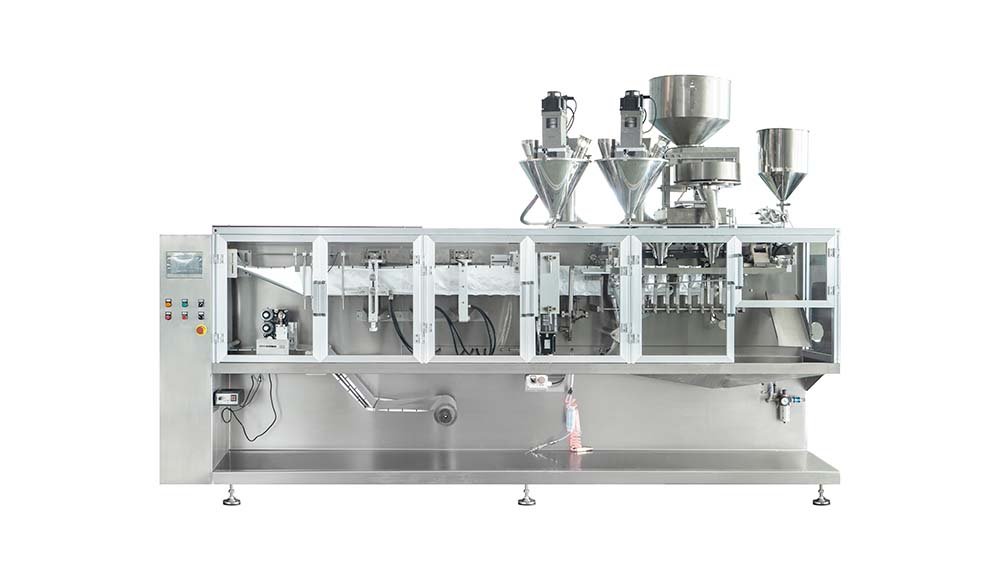
HS-180 HFFS reference
Single-lane powder sachets
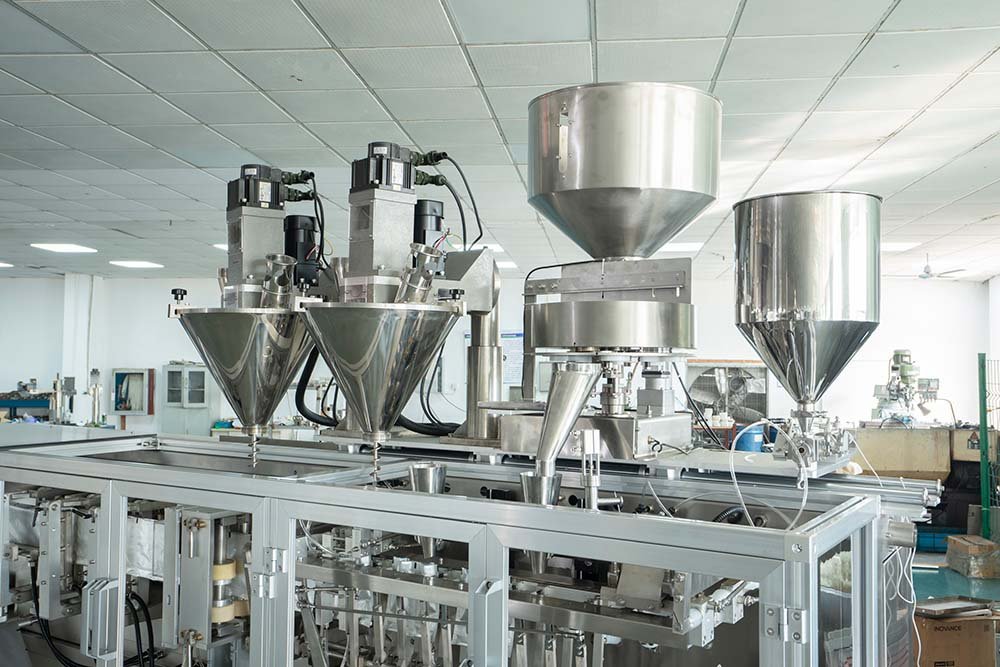
Form sachets from roll film and quote the auger, product feeder and pouch functions for your powder.
Explore Powder Sachet Machines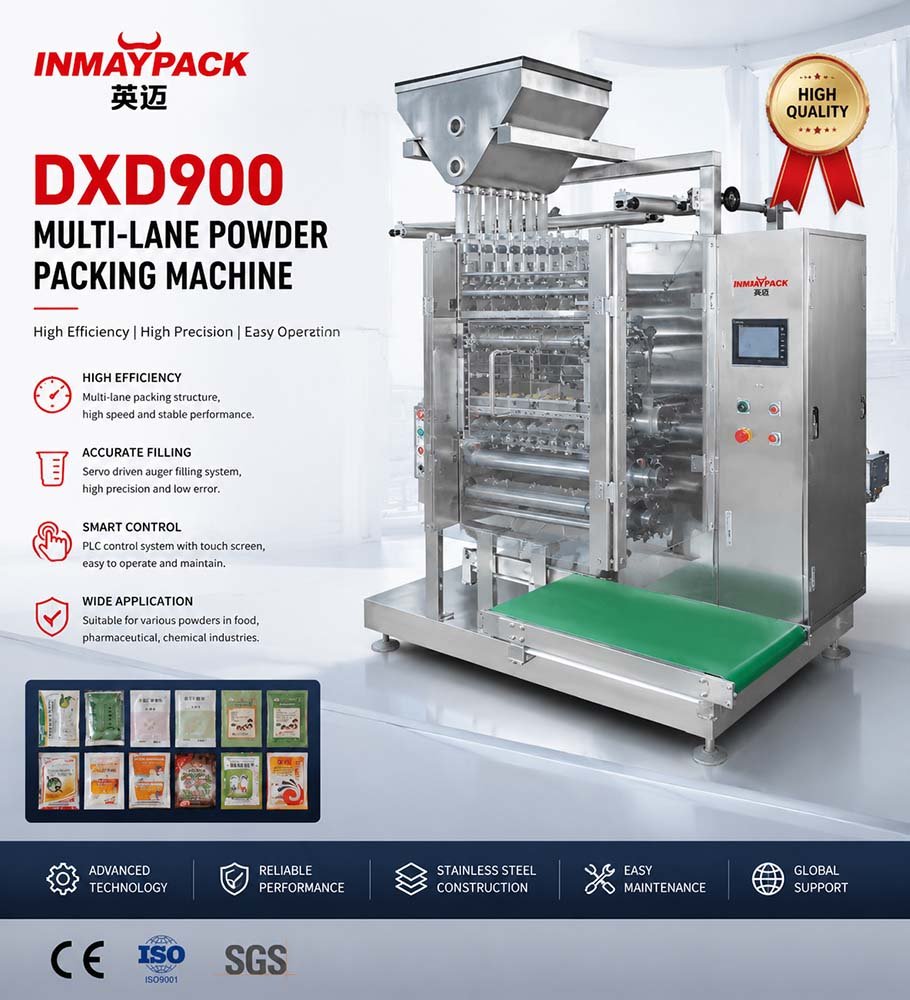
DXD-900 sachet reference
Multi-lane powder sachets
Compare the dose and film layout across parallel sachet lanes. Confirm lane count, sealing and accepted output.
Compare Multi-Lane Sachets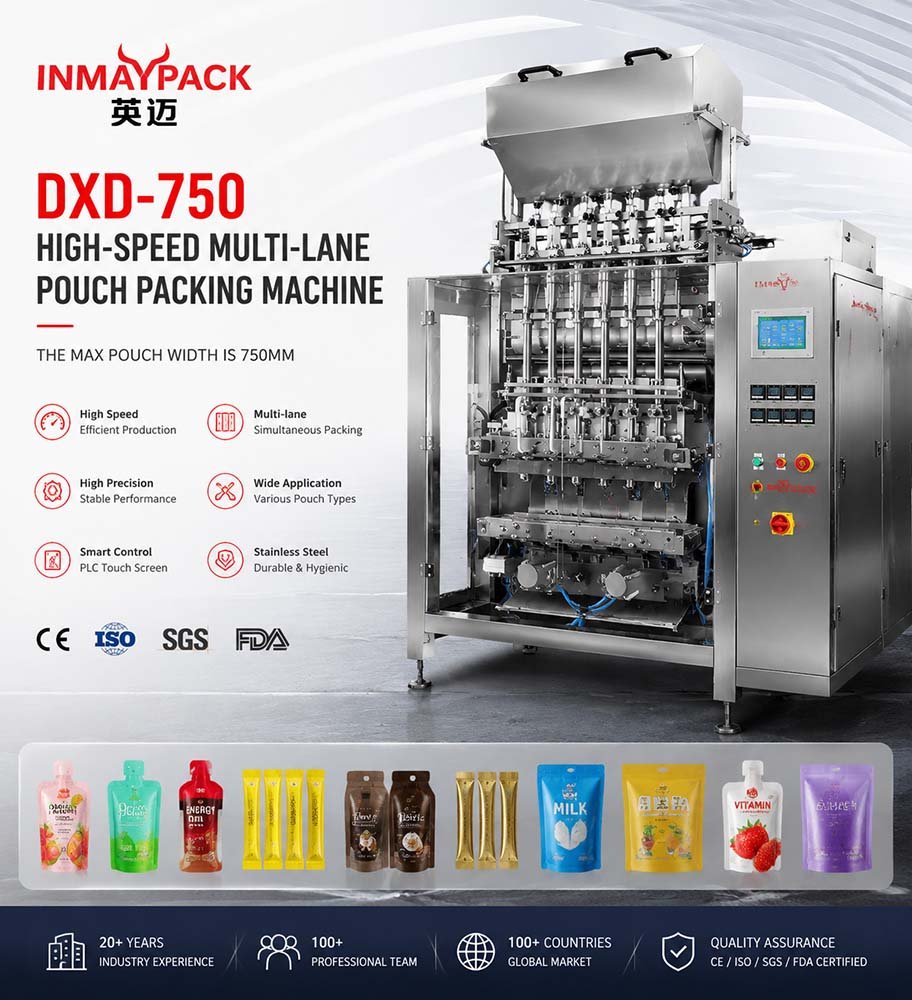
DXD-750 stick reference
Single & multi-lane sticks
Compare narrow stick-pack formats, lane layouts and powder dosing. The pictured DXD-750 is a multi-lane stick-pack reference.
Explore Stick Pack MachinesNeed a single-lane configuration? See single lane stick pack machines.
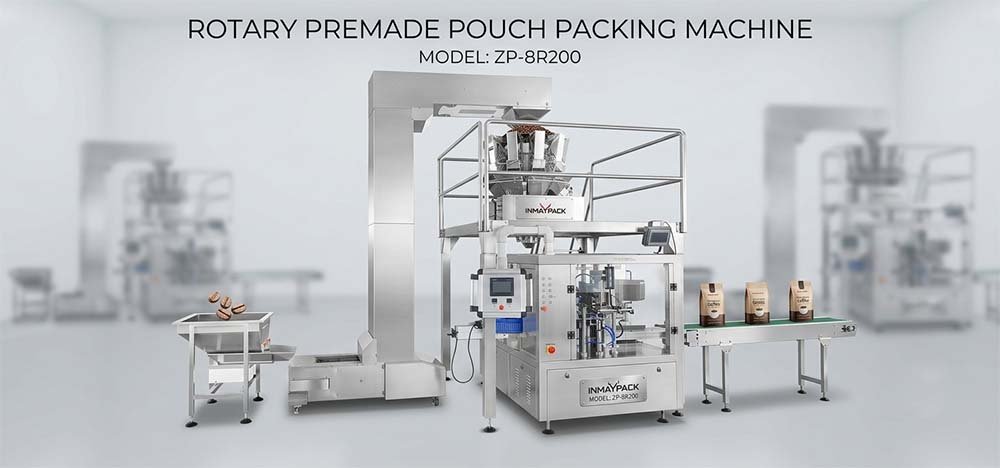
Rotary pouch platform reference
Premade powder pouches
Handle supplied stand-up, zipper or flat pouches and select the powder filling module for the product and dose.
Explore Powder Pouch FillingFor the bag-handling platform, see rotary premade-pouch machines.
Need a roll-film stand-up or zipper pouch?
Review the doypack packing machine or horizontal form fill seal machine route with the selected powder filler. Package forming and dosing have separate specifications.
Documented equipment references
Compare each model on its own specifications.
Compare the packaging platform, pack dimensions and listed operating range. Final powder dose and accepted output depend on the selected filler, product and test conditions.
| Reference model | Packing route | Listed speed | Package reference | Powder review |
|---|---|---|---|---|
| HS-180 | Single-lane HFFS sachet route | 40–70 bags/min | Listed pouch formats: 60 × 80 to 180 × 220 mm; 1 filling station. | Select the auger and feed equipment for the powder. |
| DXD-900 | Multi-lane sachets | Up to 500 bags/min | 4–10 lanes; W35–80 × L55–165 mm; maximum web width 900 mm. | Listed dosing range is volumetric, not a gram guarantee. |
| DXD-750 | Multi-lane stick bags | 280–480 bags/min | 6–10 lanes; minimum W15 × L80 mm; maximum web width 750 mm. | Confirm upper pack dimensions and the selected filling system. |
| ZP-8R200 | Rotary premade pouches | 20–60 pouches/min | W80–200 × L100–400 mm. | Select the powder filler separately; the machine family range is product dependent. |
The YS-61XBF document also lists a compact powder packer at 30–70 bags/min and 1–100 g. Its listed back-, 3-side- and 4-side-seal formats need a configuration review. DXD-900 is listed as sachet equipment; it is not substituted for a narrow-stick specification.
Powder dosing equipment
Choose how the powder is metered before fixing the packer.
Controlled screw dosing
Auger dosing
Review the screw, hopper, agitation, product level and cutoff with your powder. The supplied HS-180 and powder-pouch project documents include auger equipment. For materials that need closer flow and dust review, explore fine powder filling equipment.
Weight-based selection
Weigh-based dosing
Review the feeding and weighing arrangement where stable release of the product supports the required dose. Define the actual weigher and trial conditions.
Volume-based selection
Volumetric dosing
Provide the density range and dose basis before considering a volumetric route. Millilitres in a reference table cannot be converted to guaranteed grams without the product data.
Request a filler specification separate from the main machine.
The supplied powder-pouch project quotes an auger conveyor and filler for a 100–1,000 g requirement. Its wider main-machine range and filler-cycle references do not establish the final powder packing rate or accuracy. Review the auger filling machine guide and auger-versus-weigh-filler comparison for the dosing decision.
Your product determines the setup
Send the properties that affect filling and sealing.
Flow and settling
Describe bridging, compaction or product settling. Provide the sample condition and refill method you expect.
Density and dose
State nominal weights and density changes between recipes. Agree when and how each sample is weighed.
Dust at the seal
Identify dust and residual product concerns. Request a review of cutoff, filling clearance and seal inspection.
Recipe and cleaning
List recipe changes, allergens and the required cleaning method. Agree access and verification in the proposal.
See a reference configuration
Watch powder dosing and pouch handling together.
Use the operating footage to review the filling stage and package movement. Request a trial with your coffee, flour, spice or other powder and the material named in the proposal.
- Identify the displayed filler and packaging configuration
- Ask for samples at the proposed dose and output
- Agree dose, seal and finished-pack checks
Application routes
Choose the page for your powder product.
Each product and recipe still needs its own sample review.
Flour & starch
Send samples and describe storage, refill and compaction. Review the flour filling machine route.
Spices & seasoning
Identify recipes, oil, particle differences and flavor changes. Compare the spice filling machine route.
Milk & beverage powder
State moisture, aeration and settling concerns with the dose and pack volume. Review milk powder packing machines.
Protein & supplements
Compare protein powder filling machines for your blend, dose and retail pack. For slim portions, review supplement powder stick packs.
Coffee powder
Define ground or instant coffee, blend, dose and aroma requirements. Review the coffee powder filling machine project.
Detergent powder
Provide product-contact and dust-handling requirements. Review detergent packaging equipment for the wider scope.
For powdered pet-food supplements, review the pet food packaging guide and powdered dog-food supplement requirements alongside the product sample.
From powder supply to finished pack
Define the equipment around the filling station.
Ask for a layout that shows product infeed, dosing, package forming or pouch handling, sealing and discharge. Name each supplied module and the buyer-supplied connections.
- Product storage, refill and selected transfer equipment
- Named filler, hopper, tooling and product-level control
- Film forming or premade pouch presentation
- Required dust management and cleaning access
- Selected coding, inspection and reject handling
- Conveying, collection and downstream interfaces
Use powder packaging line planning to define the connected process. Review turnkey packaging solutions when the project extends into conveying or secondary packaging.
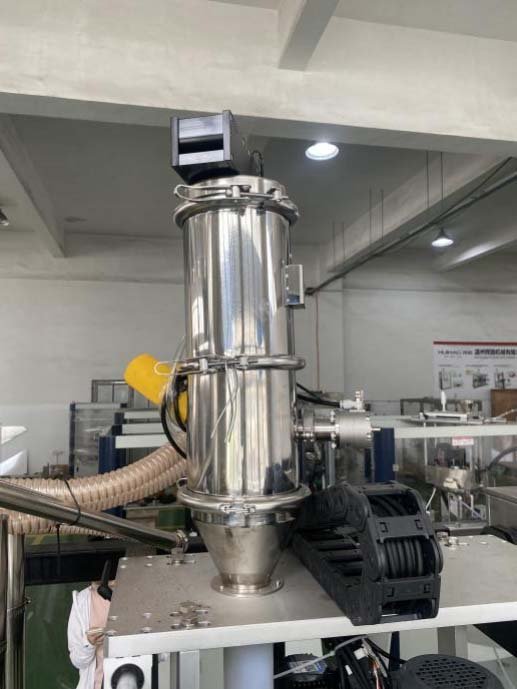
Sample trial & factory acceptance
Agree the test for your finished powder pack.
Product and material
Record the powder batch, storage condition, film or pouch and the approved format.
Dose and package
Agree the weight check, sample interval, seal inspection, appearance and code criteria.
Production events
Include refill, planned stops, restarts, recipe changes and the required cleaning checks.
Accepted output
Record conforming packs, rejects by reason, run time and the requested photos or video.
Powder filling machine price
Request a quote for the equipment you actually need.
Machine price follows the package route, filler, feeding, selected options and agreed test. Ask for an itemized configuration and current commercial proposal.
Main equipment
Packaging and dosing
- Named machine model and approved formats
- Roll-film forming or premade-pouch handling
- Filler, hopper, tooling and product-feed equipment
- Sealing, guarding and requested change parts
- Operating instructions and agreed factory test
Selected project functions
Options and line scope
- Dust extraction connection and transfer equipment
- Coding, checkweighing or selected inspection
- Reject handling, collection and conveyors
- Upstream and downstream control interfaces
- Installation, training and service requirements
Send one brief for the complete proposal.
Powder sample · all target doses · bag drawing and material · required output · changeovers · inspection · utilities · destination · connected equipment.
Before choosing a configuration
Powder filling machine FAQ.
What is a powder filling machine?
Which package routes are covered here?
Is DXD-900 a narrow stick-pack model?
What does the HS-180 reference show?
What are the DXD-900 reference ranges?
What are the DXD-750 stick references?
Should I choose auger or weigh-based filling?
Can volumetric figures be converted directly into grams?
Does the main machine speed equal the filler speed?
Can several powders run on the same system?
Are inspection and dust-handling devices included?
What should I send for a current powder machine price?
Start your powder packaging project
Send your powder and pack. Get a matched proposal.
Share the recipe, dose and required output. INMAYPACK can review the dosing equipment, machine route and line modules for your inquiry.