Flow and bridging
Describe free flow, cohesive behavior, rat-holing, bridging and the effect of storage or time in the hopper.
Packaging systems configured around your application Defined project scope

Complete powder packaging system
Configure a powder packaging line around the real product, target dose, package format, dust behavior, accepted output and factory interfaces. Compare multi-lane sachet, single-lane roll-stock and premade-pouch routes before fixing the machine scope.
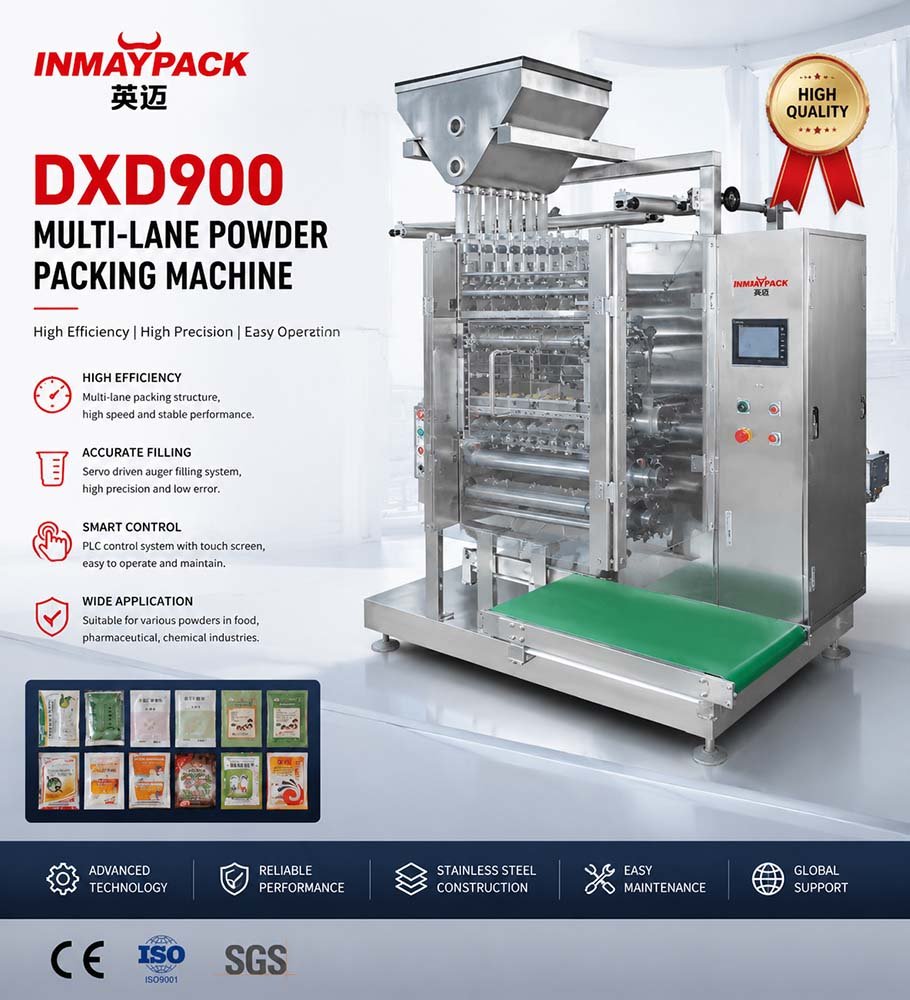
Scope and direct answer
A powder packaging line is the controlled path from approved bulk product to accepted finished packs. It can include product supply, conveying, hopper level control, metering, bag or pouch handling, sealing, coding, inspection, rejection and discharge. The exact boundary depends on the powder, package, factory and acceptance plan.
This page is for buyers defining a complete powder packaging production line. Use the powder filling machine page when the main decision is the dosing unit itself, the auger filling machine page when auger metering is already the selected route, and the powder sachet machine page when a single sachet application is already defined.
Product definition
Two powders with the same marketing name can behave differently during conveying, hopper refill, dosing and sealing. Submit representative production material and define the operating condition that the trial must reproduce.
Describe free flow, cohesive behavior, rat-holing, bridging and the effect of storage or time in the hopper.
Provide the normal range and any aerated or settled condition that affects dose volume, refill and package headspace.
State particle-size range, fines, agglomerates, fragile inclusions and any distribution that must remain consistent.
Record dust generation, airborne behavior and how conveying or agitation changes the product before dosing.
Define hygroscopic behavior, caking risk, temperature limits and the allowed exposure during supply and changeover.
State product-contact requirements, allergen or cross-contact controls, disassembly, recovery and inspection access.
Package-route decision
The package route changes the web or pouch supply, dosing arrangement, sealing process, changeover work and inspection boundary. Compare complete routes under one product and one accepted-pack definition.
One wide roll can feed parallel forming and dosing lanes for approved small sachets or stick packs. Cross-lane setup, refill behavior and lane-specific rejects belong in the FAT.
A vertical or compatible form-fill-seal route makes bags from an approved web. Forming set, bag geometry, product clearance and seal contamination are controlled together.
Supplied pouches are picked, opened, filled and sealed. Empty-pouch dimensions, zipper or fitment geometry, mouth opening and powder at the seal must be included in testing.
| Decision | Multi-lane sachet | Roll-stock bag | Premade pouch |
|---|---|---|---|
| Package supply | Approved wide web and lane layout | Approved roll stock and forming set | Approved converted pouches and samples |
| Main interface | One dosing path and setup per active lane | Metering into the forming tube or approved transfer path | Dosing into a controlled open pouch |
| Changeover evidence | Lane parts, web path, recipe and cross-lane checks | Forming set, film path, recipe and first-off bag | Magazine, grippers, opening, guides and first-off pouch |
| Acceptance focus | Conforming output by lane and total | Conforming output through refill and film events | Pouch pickup, opening, fill, seal and reject performance |
Package, utilities and changeover
A useful powder packaging line specification covers the range that production will actually run. The smallest and largest dose, every priority package, normal product condition and available factory services must be visible before tooling and controls are fixed. Otherwise, a quotation may describe one successful sample while leaving daily changeovers and utilities undefined.
State width, length, gusset or bottom geometry, seal widths, zipper or fitment, code area, artwork repeat and the permitted dimensional condition.
Supply the intended roll stock or converted pouch from the approved source. Record laminate, sealant and storage condition without assuming substitute material behaves the same.
Check the actual powder at minimum, nominal and maximum dose. Package dimensions alone do not prove usable volume, settled fill height or clean sealing clearance.
Confirm voltage, frequency, phase, compressed air and any extraction, vacuum, cooling or network service available at the installation point.
List the controlled settings, forming sets, guides, dosing tools, pouch parts and inspection recipes required for each approved product and package family.
Define which dose, seal, code, dimensions, appearance and inspection checks must pass after a product or format change before production is released.
Dosing and refill
A filler cannot maintain a useful result if the hopper alternates between starved, over-aerated and compacted product. The line review must cover how bulk powder reaches the dosing hopper and how refill is controlled during normal operation.
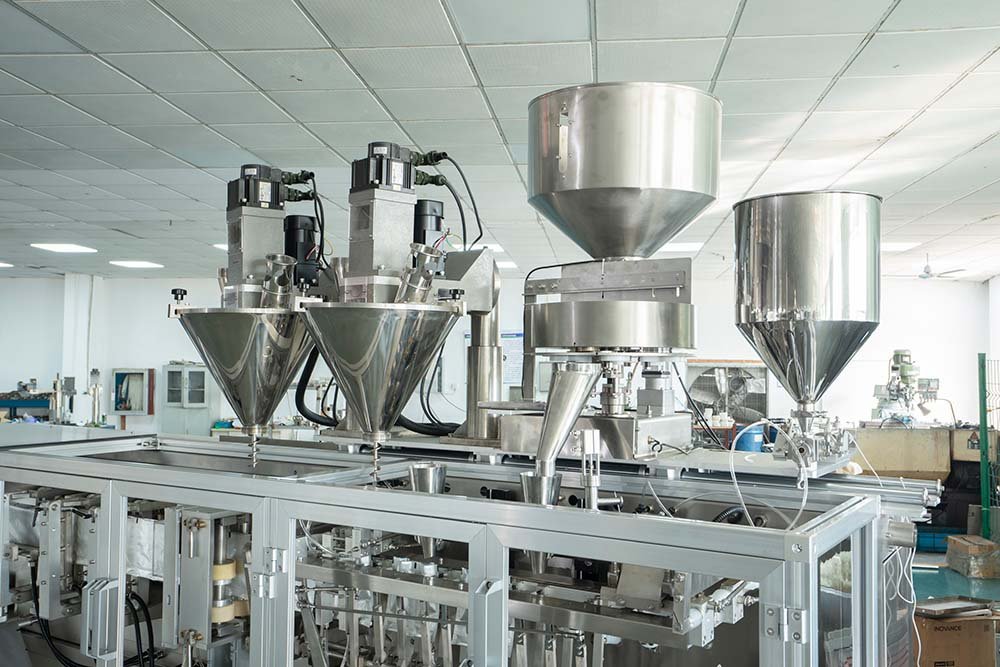
Line architecture
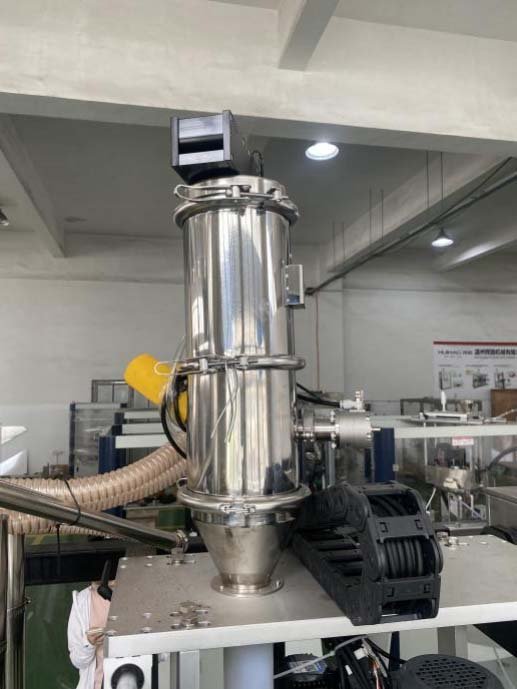
Dust and seal protection
Dust affects housekeeping, sensors, product loss, operator access and the sealing area. Its control cannot be reduced to a generic accessory added after the bagger has been selected.
Identify charging, transfer, hopper, dosing and package-fill locations where airborne product or deposits may occur.
Define headspace, settling, extraction or other approved measures and the defect rule for powder in the seal.
List removal, recovery, disassembly and inspection steps for conveyors, hoppers, fillers, chutes and the package path.
Use the actual material hazard information and local requirements to define grounding, extraction and other applicable controls.
RFQ and quotation control
A comparable quotation needs the same product, package, line boundary and acceptance definition. A machine list without these inputs does not reveal whether two proposals solve the same task.
Name, composition, particle range, density condition, flow, dust, moisture sensitivity, representative samples and hazards.
Minimum, nominal and maximum target, tolerance, measurement method, priority recipes and permitted product loss.
Roll film or premade pouch, flat drawing, material, sealant, zipper or fitment, artwork, code area and approved samples.
Required conforming packs per minute or shift, run duration, normal refills, planned stops and downstream limitations.
Layout, elevation, utilities, environment, product supply, dust-control boundary, inspection and downstream interfaces.
FAT material, sample plan, defect rules, retained records, training, documentation and handover requirements.
Scope control
| Scope area | Must be defined | Quotation should state |
|---|---|---|
| Bulk product supply | Container, charging, transfer, elevation and refill method | Included equipment, buyer-provided items and connection point |
| Primary package | Film or pouch specification, drawings, samples and recipe family | Approved formats, tooling, consumables and excluded sizes |
| Inspection | Checks, sampling, rejects and verification method | Included devices, reject path, signals and retained evidence |
| Dust and cleaning | Material condition, containment, extraction and access requirements | Machine provisions, site services and buyer safety responsibilities |
| Downstream | Discharge height, orientation, accumulation and stop response | Handoff point, exchanged signals and excluded handling |
| Acceptance | Material, duration, normal events, defects and accepted output | FAT boundary, records, responsibilities and release criteria |
Factory acceptance
Product and package lots, recipe, tooling, utilities, inspection settings and agreed defect definitions.
Powder refill, film or pouch replenishment, planned stop, starvation, downstream blockage and restart.
Dose checks, package and seal result, code, rejects, retained samples, event log and corrective action.
Conforming finished packs after removing rejects and nonconforming units under the agreed run basis.
Do not approve the line from headline machine speed alone. Record the tested product, package, active lanes, refill and stop events, run duration, staffing, rejects and definition of a conforming finished pack.
Machine-family references
Compare dosing principles after product behavior, dose range and refill condition are defined.
Review auger tooling, hopper condition, cutoff behavior and the interface with the selected package machine.
Connect powder dosing with approved film, sachet geometry, lane arrangement, sealing and inspection. For narrow single-dose food supplements, review the supplement powder stick-pack application.
Review pouch pickup, opening, filling, settling, sealing and reject behavior as one process.
Define controls, utilities, inspection and upstream or downstream interfaces beyond the primary packer.
Review how product, dosing, film, sealing, coding and evidence connect during sachet manufacture.
Buyer questions
Selection starts with the powder condition, dose range, package route and accepted output. The dosing method and packaging platform should be confirmed by representative material and package trials rather than selected from the product name alone.
No. An auger is a common option, but the appropriate method depends on flow, aeration, density, particle profile, dose and tolerance. The complete refill and package interface also needs review.
Some machine families support a range of approved formats, but sachet, roll-stock bag and premade-pouch routes have different material paths and tooling. Do not assume one platform covers all formats until drawings, samples and trials confirm it.
Send representative product data and samples, dose range, package drawings and materials, required accepted output, factory layout, utilities, inspection, cleaning and FAT requirements. State which upstream and downstream equipment is included.
Specify conforming finished packs over an agreed run that includes normal refill, replenishment, stops and restarts. Record the product, package, active configuration, rejects, staffing and downstream condition.
The project should define package headspace, product cutoff, settling, extraction or other approved measures plus a visible defect rule and inspection plan. The method depends on the actual powder and package.
Technical references
Project review
Send the product condition, dose range, film or pouch, accepted output, factory interfaces and FAT requirements. INMAYPACK will review the application before recommending a configuration.