Inside scope
Approved dry supplement blends packed into roll-film stick packs with a project-matched powder dosing system.
Packaging systems configured around your application Defined project scope

Small-dose roll-film powder packaging
Configure a supplement powder stick-pack system around the real blend, dose range, film, finished stick, lane plan, cleaning boundary and accepted output. This page covers powdered food supplements in roll-film stick packs—not tablets, capsules, jars, tubs or finished nutrition bars.
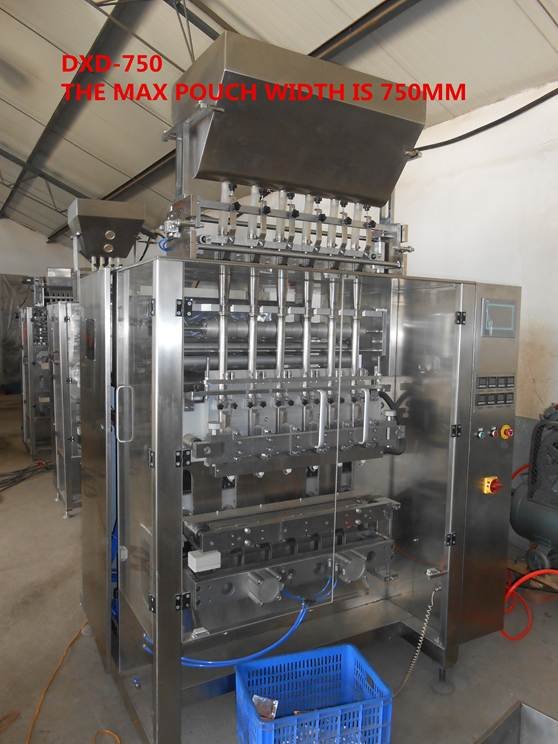
Application boundary
A supplement powder stick-pack machine forms narrow packs from approved roll film, meters the powder, seals the package and discharges finished sticks. A usable project definition must connect those functions to the blend behavior, dose, film, cleaning plan, inspection method and required conforming output.
Use the main stick pack machine page to compare machine families and configurations. Use this application page when the buyer task is specifically a protein, collagen, electrolyte, vitamin, mineral or powdered drink supplement in a narrow single-dose stick.
Approved dry supplement blends packed into roll-film stick packs with a project-matched powder dosing system.
Wider flat sachets belong on the powder sachet route; larger stand-up or zipper pouches need a pouch-machine review.
Tablets, capsules, jars, tubs, open-mouth bulk bags, finished bars and downstream case packing are not assumed here.
Product definition
“Protein powder” or “supplement powder” is not enough for machine selection. Sweeteners, flavors, minerals, fibers, botanical particles and anti-caking ingredients can change flow, dust, compaction, refill behavior and cleaning work. Submit production-representative material and define the condition the trial must reproduce.
Record bridging, rat-holing, flooding, compaction and the effect of hopper residence or agitation.
Give the normal range plus aerated and settled conditions that affect dose volume and stick headspace.
State particle-size range, fines, agglomerates, fragile pieces and any visible ingredients that must remain distributed.
Describe airborne dust, product buildup and how conveying, refill or cutoff affects the sealing area.
Define caking or hygroscopic behavior, exposure limits, storage condition and the required packaging-barrier basis.
Identify allergens, cross-contact controls, disassembly, recovery, inspection access and release after changeover.
Stick-pack definition
A narrow pack that looks acceptable in a drawing can still be unsuitable for the real dose, powder condition or seal area. Release the film and finished-stick definition together with representative product.
State stick width and length, seal widths, cut condition, tear feature, code area and permitted dimensional variation.
Provide the intended laminate, thickness, sealant, roll width, core and winding direction from the approved converter.
Give the printed repeat, eye-mark layout, registration tolerance, lane artwork and acceptable code position.
Verify minimum, nominal and maximum dose in the real powder condition, including settled fill height and clean sealing clearance.
The buyer and film supplier define the moisture, oxygen, light and shelf-life requirements for the finished product.
Define visual defects, seal continuity, strength or leak test, conditioning, sample plan and acceptance limits.
Dosing and refill
Metering cannot be separated from product supply. A short steady run may hide dose drift after hopper refill, powder aeration, compaction, a planned stop or restart.
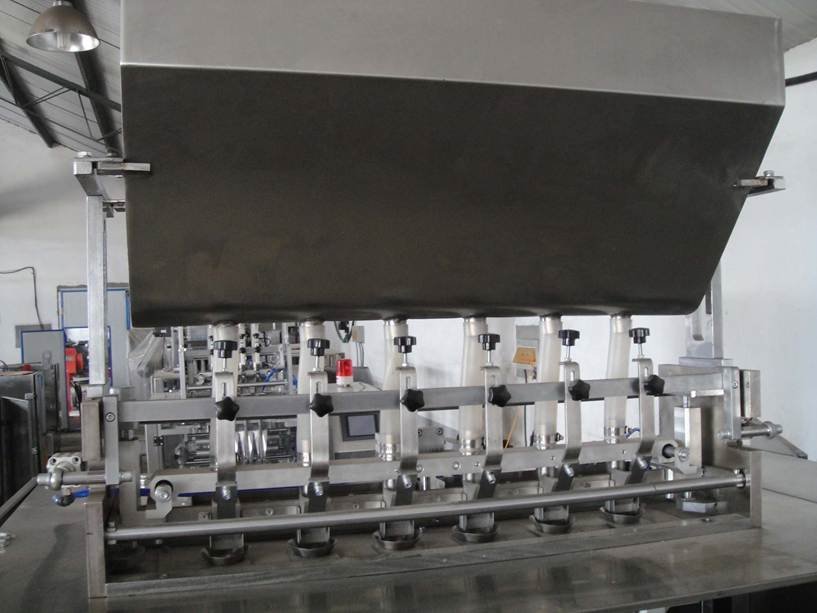
Architecture choice
| Decision | Single-lane stick route | Multi-lane stick route |
|---|---|---|
| Best comparison basis | Conforming sticks per minute or shift under one approved recipe | Conforming sticks by lane and total under the same accepted-pack definition |
| Dosing review | One dosing path, cutoff and verification sequence | Distribution, tool setup and result must remain traceable by active lane |
| Film and forming | One web path and one forming set | One wide web with parallel forming, sealing, registration and cutting paths |
| Changeover | Fewer parallel parts to release | Every active lane, tool, seal and code position must be checked |
| FAT focus | Refill, stop/restart, dose, seal, code and accepted output | The same events plus cross-lane variation and lane-specific rejects |
More lanes are not automatically the better quotation. Compare the complete machine, filler, film, changeover, inspection and accepted output under the same supplement powder and package conditions.
Hygiene and changeover
The machine supplier needs a testable cleaning and product-contact boundary. Terms such as “food grade,” “GMP ready” or “easy clean” are not enough to define materials, access, disassembly, cleaning method, verification or release.
List hoppers, feeders, tools, chutes and other contact surfaces. State required materials, finishes, seals and certificates.
Define product removal, recovery, dry or wet cleaning, disassembly, tools, operator count and the start/end boundary.
State visual inspection, residue or allergen verification, retained records and who approves the line before the next product.
RFQ control
Quotations are comparable only when every supplier receives the same powder, dose, stick, output and acceptance definition.
Formula family, flow, density, particles, dust, moisture sensitivity, allergens, samples and safety information.
Minimum, nominal and maximum target, tolerance, measurement method and priority recipe.
Drawing, laminate, roll data, artwork repeat, code area, tear feature, barrier basis and approved samples.
Required conforming sticks per minute or shift, run duration, normal refills, planned stops and staffing.
Layout, utilities, product supply, dust-control boundary, environment, inspection and downstream handoff.
FAT material, sample plan, defects, rejects, retained records, cleaning demonstration and release criteria.
Factory acceptance
Related routes
Compare the core roll-film stick-pack machine families and configuration boundaries.
Compare dosing routes after powder behavior, dose and refill condition are defined.
Choose a wider flat-sachet route when the finished pack is not a narrow stick.
Define upstream supply, conveying, inspection and downstream scope beyond the primary packer.
Prepare film, sealant, roll, print and finished-pack evidence for supplier trials.
Review parallel product, forming, sealing, cutting and lane-control paths.
Questions buyers ask
Possibly, but a shared marketing category does not prove a shared configuration. Compare flow, density, particles, dust, moisture sensitivity, dose range, cleaning and the approved film for every priority blend. The final tooling and changeover scope must be confirmed by trial.
No dosing method should be selected from the product name alone. Representative product trials, dose range, flow behavior, refill condition and acceptance method determine the project-approved filler.
Choose lane count from required conforming output, dose verification, film and stick dimensions, changeover work and the buyer's ability to inspect and control every active lane. Headline lane count alone is not a selection rule.
No. The buyer determines product classification, destination-market rules, quality controls and validation. The supplier can configure equipment and provide agreed evidence against the approved URS and FAT; that does not certify the finished supplement.
Send representative powder, dose range and tolerance, finished-stick drawing, intended film and roll data, target conforming output, cleaning requirements, utilities, inspection plan, destination and FAT requirements.
Technical references
Prepare a comparable quotation
INMAYPACK will review the application boundary before recommending a stick-pack configuration. Final suitability and performance follow the approved product, film, machine scope and test method.