Finished flat sachet
Define three-side or four-side seal, width, length, perimeter seal layout, cut style, tear feature, print registration and the acceptable finished appearance.
Packaging systems configured around your application Defined project scope

Configure a DXD900 or DXD1200 multi-lane sachet packing machine for four-side-seal flat sachets. INMAYPACK matches the usable web width, 4–12-lane layout, filling system, seal geometry, controls and accepted-output test to the real product, film and pack drawing.
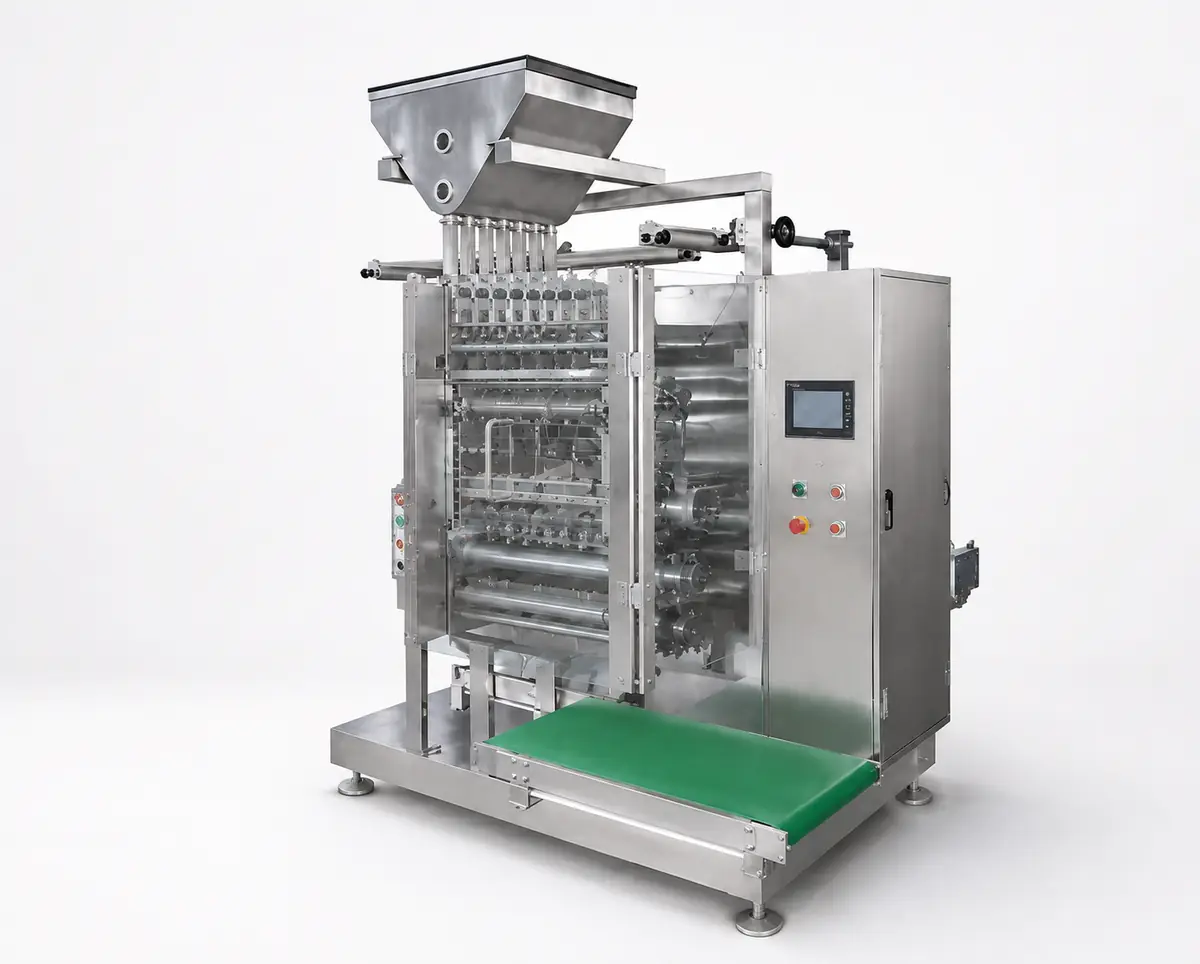
A multi-lane sachet packing machine divides one wide roll-film web into several parallel flat-sachet paths, then meters, seals and cuts the packs in a controlled sequence. DXD900 and DXD1200 are the relevant INMAYPACK routes here. More lanes can raise aggregate output only when product distribution, dosing, registration, perimeter sealing and discharge remain stable across the full web. Compare accepted good sachets under one agreed test—not lane count or empty-cycle speed alone.
The same number of lanes can produce very different results when the pack geometry, product behavior or inspection rule changes.
Define three-side or four-side seal, width, length, perimeter seal layout, cut style, tear feature, print registration and the acceptable finished appearance.
Provide the real material, minimum and maximum dose, density or viscosity, flow behavior, dust, foam, drip, temperature and cleaning constraints.
Confirm film structure, thickness, roll dimensions, maximum web width, print repeat, seal initiation behavior and storage condition.
Define how product reaches each lane, how refill is controlled and how lane-to-lane dose variation will be sampled and corrected.
State good packs per minute, test duration, allowable defects, sampling frequency, planned stops and the rule for repeating a failed run.
Identify upstream product feed, coding, inspection, reject handling, counting, collection or cartoning interfaces that belong in the quotation.
These are source-sheet reference ranges, not interchangeable promises. Final configuration and accepted output depend on the supplied product, dose, film, pack drawing and FAT method.
Swipe horizontally to compare every model and specification.
| Model | Recorded pack type | Maximum film width | Recorded pack dimensions | Recorded lanes | Recorded aggregate speed | Recorded filling range | Machine size / weight |
|---|---|---|---|---|---|---|---|
| DXD900 | Flat / four-side-seal sachet | 900 mm | Width 35–80 mm; length 55–165 mm | 4–10 | Maximum 500 sachets/min across all lanes | 1–120 ml | 1500 × 1540 × 2200 mm / 1200 kg |
| DXD1200 | Flat / four-side-seal sachet | 1200 mm | Width 35–80 mm; length 45–220 mm | 4–12 | Maximum 500 sachets/min across all lanes | 1–45 ml | 1500 × 1750 × 2200 mm / 1500 kg |
Accuracy boundary: the DXD source sheet records ±1–5%, depending on filling characteristics. The horizontal-cut reference is up to 20–50 cycles/min; cycles and accepted sachets/minute are not interchangeable. The issued quotation and FAT plan must define the product, dose, filler, sampling method, tolerance and accepted-output basis.
The DXD900 or DXD1200 frame does not establish product compatibility by itself. Each proposal should name the selected metering principle, product distribution method, refill control, contact-parts scope and cleaning access.
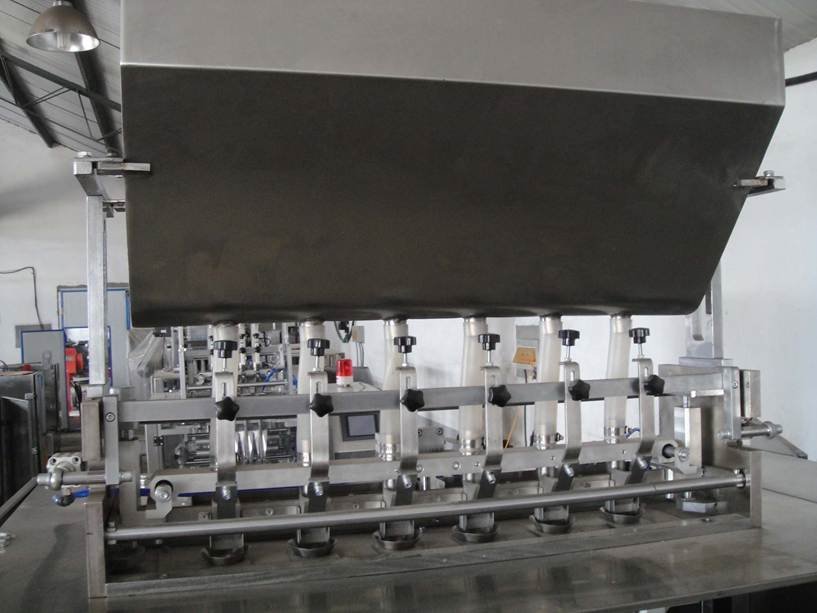
This page covers DXD900 and DXD1200 flat-sachet configurations. DXD-320 and DXD-750 are the recorded narrow back-seal stick-bag routes. They share a multi-lane concept but not the same forming, sealing, cutting or keyword intent.
Use the dedicated Stick Pack Machine page to compare narrow pack width, longitudinal seal position, 1–10-lane arrangements, dose path, print repeat and discharge.
Compare DXD stick pack configurations →Continue on this page when the project needs four-side-seal flat sachets across a 900 or 1200 mm maximum film web. Confirm perimeter seal width, tear feature, registration, cutting and finished-pack inspection.
Review flat sachet geometry →The DXD source sheet lists aluminum/plastic, paper/plastic and plastic/plastic composite-film families. This does not approve every structure: sealing behavior, intended product use, print control and the target market still require project confirmation.
The station sequence varies with the selected pack and filler, but the acceptance logic should follow the same controlled chain.
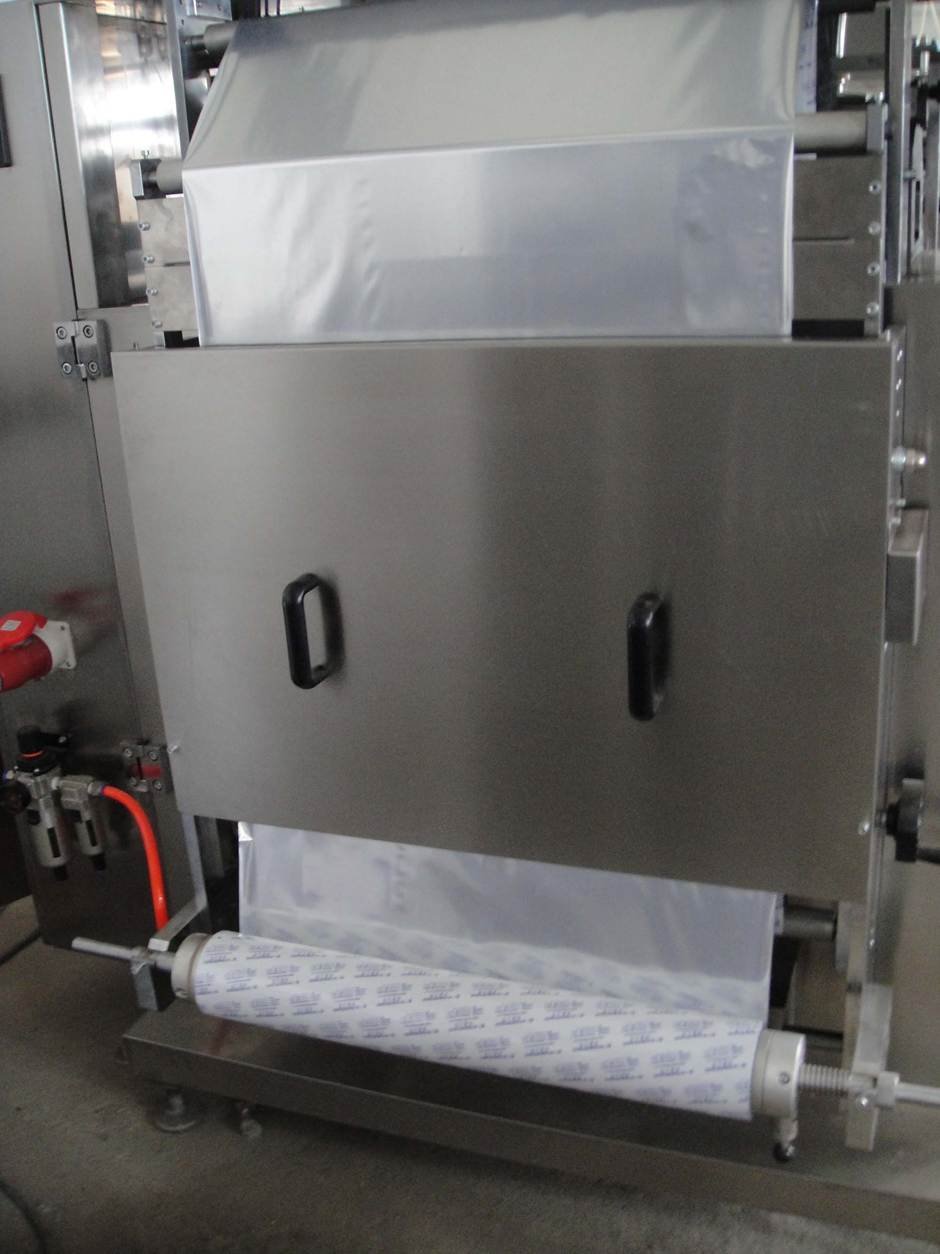
Control roll condition, tension, web path and splice handling.
Maintain print position and repeat across the usable web.
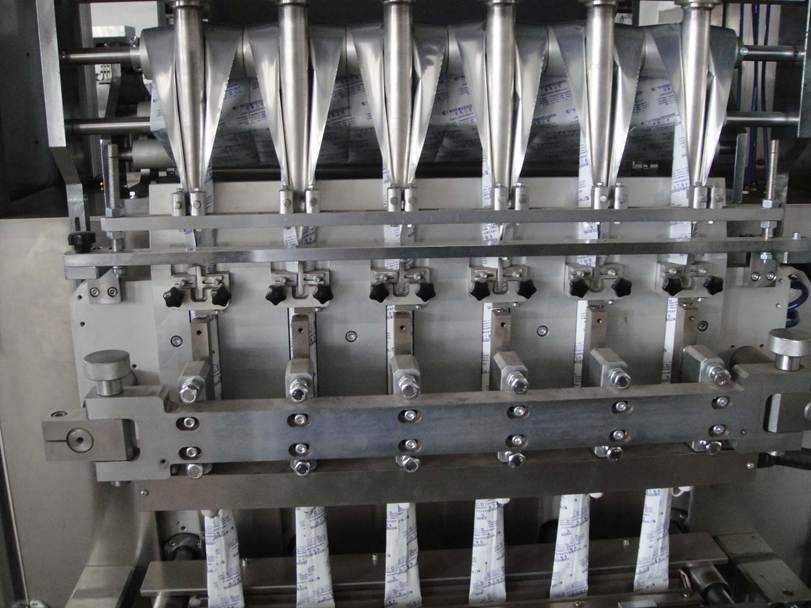
Hold the agreed pack geometry at every forming lane.
Distribute and dose the real product under refill conditions.
Protect the sealing window, registration and cut quality.
Count good packs, defects, stops and lane-level evidence.
The source photos below come from the DXD-750 family and are used only to illustrate common multi-lane web handling and parallel forming concepts. They are not presented as DXD900 or DXD1200 configuration photos. The final project drawing must show the supplied flat-sachet tooling, access and cleaning boundary.
A useful FAT reproduces the product, pack and operating conditions that matter in production. It records both aggregate performance and problems isolated to one lane.
State whether refill, film splice, normal adjustment and planned operator actions are included in the test window.
Important: the DXD900 and DXD1200 source maxima are aggregate figures across all lanes. They are not a per-lane rate and do not apply automatically to every product or pack.
A lower machine price is not directly comparable when the filler, product feed, inspection, discharge, change parts or acceptance evidence sits outside the quotation.
Record the approved DXD model, lane count, web and pack geometry, forming, sealing, cutting, controls, guarding and documented utilities.
List filler or metering system, refill equipment, dust or drip controls, coding, inspection, reject handling, discharge, counting and downstream interfaces.
List product and film samples, approved pack drawing, utilities, site conditions, required documents, FAT criteria, destination requirements and commissioning expectations.
We would not release a lane count from a speed target alone. First confirm one stable product-to-pack path: repeatable dosing, controlled registration, a usable seal window and an accepted discharge. Then verify that the same result holds across the complete web during refill, normal adjustment and restart. This exposes cross-lane risk before it becomes a production problem.
Share the real product, dose range, film specification, finished-pack drawing, target accepted output and line boundary. INMAYPACK will review the lane, filler, controls and FAT scope before recommending a configuration.