Packaging systems configured around your application Defined project scope

Share your requirements • sales@ewpackmachinery.com

01 / Choose the package

Home / Sachet Packing Machine / 3 & 4 Side Seal

FLAT SACHETS · ROLL-FILM HFFS

3 & 4 Side Seal Sachet Packing Machine

Roll-film production for three-side and four-side sealed flat sachets. Match the package geometry, dosing system and line interfaces to your product before fixing the HS-130 configuration.

Send the product, fill range, finished sachet drawing and required accepted output. We will review film forming, filling, sealing and downstream scope before recommending the production configuration.

Compare the seal formats ↓

Need liquid filling details? Start with the HS-130 liquid sachet machine and its model-specific reference specifications.

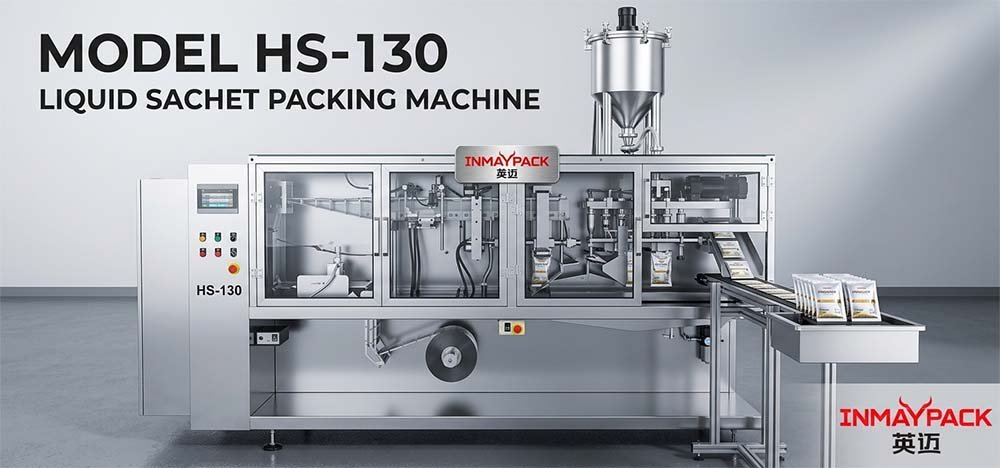
HS-130 / HFFSLIQUID CONFIGURATION SHOWN
HS-130 liquid configuration for horizontal flat-sachet packaging
HS-130 liquid configuration shown. Filling equipment and format tooling are specified for the proposed application.
  • 3-side or 4-side format review
  • Application-matched dosing
  • Roll-film production
  • Defined sample test
Package supplyRoll-film HFFS
Seal geometry3-side or 4-side
Filling systemMatched to the product
Acceptance basisDefined sample test
02 / Seal format & film

Approve the seal format before comparing machine speed

A three-side seal and a four-side seal describe the finished pack perimeter. They do not, on their own, specify the filler, usable volume, output, barrier performance or complete machine architecture. Use the approved package drawing to connect the buyer’s pack requirement to a feasible web layout and sealing sequence.

3-side seal flat sachet conceptual outline
3-side sealOne folded edge · three sealed edges

3-side seal sachet structure

A folded edge closes one side; the other three edges are sealed. The fold and seal positions must match the finished-pack drawing.

Confirm before tooling

Approve fold orientation, usable internal area, seal widths, graphics and the required opening feature. Confirm the forming and sealing arrangement for the intended laminate.

4-side seal flat sachet conceptual outline
4-side sealA sealed perimeter on all four edges

4-side seal sachet structure

All four edges of the flat sachet are sealed. The web layout and station arrangement determine how the perimeter is formed and closed.

Confirm before tooling

Approve the four seal bands, registration, cut positions and filled-pack appearance. Confirm the tooling, web preparation and changeover scope; do not assume a format change is only an HMI setting.

Conceptual package outlines; the approved drawing defines the actual fold, seal and opening positions.

Select the format for the product, handling, presentation and opening requirement. A four-side seal is not automatically more leak-resistant, and a three-side seal is not automatically a lower-cost production route. The result depends on laminate, seal geometry, product contamination, operating settings and the inspection method. Compare accepted finished packs under the same test conditions.

Freeze the film and artwork inputs

  • Finished sachet drawing

    Provide finished sachet width and height, seal bands, intended fill, headspace, tear notch and cut positions. Show which dimensions are external and which define the usable filling area.
  • Laminate and seal layer

    Identify laminate layers, thickness and the heat-seal layer. Supply the converter’s sealing guidance and representative production film. Barrier properties and shelf-life requirements belong to the product/package specification.
  • Web and print registration

    Provide web width, repeat length, registration-mark dimensions and location, reel/core information and winding orientation. Review these together with the model-specific reel and web limits.
  • SKU and changeover range

    Include the complete SKU list, printed artwork and changeover priorities. Changes to film structure, print registration or package size can require different setup work and trials.

For printed film, review HFFS registration control with the eye-mark, repeat and cut-position inputs.

Recyclable or mono-material film requires its own forming, sealing and handling trial. Do not infer compatibility from the word “recyclable.” Confirm jaw conditions, dwell, cooling, transport and the approved test result for the selected structure. For a closer format comparison, read 3-side versus 4-side seal sachets.

03 / Filling configuration

Match the dosing system to the actual product

The HS-130 source proposal describes a roll-film HFFS platform for three-side and four-side sealed flat packs, with filling methods selected for the material. Its quoted liquid/paste example includes a piston pump. A platform’s ability to accept different fillers does not mean one supplied dosing system handles every product.

Liquids, sauces and pastes

Describe viscosity at the filling temperature, density, particles, foaming and settling. Review pump selection, refill stability, nozzle access and cutoff. The source’s piston-pump configuration is an application example; the intended product must establish the suitable dosing arrangement.

Review liquid sachet filling

Powders

Provide bulk-density variation, flowability, dust, moisture sensitivity and target mass. Auger dosing and powder refill need their own review. Powder entering the seal area can affect the finished pack, so trial the dose and final seal together. Use the dedicated powder route for a powder-focused quotation.

Review powder sachet configuration

Granules and free-flowing solids

State particle size distribution, fragility, fines, flow behavior and the measurement basis. Review the feeding and metering method, product drop and sachet opening. A film or pack that suits a liquid may need different filling clearance and handling for a granular product.

Compare granule packaging routes

Several products on one project

Identify which formulations genuinely share the line, their dose ranges and the difficult cleaning or filling condition. Request a configuration and changeover matrix. Treat filler changes, contact parts, tooling and operating recipes as specified scope rather than promising universal switching.

Compare the HS-180 multifunction platform

Review the pouch filling system selection guide when the product behavior or suitable dosing arrangement is still undecided.

Keep material and hygiene claims specific to the product path

The source proposal distinguishes exterior/frame materials, internal mechanisms and product-contact parts. It contains both a specific 316L contact-parts entry and a broader SUS316L/SUS304 reference. Ask the current equipment schedule to identify the selected material for each relevant contact component. An exterior stainless finish does not establish the material of the complete wetted path.

Define hoses, seals, tank, pump, nozzles, drains and removable parts included in cleaning. Agree access, disassembly and the customer’s verification responsibilities. Food, chemical or personal-care use needs an application-specific review of compatibility, cleaning and required documentation; listing an industry does not establish regulatory suitability for a particular product.

Choose the next page by the decision you need to make. For liquid dosing and the HS-130 model reference, use liquid sachet packing. For auger configuration and powder behavior, use powder sachet packing. This page remains focused on the seal format and its production configuration.

04 / Production process

Connect film, filling and sealing to one production scope

The HS-130 reference uses horizontal form-fill-seal operation with intermittent pouch transport and one filling station. Specify the actual station sequence, filler and discharge arrangement on the project layout. Mechanical cycles, packs discharged and accepted finished sachets are different measures.

Prepare the roll film

Review reel access, web tracking, print registration and the forming arrangement for the approved sachet. Agree splice, reel-change and startup handling so printed repeats and cut positions remain under control.

Form the flat sachet

Coordinate the fold or web arrangement with the required perimeter seals. Confirm seal width, tooling clearance and product opening. Retain an approved drawing and sample so operators have one defined format reference.

Meter and fill

Match the dose and product feed to the available filling window. Observe refill, settling, drips, foam or dust as applicable. Confirm that product remains clear of the area needed for the final seal.

Complete sealing and cutting

Set the operating conditions using the real film and product. Review seal appearance, contamination, print registration, tear feature and separation. Record the approved settings and the checks used to accept the finished pack.

Discharge and inspect

Define how sachets leave the machine and where coding, weight inspection, reject handling or pack collection occur. Confirm presentation and handoff to any downstream conveyor or secondary-packaging operation.

Recover and change format

Review starts, stops, fault recovery and material refills. Define the tools, format parts, cleaning steps and operator tasks for each included SKU. Agree what is demonstrated at FAT and what remains for site acceptance.

Define the required tools and operator sequence using the pouch machine changeover guide. Retain the approved settings and first-acceptable-pack checks for each included format.

Define the line boundary before equipment is ordered

Identify who supplies the product tank, transfer equipment, filler, coding, inspection, conveyors and secondary packing. State the control handoffs, reject responsibilities and response to upstream starvation or downstream blocking. The HS-130 proposal lists a tank, simple outlet conveyor, hot-ribbon printer and tear-notch system in its quotation example; inclusion must be confirmed in the current bill of equipment.

Specify destination, voltage, frequency, phase, compressed-air conditions, installation space and service access. Keep the machine footprint separate from the complete operating envelope needed for reels, cleaning and maintenance. Supply site constraints before the layout is frozen. Discuss turnkey packaging integration when the project includes connected equipment beyond the sachet machine.

Choose a different architecture when the requirement changes

If accepted-output targets lead to multiple simultaneous sachets, compare the duplex flat-bag route or multi-lane sachet route on their own web, filler and acceptance basis. For a narrow stick with a back seal, review the stick pack machine. These are separate configuration decisions, not automatic options on every HS-130 quotation.

05 / Quotation inputs

Turn the product and sachet into a comparable quotation

Send a defined production basis so every supplier prices the same work. Start with the product and pack; the technical review can close missing information. Avoid selecting a three-side or four-side seal sachet machine from a catalogue maximum or a machine-only price.

Product and package

State product, intended filling condition, dose range, sachet drawing, seal format and laminate. Supply representative samples and identify the difficult formulation or SKU. Include registration, opening features and quality requirements that influence tooling or filling.

Accepted output and production mix

Specify conforming sachets per minute or shift, planned run length and SKU mix. Identify stops, rejects and inspection checks included in the calculation. Request a demonstrated output for the agreed pack and product, separate from a maximum mechanical cycle rate.

Included equipment and optional items

Ask for separate entries for the main platform, filler, product feed, tank, format tooling, coding, inspection, reject handling, conveyors and secondary packing. Identify the quantities and interfaces. An accessory shown in a reference image is not evidence that it is included.

Buyer-supplied items and exclusions

State who provides product, production film, utilities, lifting, installation access and downstream equipment. Request clear exclusions for freight, taxes, site work or other commercial items where applicable. Compare proposals using the same delivery term and equipment boundary.

The historical HS-130 proposal is a configuration source, not a current public price or delivery commitment. Request a dated quotation with the agreed equipment schedule, commercial terms and lead-time basis. Review the sachet packing machine price and scope guide when preparing the supplier comparison.

06 / Acceptance & delivery

Prove the complete sachet under agreed production conditions

Define the checks and retained evidence before Factory Acceptance Testing.
CheckpointScope and retained record
Freeze test identityRecord the machine configuration, filler, sachet drawing, film batch, product condition and optional equipment present. List interfaces that are simulated. Keep the same identity on the run record and retained samples.
Define dose measurementAgree the method, sampling schedule, acceptable limits and treatment of startup or rejected packs. For mass or volume decisions, state the relevant product conditions and conversion assumptions rather than leaving them implicit.
Inspect the complete perimeterCheck all required seals, contamination, registration, cut and tear features, pack appearance and the customer’s specified leak or integrity test. Agree the method and acceptance limits for this product/package combination.
Measure accepted outputAgree test duration, quality criteria and the treatment of stoppages and rejects. Count sachets that pass the required checks. A short burst at a high cycle setting is not a substitute for the agreed production run.
Observe changes and interruptionsInclude relevant refill, film change, stop/restart, fault recovery and SKU changeover. Check product disposition, unfinished packs and connected-line behavior. Record which operator tasks and tools are required.
Close deviations and retain evidenceAgree witness attendance or remote review, run settings, retained samples and test records. Document deviations, corrections and retesting. Separate demonstrated factory conditions from installation and site acceptance still to be completed.

Confirm delivery, training and ongoing support

Request the model-specific layout, utility list, manuals, relevant electrical information, maintenance tasks, format-parts schedule and critical spares. Agree site readiness, installation responsibilities and operator training. Training should cover normal production, changeover, cleaning, alarms and the maintenance scope supplied with the equipment.

Confirm the warranty, exclusions, spare-parts arrangements and remote-support access in the current contract. Destination-market documentation and applicable safety or hygiene requirements must be reviewed for the actual supplied configuration. A line in an older proposal is not a current certificate for every installation. Use INMAYPACK service and support to frame the delivery and lifecycle discussion.

07 / Related equipment & guides

Continue with the route that fits your project

Compare a filling task or production architecture, then use the technical guides to complete the requirement package.

Choose the seal geometry

Compare the fold, sealed perimeter and finished-pack inputs.

Read the format guide
08 / Buyer questions

3 & 4 side seal sachet machine questions

Use these questions to prepare the application review and to separate a suitable machine route from the final supplied configuration.

Can the same machine produce both 3-side and 4-side seal sachets?

The HS-130 source describes both flat-pack formats. Confirm the actual supplied forming and sealing arrangement, tooling and changeover procedure for your drawings. Do not assume a switch is software-only or that every format is included in a standard quotation.

Does this machine fill premade sachets?

The route covered here forms flat sachets from roll film using HFFS operation. A line that receives finished premade pouches has a different package-handling task. State the package supply method before comparing fillers or requesting tooling.

Which format should we choose for sauce or a cosmetic sample?

Approve the finished pack using product behavior, seal geometry, required opening, graphics, handling and package validation. Sauce viscosity, cosmetic formulation and the filling temperature can affect dosing and seal contamination. Trial the intended materials; the number of sealed edges alone does not settle the choice.

What sachet sizes, fill volumes and speeds can we request?

Send the required range and use the model-specific specification as the initial configuration envelope. Confirm usable filling area, headspace, seal bands and product behavior. The HS-130 model reference is on the liquid sachet page; the issued proposal and agreed test determine the supplied configuration and demonstrated output.

Can one filler handle powder, liquid and granules?

The platform can be reviewed with different filling methods, but a single quoted filler is not automatically suitable for all materials. Specify each product, measurement basis, dose and cleaning requirement. Request the filler and contact-part changes needed for the actual production mix.

Are mono-material films compatible?

Compatibility requires review of the laminate’s forming, sealing and handling behavior. Provide converter guidance and production samples. Agree seal conditions and quality tests, including the filled pack. A recyclable designation does not establish a machine-specific sealing window.

How much does a 3 or 4 side seal sachet packing machine cost?

The quotation depends on the platform, filler, film and format tooling, product feed, inspection, coding, line interfaces and delivery scope. Ask for a dated equipment schedule with included, optional and buyer-supplied items. Compare complete project requirements rather than historical machine-only prices.

What should we send if the package design is not final?

Start with your product, dose, country, planned use and required output, plus any sample or preliminary drawing. State what is still open. INMAYPACK can review the production route and identify the film, package and application information needed before tooling and a final quotation are agreed.

Send the product and finished sachet before choosing the configuration

Share your product, dose range, three-side or four-side seal drawing, film information, accepted-output target and destination. Include the SKU list and any upstream or downstream equipment. INMAYPACK will review the application and identify the information needed for a scoped technical proposal.

Email: sales@ewpackmachinery.com · WhatsApp +86 186 5879 9162

Continue with the sachet machine selection hub when the seal format, package supply or machine architecture remains open.

Tell Us About Your Packaging Project

Send your product and package details. INMAYPACK will review the application before recommending a machine configuration.

✓ Application reviewed before recommendation

✓ Project details stay private

✓ Configuration-specific technical reply