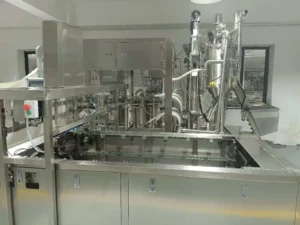
A stick pack film specification must connect the finished pack drawing, laminate, sealant layer, reel geometry, web layout, print registration and real machine trial. “Suitable for stick packs” is not enough information for a film converter or machine supplier.
This guide is for narrow back-seal stick packs made from roll stock on single- or multi-lane form-fill-seal equipment. It does not replace the approved drawing, converter technical data, food-contact review or project FAT protocol.
Quick answer: define the product and shelf-life need first; then freeze the finished stick dimensions, longitudinal seal, end seals, tear feature, print repeat and lane layout. Ask the converter to state the complete laminate, thickness, sealant side, coefficient-of-friction test basis, sealing window, roll width, core, maximum diameter, winding direction, splice rule and tolerances. Release the film only after a production-representative roll runs through forming, filling, sealing, cutting and restart checks.
Start with the stick drawing, not a generic laminate name
A narrow stick pack normally uses a longitudinal back seal plus top and bottom end seals. The drawing should show the finished width and length, usable fill space, back-seal position and overlap, end-seal depth, cut line, tear feature, artwork orientation and every area that must remain free of product.
Drawing inputs
- Finished width and cut length for every SKU
- Back-seal overlap and permitted seal position
- Top and bottom end-seal dimensions
- Notch, perforation, code and cut locations
- Artwork repeat, eye mark and no-print zones
Product inputs
- Minimum, nominal and maximum dose
- Bulk density, viscosity or particle range
- Dust, oil, moisture, foam, strings or heat sensitivity
- Required barrier and declared shelf-life basis
- Seal-area contamination risk during filling
Format boundary: a stick pack is not a four-side-seal flat sachet. If the approved package has separate seals around all four edges, use the stick pack vs sachet guide before choosing the machine family or web layout.
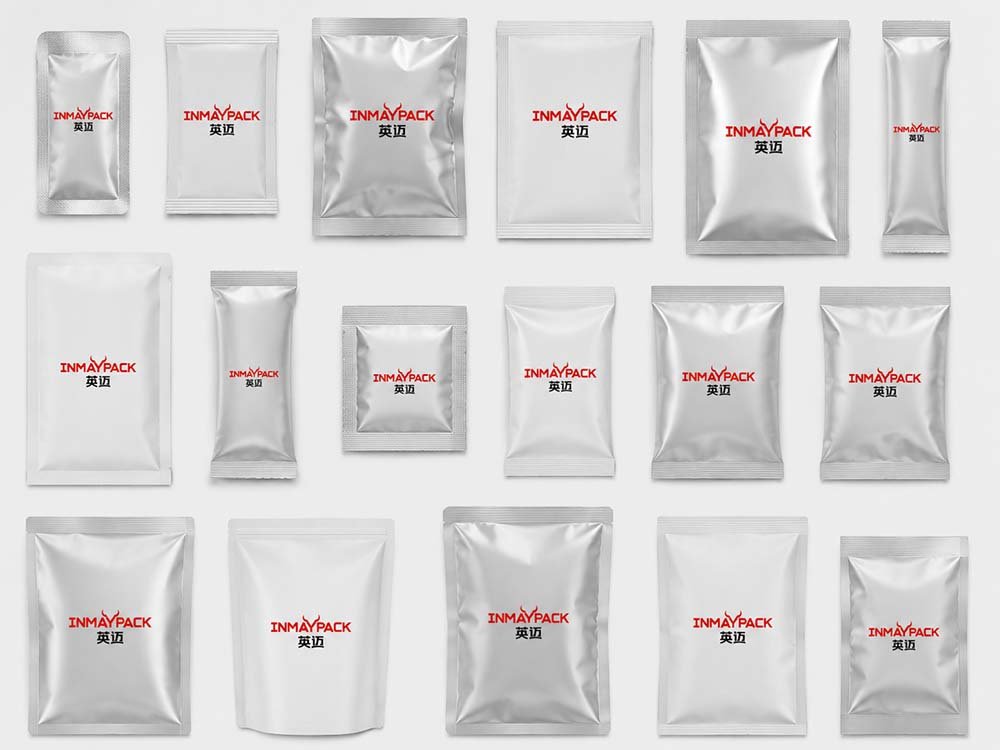
Describe every laminate layer and which side faces the product
A material description such as “foil film,” “PET/PE” or “paper look” does not define a production web. The converter should identify the complete structure, thickness of each relevant layer, total thickness and tolerance, adhesive or coating system where applicable, print side, treatment, sealant side and the test data used for barrier and seal performance.
Product protection
Set oxygen, moisture, light, aroma and grease requirements from the real product and shelf-life study. The machine cannot create barrier that the laminate does not provide.
Mechanical behavior
Review stiffness, curl, puncture resistance, fold behavior, thickness variation and how the web bends around rollers, slitters and forming sets.
Sealant behavior
Identify the product-side sealant and establish a usable temperature, pressure and dwell relationship rather than one unsupported jaw-temperature number.
Food-contact or other regulatory suitability must be evaluated for the finished material, packaged product and intended market. Do not infer approval from a machine model, a generic resin name or a supplier logo.
Make the converter drawing match the machine web path
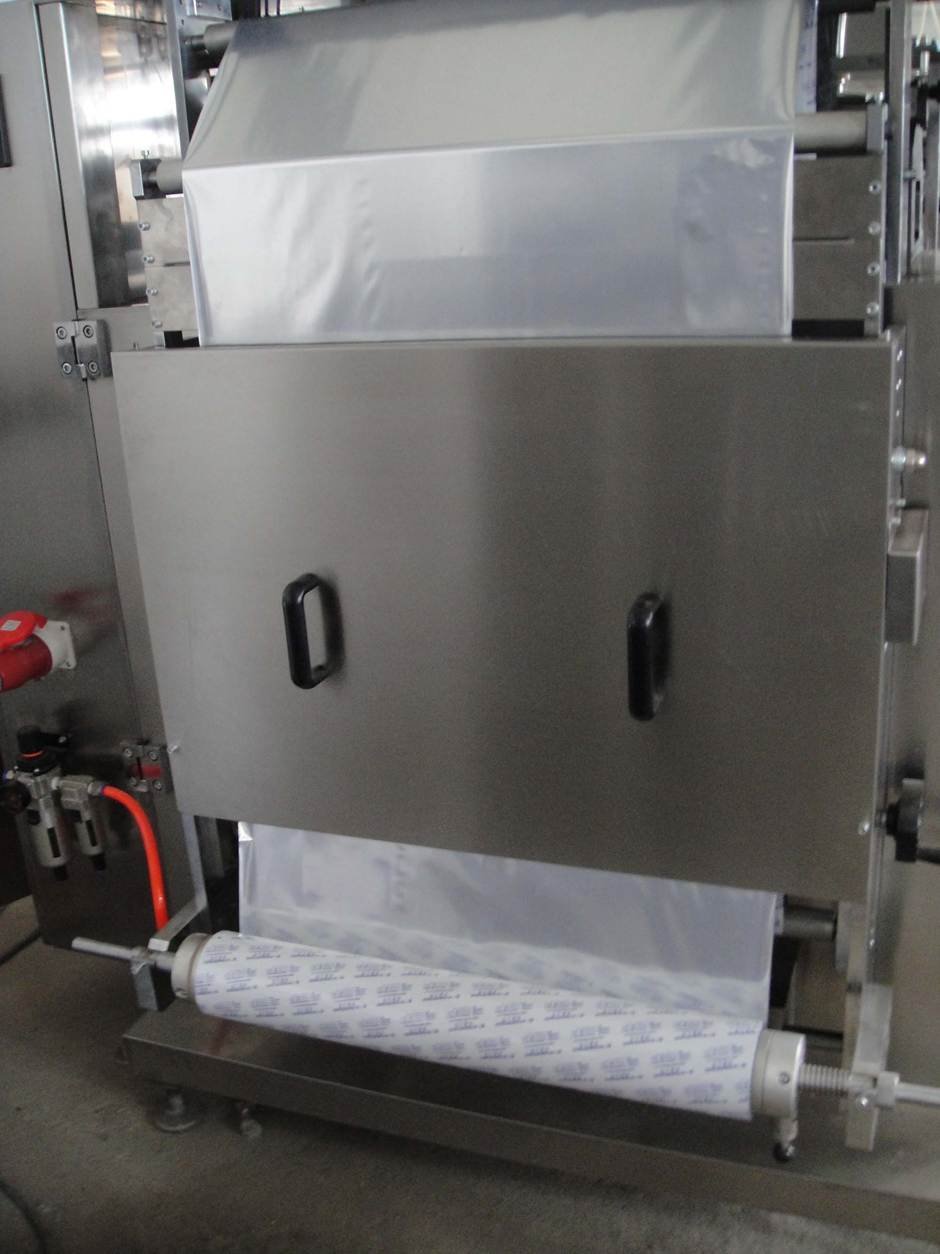
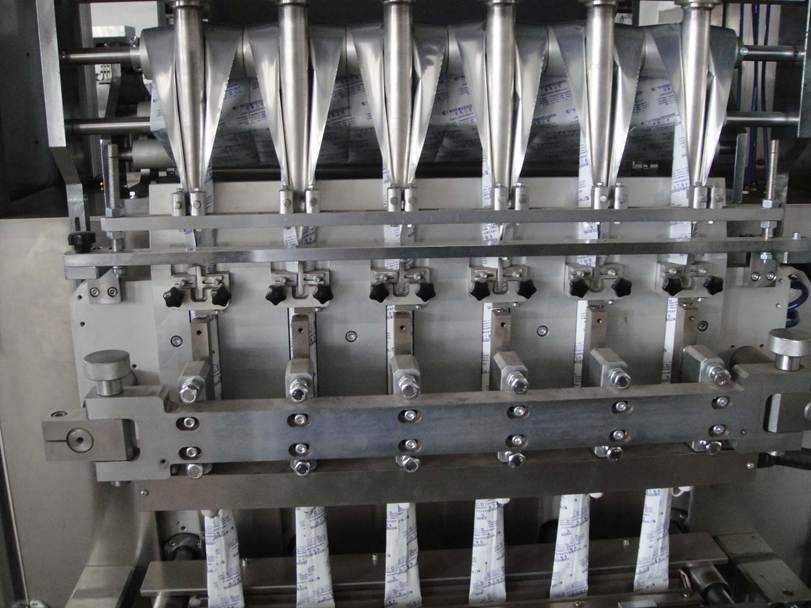
Multi-lane stick equipment begins with one controlled web. The usable layout must accommodate every stick strip, longitudinal seal allowance, lane gap, slitting allowance, edge trim, eye-mark strategy and the way the web enters the machine. Nominal film width alone does not prove that the layout will run.
| Specification field | What to state | Why it affects the machine |
|---|---|---|
| Web width | Nominal value, tolerance and measurement method | Changes lane pitch, slit position, forming alignment and trim |
| Core and maximum roll OD | Core ID/material, roll OD and maximum roll weight | Determines unwind fit, handling and usable film length |
| Winding direction | Print and sealant orientation with an unwind diagram | Prevents reversed artwork or the wrong surface entering the seals |
| Roll build | Telescoping, edge alignment, blocking and tension limits | Affects tracking, tension stability and lane-to-lane position |
| Splices | Allowed count, tape, location, marking and removal rule | Influences sensors, forming sets, sealing and changeover waste |
| Print repeat and eye mark | Repeat, mark size, contrast, lane strategy and tolerance | Controls cut position and artwork registration |
| COF test basis | Static/kinetic value, surfaces, method and conditioning | Influences web travel but does not alone prove machinability |
The official scope of ISO 8295 covers starting and sliding coefficients of friction for plastic film and sheeting, but also notes that the result is primarily a quality-control measure rather than a complete assessment of machinability. State the exact test basis instead of requesting “low COF” without surfaces or conditions.
Convert a laboratory heat-seal curve into a production trial
The longitudinal seal and the end seals do not experience identical geometry, pressure distribution or product contamination. Establish a starting window using converter data and laboratory work, then confirm that the complete web seals on the real machine at the required output.
Define the laboratory basis
Record the material construction, conditioning, sealer type, temperature, pressure, dwell, cooling and seal-strength method. ASTM F2029 provides practices for establishing heat sealability of flexible barrier materials, but it does not validate the production machine.
Set a machine trial matrix
Choose controlled combinations of jaw temperature, pressure, dwell or speed within safe equipment limits. Keep film lot, product and other variables constant while one factor changes.
Check both seal types by lane
Inspect the longitudinal overlap, top and bottom end seals, wrinkles, channels, contamination, cut position and opening behavior for every active lane.
Retain the usable window
Do not release one “best” setpoint only. Record the range that produces conforming packs and the warning signs observed near its boundaries.
ASTM F2029-16(2021) explains that laboratory heat-seal data provide a starting point and that production equipment can differ because of scale, sealing area and speed. ASTM F88/F88M addresses seal-strength measurement; the project quality team must still define the applicable method and acceptance limit.
Use the defect pattern to identify which film variable to inspect first
All lanes drift in print or cut position
Check roll build, unwind tension, web tracking, registration input, repeat length and machine pull reference before changing individual forming parts.
One lane wrinkles or tracks differently
Check local slit quality, strip width, edge damage, forming alignment and tool contact. Preserve lane identity on samples.
Seals weaken as speed rises
Review heat transfer through the full laminate, dwell, jaw contact, pressure distribution and whether the seal interface reaches a usable condition.
Product appears inside the end seal
Review dose timing, cutoff, fall distance, dust, strings or splash before blaming the sealant layer alone.
Film sticks, slips or blocks
Compare treatment, surface-to-surface COF, storage, temperature, roll pressure and the exact surfaces contacting rollers or guides.
Defects rise after a splice or restart
Check splice construction, rethreading, tension recovery, registration reacquisition, warm-up state and first-off release criteria.
Release each production roll against a controlled specification
A machine trial approves a material specification and operating window, not every future roll automatically. Incoming checks should be proportionate to risk and tied to the agreed converter certificate, retained approved samples and production history.
Keep the purchase specification, approved converter drawing, signed sample, inspection record and machine recipe under the same revision control. A receiving operator should be able to confirm that the roll presented to production is the material that was actually approved, including winding direction and the product-contact side. Record nonconforming rolls separately rather than quietly widening machine settings until they run.
| Incoming check | Record | Escalate when |
|---|---|---|
| Identification | Supplier, construction code, lot, roll number and certificate | Identity or revision differs from the approved specification |
| Dimensions | Web width, thickness basis, core, OD and edge condition | Value or tolerance is outside the controlled document |
| Roll build | Telescoping, blocking, wrinkles, damage and splice marking | The roll cannot unwind without correction or added risk |
| Print and treatment | Artwork revision, repeat, eye mark, winding and treated/sealant side | Orientation, contrast, repeat or surface identity is uncertain |
| Functional sample | Tracking, registration, forming and representative seal checks | Result differs from the approved roll or requires an unexplained recipe shift |
Change control: a new resin grade, adhesive, coating, ink, primer, layer gauge, treatment, slitting route or manufacturing site can alter web behavior even when the commercial material name remains unchanged. Require the converter to identify proposed changes before shipment, assess the risk and define whether documentary review, a short confirmation run or a full production-representative trial is needed.
Approve the film through normal filling, sealing, cutting and restart
A short empty-film run cannot expose seal contamination, product fall, refill disturbances or lane-specific dose and discharge problems. The trial should use the approved product or a formally agreed equivalent and enough printed film for setup, stabilization, the defined run, planned disturbances and retained samples. For a narrow food-supplement application, connect these film inputs to the supplement powder stick-pack machine brief before fixing the lane and dosing configuration.
Freeze the basis
Film lot, product lot, stick drawing, active lanes, dose, filler, recipe, run duration, operator actions and downstream condition.
Record by lane
Dose, longitudinal seal, end seals, registration, code, cut, rejects, adjustments and representative retained packs.
Challenge transitions
Refill, normal stop, restart, first-off release and splice behavior where included in the agreed test.
For machine sequence and lane-level control, read how a multi-lane stick pack machine works. The commercial stick pack machine page compares the available DXD stick-pack platforms and selection boundaries.
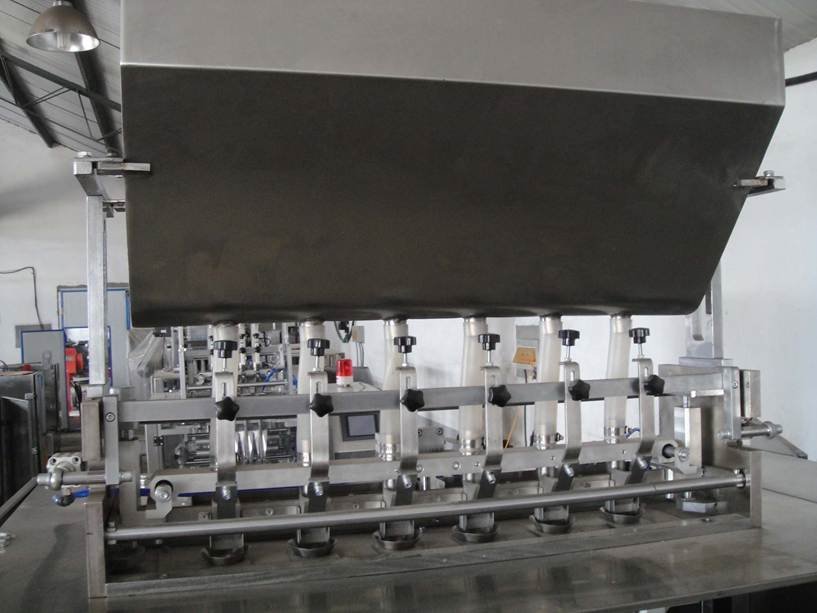
Build a stick pack film trial brief
Complete what you know. Blank fields remain marked TO CONFIRM. Nothing entered here is uploaded or sent automatically.
Standards to discuss with the converter and quality team
Use the edition, procedure, specimen conditioning and acceptance limit agreed by the responsible quality team. A standard name alone does not create a project limit.
Related INMAYPACK resources
Send the film data with the product and finished stick drawing
INMAYPACK can review the lane layout, web path, dosing route, sealing trial and accepted-output basis before the stick pack machine configuration is finalized.