Technical explainer | Published July 31, 2026
A multi-lane stick pack machine does not simply run several small baggers side by side. One wide film web, one machine cycle and one control system must produce multiple lanes that remain aligned, filled and sealed consistently.
The useful question is not only how many packs the machine can discharge. It is how the film path, dosing devices, seal tools and lane-level checks work together so that total output does not hide one unstable lane.
Quick answer: a multi-lane stick pack machine unwinds a roll of laminate, controls web position and tension, divides the web into lane-width strips, forms each strip around its own forming tube, makes the longitudinal seal, meters product through each filling path, produces transverse seals, cuts or perforates the packs, and discharges the finished lanes. The exact order and tooling vary by machine and pack format, so the approved film, product and finished-pack drawing must govern the trial.
How the film becomes multiple finished stick packs
The sequence below describes the control logic of a roll-stock multi-lane vertical form-fill-seal system. It is a process map, not a universal mechanical drawing. Some machines use one web that is divided into strips and wrapped around forming tubes; other multi-lane sachet systems bring two material webs together around a row of filling nozzles.
Unwind and stabilize the web
The unwind, guide rollers and web-control devices present the laminate to the forming section at a controlled position and tension. Roll build, splice condition, curl and friction can disturb later registration and seal alignment.
Divide the web into lanes
A slitting arrangement creates lane-width strips for stick formats, or a two-web sachet layout establishes parallel package columns. Lane pitch must match the forming and sealing tools.
Form and make the longitudinal seal
Each strip travels around a forming tube and is closed along the machine direction. The resulting narrow tube becomes the body of the stick pack.
Meter product through each filling path
The selected filler delivers one dose to each lane. Product cutoff, dust, strings, splash, aeration and settling time affect both dose consistency and the condition of the next transverse seal.
Cross-seal, cut and discharge
The machine closes the pack across its width, establishes the next pack boundary and then cuts or perforates the lane web according to the approved finished-pack requirement.
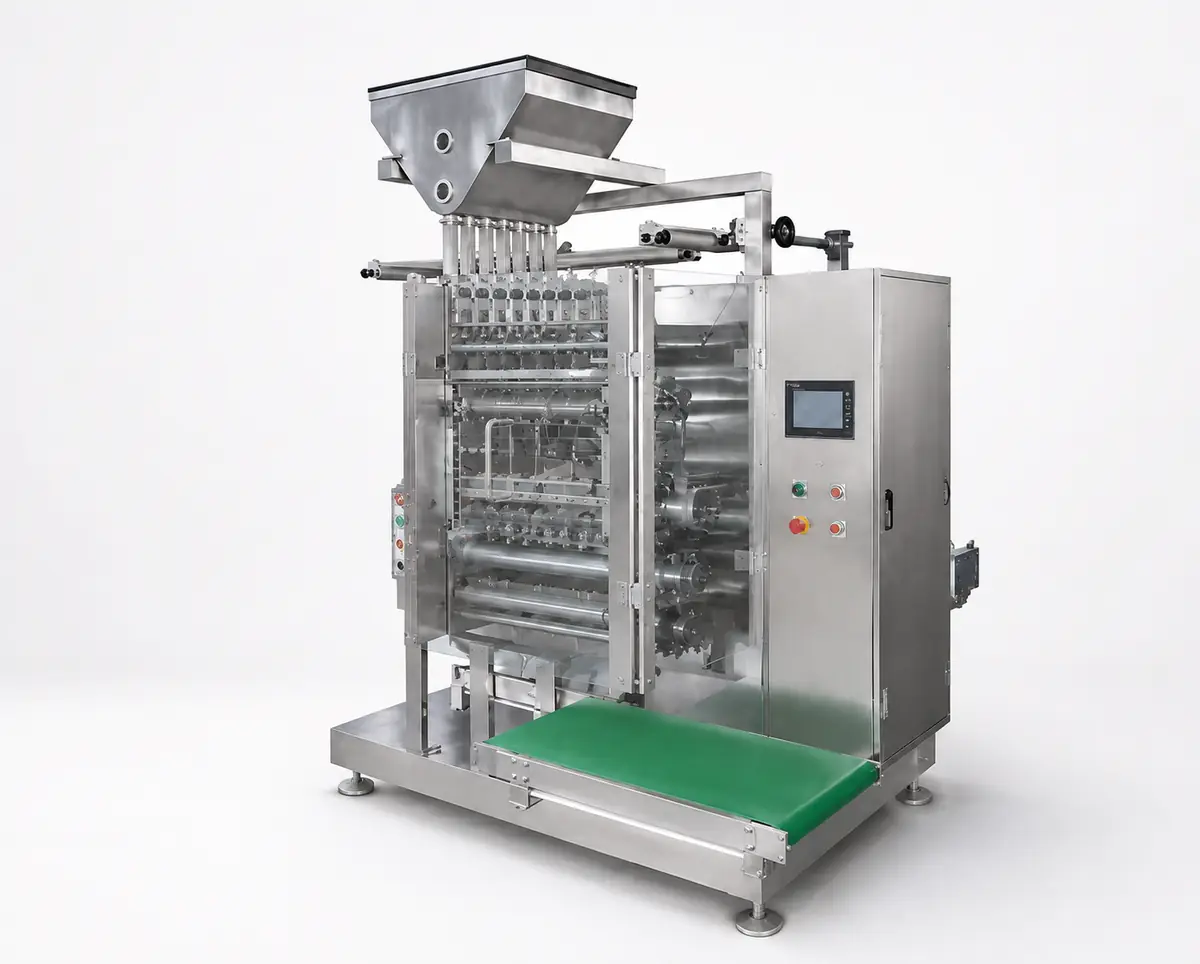
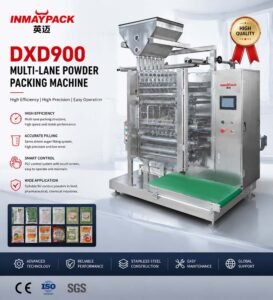
Review the INMAYPACK stick pack machine page for the available commercial platform. This article explains the process and acceptance logic behind that equipment category.
Total output can hide a weak lane
Parallel output is useful only when every active lane produces an accepted pack. A machine can reach an impressive discharge count while one lane shows dose drift, registration error, seal contamination or repeated rejects.
This is a planning relationship, not a guaranteed machine rating. Use the approved product, film, format and test condition to establish the real result.
| Control point | What can differ by lane | Evidence to retain |
|---|---|---|
| Film presentation | Strip position, tension, curl, edge condition and travel around the forming set. | Lane map, web observations and representative pack samples. |
| Filling | Dose, product cutoff, dust, splash, strings, blockage and timing. | Lane-identified weight or volume results and rejected-dose record. |
| Longitudinal seal | Overlap, seal position, wrinkle, contamination and tool contact. | Lane-identified seal samples and approved test results. |
| Transverse seal and cut | Pack length, print position, seal band, notch or perforation and cut location. | Registration trend, finished-pack drawing check and retained samples. |
| Detection and rejection | How the system identifies and separates a fault from one lane or a full cycle. | Challenge-test result, alarm record and reject traceability. |
Use a lane identity throughout the test. Number the lanes consistently from the operator side or the agreed reference side, then keep that identity on dose data, seal samples, registration checks and reject records.
My Insight
A multi-lane line should be accepted lane by lane before it is accepted as one machine. The total count is a business result; the lane map is the diagnostic result.
When a fault appears, preserve its lane, product, film position and machine state. That makes it possible to separate a lane-specific hardware issue from a web-wide, recipe-wide or product-wide cause. For mixed instant coffee, apply the coffee stick pack sampling matrix to compare weight and blend evidence across lanes and operating events.
The dosing system must match the product and the lane layout
The forming frame does not determine the filler. Powders, granules and liquids may need different metering and product-cutoff arrangements. A free-flowing powder, an aerated powder and a powder that bridges can behave differently even when the target dose is the same.
Powder
Review bulk density, flow, aeration, dust, bridging, moisture sensitivity and the time required for a clean cutoff. Confirm the installed auger or other powder-dosing arrangement with the actual product.
Granules
Review particle size, breakage, segregation, bounce, product fall and whether the selected volumetric or weighing method can feed each lane consistently.
Liquid or paste
Review viscosity across the operating range, strings, drip, splash, temperature, particulates and cleaning. Confirm the actual pump, nozzle and cutoff arrangement.
All products
Define the lane-level sampling method, accepted dose criterion, seal-area condition, restart check and handling of a blocked or disabled lane.
Use the pouch filling system guide to define the product data and metering decision. Then verify how the chosen filler is distributed across the active stick-pack lanes.
Registration, sealing and cutting form one timing chain
Print registration cannot be judged separately from web travel, pack length, seal position and cutting. If the web slips, stretches or enters one forming path differently, the visual symptom may appear at the cut even though the first disturbance occurred upstream.
| Observed result | Check first | Then confirm |
|---|---|---|
| Print or cut position drifts on all lanes | Registration input, pull length, web tension, roll condition and machine timing. | Seal position, cut command and the approved print-repeat information. |
| Only one lane wrinkles or tracks poorly | That strip path, slitter condition, forming set, contamination and local tool contact. | Whether the source begins before forming, at forming or at sealing. |
| Product reaches the cross seal | Dose timing, cutoff, product fall, dust, splash, strings and settling time. | Seal recipe and seal test only after the seal area is controlled. |
| Seal result varies by lane | Tool alignment, pressure distribution, temperature distribution and lane contamination. | The approved lane-identified test method and retained samples. |
| Rejects rise after restart | Threading, recipe, warm-up state, product prime and first-off approval. | Restart release criteria before returning all output to production. |
Use the stick pack film specification guide to align the laminate, reel build, lane layout, print repeat, COF test basis and sealing trial before testing this timing chain. For a broader architecture comparison, use the horizontal vs vertical form-fill-seal guide. A multi-lane stick-pack route is a specific vertical roll-stock architecture and should not be compared with a pouch-forming HFFS line by acronym alone.
Write lane-level evidence into the URS and FAT
Before the machine is ordered, define the product, film, finished-pack drawing, lane configuration, dosing method, required formats, test duration, sampling plan, seal test, registration check, reject behavior and accepted restart condition. Universal limits should not be copied from another project. For a narrow single-dose supplement application, use the food supplement powder stick-pack project page to connect the formula, dose, film and acceptance brief before selecting the final lane configuration.
| URS or FAT item | Define before the test | Retain as evidence |
|---|---|---|
| Product and filler | Product identity, condition, dose range, filler type, cutoff and cleaning basis. | Product lot, setup record and lane-level dose results. |
| Film and format | Film structure, roll direction, print repeat, stick dimensions, seals, cut, notch or perforation. | Controlled drawing, roll identity and retained pack samples. |
| Lane configuration | Active lanes, lane numbering, tooling, disabled-lane behavior and change parts. | As-tested lane map and configuration record. |
| Quality checks | Dose, registration, seal method, appearance, code and reject criteria. | Results identified by lane and time within the run. |
| Fault and restart | Alarm, reject, isolation, recovery, first-off check and release rule. | Challenge-test record and accepted restart samples. |
Where the project also requires a wider four-side-seal sachet rather than a slim back-seal stick, compare the multi-lane sachet packing machine and 3 and 4 side seal sachet machine routes against the same product and finished-pack requirement.
Acceptance rule: a requested output is meaningful only when the document also states the active lanes, accepted product, film, format, test duration, quality checks and treatment of rejected packs.
Technical references
Google Patents - Parallel tubular-pack production with web slitting and forming tubes
Google Patents - Multi-lane vertical form-fill-seal web forming
OSHA - The control of hazardous energy
Related INMAYPACK pages
Define a lane-level stick pack trial
Send the product, dose range, finished-pack drawing, film specification, target output and required quality checks. INMAYPACK can review the lane configuration, dosing route and project-specific FAT basis.
Reply: sales@ewpackmachinery.com | WhatsApp: +86 18658799162