To investigate clogging problems in powder filling machines, first locate where delivery stops: upstream transfer, the hopper, the dosing outlet or the machine's permission to fill. An empty pack does not, by itself, prove that the auger is blocked.
This guide provides a symptom-and-evidence framework for production teams and buyers specifying powder packaging equipment. It is not a procedure for clearing a jam or repairing a particular machine. Any internal inspection, maintenance or setting change must follow the equipment manufacturer's instructions and your site's authorized procedures.
Safety before diagnosis: Keep hands and tools out of operating equipment. Do not bypass guards, repeatedly reset a trip or increase a drive limit to force material through. Before clearing or internal inspection, authorized personnel must isolate hazardous energy and verify the safe state under the applicable lockout procedure. Stored pneumatic and mechanical energy also matter. The OSHA hazardous-energy overview explains the US safety framework; follow applicable local rules and the machine-specific procedure.
Locate the interruption before changing the recipe
Begin with information available outside the guards: the operator display, alarm history, approved viewing points, upstream status and the sequence of rejected packs. Record what the machine was commanded to do and what actually happened. A running line, a rotating feeder and powder reaching the package are three different observations.
The table below lists diagnostic possibilities, not confirmed causes. Use it to direct an authorized inspection. Stop and escalate unexplained noise, heat, visible damage or recurring drive trips; do not perform additional running tests just to collect evidence.
On a small screen, swipe the table sideways. Keyboard users can focus the table region and scroll.
| Observed event | Possible location | Evidence to capture safely | Review direction |
|---|---|---|---|
| Low hopper level and no replenishment | Upstream supply or transfer, rather than a blocked dosing outlet. | Refill request, transfer status, material availability and associated alarms. | Confirm supply and the refill sequence before adjusting the filler recipe. |
| Material is present, but delivery becomes intermittent | Restricted hopper discharge, uneven withdrawal or dosing-path obstruction. | Level indication, timing of lost delivery and any permitted external view of the material surface. | Have authorized personnel identify the actual flow restriction; hopper level alone is insufficient. |
| The controller does not issue a fill command | A missing permission to fill, a stop condition or a sequence problem. | Active alarm text and package-ready, guard and downstream status shown by the controls. | Resolve the reported condition through the OEM procedure. Never override an interlock to test a theory. |
| A dosing drive trips or a commanded fill produces no delivery | Mechanical obstruction, drive/control fault or lack of powder at the screw. | Exact alarm, command state and the last successful cycle. | Stop for authorized review. A trip is not proof of a powder bridge. |
| Fill weight changes after refill, but discharge continues | A change in feeding or powder condition; a complete blockage has not been established. | Weights in sequence, refill timing, hopper level and recipe identification. | Separate dose variation from loss of flow before proposing a mechanical change. |
| Only one lane loses delivery | A local dosing path or control condition, although shared supply remains relevant. | Affected lane, common refill event, lane alarms and weight records from adjacent lanes. | Compare like-for-like observations; do not assume all lanes require the same adjustment. |
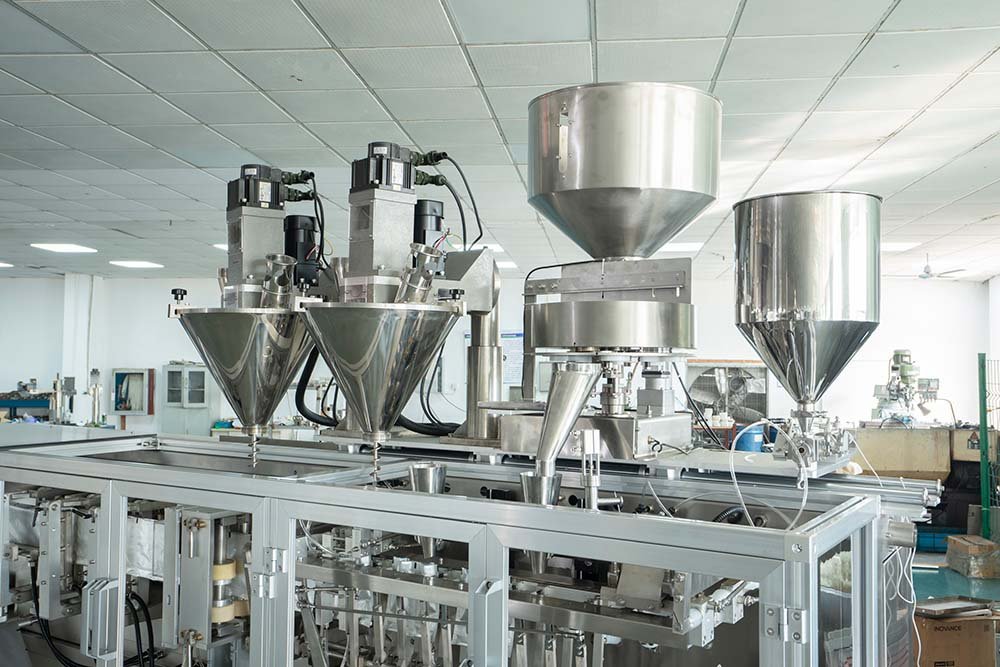
For the equipment boundary and dosing configuration, see the auger filling machine application page. Choosing a screw or hopper assistance arrangement is a material-and-configuration decision, not a universal cure for every interrupted fill.
Bridging, ratholing and outlet buildup are different findings
Hopper bridging
A bridge is an arch of material across a discharge opening that prevents flow. Cohesive powder or interlocking particles can support that arch. A hopper can therefore contain material while the region below it is starved.
Ratholing
Ratholing describes flow through a limited channel while surrounding material remains stationary. Once that channel empties, delivery may cease despite material remaining elsewhere in the hopper. Neither condition should be diagnosed solely from a level sensor. Jenike & Johanson's bulk-solids flow reference distinguishes these patterns and explains why material properties and hopper design matter.
Buildup in the dosing path
Deposits found during an authorized, isolated inspection should be recorded by location: hopper outlet, screw, tube or discharge interface. Photograph the finding only under site rules. Record whether it is a coating, a localized obstruction or material left from a previous product. “Powder stuck in the machine” is too broad a description to specify a corrective action.
A clean-looking outlet also does not eliminate an upstream or control issue. Preserve the alarm and operating history before cleaning or changing parts, so the inspection can be compared with the event that stopped production.
Record the operating event, not just the final empty pack
A useful fault record links the symptom to a particular batch and moment. “It clogs sometimes” offers little basis for comparing an inspection with a production trial. Start with the following event labels and keep the original sequence of observations.
- First startup with a new batch: identify the product, batch, storage history and any approved preparation step. Record whether the same recipe previously ran another batch.
- Immediately after refill: record the refill request and completion, the level indication and consecutive fill weights around that event.
- Restart after a pause: record the actual idle duration, material left in the hopper and the first affected cycle.
- During continuous running: record elapsed running time and whether the symptom develops gradually or appears as a single stop.
- After changeover: record the installed tooling and recipe identifiers, inspection sign-off and whether the affected path differs from the previous setup.
Moisture, consolidation during storage and material sensitivity can change flow behavior. Jenike & Johanson also cautions that vibration can worsen some pressure-sensitive materials; repeated hammering or vibration is not a substitute for identifying the flow problem. Its hopper-bridging discussion supports reviewing the material, hopper and feeder together rather than prescribing a generic agitator speed.
Use a simple event log: time, batch, recipe, lane, hopper indication, refill status, alarm text, observed delivery and pack weight. Keep rejected packs identifiable according to site procedures. If the issue includes dusty seals or incomplete sachets, review the wider powder sachet manufacturing process rather than treating every reject as a dosing blockage.
Verify the correction through refill and restart
Restored movement of powder is only the first observation. The correction still needs to support the specified dose, package and operating sequence. Agree the test scope and acceptance criteria with the responsible technical team before restarting equipment.
- Document the baseline. Keep the original recipe, tooling identifiers, batch condition and symptom record. Do not rely on memory after several adjustments.
- Confirm the authorized intervention. Record what was inspected, cleaned, repaired or changed and who released the equipment. Do not mix several unrecorded setting changes into one trial.
- Use the approved operating range. Any trial adjustment must remain within OEM and site limits. This guide intentionally provides no universal RPM, torque, clearance or hopper-angle setting.
- Include relevant events. Where safe and permitted, observe normal refill and planned restart as well as steady running. A short run that avoids the original trigger cannot establish that the symptom is resolved.
- Assess finished packs. Record dose results, seal condition, rejects and accepted output under the agreed inspection method. Continued powder discharge alone is not acceptance of the packaging process.
If the symptom returns, retain the new evidence and stop repeating the same reset-and-run sequence. Ask the responsible engineer or equipment supplier whether further material testing, mechanical inspection or a revised feeding interface is required.
Powder filling blockage questions
Does an empty sachet mean the auger is clogged?
No. The fill may not have been commanded, the hopper may be starved or material may be restricted elsewhere. Match the empty pack to the alarm and cycle record before naming the cause.
Should I increase agitation or use more vibration?
Not as an automatic first step. Confirm the equipment instructions and the material's response with the responsible technical team. More agitation is not a universal solution, and a setting change must not conceal a mechanical fault.
Can a level sensor rule out hopper bridging?
No. A level indication describes what the sensor detects at its location; it does not demonstrate uninterrupted delivery into the dosing zone. Use the operating record and an authorized inspection to establish where flow stops.
When should I discuss a different filling setup?
When documented trials show that the required powder, dose and package cannot be handled reliably within the approved configuration. Define the unmet acceptance criteria first, then review feeding, dosing and package handling together rather than buying a replacement from a symptom alone.
Define the powder application before choosing equipment
For an INMAYPACK powder packaging project, start with the powder identity, intended fill weight, bag type and required accepted output. If inconsistent feeding is part of the selection problem, include a brief event description, current equipment configuration and relevant alarm text. Share only footage taken safely from outside the guards; material samples and permitted inspection records can follow during review.
This helps define a sample trial and equipment scope. It does not establish the cause of a fault remotely or replace the original machine supplier's maintenance instructions. For the available packaging routes, use the powder filling and packaging overview.