A powder filling machine price may cover only a dosing unit, or a system that feeds powder, handles the package, fills, seals and checks the finished pack. Compare those equipment boundaries before comparing totals.
INMAYPACK prices are project-specific. This guide does not publish a fixed machine price or an unverified market range. It explains how to build a comparable quotation and estimate packaging conversion cost for powder sachets, stick packs and premade pouches. Bottle and can lines have different handling and closure requirements and are outside this guide's equipment scope.
Are you pricing an auger filler or a complete packaging system?
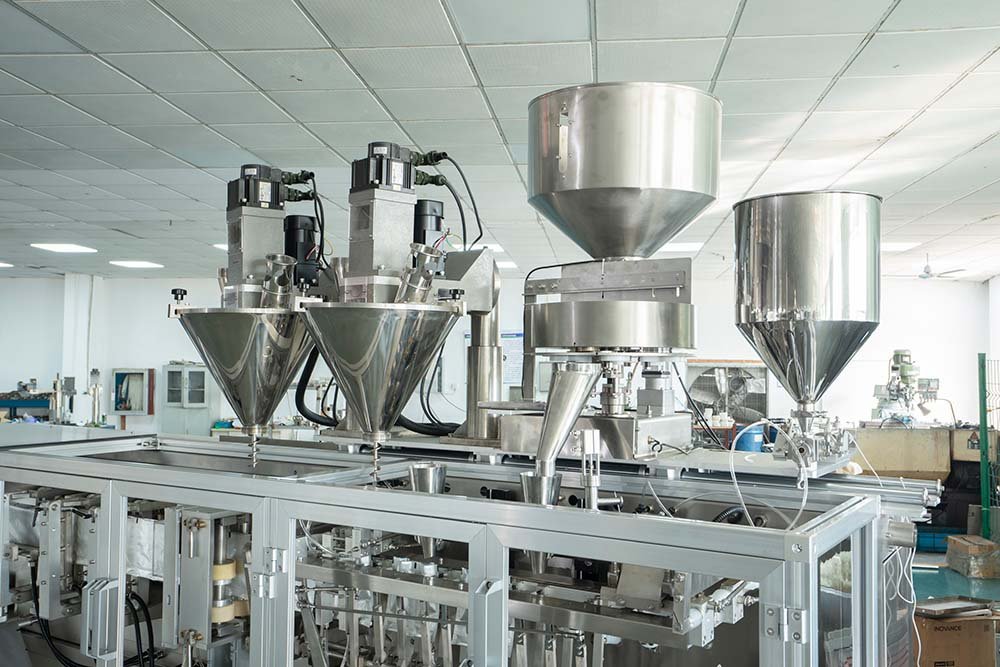
An auger filler meters powder through selected dosing tooling. It does not, by that function alone, make a bag, open a premade pouch or seal the finished package. The term “automatic powder filling machine” therefore needs a process boundary: what enters the equipment, what leaves it, and which actions still require an operator.
| Quoted scope | What to establish | Do not assume it includes |
|---|---|---|
| Auger dosing module | Hopper, drive, screw and tube set, controls, mounting and the discharge interface. | Bulk powder transfer, package presentation, sealing, inspection or integration work. |
| Roll-film sachet or stick-pack system | Dosing coordinated with film handling, forming, sealing, cutting and finished-pack discharge. | All dose change parts, every film format, upstream feeding or downstream cartoning. |
| Premade-pouch filling system | Pouch loading, opening, dosing, mouth control, sealing and discharge for the approved pouch. | Every zipper or pouch geometry, powder extraction, inspection or automatic case packing. |
| Integrated powder packaging line | Agreed product supply and machine interfaces through the defined accepted-pack handoff. | Factory utilities, building work, all upstream processing or an unlimited integration scope. |
On a narrow screen, scroll the table horizontally.
If the package route is undecided, start with the powder filling and packaging systems overview. Use the auger filling machine page to review the metering component. Keep the component specification separate from the complete system's output commitment.
Request a scope drawing with a clearly marked supply boundary. It should identify the powder inlet, the package supply point and the discharge point. Every connecting conveyor, cable, control signal and extraction connection needs an owner. A drawing can expose an omitted interface that is easy to miss in a machine list.
Which powder requirements change the quotation?
Dose range and tooling
List each product and its target fill weight, not only the smallest and largest number. Different powder behavior or dose volumes may require different screw and tube sets, discharge arrangements or recipes. Ask the supplier to identify the tooling supplied for each approved combination, the additional sets priced separately, and the changeover work expected from the operator.
Powder supply and behavior
Describe bulk density, flow behavior, moisture sensitivity and the way powder arrives at the hopper. A continuous product supply requirement is different from periodic manual replenishment. Ask which transfer equipment, level controls and hopper arrangements are included, and how refill events will be assessed in a trial. Do not treat an empty-machine demonstration as evidence for your powder.
Package handling and sealing
For roll film, confirm the material, forming geometry, lane arrangement and sealing requirements. For premade pouches, confirm the opening, zipper and mouth geometry. The relevant cost is the equipment needed to produce the approved finished pack, including the agreed measures to keep powder away from the seal area. A filler-only offer cannot answer this part of the comparison.
Cleaning, inspection and format changes
List the actual recipe sequence and the required cleaning method. Ask which parts must be removed, how operators reach them, and what inspection is needed before restart. Specify whether weighing, rejection, coding and other checks are included or separately supplied. Cleaning time and extra format tooling should remain visible even if they are outside the base machine price.
Multi-lane arrangements also require a lane-by-lane acceptance basis. An aggregate output figure can conceal a dosing or sealing issue in one lane. Agree the measurement and record format before using that output figure in a cost model.
Put every supplier quotation on the same basis
Prepare one comparison sheet with a column for each supplier. For every item, record its status as included, separately priced, buyer-supplied or excluded. A blank cell is an unanswered question, not a zero-cost item. Keep the selected configuration, quotation date, currency and delivery terms beside the total.
| Comparison line | Record for each proposal | Question to resolve |
|---|---|---|
| Dosing and replenishment | Filler, feeder, hopper controls, tooling sets and mounts. | Who maintains powder supply during the agreed run? |
| Packaging platform | Film or pouch handling, sealing, cutting and discharge. | Which product and package combinations are covered? |
| Inspection and rejects | Selected checks, reject hardware and control connections. | How are nonconforming packs separated and recorded? |
| Cleaning and changeover | Contact-part access, additional sets, tools and documented procedure. | What must the buyer supply or perform? |
| Trials and acceptance | Samples, test scope, records, retest responsibility and acceptance conditions. | Is accepted output measured across normal refill and restart events? |
| Delivery and startup | Packing, transport, site preparation, installation and training scope. | Which destination and site costs sit outside the supplier total? |
| Support and wear parts | Included spares, separately priced parts and the applicable service terms. | What is documented, and what remains an assumption? |
On a narrow screen, scroll the table horizontally.
Normalize the scope before ranking the offers. Start with each quoted total, add required items that are excluded, and remove optional items you do not need only when they are genuinely separable. Keep an unresolved amount marked as unknown. A proposal with missing scope is not yet comparable to a complete offer.
For a multi-machine project, use the powder packaging line scope to define interfaces. Do not add a feeder or installation allowance twice if it is already included in the base offer.
Calculate packaging conversion cost per accepted pack
The following is a planning method, not an INMAYPACK performance claim or a payback forecast. Use your own costs and trial-supported operating assumptions. Define one production period and one recipe mix for every alternative.
- Count accepted output. Use finished packs that pass the agreed weight, seal and other quality checks over the complete planned period. Include the effects of refill, cleaning and format changes. Do not use empty cycles or multiply a brief peak rate by the whole shift.
- Add operating costs for that same period. Include packaging material consumed, packaging labor, utilities, cleaning consumables, maintenance and parts. Add unrecovered powder loss and overfill cost where relevant. Exclude the standard recipe quantity in accepted packs if the purpose is to compare packaging conversion cost.
- Divide operating cost by accepted packs. This gives packaging operating cost per accepted pack. It is not full product cost, and it excludes equipment investment unless you explicitly add an allocation.
- Show investment separately. If useful, allocate the agreed installed equipment cost over your own planning volume, then add that amount per pack to operating cost. Use the same allocation basis for each alternative. Do not add depreciation again when this allocation is already included.
Operating cost per accepted pack = packaging-related operating costs for the period ÷ accepted packs in the same period.
Optional equipment allocation per pack = installed equipment cost ÷ planned accepted packs over the chosen allocation period.
Track powder loss without double counting it. Powder discarded during startup, extraction, cleaning or rejected packs is different from the intended recipe quantity inside saleable packs. For a measured positive average overfill, giveaway cost equals excess mass per accepted pack multiplied by accepted pack count and the powder cost per unit mass. Keep all mass units consistent. Do not count recoverable material as a total loss or count rejected product both in a loss allowance and a separate scrap charge.
Test a lower production volume, more frequent recipe changes and a less favorable loss rate. If the preferred system changes under plausible assumptions, obtain better trial or operating evidence before deciding. A cheap machine may still be the right choice for a suitable workload; the comparison should show why, not assume that more automation always pays back.
Ask for evidence that supports the cost assumptions
Send representative powder and package samples for the proposed configuration. Agree the dose, package, test duration, sampling method and acceptance criteria before the trial. Request records of individual fill results, seal checks, rejected packs and the operating conditions, not only a video of the screw rotating.
Include normal hopper replenishment, stop-and-restart behavior and at least the relevant format or recipe change in the agreed review. Record operator actions and cleaning steps if those affect the labor estimate. A factory trial supports the tested configuration and conditions; it does not automatically establish annual factory output or a guaranteed operating cost.
If the dosing method remains undecided, review the auger versus weigh-filler comparison before locking the quote. This price guide does not replace that technical selection or the product-specific trial.
Powder equipment pricing questions
Why is there no single automatic powder filling machine price?
The phrase can refer to different supply boundaries, from a dosing module to a complete packaging system. An applicable price needs the product, fill weight, package, accepted-output requirement and included equipment. Ask for a current itemized proposal for that scope rather than treating unrelated advertised machines as one price range.
Can I buy only an auger filler for an existing packer?
That is an integration assessment, not simply a price comparison. Confirm mounting space, product height, discharge timing, controls, guarding and the responsibility for the finished pack. Compatibility and the supplied integration work must be confirmed before treating a module-only quote as a complete solution.
Is a low-cost powder filling machine suitable for my project?
It can be, if its documented scope and tested performance meet your real workload. Check the manual tasks, included tooling, powder handling, cleaning and sealing boundary. A lower purchase price is useful when it does not omit a function you still need to buy or operate.
Does a wider advertised fill range avoid extra tooling costs?
Not necessarily. Ask which screw and tube sets and package change parts cover your specific product and dose combinations. A range on a brochure does not establish that every combination uses one supplied tooling set or achieves the same accepted output.
What do you need for an initial quotation?
Start with the powder, target fill weight, package type and required output. Then confirm priority recipes, package drawings, available factory services and the equipment boundary. Photos and samples can follow during the technical review. Commercial terms and trial scope belong in the issued proposal.
Request a quotation with a clear equipment boundary
Tell INMAYPACK what powder you pack, the fill weight, the finished package and the output you need. If you already have a packer, say which parts of the process you want to retain. The next step is to define the configuration and open questions before comparing prices.