A spout pouch filling machine price is useful only when the quotation defines the supplied pouch, product, dosing system, cap handling and accepted output. Start by confirming whether you need to fill an already-spouted pouch or make and fit the pouch on the line.
This guide focuses on purchasing a filling and capping system for premade pouches with the spout already attached. It explains the scope behind a quotation, the items that can be excluded from an advertised machine price, and the evidence to request before choosing a configuration. INMAYPACK quotations are project-specific; this article does not present a fixed price list.
Define the packaging route before comparing prices
“Spout pouch machine” can describe different processes. A filler and capper receives a pouch whose spout is already fitted. A roll-film system can form a pouch and perform a spout-fitting operation as part of a different equipment scope. Their prices cannot be compared as though both quotations start and finish at the same points.
| Starting material | Equipment task | What the quotation must identify |
|---|---|---|
| Premade pouch with fitted spout | Present the pouch, fill through the spout, supply and tighten the cap, discharge. | Pouch loading method, dosing, cap handling, any specified rinsing and the finished-pack handoff. |
| Premade pouch needing a separate fitment operation | Handle the supplied pouch and perform the specified filling, sealing or spout-insertion sequence. | Where filling occurs, which edges are sealed, and who supplies and attaches the fitment. |
| Roll film and separate spouts | Form and seal the pouch with the agreed spout-fitting process. | Film forming, pouch geometry, fitment supply, welding and the exact filling sequence. |
On a narrow screen, scroll the table horizontally.
For already-spouted pouches, use the spout pouch filling and capping machine page for the documented machine references. If your project begins with film, use the doypack machine price guide to compare that separate scope. If the format is still open, start with the liquid packaging routes.
What changes a filling and capping machine quotation?
The main cost drivers are the required output, product path, pouch and cap handling, format changes, cleaning provisions, inspection and delivery scope. Ask the supplier to show which of these are included, optional, buyer-supplied or excluded. A feature named in a brochure is not automatically part of the quoted configuration.
| Cost driver | Define before pricing | Ask the supplier to itemize |
|---|---|---|
| Head count and cycle | Required conforming packs, fill amount, product condition and run basis. | Selected platform and the operating conditions supporting its output reference. |
| Metering and product supply | Flow behavior, temperature, particles, foam, dose range and replenishment. | Filler, product-contact parts, hopper, transfer pump, valves and level-control boundary. |
| Pouch presentation | Center or corner spout, pouch drawing, feed arrangement and loading responsibility. | Tracks, carriers, guides, loading method and any additional format sets. |
| Cap handling | Cap and spout pair, orientation, seating and acceptance checks. | Cap elevator, sorter, feed track, capping tooling and change parts. |
| Cleaning and rinsing | Product path, cleaning method, rinse location, drains and utilities. | Included piping, removable components, circuits and buyer-provided services. |
| Inspection and discharge | Code, fill, closure and reject requirements; downstream connection. | Selected devices, reject handling, conveyors, controls and interface ownership. |
| Acceptance and support | Samples, tests, documents, training and installation responsibilities. | FAT scope, retained records, site work, support items and commercial exclusions. |
More heads do not automatically mean a better purchase
A higher head count can change the platform and its feeding requirements, but it does not establish accepted output for your product. A larger dose, slower product flow, interrupted pouch loading or unstable cap supply can change the useful cycle. Compare the proposed configuration against one written production requirement before paying for additional capacity.
Different recipes can change the product path
A product name such as sauce, puree or detergent is not enough to price the filler. Give the operating temperature, flow behavior, particle characteristics and foaming tendency. Explain how bulk product reaches the hopper. Ask whether the proposed price covers the complete dose range and product-contact components needed for your priority recipes.
Every additional pouch or closure needs a defined changeover scope
Two pouches with the same nominal volume can have different spout positions, neck geometry, cap threads and filled-pack stability. Supply each controlled pouch and cap drawing. Have the quotation list included carriers, guides, capping tools and settings, together with the first-off checks after a change. Avoid accepting “multiple formats” without a format list.
Compare quotations on one equipment and delivery boundary
Keep the suppliers’ original quotations intact and compare their scope in a separate sheet. For each required item, record “included,” “option with price,” “buyer-supplied,” “excluded” or “not stated.” Resolve “not stated” before choosing a supplier. An omission is an open question, not a zero-cost item.
Separate the equipment subtotal from freight, duties or taxes, site preparation, installation and other costs applicable to your project. Record the currency, quotation date, validity, named delivery point and commercial terms for every offer. Obtain destination-specific costs from the responsible provider; a machine headline price cannot establish your landed and installed budget.
| Comparison item | Question that makes the offers comparable |
|---|---|
| Primary machine | Do both offers include filling and capping for the same approved pouch and cap? |
| Feeding and operators | Who loads pouches, supplies product and replenishes caps during the agreed test? |
| Utilities and layout | What power, air, water, drainage, access and factory connections must the buyer provide? |
| Product changes | Which recipes, format parts, cleaning steps and setup checks are included? |
| Inspection | Which checks are automatic, which are sampled manually, and how are rejected packs handled? |
| FAT and handover | Are samples, test conditions, records, training and open-item closure defined? |
| Delivery and support | Which shipment, installation, commissioning and service costs remain outside the equipment price? |
For a connected line, use the packaging system integration checklist to assign interfaces before comparing the totals. A conveyor, pump or inspection device needs an owner for both its hardware and its control connection.
INMAYPACK engineering note. Compare the total scope required to make an accepted pouch. A lower equipment subtotal may still leave pouch loading, cap supply or product replenishment to the buyer. Those arrangements can be suitable, provided the quotation and acceptance test use the same staffing and operating assumptions.
Use a documented build to ask better questions
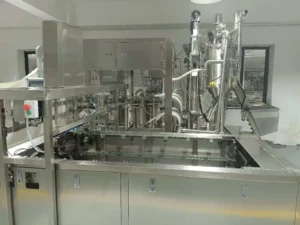
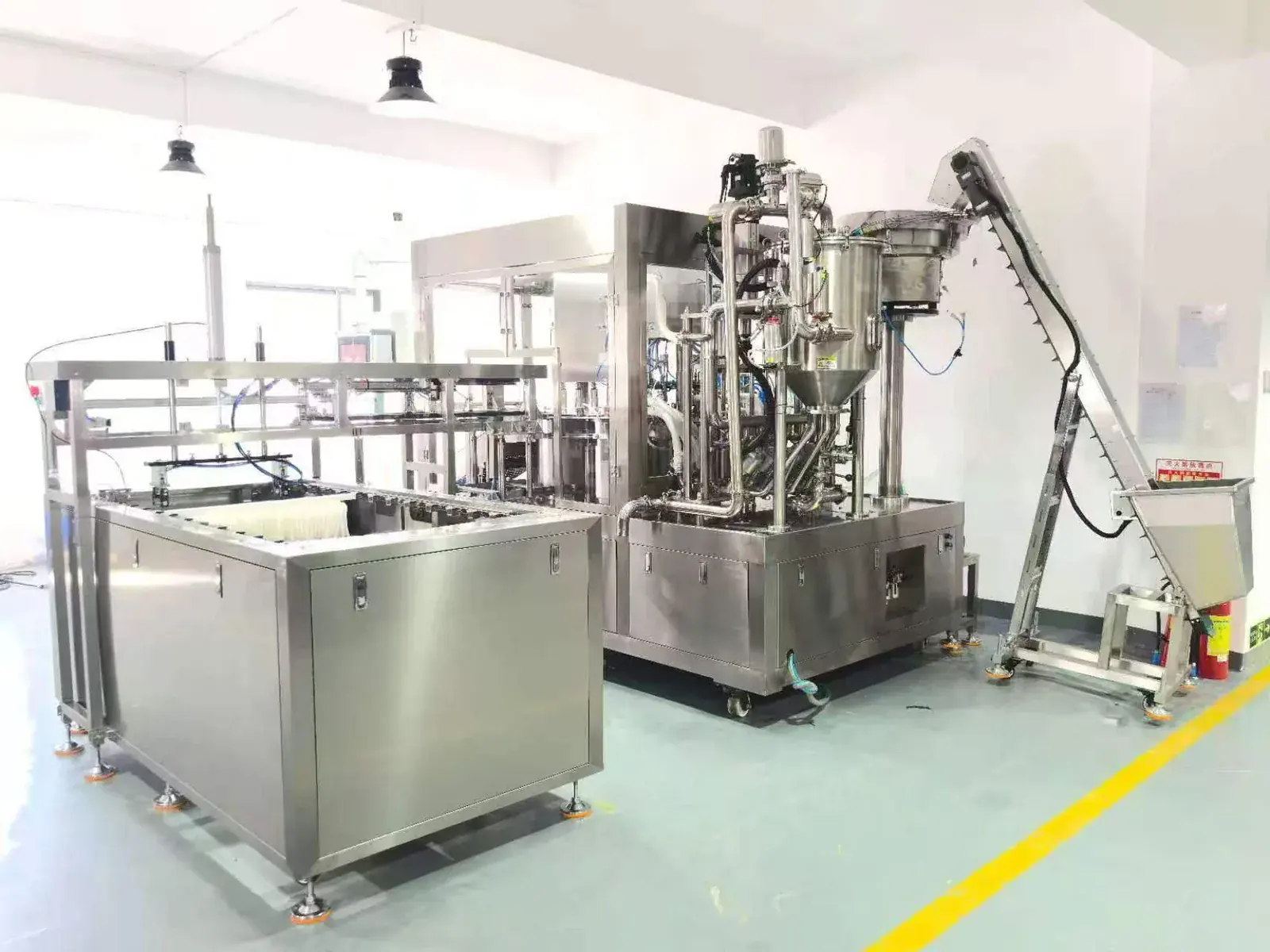
The documented 12-head spout pouch build records a piston-dosing configuration with pouch handling, cap supply, filling and capping interfaces. Its photographs help identify physical equipment to include in a quotation. They do not establish the price, commissioning status or accepted production output of your project.
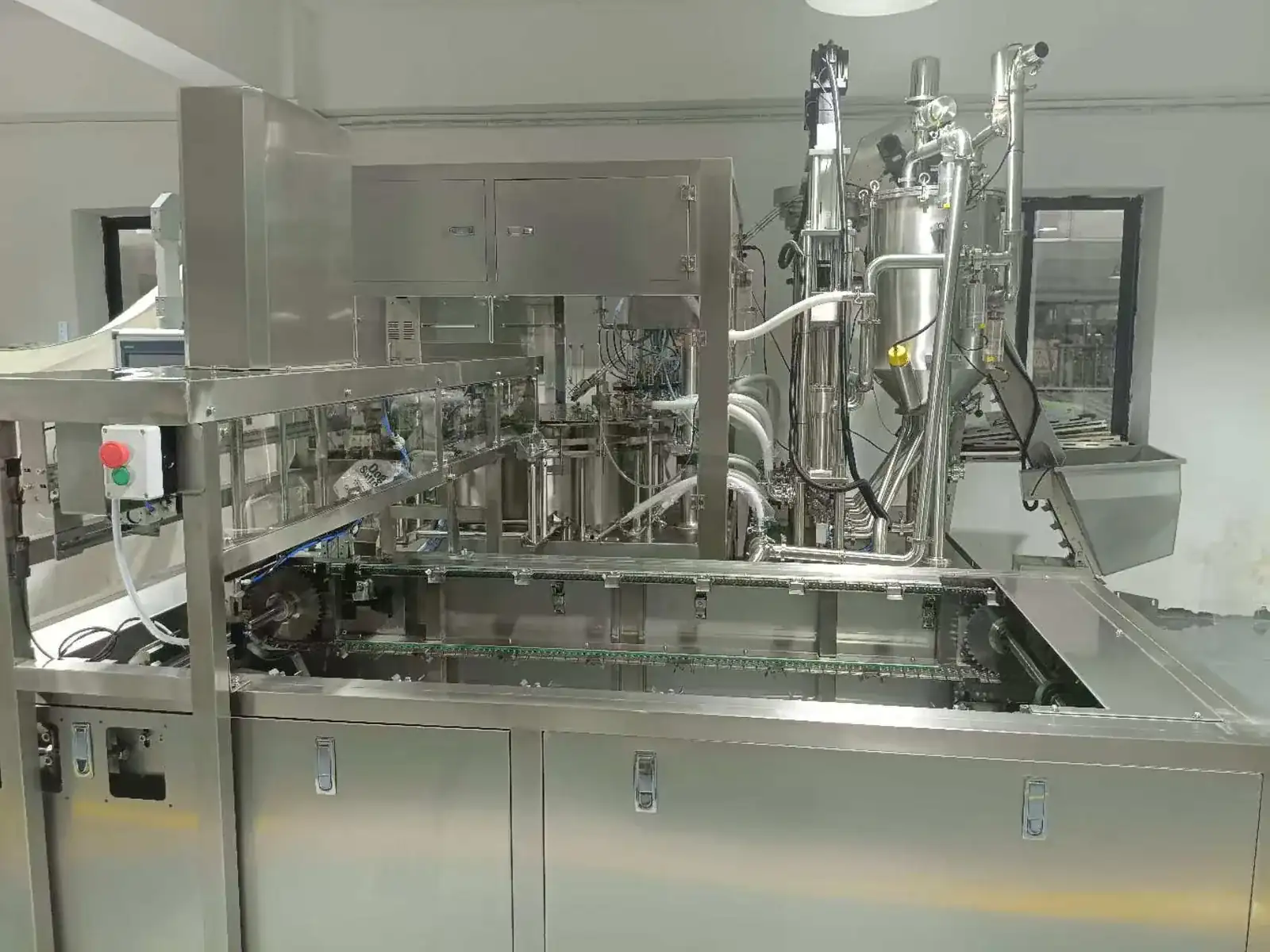
Request evidence for the decisions that change the quotation: a drawing showing the included modules, photographs of the proposed handling arrangement, a controlled format list, and a sample-test plan. A video is most useful when it identifies the product, fill amount, pouch, cap and operating conditions. Editing together short clips cannot establish sustained accepted output.
Agree what the factory acceptance test must show
Define the factory acceptance test (FAT) with the supplier before the order is released. Record the production-representative product and packaging materials, the run duration, staffing, dose checks, closure criteria and treatment of rejects. Include normal refill, low-supply, stop and restart events that matter to the intended operation.
Count conforming finished pouches separately from total machine cycles. Confirm which records, samples, settings and unresolved items will be retained. If a quotation uses a speed reference, require its conditions and acceptance method alongside the figure; do not substitute a machine-only demonstration for a product-and-package test.
Price cleaning and operating costs with the same care
“CIP included” is too broad for a purchasing comparison. Identify the cleaning-in-place circuits, supply and return connections, removable parts and buyer-provided services. Distinguish cleaning the product path from rinsing around the pouch or spout. Neither phrase by itself establishes an aseptic process or a verified cleaning outcome.
For each product change, define what must be drained, recovered, cleaned, removed, refitted and checked before acceptable production resumes. These requirements can affect tooling, access, staffing and downtime. Ask the supplier to state the cleaning boundary rather than assuming every component shown in a reference photograph is included.
Compare operating costs over the same production period. Include the relevant labor, utilities, maintenance, consumables, product losses, rejected packaging and changeover time. Divide those costs by conforming finished pouches for a comparable cost-per-good-pack measure. Keep capital cost and financing treatment separate unless your investment model explicitly includes them.
Use site-specific inputs and measured or agreed operating assumptions. There is no defensible payback promise without them. Review the service and support scope for the documents, training and support arrangements that should accompany the selected equipment.
Send a brief that can produce a useful price
Start with the information you already have. Product name, fill amount with units, pouch format and required finished-pack output are enough to begin the discussion. Photos can help establish the route; final compatibility needs controlled drawings and representative samples.
- Product: recipe family, temperature, flow behavior, particles, foam, cleaning needs and sample availability.
- Pack: filled volume, pouch drawing, center or corner spout, spout and cap drawings, supplier and material samples.
- Production: required conforming pouches per minute or hour, run pattern, product changes and available operators.
- Factory: country, layout, utilities, product supply, discharge requirements and existing equipment to connect.
- Commercial scope: priority options, buyer-provided items, required delivery boundary and target project timing.
- Acceptance: checks, records and operating events to include in the sample trial and FAT.
The packaging machine RFQ builder can help organize these inputs. Keep unknown items visible so the supplier can identify what needs review before a firm quotation.
A useful requirement to include in the RFQ
Quote the filling and capping system for the supplied pouch and cap drawings. Identify the metering system, product supply boundary, pouch-loading responsibility, cap-feed equipment, format parts, cleaning scope and discharge interface. Separate included items, priced options, buyer-supplied items and exclusions. State the product-and-package conditions and records proposed for acceptance.
This is a scope request, not a technical specification for every application. Add the actual product, package and acceptance limits during the engineering review.
Spout pouch filling machine price questions
Can I compare an advertised price with an automatic filling and capping line?
Only after checking that both prices cover the same process. Verify pouch and cap feeding, metering, capping, tooling, controls, cleaning and discharge. A price for a filling unit or a manually supported arrangement does not define the scope of an automatic system.
Does a higher head count guarantee lower cost per pouch?
No. Cost per conforming pouch also depends on product flow, staffing, refill interruptions, closure quality, rejects and changeovers. Compare a configuration against the same accepted-output requirement before judging its economic value.
Are cap feeding, rinsing and CIP always included?
The quotation must state this explicitly. Define each cap-handling component and each rinsing or cleaning circuit, including the services and equipment the buyer must supply. Reference equipment photographs are not an inclusion list.
Can one quotation cover several pouch sizes and liquids?
It can cover an agreed format and recipe list, subject to review. Provide the actual pouch, spout and cap combinations and product conditions. The quote should identify change parts, dosing limits, cleaning requirements and the test basis for those combinations.
What should I send if I do not have a complete specification?
Send the product, fill amount, a pouch photo or drawing, required output and installation country. Identify what remains undecided. These inputs let the discussion begin while the equipment scope and sample requirements are developed.
Request a configuration-based quotation
Share your product, fill amount, pouch and cap format, target output and country. INMAYPACK can review the appropriate filling and capping scope and identify the drawings, samples and interfaces needed for a project quotation.