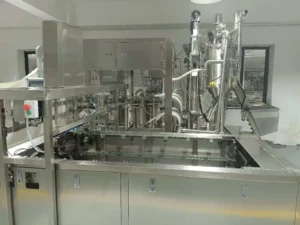
A doypack packing machine price is meaningful only when every supplier is quoting the same pouch route, product, dose, accepted output and delivery boundary. A roll-stock HFFS line and a premade-pouch machine can both produce stand-up pouches, but their equipment, material and changeover costs are not directly interchangeable.
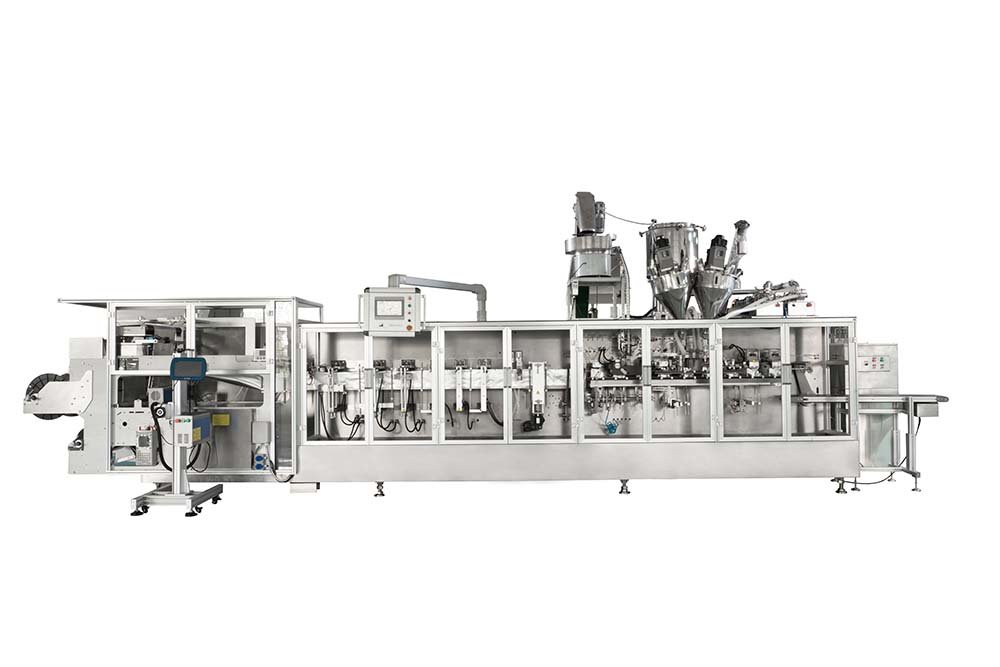
The price changes with the machine architecture, filling system, pouch features, accepted output, inspection, line interfaces, FAT evidence, shipping boundary and site work. Ask suppliers to issue a configuration-based quotation against the same controlled requirement before comparing totals.
Choose the architecture first
One doypack label can describe different machine routes
The package appearance alone does not define the equipment. Confirm whether the pouch is formed from roll stock or supplied as a finished premade pouch before asking for price.
Roll-stock HFFS doypack line
The machine unwinds film, forms the pouch, creates the bottom gusset, fills and top-seals in one sequence. Zipper, spout, shaped-pouch, duplex or full-servo requirements can change the machine frame, tooling and controls.
Premade-pouch filling and sealing
The machine receives completed pouches from a magazine, then picks, opens, fills and seals them. Pouch stiffness, zipper, gusset, opening behavior and pouch quality affect the feeder and handling design.
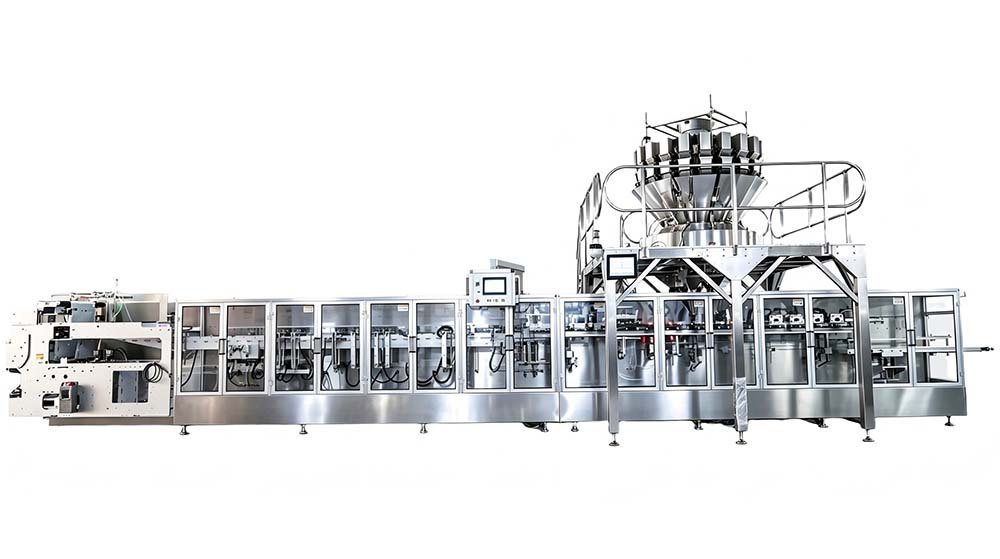
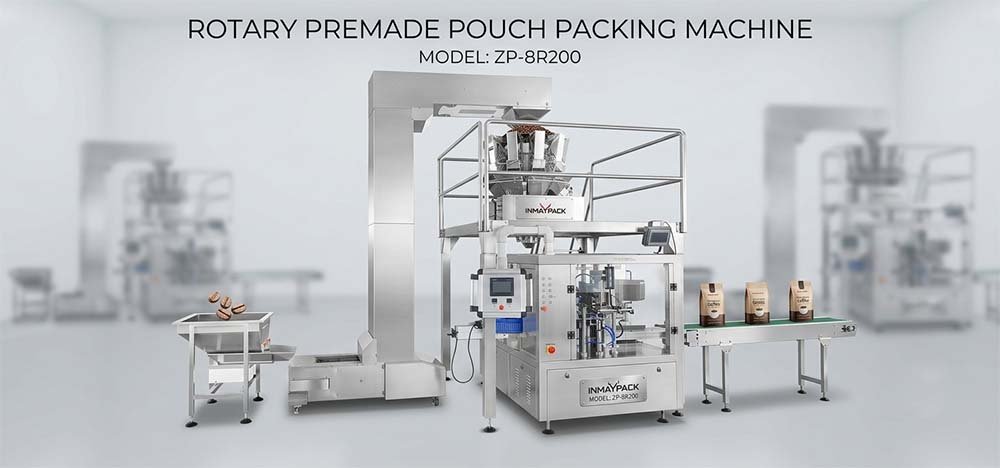
Do not compare these as equivalent base machines. Compare the accepted retail pouch, material cost, filler, change parts, inspection, labor, waste and full supplied boundary over the intended production plan.
Quotation drivers
Eight decisions that can change a doypack machine price
| Decision | What must be confirmed | Why it changes the quote |
|---|---|---|
| Product and dose | Flow, viscosity, particles, dust, temperature, bulk density, minimum and maximum dose. | Determines the hopper, feeder, weigher, auger, pump, nozzle, agitation and product-contact path. |
| Pouch route | Roll stock or premade pouch; controlled drawing, samples, material and sealant structure. | Changes the base machine architecture, film path or pouch feeder, tooling and handling sequence. |
| Pouch features | Gusset, zipper, corner or top spout, shaped outline, tear feature, hole and print registration. | Adds feature-specific stations, feeders, punching, alignment, sealing, cutting or inspection. |
| Accepted output | Saleable packs per minute or hour with the real product, pouch, refill method and inspection rules. | May change lane count, motion, filler capacity, buffer, inspection and downstream equipment. |
| Format range | All planned pouch sizes, doses, products and expected change frequency. | Changes forming sets, grippers, filling parts, recipes, tools, cleaning and changeover scope. |
| Quality checks | Coding, weight or fill verification, seal test, contaminant detection and reject confirmation. | Adds inspection devices, controls, reject handling, validation samples and data interfaces. |
| Line integration | Product supply, conveyors, accumulation, secondary packaging, safety, utilities and data. | Changes responsibility boundaries, PLC handshakes, guarding, drawings and integration testing. |
| Delivery evidence | FAT product, run duration, pass criteria, documents, training, commissioning and destination scope. | Changes engineering, test time, travel, site work, records and project-release requirements. |
The cheapest equipment line is often the least comparable quotation
If one supplier includes product feeding, coding, inspection, conveyors, change parts and an agreed FAT while another lists only the primary packer, the totals do not describe the same project. Normalize the boundary first. Then compare price, evidence and operating consequences.
Normalize quotations
Put every supplier on the same comparison sheet
Use the issued quotation and technical offer to mark each item as included, optional, excluded or still unconfirmed. Do not fill a missing item with an assumption.
For multi-machine projects, use the packaging system integration checklist to assign every mechanical, control, safety, quality, utility and data boundary before FAT.
Total project cost
Model the installed and operating boundary, not only purchase price
Installed project cost
- Primary machine and dosing system
- Product feed and downstream equipment
- Inspection, coding and reject devices
- Change parts, tools and initial spares
- Freight, unloading and site preparation
- Installation, commissioning and training
Operating cost
- Film or premade pouches
- Product giveaway and damaged product
- Startup, changeover and reject waste
- Labor and replenishment
- Cleaning and planned maintenance
- Downtime, recovery and spare parts
Use your own validated inputs
Annual incremental cash benefit = contribution from additional accepted packs − additional material, labor, maintenance and operating costsSimple payback period = installed project cost ÷ annual incremental cash benefitDo not calculate ROI from catalogue cycles alone. Use accepted finished packs under the agreed product, pouch, inspection and operating conditions, then test conservative and expected production cases.
Request for quotation
Send the inputs that allow a supplier to price the real project
| RFQ input | What to send | Decision supported |
|---|---|---|
| Product | Representative sample, photos, flow or viscosity, particles, dust, temperature, bulk density and cleaning limits. | Feeding, filler, contact path, cutoff, dust or drip control and cleanability. |
| Dose | Minimum, normal and maximum target; allowed range; recipes and expected refill condition. | Filler capacity, number of discharges, hopper, settling time and inspection method. |
| Pouch | Controlled drawing and physical samples; material, thickness, size, gusset, zipper, spout, artwork and seal area. | Machine route, tooling, grippers, film path, registration, opening, filling and sealing. |
| Output | Required accepted packs per minute or hour, shift plan, planned stops and downstream condition. | Motion, lanes or stations, filler, buffer, inspection and complete-line capacity. |
| Factory and utilities | Available space, layout, elevations, electrical supply, air, network, environment and existing machines. | Machine layout, utility package, interfaces, guarding and installation boundary. |
| Acceptance | FAT product and material, duration, sample plan, pass criteria, witnesses, records and site test. | Test plan, evidence, engineering time and commercial release conditions. |
Useful quotation rule: if an input is not confirmed, ask the supplier to label the corresponding price and performance statement as provisional instead of presenting it as a fixed promise.
Factory acceptance
Make price comparable by making evidence comparable
Before the run
- Approved product lot and condition
- Controlled pouch or film specification
- Installed filler and machine configuration
- Recipe, change parts and operator method
- Test duration and planned refill events
- Accepted-output and defect definitions
During and after the run
- Accepted finished packs
- Dose or net-content results
- Opening, filling, sealing and cut defects
- Product and packaging-material loss
- Stops, alarms, rejects and recovery
- Samples, settings, records and open items
Use the stand-up pouch machine FAT checklist to turn the quoted production claim into an agreed test structure. The issued project documents must define the final pass conditions.
Related decision paths
Continue with the route your pouch requires
Buyer questions
Doypack packing machine price FAQ
How much does a doypack packing machine cost?
A reliable price requires the product, dose, pouch route and dimensions, filler, accepted output, feature stations, inspection, line boundary, FAT and destination scope. INMAYPACK does not publish one universal range because a primary packer and a complete configured line are not equivalent quotations.
Why do doypack machine quotations differ so much?
They may cover different machine architectures, fillers, pouch features, change parts, inspection devices, conveyors, controls, factory tests, documents, commercial terms and site services. Normalize each included and excluded item before comparing totals.
Is an HFFS doypack machine cheaper than a premade-pouch machine?
There is no universal answer. HFFS and premade-pouch systems use different packaging materials and machine processes. Compare the complete installed system, material cost, changeovers, accepted output, labor, waste and planned SKU mix on the same production basis.
Which pouch features can increase the machine scope?
Zipper, corner or top spout, shaped outline, hanging hole, tear feature, print registration, special seal geometry and inspection requirements can add dedicated tooling, feeders, stations, controls or tests. Confirm the controlled pouch drawing before quotation.
What costs should be included beyond the primary machine?
Check product feeding and dosing, coding, inspection, reject handling, conveyors, guarding, utilities, change parts, spares, freight, unloading, site preparation, installation, commissioning, training, documents and the agreed FAT and site-acceptance boundary.
What should I send for an accurate quotation?
Send representative product and pouch or film samples, controlled drawings, dose range, required accepted output, format list, factory utilities and layout, inspection needs, destination, FAT criteria and the complete equipment boundary.