
HMK-1600 · Roll-film HFFS platform
HMK-1600 Zipper Pouch Packing Machine
Form resealable zipper doypacks, standard stand-up pouches and flat bags from roll film. The HMK-1600 horizontal form-fill-seal platform combines pouch making with two filling stations; match the filler, film and zipper to your product and required finished-pack output.

Selection answer
Choose HMK-1600 when the pouch is formed in-line from roll film
The HMK-1600 is a candidate for resealable zipper doypacks and related stand-up or flat pouches within the documented format boundary. It is not selected from bag width or headline speed alone. Release the machine only after the zipper profile, laminate, product behavior, dose range, filling method, accepted output and seal checks have been reviewed as one project.
The machine and the process
Compare the HFFS system. Understand the zipper pouch process.
This page covers the HMK-1600 zipper pouch configuration. Use the system overview for other roll-film pouch routes, or the technical guide to review the forming, filling and sealing sequence.
Horizontal Form Fill Seal Machines
Compare roll-film pouch formats, machine references, filling routes and project scope.
Explore HFFS systems →TECHNICAL GUIDEHow HFFS Machines Work
Follow the process, control points and common faults before reviewing the line configuration.
Read the working-principle guide →Project inputs
Define six inputs before asking for machine speed or price
The zipper pouch machine, filler and film are one operating system. A useful quotation starts with the finished package and acceptance basis, not a generic product name.
Finished pouch drawing
Provide width, length, bottom-gusset geometry, zipper position, seal widths, top headspace, tear feature, corner shape, artwork registration and allowable appearance defects.
Roll film and zipper
State laminate structure, thickness, web width, roll diameter, core, unwind direction, print repeat, eye mark, coefficient of friction, sealing window and zipper profile. Supply production material for testing.
Product behavior
Identify bulk density, particle size, dust, oil, fragility, aeration, bridging, viscosity, temperature and settling. These properties decide the dosing route and whether the seal area needs dust or drip control.
Dose and tolerance
Give the nominal dose, full SKU range, permitted variation and inspection method. The documented 1000 ml boundary does not establish a usable weight for a product with unknown density or headspace.
Accepted output
Specify accepted pouches per minute or hour, run duration, refill plan, planned stops, maximum rejects and downstream capacity. Separate mechanical cycles from saleable output.
Factory conditions
Confirm electrical supply, compressed-air quality, feeder height, floor loading, line direction, coding, inspection, discharge, guarding and maintenance clearance in the approved layout.
Machine evidence
Review the forming, zipper, transport and control areas
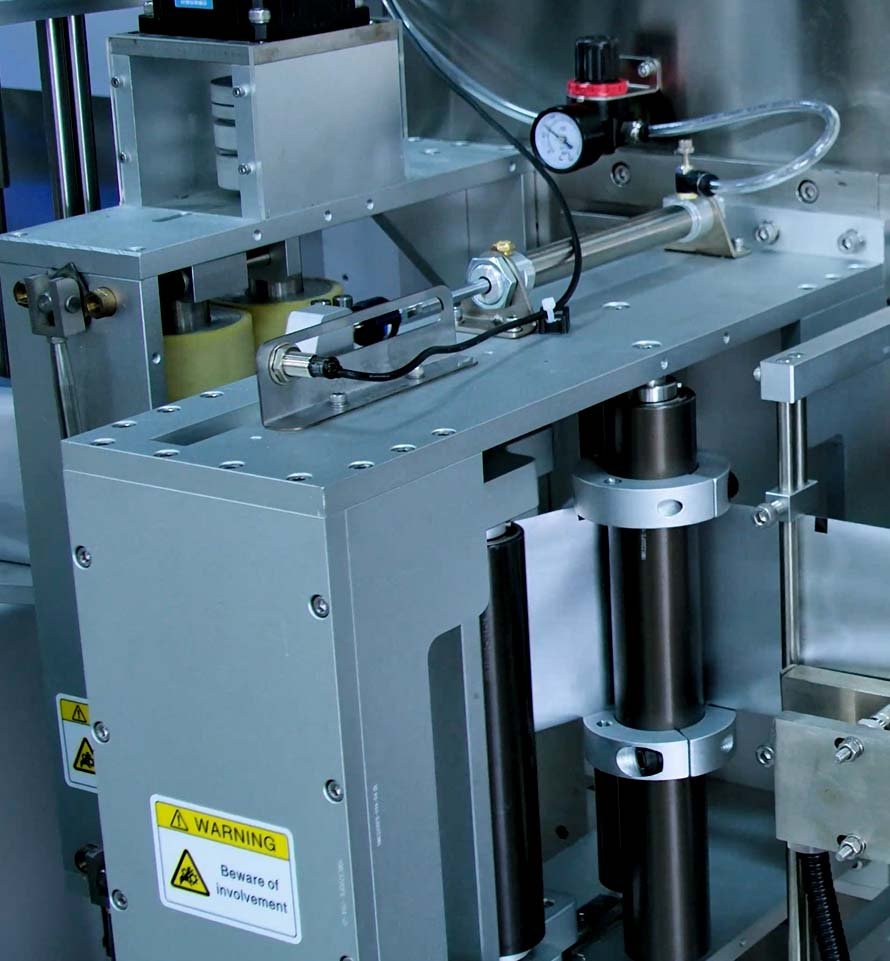
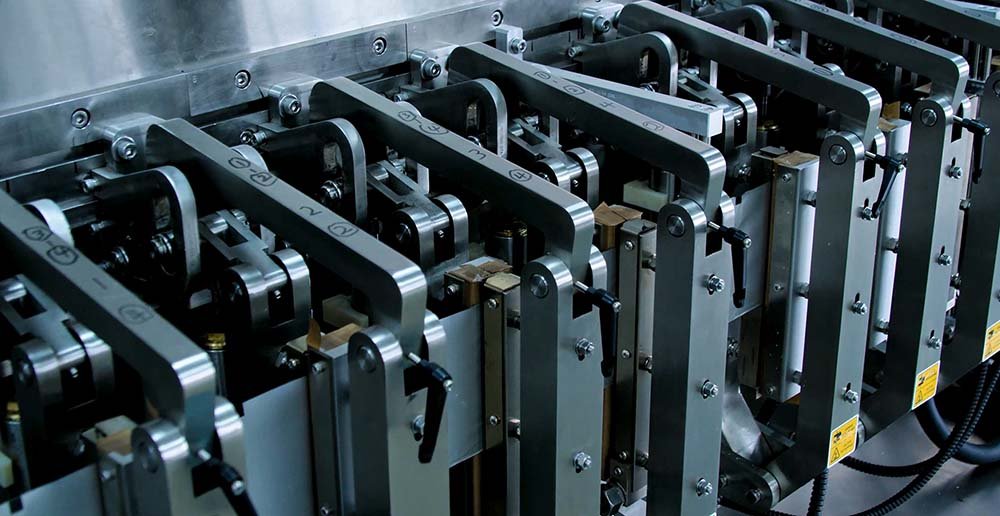
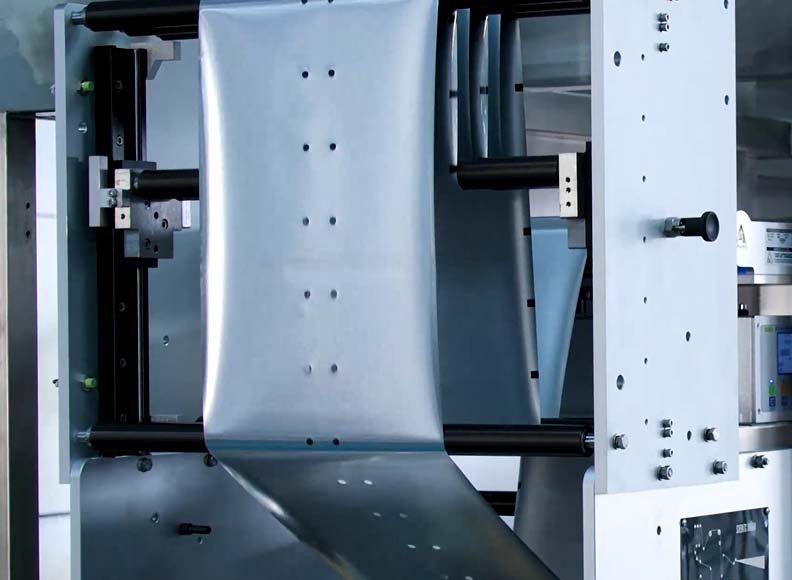
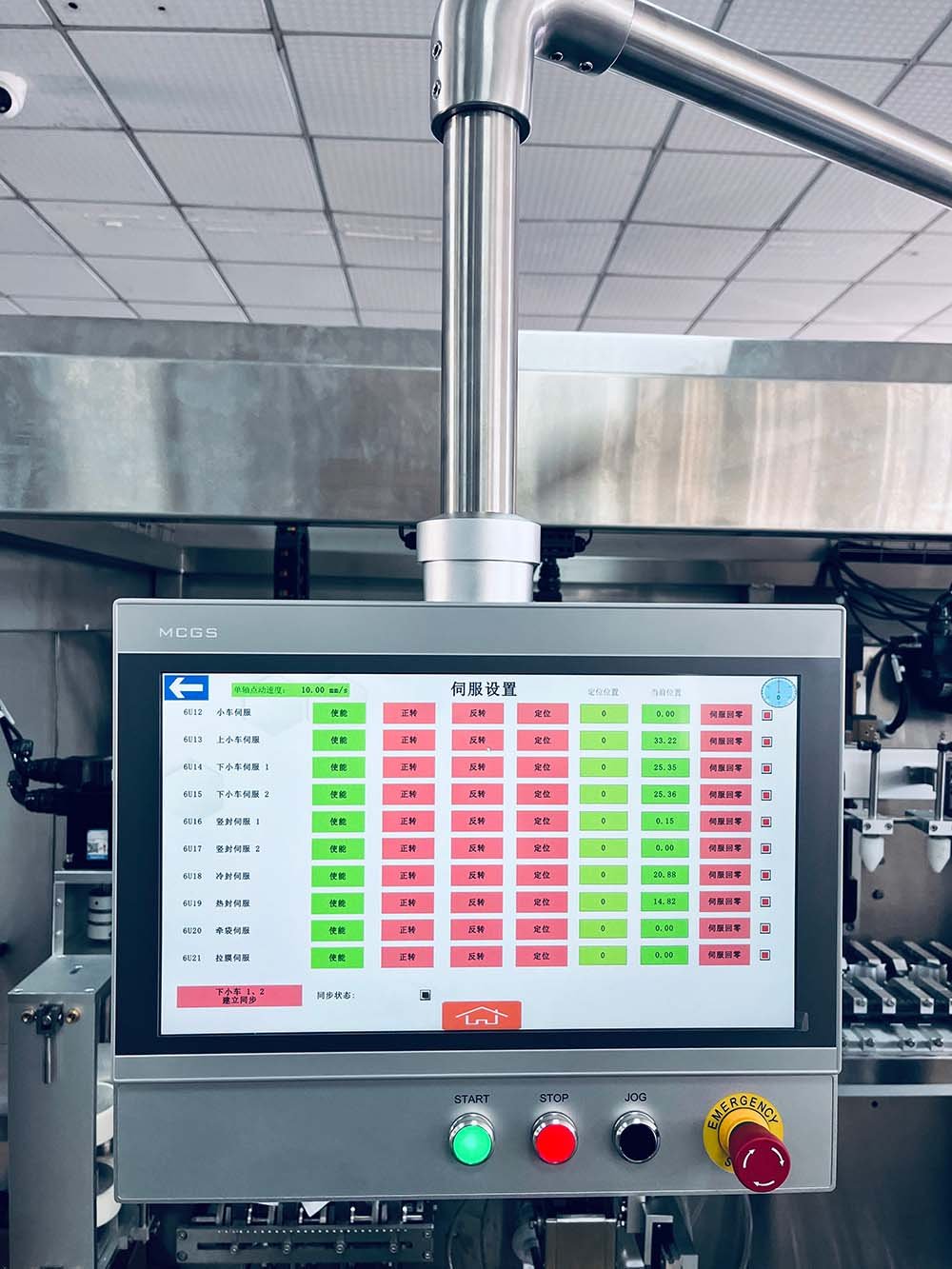
Review the HMK-1600 main frame and HMK series detail photographs below. Series details illustrate the mechanism areas; confirm the selected machine’s final arrangement in the project drawings. Open a photograph for a closer view.
Document-backed reference data
HMK-1600 reference specifications
These values come from the retained HMK-1600 budget proposal for a defined powder project. Treat them as selection boundaries. The signed quotation, approved drawings, final bill of materials and FAT protocol control the delivered configuration.
| Area | Reference value | Project confirmation |
|---|---|---|
| Machine operation | Horizontal form, fill and seal from roll film; intermittent pouch transport | Confirm machine direction, station sequence and line interfaces. |
| Pouch formats | Zipper doypack, standard doypack and flat bag | Release a controlled drawing for every priority format. |
| Doypack size boundary | Minimum 80 × 120 × (22+22) mm; maximum 160 × 280 × (40+40) mm | Validate product fit, headspace, zipper position, opening and sealing for each size. |
| Reference output | 20–50 bags per minute | Accepted output must name the product, dose, film, pouch, duration and reject rules. |
| Reference fill boundary | Maximum 1000 ml | Usable fill depends on density, flow, geometry, zipper clearance and headspace. |
| Filling stations | Two stations | Define the filler allocation, discharge timing and no-fill logic. |
| Roll film | Maximum 500 mm diameter; maximum 640 mm width; 76 mm core | Confirm roll weight, web layout, print repeat, unwind direction and splice practice. |
| Machine size and weight | 7200 × 1400 × 1850 mm; 3000 kg | Confirm final layout, floor loading, operator access and maintenance clearance. |
| Electrical | 8 kW; destination supply customizable in the proposal | Record voltage, phase, frequency, protection and connector standard. |
| Compressed air | 120 L/min at 0.6 MPa | Confirm air quality, connection, reserve capacity and auxiliary demand. |
| Construction | SUS304 appearance frame and SUS304 product-contact parts in the reference proposal | Approve product-contact materials, finish, access and cleaning method. |
| Reference outfeed | 1.8 m finished-product conveyor | Define transfer height, speed, accumulation and downstream handshake. |
Process sequence
How the zipper doypack is formed, filled and sealed
The station sequence must keep the web, zipper, pouch opening and filler timing synchronized. Review the complete process when diagnosing quality or output limits.
Unwind and guide the roll film
The unwinder releases the web into the forming path. Confirm roll diameter, core, edge control, unwind direction, web tension and low-material alarm behavior using production film.
Form the pouch and bottom gusset
The film is folded and guided through tooling that creates the pouch body and gusset. Tooling must match the controlled drawing rather than a nominal bag width.
Apply and seal the zipper profile
The zipper path, alignment and sealing conditions must suit the selected profile and laminate. Check position, bond, opening force and distortion after cooling.
Make side seals and separate pouches
Seal temperature, pressure, dwell and cooling interact with web speed and material. Cutting and registration must keep artwork, tear features and seal margins within the approved drawing.
Open and fill at two stations
Vacuum cups and mechanical assistance open the formed pouch before dosing. Assign the two stations to the confirmed filler route and verify that product does not obstruct the zipper or top-seal area.
Top seal, inspect and discharge
After filling, the machine closes the top seal and transfers the pouch to the outfeed. Coding, checkweighing, rejection and downstream handling are included only when listed in the project scope.
Filling-system selection
Match each filling station to the product
The HMK-1600 frame does not create dose accuracy by itself. The selected feeder, hopper, cut-off method, controls and inspection plan define the dosing route.
Powder and cohesive products
An auger route can be evaluated from bulk density, aeration, bridging, dust, target dose and permitted variation. Define hopper agitation, screw geometry, refill control, dust extraction and the method used to verify filled weight.
Granules, snacks and irregular solids
A cup or weigher route depends on piece size, density spread, fragility, oil, stickiness and acceptable breakage. Confirm discharge height and timing so the product clears the open pouch and zipper area.
Liquids and pastes
A pump route must be reviewed against viscosity, particulates, temperature, stringing, foam and cleaning. Define nozzle shut-off, drip control and product-contact materials in the final bill of materials.
Two-component or staged dosing
Two stations may support staged filling only when the timing, volumes, cross-contamination controls and combined acceptance method are engineered for the real product. Do not assume two stations automatically double output.
Route comparison
Compare roll-film HFFS with premade zipper pouches on one accepted-output basis
Neither route is automatically cheaper or better. Compare the same product, finished pouch, output, labor basis and quality requirement before choosing the machine architecture.
- Packaging supply: compare roll film, zipper profile, tooling, start-up scrap and converter controls with purchased-pouch price, storage and incoming inspection.
- SKU pattern: frequent artwork or format changes may favor a different route from long, stable runs. Include change parts, purge material and verified changeover time.
- Package quality: define zipper position, opening force, seal appearance, leak method, standing performance and artwork registration for both routes.
- Accepted output: use saleable pouches after rejects, planned refill and normal stops. Do not compare one supplier's empty-cycle rate with another supplier's accepted product run.
- Factory fit: include floor space, utilities, operator access, cleaning, material logistics, maintenance and downstream accumulation.
- Commercial scope: normalize filler, coding, inspection, conveyors, spares, FAT, documentation, freight and commissioning before comparing quotations.
Film and zipper validation
A controlled material specification prevents avoidable start-up problems
The web and zipper profile are machine inputs. Their variation changes tracking, forming, sealing, opening and finished-pouch appearance.
For a deeper material checklist, use the doypack film specification guide and the roll-stock zipper application guide.
Line integration
Define the equipment interfaces in the quotation
A complete line scope separates the base HMK-1600, required dosing equipment, optional modules and customer-provided utilities. This prevents gaps from being discovered during installation.
| Interface | Possible project item | Required definition |
|---|---|---|
| Product supply | Screw elevator, hopper, vacuum loader or other feeder | Refill method, buffer volume, high/low level signals, dust control and cleaning access. |
| Dosing | Auger, measuring cup, multihead weigher or pump | Product range, dose, tolerance, product-contact material, recipe and calibration method. |
| Pouch making | Forming set, zipper station, sealing and cutting tools | Approved drawings, film and zipper references, included size sets and change parts. |
| Coding | Thermal-transfer or project-approved printer | Code content, print area, line speed, consumables, inspection and data connection. |
| Inspection | Checkweigher, metal detector, vision or seal test outside the base machine | Detection target, test pieces, reject device, fail-safe logic, records and line stop behavior. |
| Discharge | Reference 1.8 m outfeed plus downstream conveyor | Height, speed, accumulation, orientation, reject separation and downstream handshake. |
| Controls | Hardwired or networked line signals | Start, stop, ready, fault, starvation, blockage, emergency-stop zoning and data ownership. |
| Documentation and service | Manuals, drawings, parts list, training and commissioning | Language, formats, delivery stage, attendance, exclusions and warranty responsibility. |
Factory acceptance
Convert the 20–50 bags/min reference into a measurable FAT
The useful output is accepted zipper pouches under one named condition. Agree the method before order release so machine speed, dosing and package quality are tested together.
Run condition
- Exact product condition and nominal dose
- Approved pouch drawing, film and zipper
- Target accepted output and run duration
- Refill method and planned stops
Dose evidence
- Sample frequency and calibrated reference
- Permitted variation and calculation method
- Start-up and steady-state samples
- Recorded rejected and reworked pouches
Package evidence
- Zipper position and opening function
- Side, bottom and top-seal inspection
- Leak or burst method where applicable
- Registration, cut and appearance limits
Recovery and handover
- Low film, low zipper and product-starved response
- Emergency stop and normal restart
- Alarm history and operator actions
- Retained samples, videos and signed records
Use the stand-up pouch machine FAT checklist to prepare the acceptance protocol before sending materials.
RFQ package
Start your zipper pouch quotation with four details
Send the available information to begin the machine review. Pouch drawings, film and zipper samples, utilities and the full acceptance requirements can follow as the configuration is developed.
Product name and a photo; mention powder, granules, liquid or paste.
Zipper pouch size, gusset and a photo or drawing, if available.
Nominal fill weight or volume and the required SKU range.
Target accepted pouches per minute or hour and your production plan.
Detailed engineering and quotation checklist
Buyer questions
HMK-1600 zipper pouch machine FAQ
What pouch formats can the HMK-1600 reference configuration make?
The retained proposal identifies zipper doypacks, standard doypacks and flat bags formed from roll film. Every released format still needs a controlled drawing covering dimensions, gusset, zipper, seals, cut, tear feature and artwork registration.
What is the documented HMK-1600 pouch size range?
The reference doypack boundary is 80 × 120 × (22+22) mm to 160 × 280 × (40+40) mm. This is a documented selection range, not proof that every product, dose, zipper and laminate will work at every combination within it.
Can the machine run at 20–50 bags per minute for any product?
No. The proposal lists 20–50 bags per minute as a reference range. Accepted output depends on product behavior, dose, filler response, pouch size, film, zipper, sealing window, refilling, inspection and downstream handling. Confirm the final number in a defined FAT.
Which filling systems can use the two stations?
The architecture can be evaluated with an auger, cup, weigher, pump or another approved dosing route. The final choice follows the product and dose. Two stations can support staged or allocated filling only when the interface timing and combined acceptance method are engineered for the project.
Is a roll-film zipper pouch route always cheaper than premade pouches?
No universal saving should be assumed. Compare roll film, zipper, tooling, start-up scrap, labor, changeover and accepted output with purchased-pouch price, storage, incoming inspection and premade-pouch handling for the same package and production plan.
What materials should be sent for sample testing?
Send the real product in representative condition, production roll film, the intended zipper profile, controlled pouch drawings, artwork and the agreed inspection method. Reserve enough material for setup, the full FAT, retained samples and any repeat test.
What should the quotation say about warranty, delivery and service?
The issued quotation and contract should state warranty coverage and exclusions, wear items, spare-parts responsibility, delivery schedule, Incoterm, documentation, training, remote support and any field-service scope for the approved configuration. Do not rely on a generic webpage statement.
Continue the decision
Related doypack engineering resources
Request an HMK-1600 configuration review
Start with your product, pouch format, fill weight or volume and target finished-pack output. INMAYPACK will review the HMK-1600 route and the next sample or drawing requirements before preparing the project quotation.