Doypack Film Specifications for HFFS Machines

A pouch drawing is not a film specification. A roll may have the expected width and still fail on an HFFS line because its winding direction, print repeat, registration mark, surface slip, roll build or sealant layer does not match the forming and sealing process.
Quick answer: specify the finished pouch geometry, laminate structure, thickness measurement method, sealant side, web width and repeat, print orientation, eye-mark position and contrast, winding direction, core and roll limits, coefficient-of-friction test method, splice rules, barrier requirements and heat-seal data. Approve the material only after a representative sample roll runs on the intended machine with the intended product.

This guide explains what must be agreed. It does not publish universal tolerances because acceptable values depend on the pouch layout, film structure, sensor, roll stand, sealing system, product and target speed.
Build your film trial briefTranslate the finished pouch into a controlled web layout
The purchasing request should begin with the final pouch, but the converter needs a machine-specific web layout. Finished width and height alone do not define the web width, repeat length, gusset material, seal bands, cut position or print-safe area.
| Specification field | What to define | Why the HFFS line needs it |
|---|---|---|
| Finished pouch geometry | Width, height, bottom-gusset construction, corner or shape profile, zipper/spout position if used | Controls forming parts, seal locations, opening space and filler access |
| Web width | Nominal width and the agreed measurement/tolerance on the controlled drawing | Determines tracking position, edge trim, overlap and forming geometry |
| Machine-direction repeat | Print repeat, pouch pitch and relationship to the registration mark and cutoff | Keeps graphics, seal zones and cut position synchronized |
| Seal and no-print zones | Side, bottom and top seal bands plus areas reserved for sensors, zipper or spout | Prevents inks, coatings, folds or components from interfering with sealing and sensing |
| Artwork orientation | Operator-side view, inside/outside print, read direction and left/right orientation | Avoids correctly sized film arriving with reversed graphics or sealant orientation |
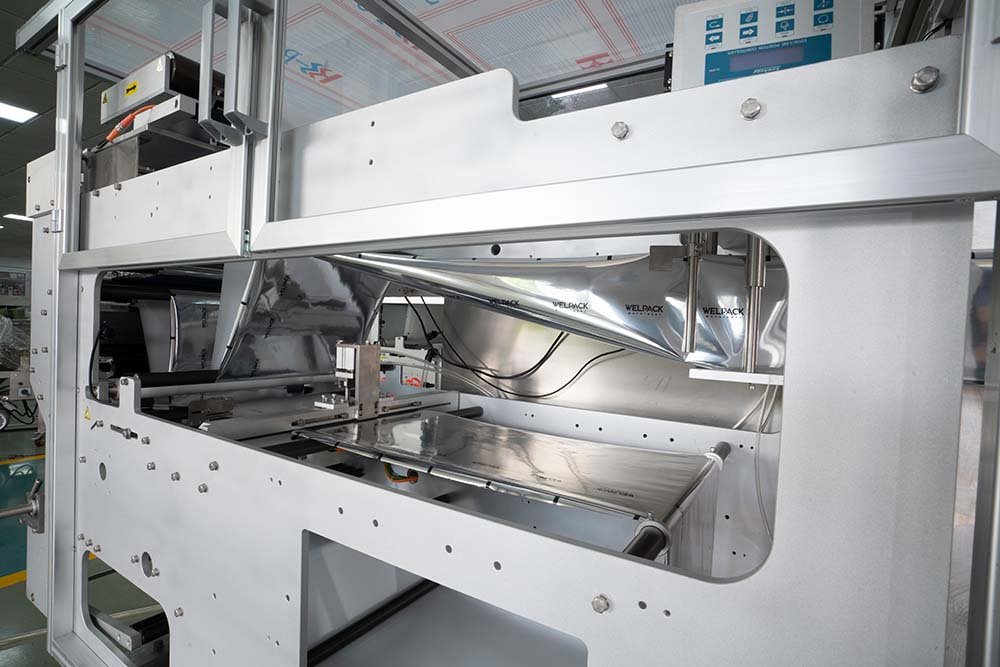
Approval rule: do not calculate web width or repeat from a generic online formula and place the order. Approve the converter’s final layout against the exact machine configuration and physical pouch sample.
Define the laminate—not only “food-grade film”
The material description should identify each functional layer and which surface faces the product. The outer layer must tolerate printing and the packaging process; the sealant layer must seal to the intended mating surface; barrier and mechanical layers must protect the actual product and distribution route.
Structure and sealant
Record the layer sequence, nominal construction, adhesive or extrusion process where relevant, print location, treatment/coating and product-contact side. A trade name without the layer sequence is difficult to compare between suppliers.
Thickness and profile
State the nominal value, tolerance, sampling plan and measurement method. ISO 4593 covers mechanical-scanning thickness for plastic film and sheeting but is not suitable for embossed film, so the chosen method must match the material.
Stiffness and curl
Record how the web lies after unwinding and forming. Excess curl, uneven gauge or poor flatness can affect tracking, folding, opening and jaw presentation even when average thickness is acceptable.
Surface friction
Define which surfaces are tested, conditioning, direction and method. ASTM D1894-24 and ISO 8295 address film friction, but ASTM states its method is not equivalent to ISO 8295 and the results cannot be compared directly.
COF is useful, but it is not a complete machinability certificate
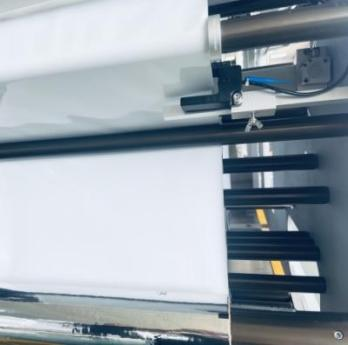
Static and kinetic coefficient of friction help compare slip behavior, but one COF result cannot predict every roller, former, seal jaw or speed transition. ISO 8295 describes the method as primarily useful for quality control and not a comprehensive assessment of machinability. Use the agreed test method for incoming control, then confirm performance on the intended line.
Specify what the registration sensor actually sees
A registration mark is not just a colored rectangle somewhere near the edge. Its position must be tied to the repeat and cutoff, and it must be presented to the installed sensor with reliable contrast throughout production.
| Control item | Put on the approved specification | Incoming check |
|---|---|---|
| Registration mark | Size, color, contrast/background, edge distance, pitch relationship and sensor side | Compare position and readability against the approved roll and machine sensor |
| Print repeat | Controlled repeat length and relationship between artwork, seal bands and cut line | Measure over an agreed number of repeats using the approved method |
| Winding direction | Print in/out, sealant in/out, leading artwork edge and unwind direction shown by diagram | Verify before mounting; do not rely only on a handwritten arrow |
| Core and roll | Core inside diameter and width, maximum outside diameter, roll width and permitted roll weight | Measure and inspect for core damage, loose winding or telescoping |
| Splices | Permitted count, tape and flagging method, splice angle, prohibited areas and roll-end marking | Confirm visibility and that the splice can pass the web path under the site procedure |
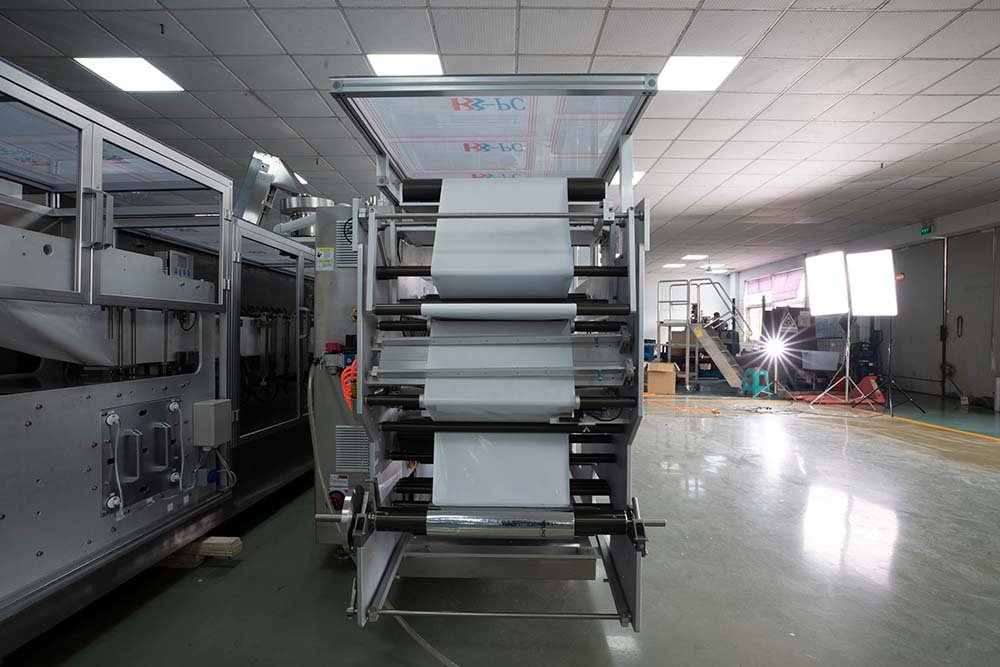
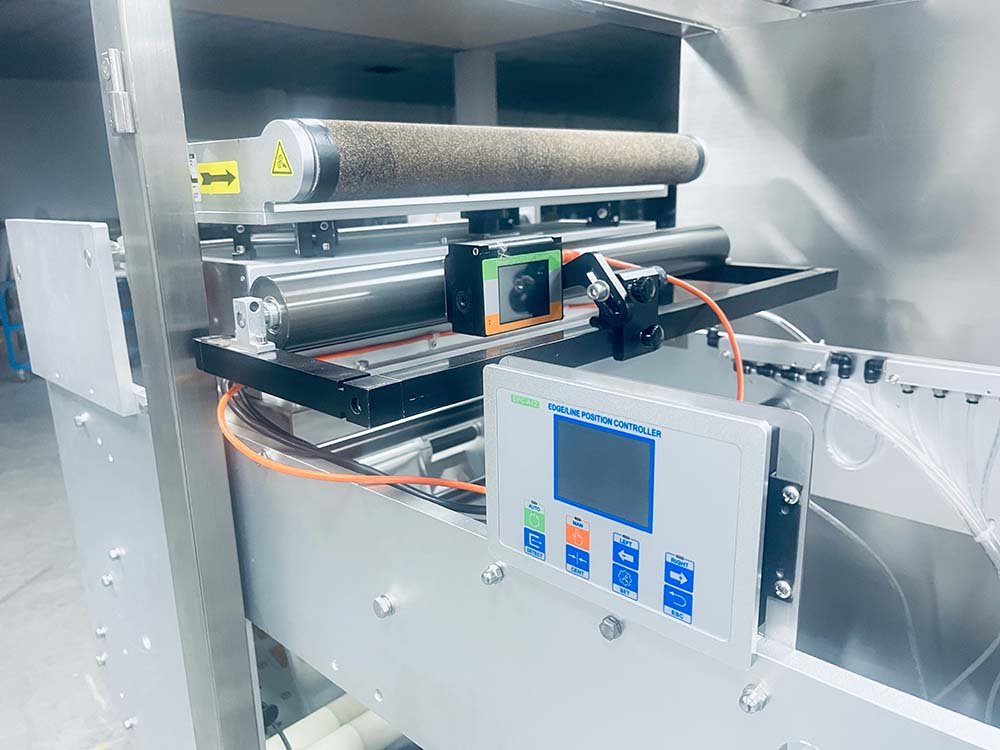
Best practice: attach a winding-direction drawing and an approved roll label to every purchase specification. Terms such as “winding 1” or “print outside” can be interpreted differently unless the web path and leading edge are shown.
Convert product needs into testable film requirements
The laminate should not be approved only because it “runs.” It must also protect the product, create the required seal and meet the applicable market and product-contact requirements. Each claim needs a defined method, condition and acceptance criterion.
Sealability data
Ask the converter for the sealant identification and the available sealing data, including the conditions used. ASTM F2029-16(2021) describes laboratory preparation of heat seals to study heat sealability. ASTM notes that laboratory results are a starting point: production equipment differs in seal area, scale and processing speed, so the production process still requires its own confirmation.
- Identify sealant-to-sealant and any dissimilar interfaces.
- Record the test method, jaw configuration, temperature, pressure and dwell used to generate the data.
- Evaluate seal strength with a controlled method such as ASTM F88 when it is part of the approved quality plan.
- Confirm hot-product, dusty, oily or wet filling conditions with the actual product; a clean dry laboratory seal does not reproduce every production condition.
Barrier and distribution
Specify oxygen, moisture, light or aroma protection only where the product and shelf-life design require it. Record the test standard, temperature, relative humidity, sample conditioning and units. A barrier number without its test conditions cannot be compared reliably.
Food-contact and printing documentation
For product-contact applications, request declarations and supporting documents appropriate to the destination market and intended conditions of use. Define the product-contact side, use temperature, food type, printing/adhesive location and migration or compliance documentation required by the buyer’s quality system. Do not treat the phrase “food grade” as a complete compliance file.
Keep roles clear: the product manufacturer owns the packaging specification and release criteria. The film converter supplies material data and conformity documents. The machine supplier confirms whether the proposed roll and web layout can be handled and sealed on the intended equipment.
Approve a specification, a sample roll and a production result
A supplier certificate cannot show whether a specific roll is mounted in the correct direction, tracks through the former, opens consistently or remains stable after the line reaches normal speed. Use documentation and machine testing together.
Before the trial
- Controlled pouch drawing and converter web layout have matching revision numbers.
- Film structure, sealant side, thickness method and print location are documented.
- Registration mark, winding direction, core, outside diameter, roll width and roll weight are confirmed.
- Target product, fill quantity, product temperature/viscosity where relevant and target speed are defined.
- Inspection and seal acceptance methods are agreed before the roll is consumed.
During the HFFS trial
- Record roll identity, machine recipe and starting conditions before adjustments.
- Observe unwind stability, web tracking, registration sensing, forming, gusset geometry and cutoff.
- Confirm pouch opening, filler access and clean seal headspace with the intended product.
- Evaluate seals after the process reaches its normal thermal and speed condition.
- Record every setting change and keep approved samples linked to the final specification revision.
Incoming inspection after approval
Build a short receiving plan from the risks found during the trial. Typical checks include roll label and revision, width, roll damage, telescoping, core condition, winding direction, splice marking, print/eye-mark position and the material properties identified as critical. Do not add tests that have no decision rule, and do not omit a critical attribute merely because the supplier certificate lists an average.

Make the approved film specification usable at the next reorder
A successful sample roll is not the end of qualification. The buyer needs a controlled package that can be used when another production lot is ordered, received and mounted months later. Put the drawing, material definition, trial result and change-control rule under one revision. Otherwise, purchasing may reorder a commercial description while production expects the behavior of a specific approved roll.
| Release record | Minimum content | Who uses it |
|---|---|---|
| Controlled pouch and web drawing | Finished dimensions, gusset or fitment geometry, web width, repeat, seal/no-print zones, eye mark, cutoff, artwork orientation and revision | Converter, machine supplier, quality and purchasing |
| Material and roll specification | Layer sequence, sealant and product-contact side, thickness method, roll/core limits, winding diagram, splice rule and critical material properties | Converter, incoming inspection and production |
| Approved trial record | Roll and product identity, machine recipe, run duration, accepted output, inspection method, reject definition, changes made and retained samples | Engineering, quality and machine acceptance team |
| Change-control rule | Which converter, material, print, adhesive, coating, dimension or site changes require notification, document review or another machine trial | Purchasing, quality and suppliers |
Do not use “same as last order” as the only release instruction. Link the purchase order to the approved revision and require the roll label or certificate to identify that revision. If a value is unknown, keep it marked for confirmation rather than copying a nominal figure from an unrelated machine or pouch.
The same discipline protects the supplier comparison. Two converters may describe similar laminates while using different thickness methods, surface treatments, adhesives, print constructions or winding practices. Compare like with like, and use the approved machine trial to decide which differences are critical for routine control.
Trace each film symptom back to a controlled field
A machine adjustment may hide a film problem for part of a roll, but it does not make the next roll predictable. When a defect appears, record the roll identity, machine recipe, speed and product condition before changing settings. Then compare the symptom with the approved sample and specification revision.
| Observed symptom | Film or layout fields to verify | Evidence to retain |
|---|---|---|
| Registration drifts or cuts move | Repeat length, eye-mark contrast and pitch, roll build, web tension, edge position and splice condition | Marked pouch sequence, sensor status, roll label and measured repeats |
| Web walks, wrinkles or forms unevenly | Roll width, gauge profile, winding quality, curl, core alignment, COF method and web-path setup | Photos at unwind and former, roll diameter, tension settings and defect location |
| Seal peels, channels or contaminates | Sealant identity, sealing window, material thickness, seal-band width, product condition and jaw cleanliness | Sealing settings, conditioned samples, test method and failure mode |
| Pouch will not open or stand consistently | Gusset geometry, stiffness, curl, pouch pitch, opening feature and product-drop timing | Empty and filled pouch samples, opening sequence video and dimensional checks |
| Performance changes after a new film lot | Material revision, supplier site, layer structure, thickness profile, surface treatment, COF and roll construction | Old/new certificates, retained film, roll labels and an A/B trial under one recipe |
Do not release a film change by appearance alone. If the converter changes a layer, adhesive, coating, print process, treatment or production site, define whether requalification is required before the altered roll enters routine production.
Build an HFFS film-trial specification brief
Complete the known fields before requesting a machine review or sample trial. Unknown values remain visible as gaps instead of becoming guessed tolerances. The summary is generated only in your browser and is not uploaded.
Use this brief as the front page of the trial package. Attach the controlled pouch drawing, converter layout, material data sheet, winding diagram, roll label and representative film. During the run, add the final recipe, changes made, accepted samples and unresolved deviations. The result becomes a traceable handoff between the product owner, converter and machine supplier.
Send the film data before ordering the production quantity
The correct time to discover an incompatible core, winding direction, eye mark or sealant layer is during drawing review and sample testing—not after commercial rolls arrive at the factory.
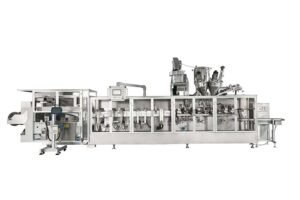
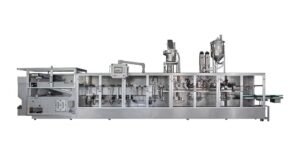
For the machine-side application range, review the roll-stock stand-up pouch machine. Keep the equipment specification and approved film specification linked by revision so a future converter change does not silently change the process.
Request a film-and-machine compatibility review
Send the finished pouch drawing, laminate proposal, web layout, roll dimensions, product details and target speed. If any critical value has not been confirmed, we will mark it for confirmation instead of inventing a tolerance.
Technical references
ASTM International, ASTM D1894-24: Static and Kinetic Coefficients of Friction of Plastic Film and Sheeting.
ASTM International, ASTM F2029-16(2021): Laboratory Heat Seals for Determination of Heat Sealability.
ISO, ISO 4593:1993: Determination of Film and Sheeting Thickness by Mechanical Scanning.
ISO, ISO 8295:1995: Determination of the Coefficients of Friction.
Need a Technical Opinion?
You Might Also Find Helpful

Auger Filler vs Weigh Filler for Powder Packaging
Compare auger and weigh fillers by powder flow, bulk density, dust, dose, refill behavior and acceptance testing before choosing aRead more
Modified Atmosphere Packaging Machine Guide for Pouches
Specify a modified atmosphere packaging machine by food risk, gas recipe, film barrier, seal integrity, residual oxygen checks and FATRead more
How to Choose a Coffee Capsule Filling Machine
Compare CF30, CF80, CF140 and CF240 coffee capsule filling machine routes by capsule, lid, dose, accepted output, tooling and FATRead more
VFFS Film Specification Guide
Define VFFS rollstock by bag geometry, web width, repeat, winding, COF, seal window, roll build and machine-trial acceptance.Read more
End-Load vs Vertical Cartoning Machine: Selection Guide
Compare end-load horizontal and vertical cartoning machines by product infeed, loading direction, carton format, line integration and FAT evidence.Read more
Liquid Form Fill Seal Machine Guide: Sachet, Doypack or Premade Pouch?
Compare liquid sachet, roll-film doypack and premade pouch routes by product flow, dosing, film, sealing, cleaning, RFQ inputs and FATRead morePowder Sachet Manufacturing Process: Equipment and Quality Guide
Follow powder sachet manufacturing from product definition and auger dosing through film forming, dust control, sealing, inspection and FAT.Read moreTurnkey Packaging Line vs Separate Machines: Buyer Decision Guide
Compare a turnkey packaging line with separate machines by responsibility, interfaces, FAT, schedule, total cost and lifecycle support.Read more