
Shaped pouch engineering
Shaped Doypack Packaging Solutions
Plan bottle-shaped and contour-cut stand-up pouches around your product and finished-pack drawing. Match the roll-film HFFS route, cutting tools, pouch opening and filler before approving the production configuration.
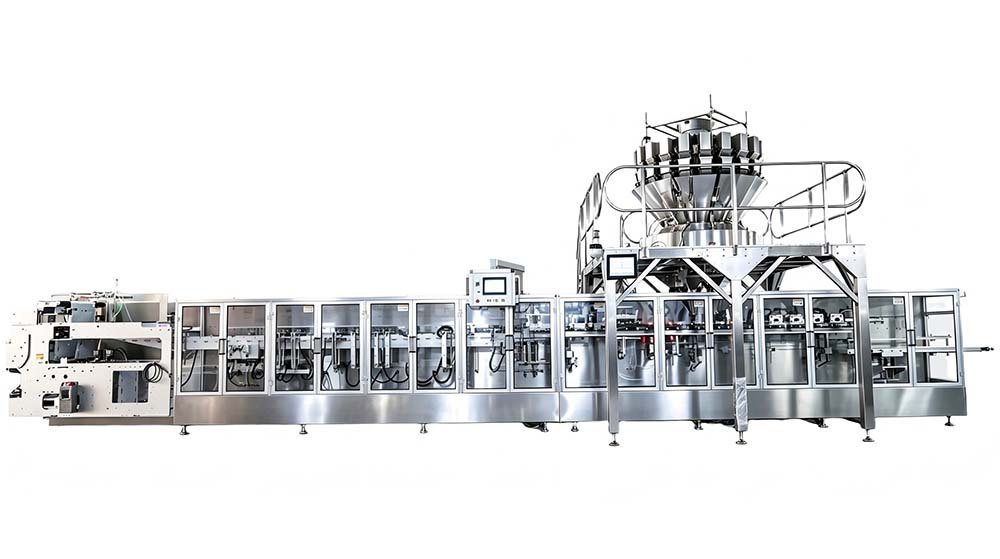
What is a shaped doypack packaging solution?
A shaped doypack packing machine forms, cuts, opens, fills and seals bottle-shaped or contour pouches from roll film. Use this guide to define the pouch geometry, material and product requirements, then compare equipment routes against the same drawing and accepted-output criteria. Review model-specific specifications on the linked product pages.
For other roll-film formats, explore the horizontal form fill seal machine systems. To understand the process, read how HFFS machines work.
Geometry before machinery
Each contour changes the process window
More complex geometry reduces tolerance for web drift, registration error, die-cut variation, narrow seal zones and restricted filling access.
Standard doypack
A simple reference contour with the widest process tolerance.
Contour-cut doypack
Shoulders and side contours introduce additional tooling and registration boundaries.
Bottle-shaped pouch
Neck, shoulders and a bottom gusset must leave enough opening and sealing access.
Illustrative pouch outlines. Final dimensions, contours and features follow the approved pack drawing.
Product and package together
Match the shaped pouch to the filling application
The product must pass through the selected opening, settle inside the usable pouch volume and leave a clean top-seal area. Start the equipment discussion with the product behaviour and the finished package together.
Tomato paste, puree and sauces
The four-station reference concerns tomato paste or puree in bottle-shaped doypacks. Review product consistency, temperature, particles, nozzle clearance and cut-off behaviour. A narrow neck or longer filling time can change the usable output, even when the nominal pouch volume is unchanged.
Liquid gel in a compact contour pouch
The duplex reference concerns liquid gel in a shaped doypack. Small packs still need usable filling access and enough headspace for sealing. Send the dose, product flow information and intended opening feature so the pouch drawing and dosing route can be evaluated together.
Thin, foaming or stringing liquids
Share how the product behaves during transfer and dispensing. Foam can consume headspace; stringing or drips can contaminate the seal area. Review the nozzle, shut-off, fill profile, settling and cleaning requirements with representative product before agreeing the line scope.
Home-care or cosmetic formulations
For a detergent, lotion or another formulation, provide viscosity, temperature, ingredients relevant to material compatibility and cleaning needs. Evaluate the contact materials, dosing method and pouch barrier requirements for that formulation. The food and liquid-gel references do not establish compatibility for every other product.
One controlled sequence
From roll film to accepted shaped pouch
The exact station arrangement is project-specific, but every viable route must control the same eight engineering stages.
Unwind and register
Control tension, tracking and print position before forming.
Build the gusset and seals
Establish the pouch body before contour cutting.
Create the contour
Protect seal width and drawing tolerances at the tooling stage.
Separate and open
Confirm access with the real laminate and pouch memory.
Coordinate filling travel
Keep the nozzle clear of the contour and seal zone.
Top seal and cool
Validate time, temperature, pressure and contamination control.
Inspect accepted output
Judge the finished pouch against agreed evidence.
Record the approved state
Lock drawings, settings, samples and restart criteria.
Engineering controls
Controls that matter on an irregular contour
Review the film path, contour tooling, opening access, filling-head travel and seal controls as one process. Specify the selected components and operating requirements in the project quotation.
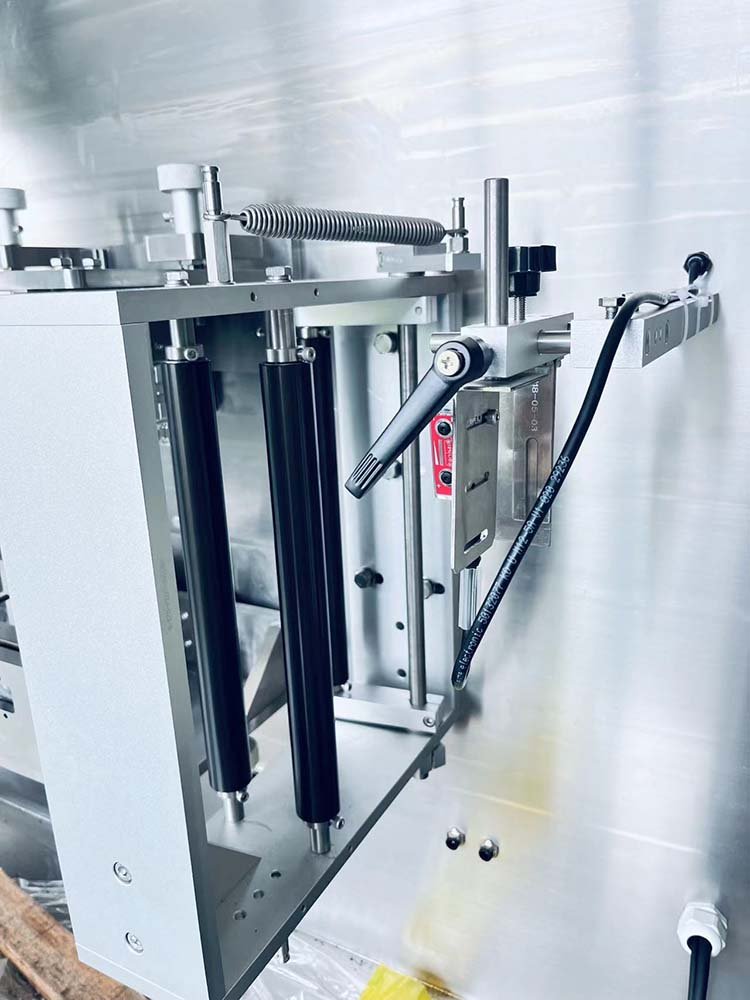
Web tracking
Registration evidence must cover normal running, restart and roll change.
Contour tooling
Die-cut clearance must protect the minimum usable seal width.
Opening assistance
Vacuum, mechanical or air assistance is selected from the pouch behaviour.
Filling travel
Nozzle position and settling time must keep the final seal area clean.
Seal control
Seal settings are validated against the actual laminate and contamination risk.
Inspection evidence
Accepted output is defined by the project test method, not appearance alone.
Customization and changeover
Define each pouch design as an approved format
A custom contour connects the artwork, forming path, cutting tool, pouch opening and final seal. Record these relationships for every SKU before deciding which formats belong on the same line.
Control the shape revision
Include neck width, shoulders, gusset, contour tolerances, seal zones, tear feature and print-to-cut position. A change to the outline can affect more than the cutting tool. Identify the drawing revision and included forming or sealing parts in the quotation.
Review a complete format matrix
List every required pouch shape, dimension and fill amount. Engineering can then review common tooling, dedicated parts, nozzle access and recipe requirements. Several formats should be evaluated together rather than assuming approval of one pouch covers the entire SKU range.
Include the restart checks
Confirm which parts, film rolls, settings and filler adjustments change between formats. Include alignment, trial packs, seal inspection and accepted-output checks after restart. Compare a defined changeover procedure and test condition rather than an unsupported number of minutes.
Route selection
Choose the configuration after the pouch is defined
Compare a four-station route for higher output with a duplex route for the intended product and pouch. These references describe different configurations; the final specification follows the approved drawing and sample trial.
| Decision factor | Four-working-station reference | Duplex reference |
|---|---|---|
| Best starting point | Projects with a validated bottle-shaped pouch drawing and a higher accepted-output requirement. | Projects that need a two-station shaped-pouch route evaluated around a controlled sample. |
| Reference application | 120 g tomato paste or puree in a bottle-shaped doypack. | 20 ml liquid gel in a shaped doypack. |
| Reference output | 160–200 bags/min in the referenced configuration; not a promise for every product or pouch. | 80 bags/min in the referenced application; final output remains subject to sample trials. |
| Reference pouch size | 80 × 120 × 20 to 105 × 210 × 35 mm for the documented four-working-station configuration. | A 53 × 112 mm application example is documented; the final range follows the approved drawing. |
| Approval gate | Confirm the model designation, station count, tooling, filling scope and FAT basis in the signed quotation. Evaluate each route as a separate configuration using the approved drawing and production samples. | |
These are application references. Pouch geometry, product behaviour, dose, laminate and inspection requirements determine the usable production range.
Packaging supply route
Compare roll-film HFFS with premade shaped pouches
Choose the supply route against the same finished pouch, product, production plan and quality requirement. Include packaging materials, tooling, changeovers and accepted output when comparing the complete project.
| Decision factor | Roll-film HFFS route | Premade shaped-pouch route |
|---|---|---|
| Where the contour is made | The line forms and cuts the pouch from roll film using the approved tooling and registration settings. | The pouch converter supplies the finished contour. The filling equipment must handle and open that supplied shape. |
| Long runs and repeat formats | Review roll supply, die-cut repeatability, tooling life, start-up scrap and the required continuous production run. | Review pouch supply consistency, storage, incoming inspection, magazine loading and handling stability. |
| Several shapes or short batches | Include dedicated tools, forming parts, recipes, film changes and the restart acceptance work for each format. | Changing the purchased pouch still requires a review of holding, opening, filling clearance and sealing parts. |
| Product and filling access | Coordinate the formed pouch, opening station, nozzle travel, dose and top-seal clearance as one process. | Confirm that the supplied pouch opens reliably and leaves enough room for the selected filler and headspace. |
| Cost comparison | Include film, tooling, scrap, labor, maintenance and accepted packs under the planned running condition. | Include purchased-pouch price, handling, storage, labor, rejects and accepted packs under the same basis. |
Already buying finished shaped pouches? Start with the premade pouch packing machine overview, then confirm handling of your actual contour and opening. A general machine category is a starting point for review, rather than proof of compatibility with every shaped pouch.
Quotation and line integration
Make the shaped-pouch project scope clear
Separate the forming machine, required dosing equipment, selected options and customer-provided services. A clear scope lets you compare quotations and plan installation around the same finished-pack requirement.
Forming and contour tools
List approved pouch drawings, included size sets, contour-cut tools, seal tooling and change parts. Identify how additional formats will be reviewed.
Filling and product supply
Define the feeder, tank or hopper, dosing equipment, nozzles, contact materials, refill method and cleaning access for the selected product.
Coding and inspection
Specify the code location and any checkweighing, vision, rejection or seal-test requirements. Identify equipment included in the line and equipment supplied separately.
Utilities and layout
Confirm electrical supply, compressed air, floor space, line direction, operator access, cleaning clearance and downstream transfer in the approved layout.
Trial and acceptance work
Name the product, film, pouch drawing, run condition and test method. Record accepted output, rejects, seal results and the evidence needed for release.
Documentation and support
Define manuals, drawings, spare-parts scope, training, commissioning and service responsibilities in the issued quotation and contract.
Plan the project in four stages
- Share the package concept.Begin with the product, pouch photo or drawing, fill amount and production target.
- Review geometry and materials.Develop the controlled drawing, laminate and filling-access requirements with representative samples.
- Define the quotation.Agree the route, tooling, filler, options, utilities and acceptance scope.
- Confirm the sample-trial evidence.Use the agreed trial and FAT conditions to release the selected configuration and handover requirements.
FAT evidence
Approve evidence, not an isolated speed number
A useful acceptance plan records the complete shaped-pouch process and the conditions under which the result was achieved.
Revision, dimensions, seal zones, gusset and contour tolerance.
Laminate, thickness, print repeat, roll condition and splice route.
Opening success and filling access through normal running and restart.
Defined inspection or test method using agreed reference samples.
Run time, counted input, accepted packs, rejects and recorded stoppages.
Approved parts, recipes, checks and restart acceptance criteria.
A distinctive contour is not a cosmetic machine option
The pouch outline changes the forming, cutting, opening, filling and sealing process at the same time. Approving a machine before the controlled drawing and sample trial are stable transfers too much risk into commissioning. Freeze the pouch geometry first, then compare equipment routes against the same accepted-output evidence.
Buyer questions
Shaped pouch equipment FAQ
Start with the finished package and the real product. These answers explain how to choose a route and prepare a useful quotation.
Can my bottle-shaped or contour pouch be made from roll film?
Feasibility depends on the pouch drawing, gusset, neck and shoulder geometry, seal widths, film structure and opening access. Send a photo or concept drawing to begin the review. Approve the cutting tools and machine configuration after evaluating the controlled drawing and production materials.
How do I choose between duplex and four-station production?
Compare the same product, dose, finished-pouch drawing and accepted-output requirement. The references in the table describe different project configurations. Headline speed does not establish suitability for a smaller neck, another laminate or a longer filling time. Use sample trials and the agreed FAT basis to confirm the route.
Which products can be evaluated for shaped doypacks?
The application references include tomato paste or puree and liquid gel. Other products require a review of viscosity, temperature, particles, foam, stringing, cleaning and filling-head clearance. Select dosing equipment and product-contact materials for the actual product rather than assuming one filler suits every liquid or paste.
Can I request a quotation with only a pouch photo?
A pouch photo, product name, fill weight or volume and target output are enough to start a configuration discussion. A firm tooling and machine scope needs a controlled drawing, film information, product requirements and agreed test conditions. Share the available information first; drawings and samples can follow.
What determines the price of a shaped pouch line?
The scope includes forming and cutting tools, working stations, dosing, material handling, coding, inspection, discharge and commissioning. Define included pouch formats, change parts and acceptance work before comparing quotations. There is no universal machine price or guaranteed packaging-cost saving for every shaped-pouch project.
Does a shaped pouch automatically support a spout or zipper?
A custom contour does not establish that a spout, zipper or another closure can be integrated in the same configuration. Put its position, profile, opening clearance and seal areas on the drawing, then review the operations and sample trial. Confirm tooling and closure scope explicitly in the quotation.
Can one machine run several custom pouch shapes?
Several shapes may be evaluated on one machine route, but each needs an approved drawing, tooling and filling-access review. Provide the complete SKU matrix, included format parts and changeover requirements. Confirm compatibility and restart acceptance for every released pouch rather than assuming one successful sample covers all shapes.
What should be included in a shaped pouch quotation?
The quotation should identify the forming machine, included contour tools, pouch formats, filler, product-supply equipment, selected coding or inspection, discharge and line interfaces. It should also define sample trials, FAT evidence, documentation, commissioning and service responsibility. Separate included equipment from options and customer-provided services.
Continue the engineering decision
Continue the engineering decision with the relevant equipment overview or technical guide.
Start your project
Start the shaped-pouch review with four details
Share what you have now. A photo or concept drawing is useful for the first discussion; the controlled drawing and production samples can follow.
What are you filling?
Product name and a photo; share any viscosity or temperature information you have.
What shape do you need?
A bottle-shaped or contour-pouch photo, concept drawing or existing sample.
How much per pouch?
Nominal fill weight or volume and the planned SKU range.
What is your production target?
Required accepted pouches per minute or hour and the expected shift pattern.
Detailed pouch drawing and sample checklist
Review the pouch before committing to tooling
Send your product, pouch photo or drawing, fill weight or volume and target accepted output. INMAYPACK will review the tooling, filling and trial requirements for the relevant machine route.