Stand-Up Pouch Opening and Filling: Vacuum, Grippers and Fill Clearance

A pouch can look open and still reject the filling nozzle. Reliable filling requires more than separating two film panels. The pouch must be held on its centerline, opened to the required cross-section, stabilized through nozzle entry and product discharge, then withdrawn without carrying product into the top-seal area.
Quick answer: use vacuum or panel contact to initiate separation, coordinate the side grippers so the mouth gains width instead of buckling, confirm the zipper and gusset are not restricting the cavity, guide the nozzle or funnel through a repeatable clearance window, control product trajectory, and keep the pouch supported until the filling tool is fully withdrawn.
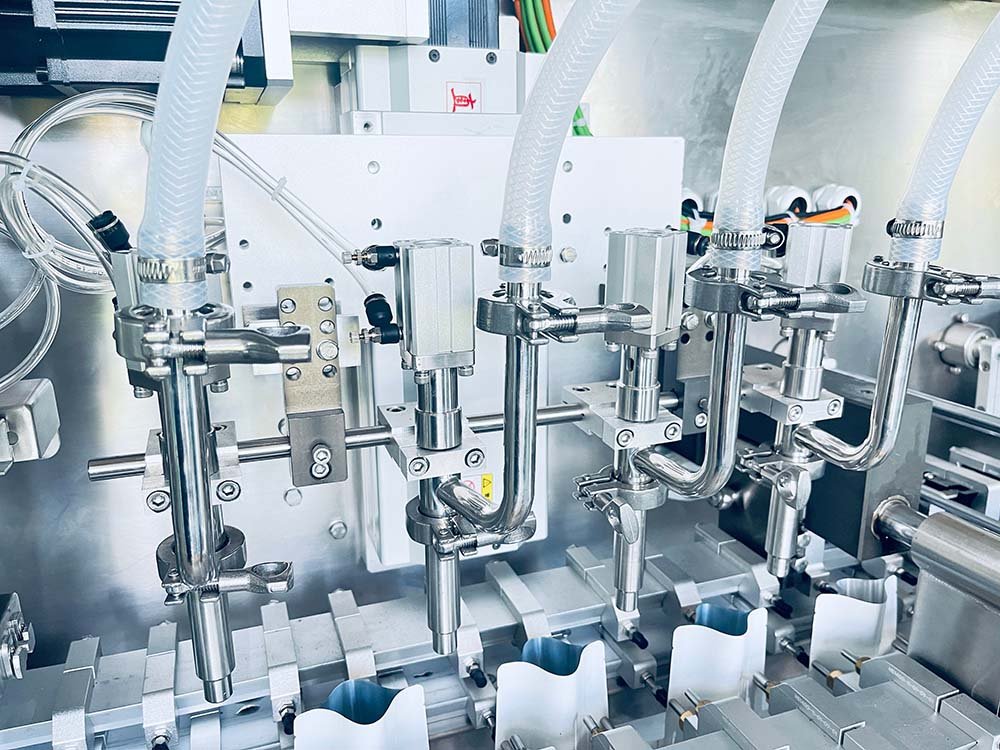
Opening is a sequence, not a single suction event
- Present the pouch repeat. The formed pouch reaches the opening station with its side seals, cut line, zipper or top margin in a known position.
- Control the side edges. Grippers establish the transport reference. Their spacing and timing must support opening without stretching or folding the pouch mouth.
- Separate the panels. Opposed suction or panel-contact devices initiate an air path between the front and rear walls.
- Build usable cross-section. Gripper motion, mechanical opening support or air assistance expands the mouth far enough for the specified filling tool.
- Confirm access. The nozzle or funnel enters without striking the pouch, zipper, gusset or sealing margin.
- Fill while supported. Pouch position remains stable as product momentum, weight and trapped air change the bag shape.
- Withdraw cleanly. The filling tool clears the mouth before transport resumes, leaving the top-seal surfaces free of product where the process requires it.

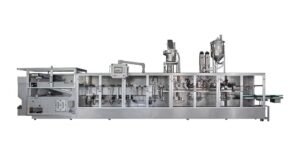
This process explanation complements the HMK2000 stand-up pouch packing machine specifications. Equipment selection belongs on the product page; this guide focuses on the opening-and-filling interface.
More vacuum is not the universal fix
Suction can fail because the cup never forms a stable seal, the panel bends in the wrong place, the two inner surfaces remain blocked together or the side grippers do not create room for the pouch to expand.
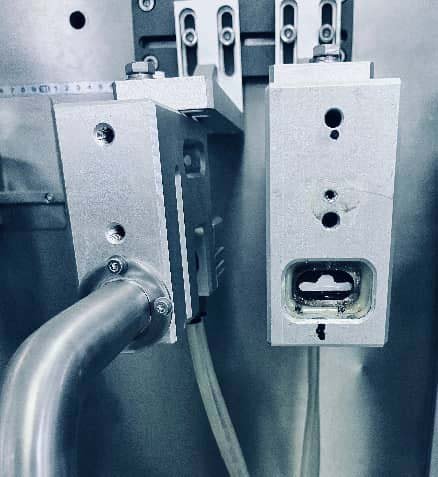
Contact surface: gloss, texture, ink, varnish, dust, oil, moisture and wrinkles can change suction-cup sealing.
Panel stiffness: laminate structure, temperature and pouch width affect how the wall flexes when the cups move apart.
Internal blocking: static, pressure, film contact and zipper engagement can keep the inner layers together after the outer panels begin moving.
Contact position: too close to the cut edge can leak; too low can distort the pouch body or leave insufficient mouth opening.
Timing: vacuum-on, pull-apart, gripper motion, opening support and release must overlap correctly at production speed.
Diagnostic rule: observe where the opening sequence first stops matching the approved motion. Increasing vacuum before checking pouch position, cup contact and gripper timing can hide the original fault and create new film marks or deformation.
Flexible-container opening systems commonly combine suction with controlled pouch curvature or gripper movement. See the opening principles described in US7509792B2 and the opposed side/panel-gripper method in WO2008057937A3.
Define the clearance window at the moment of filling
The useful opening is the space available to the filling tool while the pouch is moving through its real sequence. A static hand-opened sample does not show nozzle entry, machine tolerances, pouch oscillation or the way product load changes the bag.
Nozzle and funnel geometry
Confirm outside dimensions, entry depth, centerline, withdrawal path and clearance from zipper profiles, side seals and the top-seal margin. A large opening tool may improve product flow but reduce tolerance to pouch-position error.
Product trajectory
Fine powders can create airborne dust; granules can bounce or bridge; liquids can splash or string during cutoff. The filling system, pouch opening and extraction or drip-control method must therefore be tested together with the actual product condition.
Pouch support under load
As the pouch gains weight, its center of mass and film tension change. Grippers and guides must keep the mouth located until the filling tool clears and the pouch is ready for transfer to the top-seal process.
A pouch-filling system must keep the mouth accessible during filling and control the flexible package through transport. The relationship between opening, filling and sealing is illustrated in EP1517837A2; a filling-funnel arrangement coordinated with opening fingers is described in US20140020339A1.
Match the symptom to the first unstable interface
| Observed symptom | First process family | First checks |
|---|---|---|
| One panel does not follow the suction cup | Cup contact, surface or vacuum path | Inspect contact mark, surface condition, cup wear, approach and vacuum response. |
| Panels separate but mouth stays narrow | Gripper spacing, internal blocking or opening support | Observe side-edge motion, zipper engagement, pouch curvature and mechanical opener timing. |
| Nozzle clips one side intermittently | Pouch centerline, repeat variation or tool clearance | Trend pouch-to-nozzle position through the run; compare left/right gripper references. |
| Good opening empty, poor opening with product cycle | Timing overlap, vibration or product-tool motion | Review the complete production-speed sequence rather than a reduced-speed dry cycle. |
| Product appears in the top-seal area | Discharge trajectory, fill cutoff, withdrawal or pouch support | Identify when contamination occurs and whether it comes from splash, dust, bounce or nozzle drag. |
| Pouch tilts after filling | Gripper balance, product distribution or transfer timing | Compare both edge references, fill location and support until tool withdrawal. |
| Zipper pouch opens less reliably than standard pouch | Profile engagement, flange position and available opening margin | Verify zipper application and opening sequence against the approved finished-pouch drawing. |
Change one process family at a time and preserve the first failed sample. For broader isolation logic, use the stand-up pouch machine troubleshooting guide. For reclosable formats, review the roll-stock zipper application process.
Bring the opening and filling evidence into one record
Pouch and film: approved dimensions, laminate, zipper, print surface, roll direction and representative production condition.
Opening setup: gripper reference, suction-cup type and contact position, opening support and sequence timing.
Filling tool: nozzle or funnel dimensions, entry depth, centerline, discharge behavior and withdrawal path.
Product: actual density, particle behavior, temperature, viscosity or dust/splash tendency relevant to the project.
Evidence: continuous-run observations, classified rejects, retained samples, top-seal cleanliness and measurements against approved criteria.
Check your pouch opening before final tooling
Send the pouch drawing, film structure, zipper details, product, fill weight, filling-system information and target output. INMAYPACK can review the opening sequence and identify the sample tests needed before machine configuration is finalized.
Technical references
Google Patents, US7509792B2: Device for opening flexible containers—suction, pouch curvature and controlled panel separation.
Google Patents, WO2008057937A3: Method and apparatus for opening a flexible pouch using opening fingers—coordinated side and panel grippers.
Google Patents, EP1517837A2: Method and system for filling pouches—controlled transport, mouth opening, filling and sealing sequence.
Google Patents, US20140020339A1: Flexible funnel for filling a pouch with a product—opening devices and filling-tool access.
Need a Technical Opinion?
You Might Also Find Helpful

Auger Filler vs Weigh Filler for Powder Packaging
Compare auger and weigh fillers by powder flow, bulk density, dust, dose, refill behavior and acceptance testing before choosing aRead more
Modified Atmosphere Packaging Machine Guide for Pouches
Specify a modified atmosphere packaging machine by food risk, gas recipe, film barrier, seal integrity, residual oxygen checks and FATRead more
How to Choose a Coffee Capsule Filling Machine
Compare CF30, CF80, CF140 and CF240 coffee capsule filling machine routes by capsule, lid, dose, accepted output, tooling and FATRead more
VFFS Film Specification Guide
Define VFFS rollstock by bag geometry, web width, repeat, winding, COF, seal window, roll build and machine-trial acceptance.Read more
End-Load vs Vertical Cartoning Machine: Selection Guide
Compare end-load horizontal and vertical cartoning machines by product infeed, loading direction, carton format, line integration and FAT evidence.Read more
Liquid Form Fill Seal Machine Guide: Sachet, Doypack or Premade Pouch?
Compare liquid sachet, roll-film doypack and premade pouch routes by product flow, dosing, film, sealing, cleaning, RFQ inputs and FATRead morePowder Sachet Manufacturing Process: Equipment and Quality Guide
Follow powder sachet manufacturing from product definition and auger dosing through film forming, dust control, sealing, inspection and FAT.Read moreTurnkey Packaging Line vs Separate Machines: Buyer Decision Guide
Compare a turnkey packaging line with separate machines by responsibility, interfaces, FAT, schedule, total cost and lifecycle support.Read more