What must the package become?
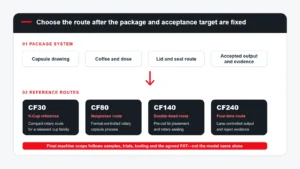
Start with the controlled drawing, seal layout, gusset, closure, fitment and presentation—not the machine acronym.
Packaging systems configured around your application Defined project scope

Selection guide · Form-fill-seal architecture
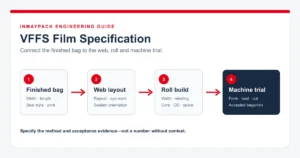
Choose the machine from the package path, not from the acronym. Horizontal and vertical form fill seal machines both convert roll stock into a package, fill it and close it. The decisive difference is the material path: HFFS moves the web and package mainly through a horizontal process, while VFFS draws film downward around a forming tube.
For the wider architecture boundary—including flow wrap and sachet routes—start with the complete form fill seal machine guide.
This comparison covers pouch and bag packaging systems. “HFFS” can also describe horizontal flow wrappers that form a tube around a product; confirm the supplier's actual machine architecture before comparing quotations.
For a discrete product that is wrapped while travelling horizontally, use the flow wrap packaging machine guide to define infeed, film, seal and FAT requirements.
| Decision point | Horizontal form fill seal | Vertical form fill seal |
|---|---|---|
| Material direction | Web and pouches advance through horizontal stations. | Film travels downward around a forming tube. |
| Typical filling relationship | A formed pouch is opened and presented to a nozzle, funnel or chute. | Product is delivered through the forming tube into the developing bag. |
| Package geometry | Relevant for flat and stand-up pouch architectures; available features depend on the machine and tooling. | Commonly associated with pillow, gusseted and related bag formats; exact formats depend on the forming set and machine. |
| Functional features | Zipper, spout, shaped contour or other operations may be integrated on suitable pouch-forming platforms. | Feature integration follows a different film path and must be confirmed for the intended VFFS platform. |
| Main validation focus | Web control, pouch geometry, transfer, opening, filling and seal-area condition. | Film tracking around the collar/tube, vertical product drop, bag length and cross sealing. |
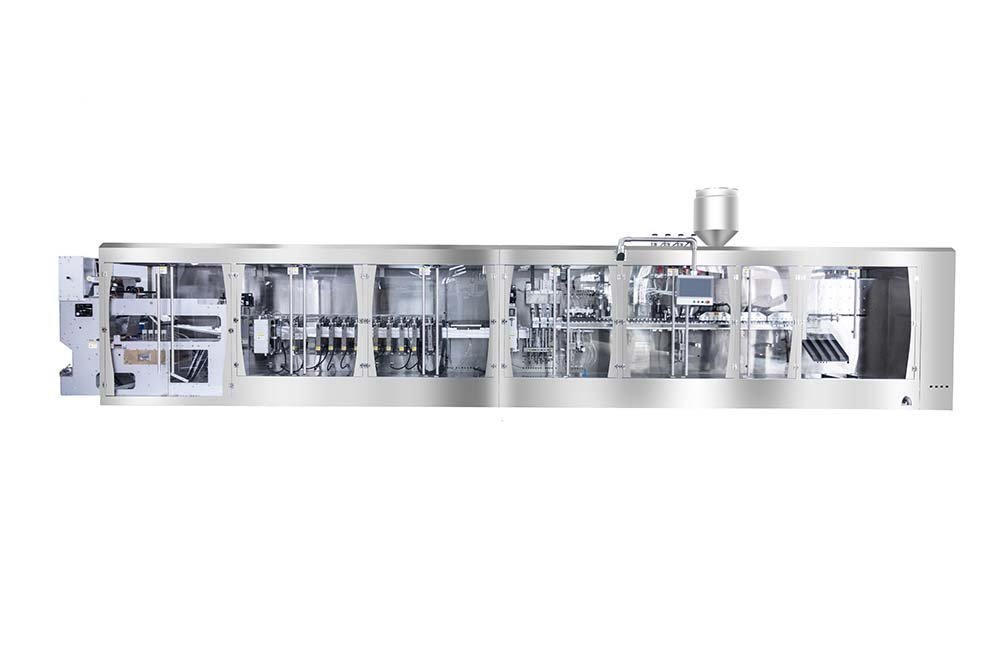
HFFS is relevant when the package itself needs multiple controlled stations before filling: web guiding, folding, bottom or side sealing, optional zipper or fitment operations, cutting, pouch transfer and opening. It is therefore useful to evaluate the complete pouch geometry rather than only nominal width and length.
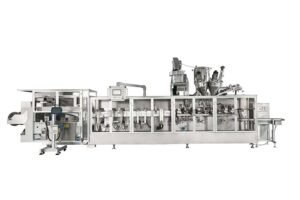
The INMAYPACK stand-up pouch packing machine is a roll-stock HFFS route. For the station sequence, see the HFFS packaging machine components guide.
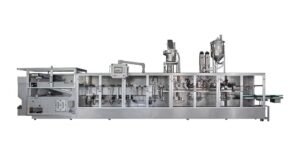
For a commercial comparison of standard, high-speed, spout, shaped and multi-lane pouch platforms, review the horizontal form fill seal machine family before fixing a model.
VFFS is relevant when the film can be drawn around a forming tube and the product can be delivered downward into the developing bag. Product drop, forming-collar geometry, film friction, bag length and cross-seal timing become central process variables.
Do not assume that every product that flows can use the same filling arrangement. Dust, fragility, aeration, bridging, splash or large pieces may change the feeder, dosing system, drop distance and required bag support. Compare the complete bagging system, not just the basic VFFS frame.
If the requirement is a small sachet rather than a larger bag, review the sachet packing machine category separately; multi-lane sachet systems are another architecture and should not be treated as a generic VFFS substitute.
Start with the controlled drawing, seal layout, gusset, closure, fitment and presentation—not the machine acronym.
Review gravity, dust, splash, fragility, particulates and the distance between dosing and the package.
Film construction, stiffness, friction, registration and seal response interact with the selected forming path.
Match the dosing method to the product, then confirm the physical handoff to the package. Use the pouch filling system selection guide.
Define dose, seal condition, registration, appearance and sustained accepted output before trials.
List the real package range and change parts so flexibility is evaluated against actual production plans.
I would not begin a project by asking whether HFFS or VFFS is faster. I would first freeze the acceptable package, product path and test method. Once those are clear, the direction that requires fewer unstable handoffs usually becomes easier to identify. Speed only matters after the line can repeatedly produce the pack that quality and production teams will accept.
If the decision is roll-stock HFFS versus supplied premade pouches rather than horizontal versus vertical direction, use the separate HFFS vs premade pouch machine guide.
Send the product, package drawing, film information and intended acceptance checks. INMAYPACK can review whether a horizontal pouch architecture fits the requirement.
Reply: sales@ewpackmachinery.com · WhatsApp: +86 18658799162