A premade pouch packing machine price is comparable only when the quotation covers the same finished bags, product, dosing system and accepted output. A pouch handler alone is not the same purchase as a working filling and sealing cell.
This guide is for buyers who have selected supplied premade bags and now need to compare equipment offers. It separates the quoted machine, missing project scope and recurring pouch-production costs. INMAYPACK does not publish a universal price in this guide: a current quotation requires a defined configuration. The comparison method below is a purchasing framework, not a market-price survey or a promised saving.
First decide whether the offer is a handler, a cell or a line
A supplied-pouch machine presents, opens, fills and seals bags that have already been manufactured. The dosing equipment may be an integrated package, a separate item or equipment supplied by the buyer. Start with the premade pouch machine range to identify a suitable handling route, then define the commercial boundary.
Pouch-handling machine
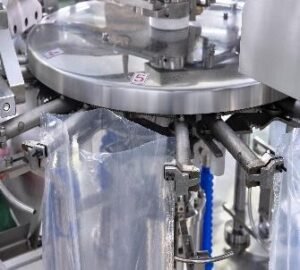
The offer may cover the magazine, transfer, gripping, opening, sealing and controls, but not the equipment that weighs or meters the product. Ask which opening devices, coding arrangements, discharge components and protective systems are actually included. A machine pictured beside a scale, elevator or platform does not establish that those items are in the quoted price.
Complete filling and sealing cell
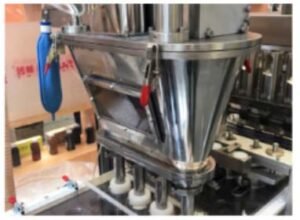
A cell adds the selected filler, product supply, supports and control interfaces needed to coordinate dosing with an open pouch. Confirm who supplies the connecting chute or nozzle, who programs the handshake, and who is responsible if the filler is ready but the bag is not. When the buyer supplies an existing filler, require a compatibility review rather than deducting an assumed filler cost.
Integrated production line
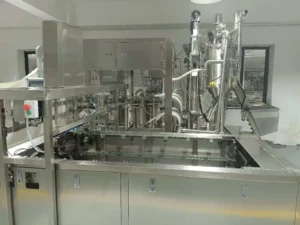
An integrated offer may extend to product preparation, inspection, reject handling, conveyors, accumulation and secondary packaging. Each boundary needs a named supplier and an acceptance condition. Do not compare that offer with a standalone machine until the excluded equipment and installation work have been priced.
If you are still deciding between purchased pouches and roll film, use the HFFS versus premade-pouch comparison first. This article does not assign a universal volume threshold at which one route becomes cheaper.
Use a scope-and-evidence ledger to expose missing costs
For every supplier, mark each requirement as included, separately priced, buyer-supplied, excluded or unresolved. Record the quotation revision and the evidence supporting that status. An empty cell is unresolved scope, not a zero-cost item.
On a small screen, scroll the comparison table horizontally. Use the same rows for each supplier.
| Quote line | What to name explicitly | Evidence before approval |
|---|---|---|
| Pouch handling | Named machine, magazine, gripping, mouth and zipper opening, bottom support | Approved pouch drawings and a handling trial using normal production bags |
| Dosing and product supply | Weigher, auger or pump; feed system; contact path; chute or nozzle; support platform | Product-specific dose results and a documented filler-to-packer interface |
| Sealing and product control | Seal arrangement, settling, dust or drip control, and any separately requested gas function | Agreed finished-pack checks and an explicit installed-option list |
| Inspection and coding | Printer, checks, reject device, reject confirmation and downstream handoff | Agreed fault challenges and responsibility for rejected or unverified packs |
| Formats and change parts | Every launch SKU, tooling set, recipe, spare contact set and later-format boundary | Format matrix, changeover demonstration and first-good-pack criteria |
| Installation and services | Utilities, unloading, positioning, connections, travel, training and commissioning | Layout, site-readiness checklist, responsibility list and service quotation |
| Handover and lifecycle | Manuals, drawings, backups, spare-part identification and support scope | Document register, contract terms and quoted replacement-part basis |
The useful comparison is not simply whether two proposals both say “automatic.” One may include continuous product feeding and inspection while another relies on operators between stages. Keep those duties visible, including the staffing assumed during the output test.
The pouch range can change the quotation before speed does
Prepare a matrix with a row for every product and pouch combination you intend to launch. Include finished width and height, gusset, usable mouth opening, zipper position, seal allowance, fill quantity and product condition. Attach the controlled drawing revision and representative pouch samples rather than only a marketing photograph.
Opening and presentation
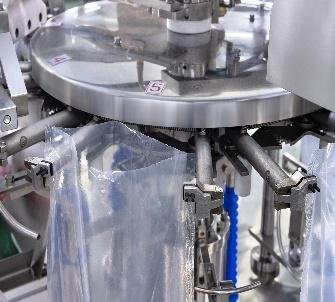
A nominal width range does not prove that every bag within it will feed and open consistently. Ask how the proposed configuration handles the actual zipper, bag flatness, curl, stiffness and stack presentation. Distinguish opening a pre-installed zipper from adding a zipper to roll film; these are different functions and should not share an ambiguous quotation line.
Product and dosing changes
Changing from free-flowing pieces to a powder or viscous product may require more than a new recipe. Identify the dosing principle, contact parts, feed arrangement, discharge geometry and cleaning requirements for each product. A shared pouch handler does not make every filler interchangeable or every product change inexpensive.
Changeover and future SKUs
Ask which changes use adjustments, which need replacement parts, and which require a different machine or a new engineering review. Price launch formats separately from possible future formats. Record who installs each tooling set, what must be cleaned, how settings are restored and how the first acceptable pouch is released.
For a rotary configuration, the ZP rotary pouch machine page owns the model-specific references. Keep those specifications attached to the named model; do not blend several machines into one price-and-performance promise.
Make the output condition part of the price comparison
Ask for accepted finished pouches under a named product, dose, pouch and test plan. Empty machine cycles, the filler's component speed and a brief best-case run are not equivalent evidence. The agreed run should show how product replenishment, pouch loading, interruptions and rejected packs are recorded.
Use a common count boundary: record all pouches presented, accepted finished packs, recoverable unused bags, rejected filled packs, stops and rework. Keep the duration and staffing visible. Otherwise two offers can appear to deliver the same output while transferring very different work and losses to the buyer.
| Trial condition | Record | Commercial question it answers |
|---|---|---|
| Normal pouch supply and replenishment | Bag lot, orientation, pickup or opening failures, loading effort and stops | Does the quoted handling system work with ordinary production bags? |
| Product refill and dose changes | Dose results, product condition, refill events, settings and rejects | Is the selected dosing and supply scope sufficient for the required range? |
| Opening fault and controlled restart | Approved challenge, machine response, pack disposition and recovery steps | Are the detection functions and operating responsibilities defined? |
| Full format change | Last accepted old-format pack to first accepted new-format pack, parts and staffing | What changeover work is included beyond an HMI recipe change? |
| Finished-pack release | Agreed dose, seal, appearance, code and inspection results | Does the price support the actual saleable pack, not merely a filled bag? |
The plant quality team and equipment supplier should agree methods, sample sizes and acceptance limits for the application. This is a proposed comparison structure, not a universal sampling standard. Do not invent a pass threshold after seeing the results.
For industry context, Viking Masek's premade-pouch buyer questions also identify construction, changeover and machine complexity as purchase considerations. That source supports the questions to ask, not an INMAYPACK price, configuration or performance claim.
Keep installed budget separate from cost per accepted pouch
Build two views of the decision. The first is the money and work needed to bring the selected configuration to the agreed handover point. The second is the expected cost of operating it for a common production plan. Mixing one-time purchases and recurring costs without a defined period can distort the comparison.
Installed project budget
Start with the confirmed equipment and required options. Add integration, format tooling, freight, applicable import costs, unloading, site preparation, utility connections, commissioning and agreed training. Assign an owner to every item and distinguish a firm quote from an estimate. Do not add a standard percentage and assume it covers every destination or factory.
Match supplier offers on currency, quotation validity, delivery boundary and named location, payment milestones, exclusions and acceptance conditions. Ask the appropriate freight, customs and site-service providers to price their own scope. A machine supplier's equipment quote alone does not establish those external costs.
Operating cost for the intended production mix
Use a common time horizon and production schedule. Include purchased pouches, product giveaway or loss, labor, utilities, cleaning, maintenance, wear parts and inspection costs. Capture unused printed pouch inventory after artwork changes and the storage or handling requirements of finished empty bags.
Comparison measure: allocated equipment ownership cost plus operating cost over the selected period, divided by accepted pouches during that same period. Define the finance allocation method and avoid charging the full machine purchase again if ownership cost already includes it.
Use product and packaging usage that already accounts for rejects, or calculate reject losses separately—not both. Likewise, if actual accepted output already reflects stoppages and changeovers, do not subtract the same lost production a second time. Keep cash expenses separate from any estimate of lost contribution so the model remains auditable.
Test the assumptions that could reverse the decision
Recalculate with different SKU mixes, shorter campaigns, more frequent pouch replenishment, a slower validated rate or changed packaging prices. Obtain current pouch-supplier offers for the actual laminate, printing, order quantity and delivery conditions. Do not assume a fixed savings percentage against roll film or a guaranteed payback period.
Send a request that can produce a comparable quotation
You do not need a finished engineering specification to start. Share the available inputs and mark what remains open. The supplier can then separate a preliminary configuration from a proposal ready for technical and commercial approval.
- Product: name, photos, condition, relevant flow or handling concerns, and production samples when available.
- Dose: target and additional pack sizes, with the required tolerance basis to be agreed.
- Pouch: drawing, dimensions, material information, zipper or spout details, supplier and sample availability.
- Production: required accepted output, SKU mix, shift plan, replenishment and expected changeovers.
- Existing equipment: filler, feeder, utilities, inspection and downstream devices that must be reused or connected.
- Site and delivery: destination, available layout, access constraints and which installation services are requested.
- Evidence and handover: proposed trial conditions, documents, operator training and unresolved acceptance questions.
Ask for a revision-controlled offer with a named model, equipment list, options, exclusions, responsibilities and validity. Record which drawing and sample lot it is based on. If the pouch, dose or product changes, request a technical review before treating the old price as valid for the new requirement.
For a broader route comparison, keep the doypack price and project-scope guide separate from this supplied-pouch checklist. The former compares different pouch-making routes; this article checks whether offers within the premade-pouch route cover equivalent work.
Premade pouch machine price questions
Can I get an exact price from a machine photograph?
No. A photograph can identify a possible architecture, but it does not define the selected filler, tooling, options, output test or delivery scope. Send the product, dose and pouch details for a configuration-based quotation.
Is a rotary machine always cheaper than a linear system?
No universal price order is reliable. Compare the actual pouch range, product, dosing, output, changeover and installed equipment. The architecture name alone does not describe an equivalent production result.
Does a machine price include a multihead weigher or auger?
Only when the equipment list explicitly includes it. Confirm the model, feed system, product-contact parts, platform, discharge connection and controls responsibility. A component shown in a photograph may be outside the quoted supply.
Can I reduce cost by using my current pouch supplier?
Possibly, but qualify the actual bags first. Compare delivered pouch cost together with opening performance, seal quality, rejected material, loading labor and inventory exposure. A cheaper empty bag may not produce a lower cost per accepted pack.
What should warranty and support comparison include?
Request the written coverage, exclusions, start point, spare-part process, remote-support scope and responsibility for travel or on-site work. Do not infer service terms from another project or a general machine advertisement.
Request a defined premade-pouch configuration
Start with your product, fill quantity, pouch photo or drawing, required accepted output and delivery country. Ask INMAYPACK to identify the machine, filling system and project scope that need to be quoted together. Detailed samples and interface information can follow during the review.