
INMAYPACK · Single-path portion packaging selection
Single Lane Stick Pack Machine
Choose the stick. Plan the batch. Define the working configuration.
Review a single-lane stick-pack configuration around your product, finished pack and daily production needs. Compare the DXD320 documented stick-bag scope with compact YS-61 powder-platform references, then agree the forming path, selected dosing, film and changeover requirements.
- Single-lane configuration review
- Product-matched dosing
- Batch & SKU planning
- Narrow-pack tooling assessment
Send product samples, every dose, finished stick drawing, production film, required accepted output and planned recipe changes.
What is a single lane stick pack machine?
Make the portion through one packaging path.
A single lane stick pack machine forms a narrow package from roll film, introduces the selected dose, makes the longitudinal back seal, closes the ends and cuts the finished stick through one packaging path. Product metering and bag-making are configured together.
The selection question is whether the chosen stick and product can meet your required accepted output within the available operating time. Include batch sizes, portion changes, replenishment and finished-pack handling in the brief.
A single filling station on a horizontal flat-sachet machine does not automatically make it a narrow-stick machine. Start with the finished package and compare the broader stick pack machine range for documented lane and format routes.
When to assess a single-lane route
Match the configuration to the way you actually produce.
For new portion-pack projects or a varied batch schedule, compare the required finished output and operator tasks with the selected product and tooling.
01 · Batch requirements
Start with accepted packs per shift
State the finished packs required per day, shift pattern and net time available after planned interruptions. Include film replacement, refill, checks and recipe changes so the required run target is clear.
02 · Recipe and portion changes
List the full SKU schedule
Describe all products, doses and finished dimensions. Review the adjustments, format parts, product-contact access and first-off checks needed between batches instead of selecting from maximum speed alone.
03 · Operating arrangement
Plan the work around the machine
Define product replenishment, roll loading, pack checks and collection responsibilities. A single packaging path still needs its own supply, inspection and downstream plan.
Several recipes, one production schedule?
Send the batch quantities, all portion sizes and expected change frequency.
Keep the machine references distinct
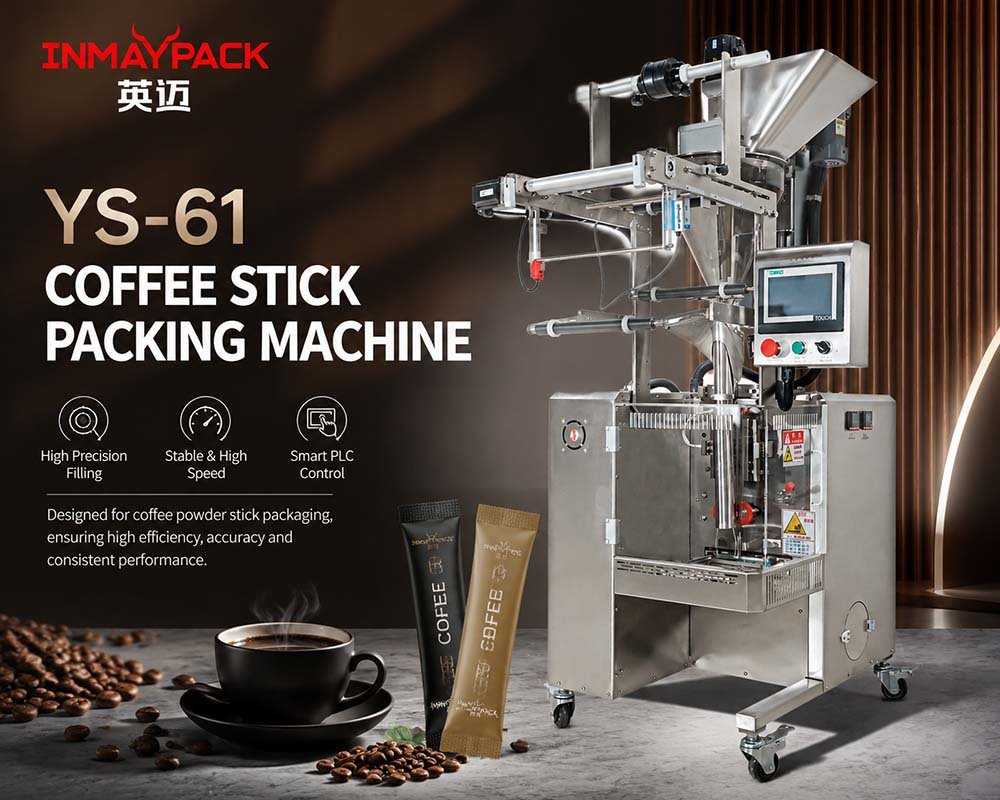
Narrow-stick scope and compact powder packing.
Use the supplied documents to identify format boundaries. Agree the exact model, lane layout and filler in the current proposal.
DXD320 · Documented stick-bag route
Assess the single-lane configuration within the 1–4 lane series.
The DXD family table names DXD320 as stick-bag equipment, with 1–4 lanes, a minimum listed width of 15 mm and minimum length of 80 mm. Request the one-lane web drawing, selected filler and accepted-output target. No separate DXD320 photograph is presented here.
YS-61XBF · Supplied powder document
Review the compact auger-fed powder route.
The document describes a back-seal powder machine and lists three-side, four-side and back-seal formats for review. It gives a 1–100 g measuring reference and W30–130 × L30–170 mm bag range. Confirm the exact model, single-path arrangement and chosen back-seal tooling.
- Do not transfer the DXD320 15 mm minimum to YS-61
- Assess actual powder, dose and usable bag cavity
- Confirm lane count and supplied functions in the proposal
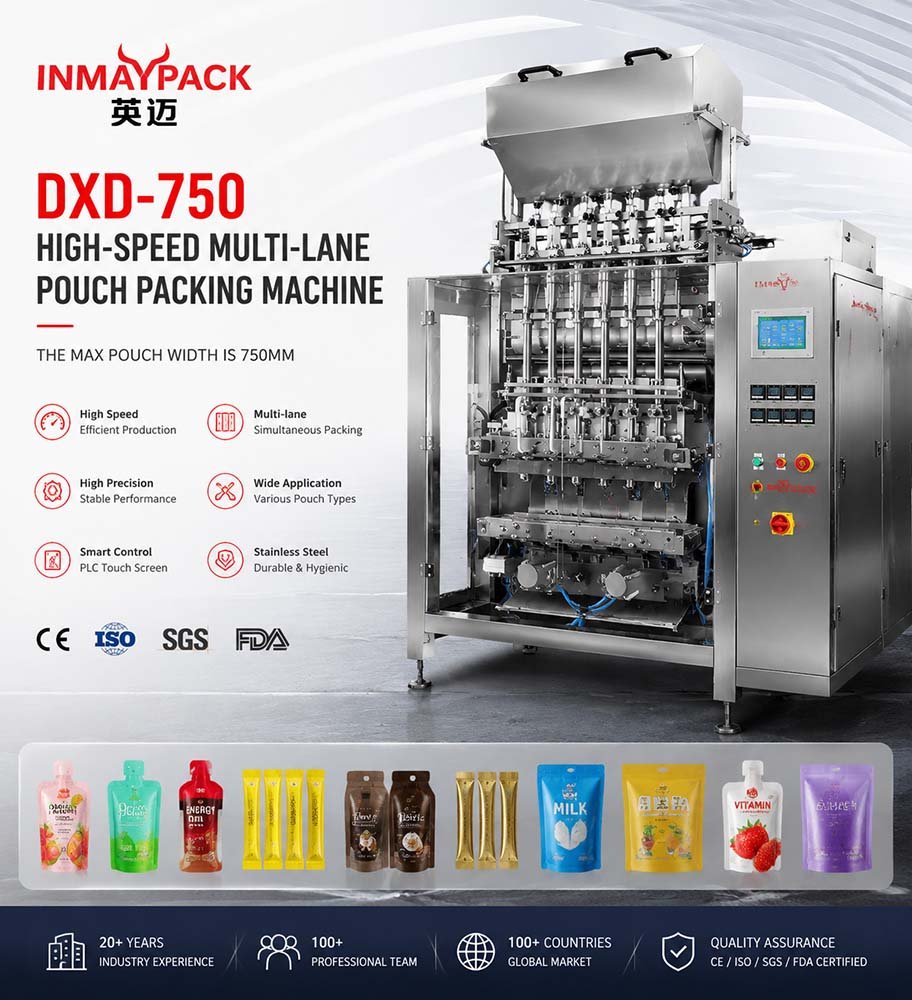
DXD750 · Multi-lane comparison
Compare parallel paths when output requires them.
The DXD750 table lists 6–10 lanes and 280–480 bags/min as series references. Compare feed distribution, all active lanes, web layout and downstream handling with your required production target.
- This photograph represents a multi-lane platform
- It is not a single-lane DXD320 equipment photograph
- Actual accepted output requires the agreed product and film run
Documented selection values
Compare each model on its own dose and format basis.
DXD320 values come from the DXD family table. YS-61XBF values come from the supplied powder-machine document, while the photograph is a YS-61 family reference.
| Selection item | DXD320 stick-bag series | YS-61XBF powder reference |
|---|---|---|
| Documented equipment scope | Stick bag; selected one-lane build within 1–4 lane series | YS-61XBF back-seal auger powder reference; final lane count and format confirmed in proposal |
| Dose reference | 1–40 ml; approve product-specific usable dose | 1–100 g; approve powder and portion range |
| Bag dimension reference | Minimum width 15 mm; minimum length 80 mm. Confirm complete range. | Width 30–130 mm; length 30–170 mm |
| Film / web reference | Maximum packing width 320 mm; approve one-lane web drawing | Confirm selected web width, forming tools and reel details |
| Packing-speed reference | 20–160 bags/min across the documented 1–4 lane series; not a one-lane 160 bags/min rating | 30–70 bags/min document reference; product, dose and pack dependent |
| Machine dimensions L × W × H | 1200 × 1200 × 2400 mm | 730 × 1000 × 1600 mm |
| Machine weight | 700 kg | 230 kg |
| Electrical reference | Confirm destination supply and supplied build | 220 V / 50–60 Hz / 2.2 kW source reference |
| Configuration to approve | One-lane tooling, selected dosing and accepted-output test | Exact model, selected back-seal tooling, powder feed and accepted-output test |
Volume in ml does not establish weight in grams. Maximum dimensions, dose and speed are not one combined operating point. A series output range covering several lane counts must not be assigned to one lane, multiplied by lanes or divided into a guaranteed per-lane rate. Add operating and service clearance to the listed machine footprint. Swipe inside the table on a phone.
Finished geometry before tooling
Stick width is a specification. It changes the machine review.
Send a dimensioned pack and real production samples. Make the longitudinal seal, end seals, cut position and intended opening clear.
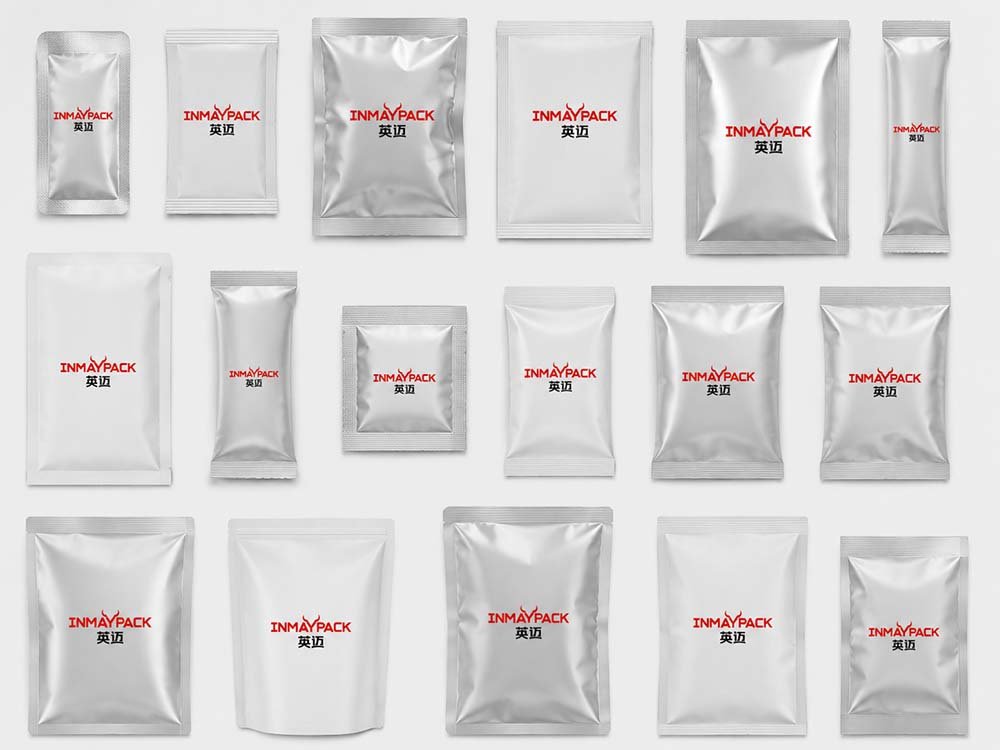
01 · Narrow stick concept
Approve the slim back-seal pack
Define the finished width and length, longitudinal seal, end-seal bands, opening and usable cavity. The DXD320 minimum dimensions are starting boundaries for assessment, not proof that every product and dose will fit.
02 · Wider back-seal concept
Recognize the compact powder bag
The supplied YS-61XBF bag range starts at 30 mm width. A wider back-seal portion is not automatically equivalent to a narrower stick. Confirm the drawing and exact forming tools before selecting the machine.
Concept drawings explain shape and seal layout. They are not approved customer packs, production dimensions or proof of interchangeable tooling. Three-side and four-side flat sachets require their own format review.
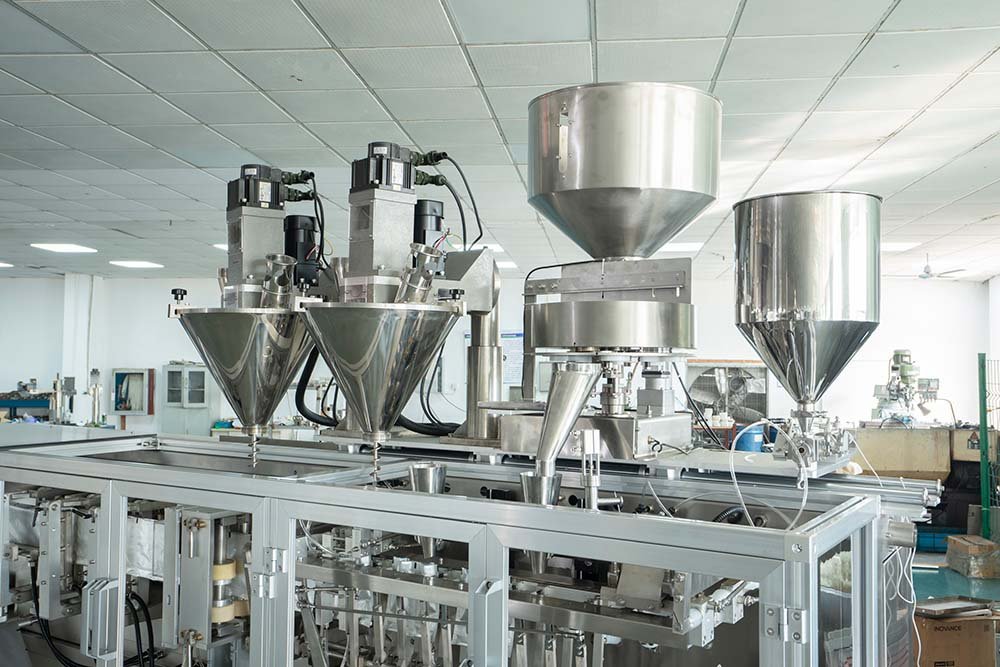
Powder feed and selected dosing
Match the product to the filling path.
The YS-61XBF document identifies an auger-fed powder route. Provide flow, bulk-density variation, dust, aeration and replenishment information with representative product samples.
- Define the nominal dose and permitted variation
- Assess the selected auger, hopper and fill delivery
- Observe startup, refill and restart portion results
- Keep powder residue out of the closing area
The DXD table does not name a product-specific filler. Granules, liquids or pastes require a separately selected dosing and machine configuration; a powder reference does not establish suitability for every material. Compare powder filling systems for the wider product and package discussion.
Roll film and the back seal
Define the web for the selected forming path.
Provide film structure, thickness, sealant layer, web width, print repeat and roll direction. Review the forming tools, longitudinal seal and end-seal layout as one package specification.
- Finished pack, seam location and usable cavity
- Reel, core and roll-handling requirements
- Print marks, code area, opening and cut position
- Seal appearance and agreed package checks
The source documents name composite film families. Actual film suitability follows the production sample and selected build; paper-based or mono-material film is not universally established by the equipment table.
Single lane vs multi lane stick pack machine
Compare the production tasks. Then decide the lane architecture.
Lane count should follow product, package, batch schedule and accepted-output requirements. Avoid selecting from an empty-cycle figure or assuming that more lanes solve every production constraint.
| Review point | Single-lane configuration | Multi-lane configuration |
|---|---|---|
| Product supply | Define one selected feed and dosing path | Define distribution and checks for all active positions |
| Film and tooling | Approve one forming path and its web specification | Approve web division, lane pitch and every forming path |
| Portion and seal checks | Record the selected path, refill and released packs | Identify individual lane results as well as aggregate output |
| Changeover | Review the selected forming parts and product-contact access | Review all affected lanes, web setup and first-off checks |
| Production target | Confirm accepted output within net batch operating time | Confirm accepted aggregate output and downstream capacity |
Assess a different model or route when the actual portion, geometry or accepted output requires it. A machine configured for one lane is not automatically convertible into a multi-lane system.
Plan beyond the first SKU
Include recipe changes in the purchase brief.
Product-contact access
Plan recipe changes
List products, change frequency and product-separation requirements. Agree how the selected hopper, dosing parts and delivery path are emptied, cleaned, inspected and reassembled.
Portion and format changes
Identify adjustments and tools
List all doses and finished dimensions. Define settings, forming parts, sealing tools or other changes needed for the approved range; one machine-family table does not prove a tool-free changeover.
First-off checks
Release the next batch
Check portion results, back seal, end seals, registration and cutting after recipe or format changes. Document the first acceptable finished packs using the agreed inspection method.
Product, film and acceptance trial
Agree the finished-pack test before the production target.
Set the run conditions, duration, sampling, dose limits, seal checks and rejection method. Define which functions and connected equipment are included in the trial.
Prepare the product and pack
Use representative samples, actual production film, the finished drawing and all nominal portions.
Run the selected configuration
Include startup, normal supply, refill and restart; record the active lane and product conditions.
Inspect accepted sticks
Measure portions, inspect the longitudinal and end seals, check code and cutting, and count conforming packs.
Check the next batch
Record adjustments, change parts, cleaning tasks and first-off approval after the intended SKU change.
Single lane stick pack machine price
Quote the working configuration. Compare an itemized scope.
Price depends on the product-handling system, selected model, stick tooling and project options. Compare suppliers using the same product, pack, film, batch schedule and acceptance brief.
01 · Core configuration
Model, lane and stick tooling
Define the exact model, one-lane arrangement, finished width and length, dose range, forming and sealing tools, destination supply and accepted-output target.
02 · Product and pack handling
Feed, filler and selected options
Name the dosing system and supply interfaces. Itemize assessed coding, inspection, collection, grouping or downstream equipment instead of assuming them from a family photograph.
03 · Project delivery
Trial, startup and change parts
Agree materials and acceptance checks, delivery, installation, operator training, change parts and spare-parts scope in the current proposal.
Include the first batch and the next SKU.
Request core equipment, assessed options and change parts as separate items.
Historic document prices are not current offers. Define connected equipment with turnkey packaging project planning.
Work with INMAYPACK
Bring the stick, product and production schedule together.
Share the finished pack your business intends to supply and the products your team expects to run. A defined proposal connects replenishment, selected dosing, forming, sealing, inspection and collection.
Review batch changes, operating access, floor layout and startup checks during selection. Ask for the exact model, lane arrangement and accepted run conditions in the current proposal.
Buyer questions
Single lane stick pack machine FAQ.
What does a single lane stick pack machine do?
It forms, fills, back-seals, end-seals and cuts sticks through one packaging path. The selected dosing system, product supply, film and forming tools must work together for the intended portion and agreed accepted output.
Which documented model includes a one-lane stick configuration?
The supplied DXD table identifies DXD320 as stick-bag equipment with a 1–4 lane range. Request the selected one-lane build, web drawing, filler and accepted-output test. The series table alone does not specify the complete delivered configuration.
Can YS-61XBF make the same narrow stick as DXD320?
Do not assume that. The YS-61XBF powder document lists bag width 30–130 mm and length 30–170 mm; DXD320 lists a minimum width of 15 mm and minimum length of 80 mm. Confirm the drawing and selected tooling. The YS-61 photograph is a family reference, and the exact lane count is confirmed in the proposal.
Does the DXD320 reference mean 160 sticks per minute on one lane?
No. The document lists 20–160 bags/min for a series covering 1–4 lanes. That range is not a guaranteed one-lane rating. Agree conforming output for the selected lane layout, product, dose, film and run conditions.
When should I compare a multi-lane machine?
Compare it when the finished-output requirement and production schedule call for parallel packing paths. Review product distribution, all lane results, film layout, changeover and collection capacity. The DXD750 6–10 lane reference is a separate model route.
Can powder, sugar and liquids use the same filler?
Each requires a product and dosing assessment. YS-61XBF is an auger-fed powder reference; it does not establish a universal filler for every material. The DXD table does not identify a product-specific filler, so define the selected feed and dosing system separately.
Is a single-lane machine automatically convertible to multi-lane?
No conversion is established by these source documents. Review future output, products and pack dimensions before purchase. A later multi-lane requirement may call for different equipment, web handling, feed distribution and downstream scope.
What is needed for a single lane stick pack machine quote?
Send product samples and conditions, all doses and permitted variation, a dimensioned stick drawing, actual film, daily accepted packs, net operating time and SKU schedule. Include feed, inspection, collection, change parts, destination utilities and startup scope.
Continue the selection
Related equipment for portion packaging.
Start with your product and stick drawing
Send the pack and batch plan.
Build a clearer equipment proposal.
Include every product, dose, finished dimension, production film, accepted-output target, SKU schedule, destination and utilities.