
A dog food packaging machine should be selected from the food form, target dose, finished package and accepted output—not from the words “dog food” alone. Dry kibble, fragile treats, powdered supplements and wet food create different feeding, dosing, cleaning and sealing requirements.
Do not compare machine speeds until every supplier is pricing the same product condition, dose, package, refill method, line boundary and accepted-finished-pack test.
Start with the package
Four dog food packaging routes to compare
The finished pack changes the machine architecture. A zipper pouch supplied to a rotary machine is not the same project as a pouch formed from roll stock, and neither should be compared directly with a small supplement sachet.
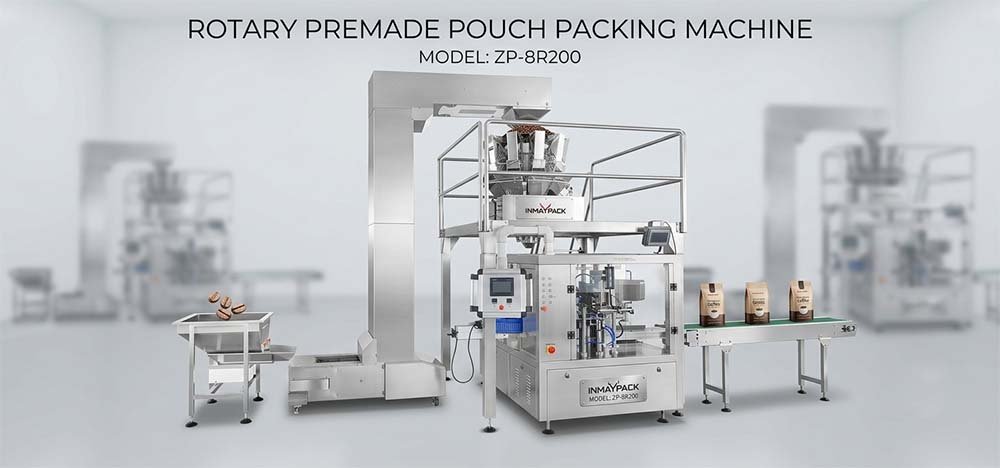
Premade retail pouches
Use supplied stand-up, zipper or flat pouches when shelf appearance, reclosure and pouch-converter features are central to the project. Confirm pickup, opening, zipper behavior, fill access and final seal quality with production pouch samples.
Roll-film stand-up pouches
An HFFS machine can form a compatible flat or stand-up pouch from roll stock before filling and top sealing. Film tracking, gusset geometry, pouch opening, product settling and seal-area cleanliness must work as one timed process.
Small sachets and sample packs
Single- or multi-lane sachets may suit small portions of granules, toppers or powdered supplements. Lane count is chosen after the dose, flow, film layout, cross-lane consistency and downstream collection method are confirmed.
Wet-food and gravy pouches
Wet products require a separate review of viscosity, particles, shear, temperature, product supply, pump, nozzle cutoff, cleaning and contamination of the final seal area. A dry-kibble configuration is not automatically convertible.
Scope boundary: this guide addresses flexible packages such as premade pouches, roll-film bags and sachets. Trays, cans, jars and large open-mouth bulk bags require different equipment and are not presented here as INMAYPACK offerings.
Product behavior
The dog food changes the feed and fill system
A category name does not describe flow. Send representative samples from the hardest approved production condition, including fines, coatings and the largest acceptable pieces.
Dry kibble
Record piece dimensions, bulk density, oil coating, surface dust, breakage limit and refill behavior. A combination weigher may be evaluated, but stable product distribution, controlled drop and a clean pouch mouth still determine accepted output.
Biscuits and treats
Large, irregular or fragile treats can bridge, orient poorly or break at transfer points. Define the largest piece, acceptable broken-piece rate, drop-height limit and whether product presentation matters inside the final pouch.
Powdered supplements
Protein, mineral and functional powders can aerate, dust, compact or continue flowing after cutoff. Compare hopper agitation, auger geometry, refill control, dust collection, cleanout and dose verification with the actual formulation.
Wet food, paste and gravy
Measure viscosity across the approved temperature range and identify particles, separation, foaming and shear sensitivity. The product supply, pump and nozzle must deliver the dose without dripping or contaminating the seal.
Mixed pieces or inclusions
Different densities and sizes may segregate during transport and refill. Define the accepted mix ratio as a finished-pack result, then test whether the feed and dosing route preserves it throughout the run.
Freeze-dried products
Light, fragile pieces can create static, fines and inconsistent hopper loading. Review gentle transfer, feeder motion, drop distances, dust removal and package volume rather than using weight alone to size the pouch.
Dosing selection
Match the metering principle to the real product
| Product condition | Route to evaluate | Evidence to request |
|---|---|---|
| Free-flowing kibble and small treats | Combination or other project-matched weighing system feeding a premade-pouch or roll-film packer. | Finished-pack weight distribution, giveaway, breakage, starvation, refill events and accepted output. |
| Uniform granules or small toppers | Compare combination weighing, linear weighing or another measured route from target dose and output. | Cutoff behavior, density variation, product loss, pack weight and repeatability after refill. |
| Fine or aerated supplement powder | Servo auger or other powder-specific dosing system. | Bulk density range, dust, settling, cutoff, cleanout, cross-lane variation and final net content. |
| Wet food, gravy or paste | Product-matched pump and nozzle arrangement. | Viscosity and temperature range, particle passage, fill variation, dripping, splash, cleaning and seal contamination. |
| Mixed pieces and inclusions | Trial the feeding and weighing arrangement as a complete system. | Accepted component ratio, segregation, damage, blockage, weight distribution and rejected packs. |
Do not treat “accuracy” as a complete specification. State the target, allowed range, sampling method, commercial giveaway limit and whether the result is measured at the filler or on accepted finished packs.
The first unstable handoff usually matters more than the headline speed
If a kibble pouch reaches the top seal with crumbs or oil in the sealing area, increasing the machine cycle will not solve the defect. I would first trace product supply, weighing, discharge, pouch opening, settling and sealing under one controlled test. The useful number is accepted finished packs produced during that agreed condition.
Line integration
A dog food packing line is more than the pouch machine
Define every handoff before comparing quotations. Otherwise, one proposal can appear cheaper simply because feeding, inspection, rejects or downstream handling were left outside its boundary.
For projects that include several machines, use the turnkey packaging line integration guide to align utilities, controls, documents and acceptance responsibilities.
Quotation worksheet
Send the inputs that can change the machine
| Input | What to provide | Decision affected |
|---|---|---|
| Dog food | Representative samples, photos, piece or particle range, bulk density or viscosity, oil, dust, fragility, temperature and inclusions. | Product feed, weigher, auger or pump, hopper, transfer, cleaning and contact path. |
| Dose range | Minimum, normal and maximum target; allowed tolerance; recipes and expected change frequency. | Filler size, number of discharges, settling time, hopper volume and inspection method. |
| Finished pack | Pouch drawing and samples, material, size, zipper or spout, gusset, seal area, headspace and fill level. | Premade versus roll-film route, opening, tooling, nozzle or chute, settling and sealing. |
| Required output | Accepted saleable packs per minute or hour, shift pattern, test duration and allowed rejects. | Equipment capacity, lane or station count, buffering, downstream scope and FAT duration. |
| Hygiene | Allergens, recipe changes, cleaning method, inspection points, utilities and destination-market requirements. | Contact construction, access, removable parts, drainage, changeover and documentation boundary. |
| Factory evidence | Tests, measurements, video, records, drawings, manuals, certificates and required witnessing. | FAT protocol, sample quantity, acceptance criteria and project release. |
Factory acceptance
Compare accepted pouches, not isolated machine cycles
Freeze the test basis
- Approved dog food batch and condition
- Target dose and accepted range
- Production pouch or controlled equivalent
- Product refill and operator method
- Complete supplied equipment boundary
- Test duration and planned stops
Record complete-line results
- Accepted finished packs per hour
- Net-content samples and giveaway
- Broken pieces or mix-ratio loss
- Opening, filling and sealing defects
- Reject count and reason
- Restart, cleaning and changeover evidence
A published mechanical speed is not an acceptance promise for a new dog food. Use the stand-up pouch machine FAT checklist to define the test boundary and evidence before production release.
Cost and changeover
Compare the same production boundary, not the lowest machine line
A useful dog food packaging quotation shows what is included, what remains optional and which operating conditions support the proposed result. A lower base price can become the higher production cost when essential feeding, inspection, change parts or acceptance work is excluded.
Equipment boundary
List product receiving, elevator or conveyor, hopper, dosing system, pouch machine, coder, inspection, reject device, discharge conveyor and downstream handoff. Compare alternatives only after the same functions and controls are included.
Format and recipe changes
Record the planned dog foods, dose range and pouch sizes. Ask which change parts, tools, recipes and cleaning steps are required, who performs them and how the first acceptable pouch after changeover is released.
Consumables and product loss
Include pouch or film use, startup waste, overweight giveaway, damaged treats, rejected packs, cleaning loss and product left in hoppers or transfer paths. These can outweigh a small difference in mechanical cycle rate.
Support and evidence
Define drawings, manuals, electrical documents, spare-parts list, training, remote support, commissioning boundary and FAT deliverables in the quotation. Do not assume a generic service statement includes every site or market requirement.
No universal price belongs in this guide. The product path, dosing method, package architecture, hygiene scope, inspection, output and documentation change the quotation. Request a configuration-based proposal after these inputs are fixed.
Hygiene and compliance
Destination requirements belong in the project scope
Equipment design does not by itself make the producer compliant. The dog food manufacturer remains responsible for the product, facility, process, destination market and validation plan. Tell the machinery supplier which contact materials, cleanability, allergen controls, traceability interfaces, documents and tests the project requires.
For U.S. animal-food operations, FDA explains that 21 CFR Part 507 includes current good manufacturing practice and preventive-control requirements for covered animal-food facilities. For relevant EU feed operations, Regulation (EC) No 183/2005 establishes feed-hygiene and traceability requirements. These references provide regulatory context; they do not certify a machine or replace advice from the responsible authority.
- U.S. Food and Drug Administration, How Do I Start an Animal Food Business?
- EUR-Lex, Regulation (EC) No 183/2005 on feed hygiene
Buyer questions
Dog food packaging machine FAQ
Which packaging machine is suitable for dry dog food or kibble?
Start with piece size, bulk density, oil coating, dust, fragility, target dose and finished pouch. A project-matched weighing system can be evaluated with a premade-pouch or roll-film machine, but the final route should be confirmed using representative dog food and pouch samples.
Can one machine pack kibble, treats and powdered supplements?
Not automatically. A pouch platform may support more than one approved product, but product supply, dosing, dust control, cleaning, change parts and acceptance conditions can differ. Each product family needs a documented setup and trial plan.
Should dog food use premade pouches or roll film?
Premade pouches suit projects where supplied pouch appearance, zipper or other converter-made features are important. Roll-film HFFS forms a compatible pouch inside the machine. Compare total pouch or film cost, controls, tooling, changeover, accepted output and shelf requirements on the same basis.
Can the same line package wet dog food?
Wet food requires a separate filling and hygiene review. Viscosity, particles, temperature, product supply, pump choice, nozzle cutoff, cleaning and seal-area contamination can change the machine and FAT method.
How is dog food packaging machine capacity verified?
Verify accepted finished packs during an agreed test using the approved product, dose, pouch, refill method and complete line. Record weight or fill checks, product damage, pouch defects, seal tests, rejects, stops and recovery instead of relying on empty-cycle speed.
What information is needed for a quotation?
Send representative dog food, piece or particle range, bulk density or viscosity, dose range, pouch drawing and samples, target accepted output, cleaning requirements, destination-market documentation needs and the exact equipment boundary.
Related routes







