Premade pouches
Use supplied stand-up, zipper or flat pouches when the approved bag construction and presentation are fixed before filling.
Packaging systems configured around your application Defined project scope

Compare pouch filling, weighing, sealing and downstream routes for frozen vegetables, fruit, dumplings, seafood pieces, meatballs and mixed IQF products.
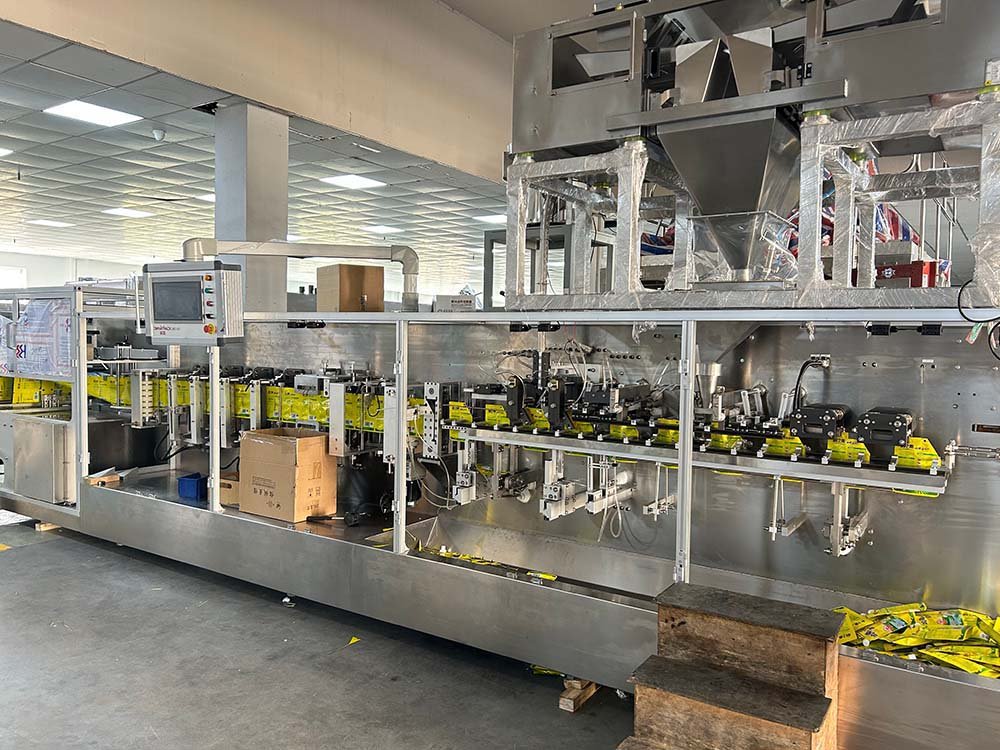
For this page, it is a project-matched pouch line that receives frozen pieces at an agreed condition, meters the dose, controls transfer into a supplied or formed pouch, closes the seal and releases accepted packs. It is not the freezer, a universal machine for every frozen product, or a substitute for product-specific hygienic and cold-environment validation.
Product temperature, surface frost, free water, piece size, clumping, dose and retail pack determine the handling and pouch route.
Use supplied stand-up, zipper or flat pouches when the approved bag construction and presentation are fixed before filling.
Form compatible flat or stand-up pouches from roll stock when film response, product drop, opening and sealing are validated together.
Define frozen-product supply, weighing, pouching, coding, inspection, discharge and cartoning as one controlled line boundary.
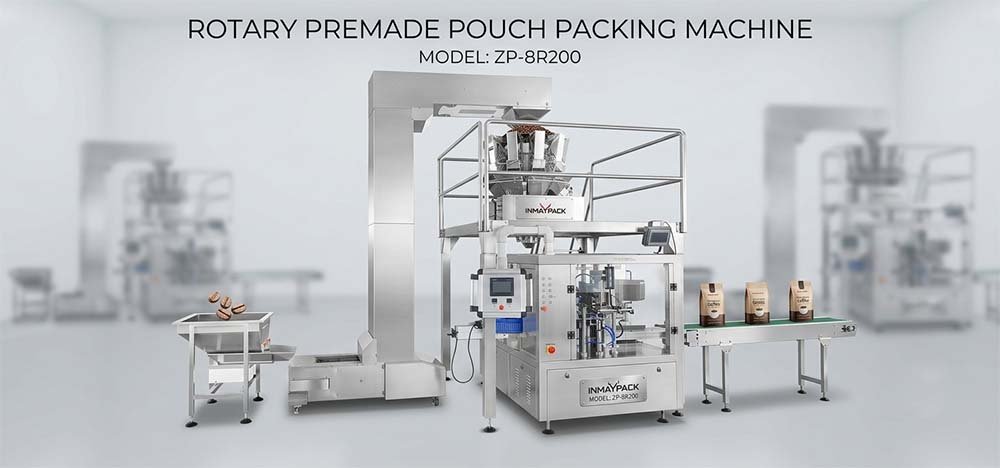
A rotary platform indexes approved pouches through pickup, opening, filling and sealing. The frozen product, weighing system, transfer height, pouch opening and seal condition must be tested as one sequence.
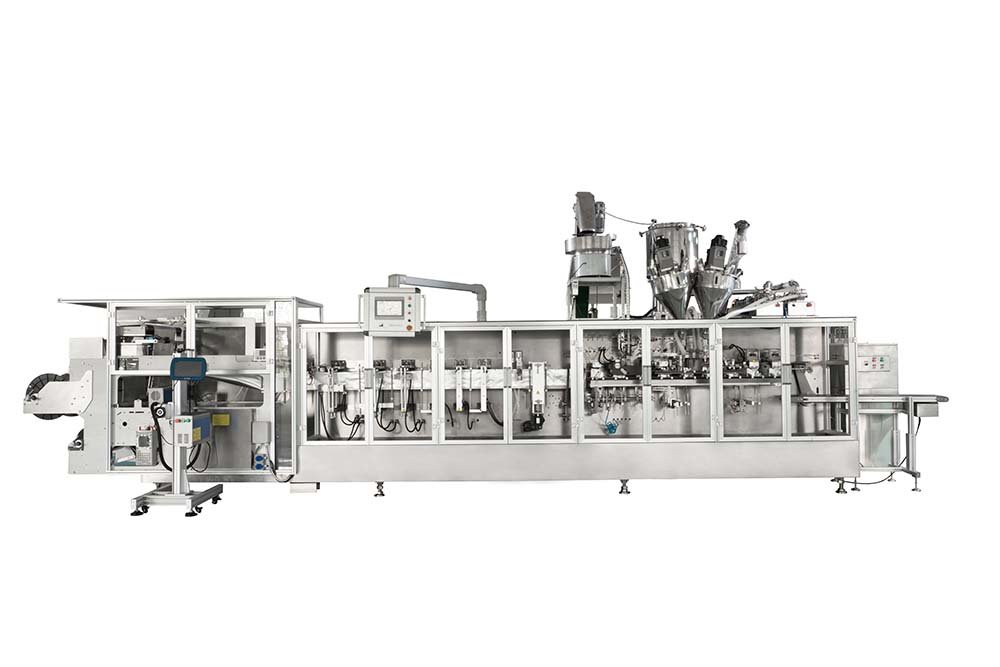
An HFFS line forms compatible pouches from roll film. Film tracking, pouch geometry, product settling, headspace, seal-area condition and accepted output belong to the same trial.
Record piece dimensions, bulk density, target dose and the conditions that create bridging or clumping before selecting the feeder and weigher.
Define acceptable breakage, drop height, transfer impact and the effect of vibration on frozen fruit, dumplings, seafood and coated pieces.
Confirm product condition at the filler, condensation risk, drainage, cleaning method and how moisture may reach gripping or sealing areas.
Check segregation, piece-size distribution, blend consistency and whether the accepted mix is maintained through feeding, weighing and discharge.
| Decision factor | What to provide | Why it changes the line |
|---|---|---|
| Product condition | Temperature at filling, frost, free water, stickiness, clumping and thaw sensitivity | Changes feeding, contact surfaces, condensation controls, cleaning and trial conditions |
| Piece profile | Minimum and maximum dimensions, bulk density, fragility and mixed-product distribution | Changes hopper, feeder, weigher, discharge opening, drop height and blockage risk |
| Dose range | Minimum, maximum and nominal dose plus the accepted verification method | Changes weigher selection, discharge timing, pouch support and accepted output |
| Finished pouch | Supply method, controlled drawing, film, dimensions, zipper, headspace and seal zone | Changes premade versus roll-film architecture, tooling, opening, filling access and sealing |
| Acceptance basis | Test duration, saleable packs, allowed rejects, fill checks, seal test and restart criteria | Separates usable production from an empty mechanical-cycle figure |
| Line boundary | Frozen-product infeed, weighing, bagger, coding, inspection, conveying and cartoning | Ensures suppliers quote and test the same complete system |
State the upstream freezer or cold-room handoff, buffer, refill method, product temperature and maximum waiting time.
Confirm the real product, dose range, clumping, piece damage, repeatability method and discharge timing. For combination weighing, review the multihead weighing and pouch-line integration as one system.
Define drop height, chute geometry, impact limits, buildup, drainage and access for cleaning.
Control supplied-pouch pickup or roll-film forming, opening, filling access and the approved pouch drawing.
Define product clearance, seal-area condition, coding, fill checks and the approved seal or leak test.
State discharge orientation, condensation handling, checkweighing, accumulation, cartoning and responsibility boundaries.
For the wider food application boundary, use the food packaging machine selection guide. For complete controls, inspection and downstream ownership, review turnkey packaging line integration.
A frozen food line cannot be accepted from an empty cycle or a room-temperature substitute. Product condition, dose, pouch, film, run time, allowed rejects and downstream state must be held constant before two outputs can be compared.
Use the stand-up pouch machine FAT checklist to define evidence before shipment.
Start with product temperature, piece size, bulk density, frost, free water, clumping, fragility, dose and finished pouch. A multihead weigher can be evaluated with a premade-pouch or roll-film pouch platform, but the complete transfer and sealing route must be validated with the actual product.
One platform may support more than one approved format, but feeder surfaces, weighing settings, drop height, cleaning, pouch size, change parts and acceptance conditions can differ. Each product family needs its own controlled trial basis.
Premade pouches suit projects where supplied bag construction and shelf presentation are fixed. Roll-film HFFS forms compatible pouches in the line. Compare actual pouch cost, tooling, opening, product drop, accepted output, changeover and complete line boundary.
This page covers pouch packaging after the upstream frozen-product handoff. Refrigeration, IQF freezing, cold storage and thermal logistics are separate systems unless they are expressly included in an approved project scope.
No. Tray sealing, thermoforming and individual flow wrapping use different primary-pack architectures. They should not be quoted as the same pouch filling and sealing system.
Send product photos and samples, filling temperature, frost or moisture condition, piece dimensions, bulk density, fragility, dose range, pouch drawing and samples, target accepted output, cleaning method and complete line boundary.
Share product condition at filling, piece profile, dose range, pouch drawing, accepted output and line boundary. INMAYPACK will compare the supported pouch and dosing routes before recommending a configuration.