
Gummy packaging machines
INMAYPACK gummy packaging machines combine feeding, weighing, pouch handling and sealing for finished gummies. Select a roll-film or supplied-pouch route around surface condition, target dose and pack format, then define the finished-pack checks for your production run.
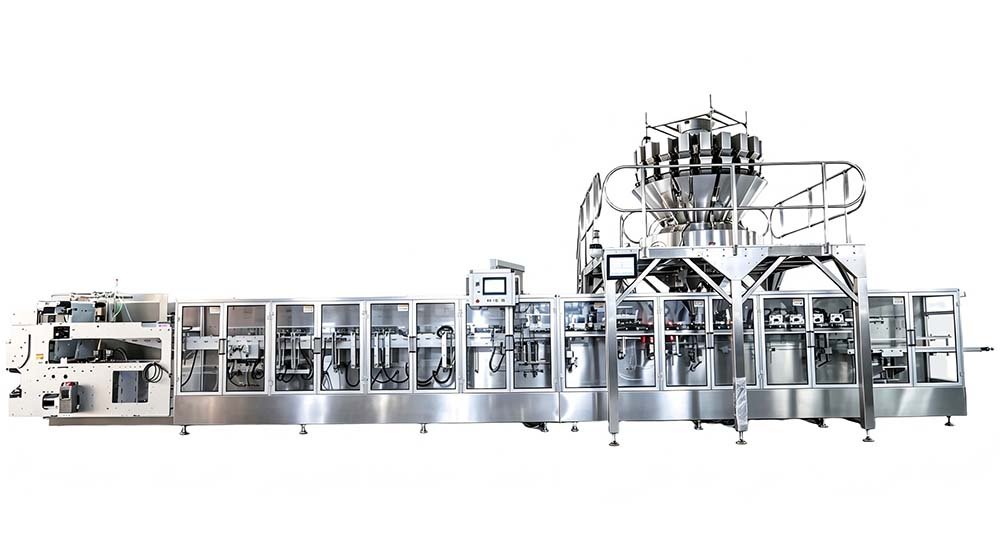
Choose a gummy pouch system
A gummy packaging machine is the complete weighing-and-pouch system, not only the bagger.
For retail pouches, compare a roll-film HFFS doypack line with a rotary premade-pouch line. The correct route depends on gummy stickiness, coating, size distribution, fragility, target weight, pouch geometry and the accepted test method. A multihead weigher may be used for weight-based filling, but its theoretical speed or accuracy does not equal accepted finished-pouch performance.
Finished gummy packaging
Configure the line for finished gummies entering the packaging area: product feeding, weighing or filling, pouch forming or handling, sealing and inspection. Cooking, depositing and curing belong to the gummy-production process.
Packaging-line scope
- Product feeding and buffer control
- Weight-based dosing or another confirmed filling method
- Roll-film doypack or supplied-pouch handling
- Product drop, settling and seal-area protection
- Coding, inspection, discharge and FAT evidence
Handled on other pages
The broader candy packaging machine page compares multi-piece bag and pouch filling for hard candy, coated pieces and mixed assortments. This page focuses on loose gummies, including product conditioning, stickiness, feeding, dosing and pouch-sealing requirements.
Match the gummy condition
“Gummy” is not a sufficient specification. Send production-representative samples and define the worst normal condition expected during a shift.
On smaller screens, scroll the table horizontally.
| Gummy condition | Engineering question | Evidence to request |
|---|---|---|
| Oil-coated or tacky surface | Will pieces bridge, cling to contact surfaces or release inconsistently from the feeder and weigh buckets? | Sustained sample run, stoppage causes, buildup inspection and restart behaviour. |
| Sugar- or sprinkle-coated | Will loose coating separate from the gummy, affect blend ratio or accumulate in product-contact areas? | Before/after product comparison, residue check and cleaning demonstration. |
| Soft, fragile or shape-sensitive | What drop height, transfer geometry and vibration level preserve the approved appearance? | Breakage and deformation sample retained from the agreed run. |
| Variable piece size or density | Is the commercial pack accepted by net weight, piece count or a defined combination? | Recorded pack-weight distribution and the buyer's declared acceptance rule. |
| Temperature-sensitive surface | What product temperature and room condition exist at the filler during normal production? | Trial at the agreed product condition, not only with cool or ideal samples. |
| Mixed shapes, colours or coatings | Must the line preserve a specified component ratio as well as total weight? | Component-distribution samples from multiple points in the run. |
Define the finished pouch
A pouch sample alone is not a controlled specification. Give every supplier the same drawing, material and acceptance boundary so the quotations describe comparable equipment.
Dimensions and retail features
Record pouch width, overall height, bottom gusset, top and side seal widths, zipper position, tear notch, hang hole, print repeat and allowed dimensional tolerances. The smallest opening and largest fill usually expose different risks, so both formats should be evaluated.
Usable volume and headspace
A nominal pouch volume does not establish a reliable gummy fill. Piece geometry, bulk arrangement, settling, zipper clearance and the required top-seal area determine usable capacity. Approve fill level and appearance with the actual gummy, not water volume or a drawing alone.
Film and seal window
For roll film, release laminate structure, thickness, roll width, core, maximum roll diameter, print registration and material-supplier sealing information. For premade pouches, provide production samples from the intended converter. Both routes still require seal validation after the real product has passed through the line.
Downstream presentation
Define whether the sealed pouch is collected manually, checked, metal-detected, conveyed, counted or placed into a carton. Discharge direction, pouch temperature, orientation, spacing and reject logic affect the packaging-line boundary even when the primary pouch itself is acceptable.
Format range and changeovers
List every planned pouch and annual volume, then identify the most frequent changeover and the minimum and maximum formats. Ask which adjustments are recipe-based, which need tools and which require change parts, cleaning or first-off quality approval.
Saleable-pack criteria
Define acceptable appearance, zipper function, code legibility, weight or count, residual coating around the seal, seal integrity and maximum rejects. These checks convert a general “good pouch” claim into a result that production and quality teams can witness.
Choose the packaging route
On smaller screens, scroll the table horizontally.
| Route | Package supply | Core selection checks |
|---|---|---|
| Roll-film HFFS | Production roll film and zipper components | Web control, forming, opening, dosing, settling and top sealing. |
| Rotary premade pouch | Finished pouches from the selected converter | Pickup, opening, gusset release, dose timing and clean top presentation. |
| Flat bag or sachet | Selected film and a controlled small-pack drawing | Piece dimensions, filling access, product clearance and seal width. |
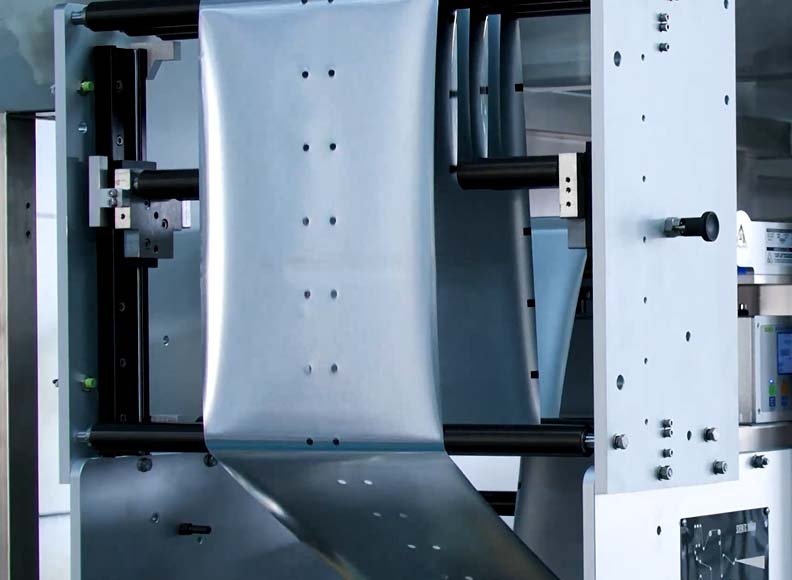
Roll-film zipper pouch
The machine forms the pouch from approved roll film, applies the required retail features, opens it, receives the gummy dose, settles the product and seals the top. Film, zipper, product drop and sealing are one integrated process.
Explore the HMK420 roll-film route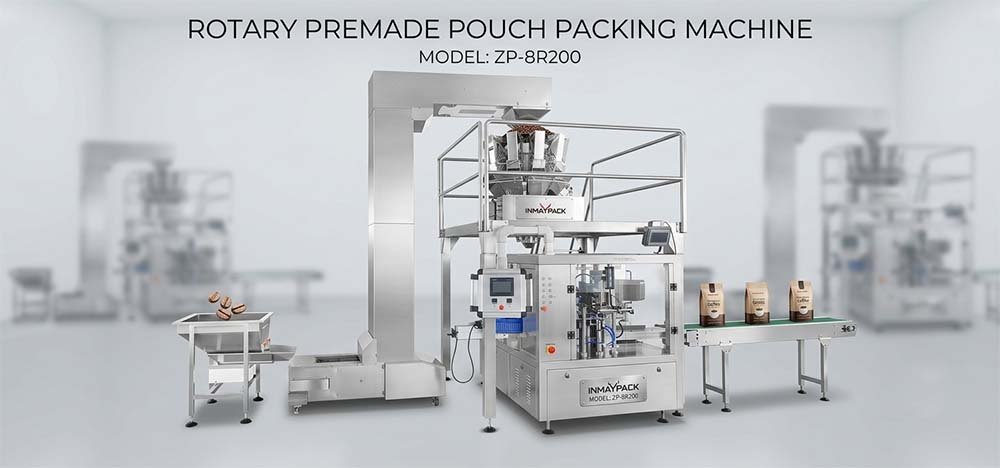
Rotary premade pouch
Use this route when finished pouches are supplied to the line. Confirm pouch pickup, opening access, bottom expansion, filler timing, gummy drop, seal cleanliness and accepted output with the production pouch.
Compare rotary premade-pouch systems →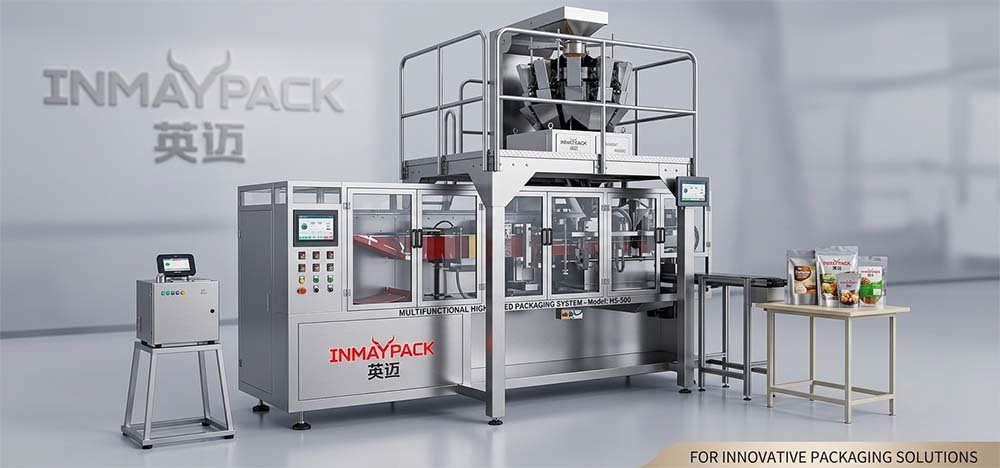
Flat bag or sachet
Evaluate a sachet route only after piece size, target dose, opening area, seal width and required pack appearance are fixed. A small package can create a tighter filling and seal-contamination window.
Compare sachet packaging systems →HMK420 gummy-cluster configuration
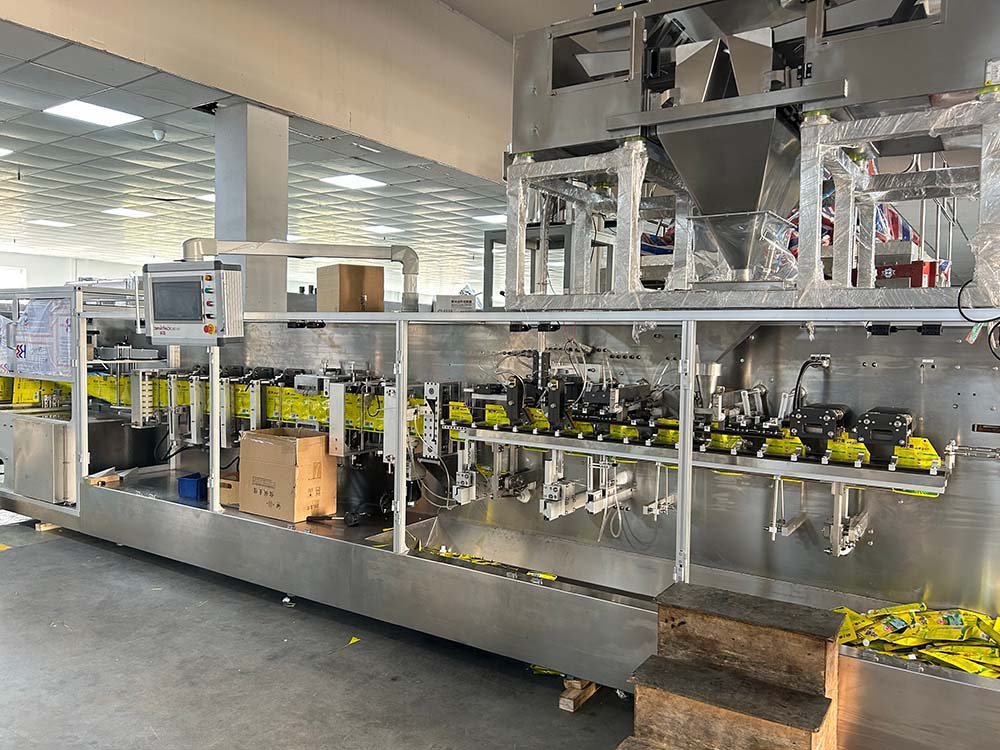
The HMK420 roll-film configuration combines zipper-pouch forming with a separate combination weigher for gummy clusters. The paired fill and pouch formats below define the configuration brief and its production target.
On smaller screens, scroll the table horizontally.
| Configuration item | Specified basis | Selection check |
|---|---|---|
| Product | Gummy clusters with a chewy centre and crunchy sugar granules; 40% sprinkles and 60% gummy candy by mass. | Check coating retention, blend distribution, flow and surface condition. |
| 85 g pack | 100 × 130 mm pouch | Check opening access, fill level, settling and top-seal clearance. |
| 150 g pack | 200 × 200 mm pouch | Check dose release, pouch support, finished shape and seal condition. |
| Output target | 80 pouches/min for the gummy-cluster configuration | Agree the product, film, dosing arrangement and finished-pack acceptance run. |
| Dosing equipment | Separate 14-head, 1.6 L combination weigher | Coordinate product supply, discharge timing and the receiving pouch. |
Set the dose acceptance
Weight-based filling
A combination-weigher and pouch-line configuration forms combinations toward a target weight. Confirm the actual gummy condition, target weight, allowable distribution, giveaway, feed stability and finished-pack results. The source HMK420 project used this route.
- Best defined by a net-weight acceptance method
- Must include feeder and product-replenishment behaviour
- Needs finished-pouch data, not only weigher display values
Piece-count filling
Use counting when the commercial requirement is an accepted number of pieces. Review piece separation, doubles, misses, broken pieces and the detection method as a distinct dosing configuration. Set the acceptance rule before comparing a counting proposal with weight-based filling.
- Define permissible doubles, misses and broken pieces
- Confirm the full shape and size range
- Test tackiness and coating under production conditions
From bulk gummy to sealed pouch
Receive
Supply the gummy at the approved temperature, coating condition and batch range.
Elevate
Feed the dosing system without uncontrolled buildup, breakage or blend separation.
Distribute
Maintain stable product presentation across the selected weighing or counting device.
Dose
Release the accepted weight or count at the timing required by the pouch machine.
Open or form
Create or present the approved pouch with sufficient filling access and stable geometry.
Drop and settle
Control the product path so gummies enter the pouch and remain below the seal area.
Seal and cool
Apply the validated time, pressure, temperature and cooling window for the film.
Inspect
Record weight or count, seal result, appearance, rejects, stops and restart behaviour.
Connect the line controls
A capable filler and a capable pouch machine can still make an unstable line if their handshakes, buffers and restart rules are not agreed.
Product replenishment
Define hopper-level sensing, elevator start/stop logic, high- and low-level states and the response to a feeder fault. The line should avoid starving the weigher and overfilling the distribution system.
Dose-to-pouch handshake
Confirm ready, dose request, dose complete, no-pouch/no-fill, invalid-opening and fault signals. A gummy dose should not be released until the receiving pouch condition is valid.
Inspection and rejection
State which device checks weight, metal, code, seal or pouch presence; how a failed pack is tracked; and where it is rejected. Include reject confirmation and a response when the reject bin is full.
Downstream blockage
Define how the pouch machine slows or stops when inspection, collection or cartoning cannot accept product. Test accumulation limits and the restart sequence so a downstream stop does not create trapped gummies or bad seals.
Recipes and change control
Identify which settings belong to each gummy and pouch format, who may edit them and how approved values are restored. Record mechanical change parts separately from touchscreen recipes.
Data and evidence
Agree which counters, alarms, reject reasons, weight records and production totals are retained or exported. The required reporting level must be included in the quoted controls scope, not assumed after installation.
Prepare the quotation brief
On smaller screens, scroll the table horizontally.
| Input | What to provide | Decision affected |
|---|---|---|
| Gummy samples | Representative and worst-normal samples, piece dimensions, weight range, surface treatment, fragility and storage temperature. | Feeding, contact surfaces, distribution, drop path and test condition. |
| Dose basis | Target net weight or piece count, allowable deviation, giveaway rule and any blend-ratio requirement. | Weigher, counter, controls and inspection method. |
| Finished pack | Controlled drawing, sample, dimensions, gusset, zipper, seal widths, artwork and case-packing orientation. | Roll-film versus premade route, machine width, opening and change parts. |
| Film or pouch | Production laminate or supplied pouches, coefficient and sealing data available from the material supplier. | Forming, opening, seal window, cooling and line speed. |
| Accepted output | Good pouches per minute or shift, run duration, maximum rejects and required quality checks. | Complete-line sizing, buffer capacity and FAT protocol. |
| Plant boundary | Utilities, room conditions, upstream supply, inspection, discharge, secondary packing and data interfaces. | Equipment list, controls, footprint and quotation responsibility. |
Define equipment responsibilities
Compare quotations against one equipment schedule. Separate the core pouch platform, selected dosing and retail features, integration work and buyer-provided facilities.
On smaller screens, scroll the table horizontally.
| Scope | Define in the quotation | Buyer or supplier input |
|---|---|---|
| Core pouch equipment | Forming or pouch handling, opening, filling interfaces, sealing, cooling, controls and guarding. | Approved pouch family, product conditions and first-off release checks. |
| Dosing and options | Feeder, weigher or selected filler, platform, zipper tooling, coding and format parts. | Sample product, dose acceptance rule, film/pouch samples and chosen options. |
| Line integration | Inspection, rejection, outfeed, conveying, upstream supply and downstream handshakes. | Interface ownership, fault response, accumulation and restart requirements. |
| Delivery and support | Drawings, manuals, FAT records, training, commissioning and spare-parts scope. | Utilities, site access, installation facilities and handover responsibilities. |
Accept the finished pouch
Put the acceptance boundary into the purchase documents before the machine is built.
Controlled inputs
Approved gummy samples, fill target, pouch drawing, production film or supplied pouches, coding and utilities.
Agreed run
Named format, product condition, target duration, operator basis, startup state and downstream boundary.
Recorded outputs
Accepted pouch count, weight or count data, product damage, seal results, rejects, minor stops and causes.
Stress formats
Test the smallest and largest approved package and the gummy condition most likely to expose feeding or sealing risk.
Changeover
Record required parts, recipe changes, cleaning, first-off checks and time to release good production.
Handover
Confirm manuals, drawings, recipes, alarms, training, spares and the responsibilities stated in the signed quotation.
Resolve process interruptions
Irregular feeding
Check gummy surface condition, bridging, hopper level, distribution and the replenishment signal before changing the pouch-machine speed.
Weight variation
Separate feeder stability, weigher settings, target weight and finished-pack verification. Do not treat a component display as final acceptance.
Gummies in the seal
Review dose timing, drop path, bounce, settling time, pouch depth and product level before increasing seal temperature.
Coating buildup
Compare the actual coating condition with the approved sample and document access, cleaning frequency and restart checks.
Deformed product
Trace excessive drop height, impact, vibration and product temperature. Keep an accepted retained sample for comparison.
Unstable zipper pouch
Check pouch geometry, zipper location, bottom opening, stiffness, fill level, top clearance and cooling before blaming one station.
Test production-ready samples
Approve gummy samples at the temperature, surface-oil level, sugar-coating condition and storage interval expected at the filler. Run feeding, weighing, pouch filling and sealing together for the agreed duration. Record recurring buildup, product damage, misfeeds, seal contamination and restart behaviour, with retained accepted packs for comparison.
Gummy packaging questions
What is the difference between a gummy making machine and a gummy packaging machine?
A making line prepares and forms the gummy product. A packaging line receives finished gummies and feeds, weighs or counts, fills and closes the final package. This page covers flexible pouch packaging after the gummy has been produced and conditioned.
Can one machine pack every type of gummy?
Match the configuration to the product range. Oil-coated, sugar-coated, soft, firm, large, small and mixed gummies need different feeding, contact, drop and pouch-handling settings. Use representative production samples to define approved formats and operating conditions.
Should gummies be filled by weight or by count?
Use the commercial acceptance rule. Weight-based filling may use a multihead weigher; piece-count filling requires reliable separation and detection. If both count and net weight matter, state how each will be checked and which result controls acceptance.
Is a premade pouch or roll-film doypack better for gummies?
Neither is automatically better. Compare supplied-pouch logistics and opening reliability with roll-film forming, zipper integration, material usage, changeover, output and the required finished pack. Test both quotations on the same project boundary.
What speed can the gummy packaging line reach?
The HMK420 gummy-cluster configuration targets 80 pouches/min for the specified 85 g and 150 g formats. Set accepted output for your gummy condition, film, filler and pouch, then evaluate conforming finished packs over the agreed run, including replenishment, rejects and restart events.
How should sticky gummies be tested?
Use representative product at the agreed temperature and coating condition. Record feed interruptions, buildup, dose results, product damage, pouch-filling faults, seal contamination, rejects and restart behaviour over an agreed duration.
What should I send for a machine recommendation and quotation?
Send gummy samples and photos, surface treatment, piece size and weight range, target dose, pouch drawing and samples, roll-film data if applicable, required accepted output, plant utilities, inspection requirements and downstream scope.
Discuss your gummy project
Send the actual gummy samples, surface condition, target dose, controlled pouch drawing and required accepted output. INMAYPACK will review the feeder, dosing method, package route, product drop, sealing and FAT boundary as one system.