
Flexible Packaging Machine for Zipper Doypacks
Form the pouch from roll film. Match the filling system to your product. The HMK420 brings zipper-pouch forming, product dosing and final sealing into a configured horizontal packaging line.

- Roll-stock HFFS
- Forms zipper stand-up pouches from roll film
- 80 bags/min target
- Gummy-cluster proposal; not measured output
- 85 g / 150 g
- Two proposed gummy-cluster pack weights
- 100 × 130 to 210 × 270 mm
- Main-machine pouch-size reference
Is the HMK420 the right packaging route?
The HMK420 is a horizontal form-fill-seal machine that forms zipper stand-up pouches from roll film, opens the formed pouch, receives a measured dose, and completes top sealing, cooling and discharge. Its pouch-forming process and product-feeding process meet at the filling station.
INMAYPACK manufactures packaging machinery around your product samples, pouch design, packaging materials and production requirements. Start with the finished pack to define the forming tools, filler and connected equipment.
Choose the route against the same product, pack and production brief:
| Your production brief | Route to review | Main purchasing decision |
|---|---|---|
| Make zipper stand-up pouches from roll film | HMK420 configured HFFS line | Film, zipper, forming tools, filler and operating duties |
| Fill bags supplied already made | Premade pouch packing machine | Bag supply, pickup, opening and format handling |
| Compare roll-film pouch platforms | Horizontal form-fill-seal machines | Pouch style, product, dosing method and layout |
| Review another zipper-pouch model | HMK-1600 zipper pouch machine | Its own pouch, filling and production specifications |
Compare film or premade-bag cost together with setup waste, changeovers, labor, maintenance and accepted output. The lowest material price alone does not establish the lowest cost per saleable pack.
A gummy-cluster zipper-pouch configuration
Engineering proposal reference — subject to product and film trials.
An INMAYPACK HMK420 proposal considers coated gummy clusters in two retail pack sizes. The requested package combines a standing bottom gusset, reclosable zipper, tear notches and a Euroslot hanging hole. The proposed line includes a multihead weigher, product elevator, installation platform and outlet conveyor.
| Proposed pack | Dose target | Pouch face-size reference | Output target |
|---|---|---|---|
| Small retail pack | 85 g | 100 × 130 mm | 80 pouches/min |
| Larger retail pack | 150 g | 200 × 200 mm | 80 pouches/min |
The proposal lists a dose-tolerance figure of 1.5%. Its measurement basis, sampling plan and acceptance limits must be agreed before testing. Dose, pouch size and output depend on the received product samples, packaging film and final trials.
For coated clusters, the engineering review follows the product from loading to the sealed pouch. Check bridging, coating loss, product drop, settling time and clearance beneath the top seal. The filler must release a dose into a pouch that is present, open and correctly positioned.
Approve the complete gusset and zipper drawing for each pack. These face dimensions do not define usable volume or the full forming specification. For other gummy products, use the gummy packaging route guide to compare the product-handling requirements.
Specify the pouch, film and zipper together
A zipper doypack is a coordinated package design. The gusset must form and stand correctly, the zipper must open and reclose, and the top seal must close above the product without interfering with the retail features.
| Submit for review | Engineering decision |
|---|---|
| Pouch width, height, gusset and seal widths | Forming geometry, tools, opening access and usable filling space |
| Zipper profile, flange dimensions and supply format | Guiding, alignment, welding and end treatment |
| Film structure, thickness and seal layer | Sealing conditions, handling and cooling requirements |
| Print repeat, eye mark and artwork | Registration, cut position, coding and feature alignment |
| Reel width, diameter, core and unwind direction | Film supply and loading arrangement |
| Tear notch and Euroslot positions | Punching tools, header layout and the continuous seal path |
Test the intended film and zipper combination, including conditions after a stop, restart and roll change. A recyclable or paper-based material requires its own forming and sealing assessment. Package recyclability also depends on the complete structure and the destination collection system.
Use the HFFS film specification guide, bottom-gusset forming guide and roll-stock zipper application guide when preparing the material brief.
HMK420 project specifications
The following values describe the referenced zipper-doypack proposal. The current equipment schedule must identify the ordered HMK420 variant, supplied modules and accepted product/pack combinations.
| Item | Proposal reference | Selection note |
|---|---|---|
| Machine process | Roll-stock HFFS; intermittent pouch transport | Final station layout follows the selected configuration |
| Pouch size | 100 × 130 to 210 × 270 mm | Confirm dimension order, gusset, zipper and seal drawing |
| Output | 80 bags/min project target | Establish accepted output with the actual product, film and filler |
| Main-machine dimensions | 11,500 × 1,300 × 2,000 mm, L × W × H | Accessories and operating access need additional space |
| Main-machine weight | 9,000 kg | Review unloading, floor support and positioning |
| Electrical reference | 18 kW | Add the selected auxiliary equipment to the load schedule |
| Compressed-air reference | 0.5 m³/min at 0.6 MPa | Confirm air quality and complete-line demand |
| Electrical supply | 200–415 V, 50–60 Hz; project-configured | Specify the destination supply for the ordered machine |
| Construction | SUS304 and carbon-steel frame; SUS304 product-contact parts | Confirm component materials, finish and cleaning method |
| Controls and guarding | Project-selected equipment package | Confirm components, interlocks and applicable documentation |
From roll film to a finished zipper pouch
The selected modules determine the final station arrangement. Review the sequence and the interfaces together:
- Unwind and aligncontrol film presentation, tension and print registration.
- Form the pouchcreate the bottom geometry and specified seal structure; incorporate the zipper and retail features in their required positions.
- Cut and transferseparate the formed pouch and carry it through the indexed process.
- Open and verifyestablish a usable pouch opening and bottom before dose release.
- Dose and settlecoordinate the filler with the pouch and keep product below the sealing area.
- Top seal, cool and dischargeclose the filled pack and transfer it to the selected outfeed.
The proposed design describes inhibition of filling and sealing when a pouch is missing or its opening is invalid. Include this behavior in the factory test, together with product interruption, film depletion and downstream blockage. Define how rejected packs are separated and how production restarts.
Inspect the mechanisms that shape the result
Film alignment and pouch transport
Film tracking influences pouch geometry and registration. The transport system then controls the pouch position through opening, filling and sealing. Review adjustment points, lubrication requirements and maintenance access for the supplied configuration.
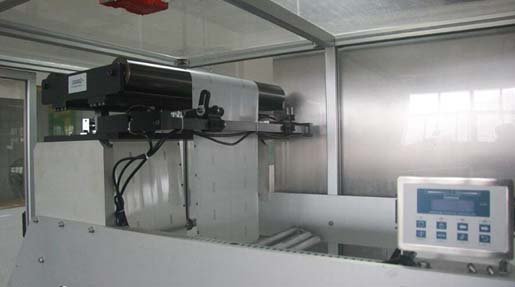
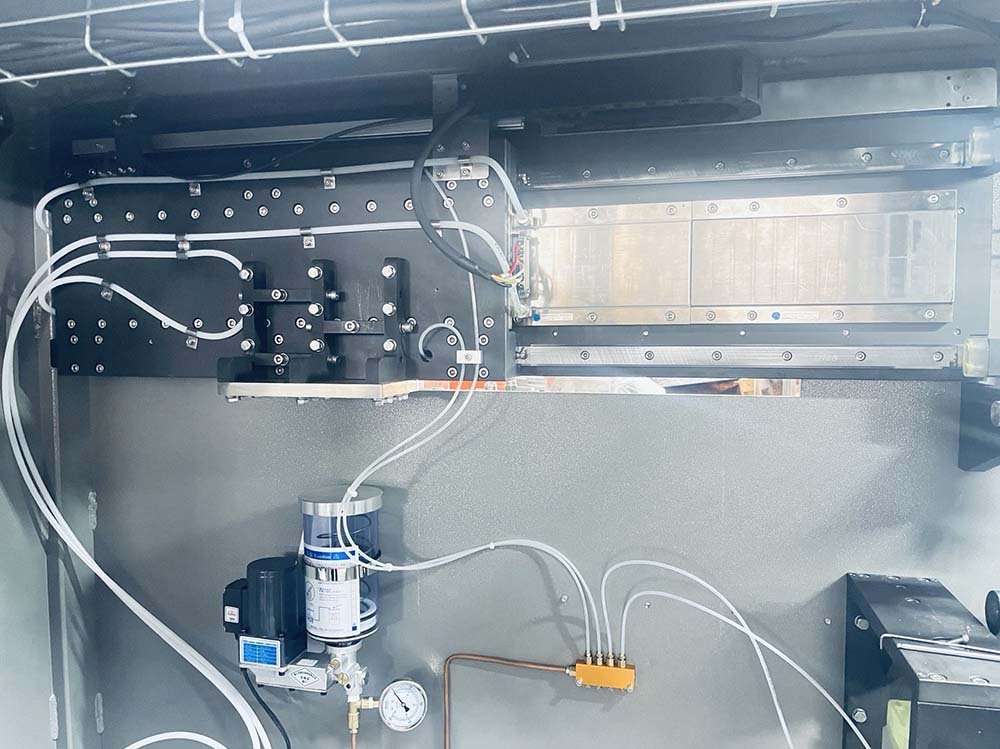
Euroslot punching and retail-feature position
The hanging hole is produced by dedicated punching tooling. Its position must be coordinated with the zipper, artwork, tear notch and sealed header. Confirm the tool and change parts for every launch format.
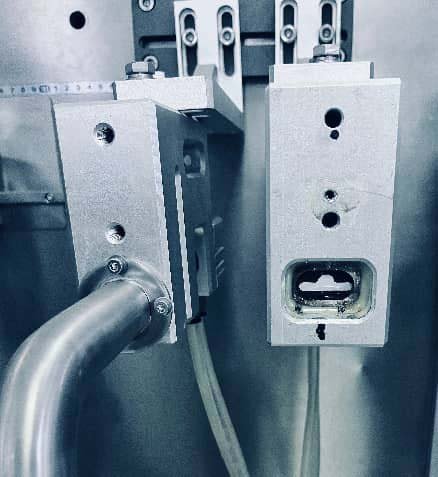
Pouch opening, filling clearance and top sealing
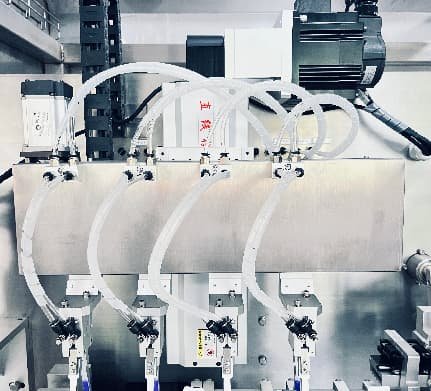
Evaluate the opening mechanism with the actual laminate and zipper. Product must enter without catching at the mouth or contaminating the seal area. Review any selected bottom-opening, settling or dosing-cutoff assistance as part of the product trial.
Top-seal temperature, pressure, dwell and cooling need to work with the approved material. Examine seal appearance and integrity after normal running and restart. A closed zipper and an acceptable final top seal are separate checks.
The pouch opening and filling guide explains the handoff between an open pouch and a released dose.
Configure the complete packaging line
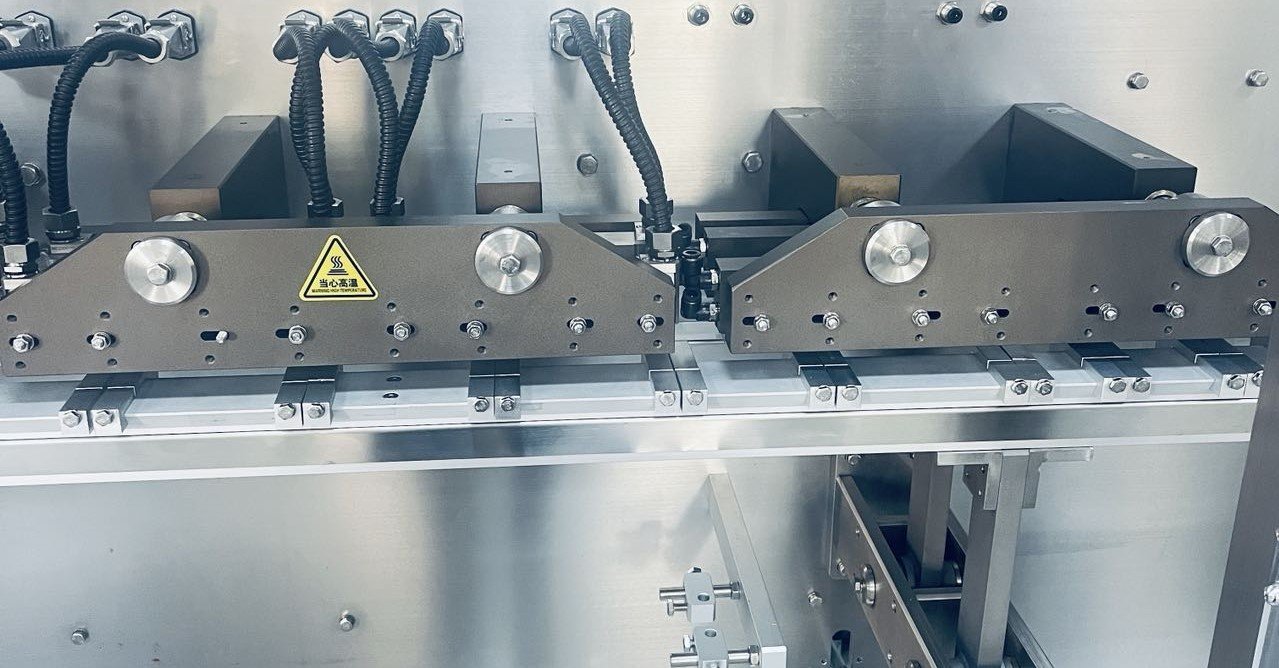
INMAYPACK reviews the product path and the pouch path as one project. The gummy-cluster proposal combines the HMK420 with weighing, elevation, access and discharge equipment. Inspection, rejection, coding and downstream connections must be named in the supplied scope.
The main-machine footprint is only one part of the layout. Include the elevator, weigher, platform, safe access, guards, outfeed and servicing clearances. Release the total equipment height, floor loading and utility schedule before finalizing the production area.
For a wider installation, use complete packaging-line planning to define who supplies and integrates each component.
| Line interface | Define before ordering |
|---|---|
| Product supply to the weigher | Loading method, feed continuity, product condition and refill access |
| Weigher to the pouch machine | Ready-to-dose, pouch-ready, dose-complete and fault responsibilities |
| Machine to inspection/outfeed | Pack transfer, accumulation, rejects and downstream hold conditions |
| Factory to equipment | Utilities, floor support, roll loading, cleaning access and operator space |
| Controls and support | Available interfaces, recipes, documentation and agreed remote-support access |
Select the filling route for the material
| Product | Dosing route to evaluate | Main engineering questions |
|---|---|---|
| Candy, nuts, dried fruit and similar pieces | Combination or other suitable weighing system | Stickiness, piece size, coating loss, bridging and drop height |
| Coffee beans | Weighing with suitable transfer equipment | Breakage, product condition, headspace and freshness requirements |
| Ground coffee and other powders | Auger or another product-appropriate filler | Flow, dust, cutoff, dosing stability and cleaning |
| Liquids and pastes | Product-appropriate pump or piston filling | Viscosity, temperature, particles, dripping and cleanability |
Each alternative needs its own machine and filling review. Gas flushing, degassing valves, special contact materials and cleaning systems must be explicitly assessed and quoted where required.
Typical engineering examples
The following examples show how a configuration can be evaluated. They are proposed application approaches, with performance established through testing.
Coated gummy clusters in a retail zipper pouch
Requirement: pack a weight-based portion while preserving the coating and keeping the seal area clear. Challenge: clusters may bridge, shed coating or settle unevenly after release.
Review the weigher contact surfaces, feed rate, discharge path and transfer height with representative product. Match the outlet and pouch opening, and assess settling assistance only where it improves the pack without increasing damage. During the trial, record net weight, coating loss, pouch contamination and conforming output after refills and restarts. The purchasing decision is whether the complete handling path meets the approved pack standard.
Nuts and dried-fruit mixes with changing piece sizes
Requirement: produce a resealable snack pouch across recipes with different shapes and bulk densities. Challenge: flow, bridging and mixture uniformity may change between batches.
Review whether total-weight filling is sufficient or whether component proportions require a different feed and weighing arrangement. Agree allowable breakage, check the usable pouch volume and establish a clean changeover between ingredients. Trial each representative recipe rather than assuming the easiest product defines the whole range. Approve the filler and cleaning scope against the actual SKU list.
Coffee products or multiple customer SKUs
Requirement: plan roll-film zipper pouches while accommodating changes in product form, material or artwork. Challenge: beans and ground coffee require different dosing and contamination controls; a recipe change may also affect forming and sealing.
Separate the bean and powder assessments, define any gas-treatment or valve requirement, and review the change parts and product-contact cleaning steps. Check the first conforming packs after a format or material change, including zipper alignment, dose and top seal. Use the coffee pouch machine comparison or the broader coffee packaging range if the package route is still being selected.
Validate the product and package before shipment
Agree a factory acceptance test using representative product and approved film and zipper materials. Define the run length, sampling plan and pass criteria before the test begins.
| Test area | Record during the agreed run |
|---|---|
| Product and materials | Product condition, batch identities, film and zipper specifications |
| Output and dosing | Conforming finished bags per minute, weight samples, rejects and stops |
| Finished pouch | Dimensions, standing shape, feature position, zipper operation and appearance |
| Seals | Settings, contamination, wrinkles, agreed strength and leakage checks |
| Recovery | Missing or unopened pouch, product interruption, normal stops and safe restart |
| Changeover and cleaning | Required parts, access, cleaning steps and first-pack release |
Seal-strength testing and leakage testing assess different properties. Select suitable methods and limits with your packaging and quality team. A visual inspection alone cannot establish package integrity or shelf life.
Use the stand-up pouch machine FAT checklist to prepare the acceptance brief. Where site acceptance is included, repeat the agreed checks after installation using the destination utilities and connected equipment.
Engineering, manufacturing and handover
INMAYPACK's project review connects the approved pouch drawing with forming tools, product-contact parts, the filler and line controls. Confirm the equipment schedule before manufacture, then review assembly, guarding, electrical functions and operation against the agreed scope.
Define the handover package: as-built layout, relevant drawings, operating instructions, recipes, change parts, recommended spares and training. Export packing, transport responsibilities, commissioning and support are agreed for the destination and project. See service and project support for the planning route.
Flexible packaging machine price and quotation scope
An HMK420 quotation depends on the complete equipment and acceptance brief. Request comparable line items for:
- The named machine configuration and launch pouch formats.
- Zipper, punching, coding and other selected forming modules.
- The filler, product feed, platform, outfeed and change parts.
- Inspection, reject handling and upstream/downstream interfaces.
- Materials, cleaning requirements, trials and acceptance records.
- Export handover, installation, training, spares and agreed service terms.
Questions before choosing the HMK420
Does this machine use roll film or premade pouches?
The HMK420 configuration described here forms the pouch from roll film. A premade-pouch line receives finished empty bags and uses a different feeding route. Choose against your product, package supply, SKU mix and production requirements.
Is 80 bags/min guaranteed for my product?
It is the target in the referenced gummy-cluster proposal. Accepted output must be established with the ordered configuration, actual product, film and pouch during an agreed test. Count conforming finished packs and record stops and rejects.
What does the 1.5% dose figure mean?
It is a proposed tolerance figure whose measurement basis and sampling conditions need agreement. It is not a published test result. The selected weigher's theoretical component accuracy is a separate specification.
Can the same setup make every pouch within the size window?
Review each pouch as a complete geometry, including gusset, zipper, seals, features and usable filling volume. The listed size window alone does not confirm every product, dose or combination of dimensions.
Can you evaluate a different film or zipper?
Yes. Provide the material specification and representative film and zipper samples. Forming, alignment, welding, opening and final sealing must be evaluated together, with any required tooling changes defined in the quotation.
How are powders, liquids and pastes considered?
They require a product-specific filler and transfer review. Discuss flow or viscosity, temperature, particles, dust or dripping, contact materials and cleaning. Performance from the gummy configuration cannot be assigned to another material.
What is needed for a format change?
Define the new pouch drawing, film, zipper and product. Review guides, tooling, filling settings, cleaning and first-pack checks. The agreed format list determines the change parts and operating procedure; changeover time is measured in the trial.
Can HMK420 connect to our existing equipment?
Submit the upstream and downstream layout, supply rates, product-transfer conditions and control-interface requirements. Confirm mechanical fit, ready/fault behavior, accumulation, rejection and integration responsibility before ordering.
How does this relate to HMK420Q?
HMK420Q has its own configuration and project specifications. Review the HMK420Q high-speed doypack route separately; do not combine its station arrangement or output references with this HMK420 proposal.
What support and warranty are included?
The current quotation and contract define warranty coverage, installation, commissioning, training, remote support and spares. Confirm destination requirements and any separately priced on-site work before accepting the project scope.
Discuss your HMK420 line
Send your product description, target dose, pouch photo or drawing, required output and destination. If available, add film and zipper specifications, the SKU list, factory layout and connected-equipment details.
A pouch photo is enough to start a discussion. For a small dose, short run, oversized pouch or higher output target, share your batch size and a representative product sample so we can compare tooling, filling and alternative pouch routes.