Packaging systems configured around your application Defined project scope

Share your requirements • sales@ewpackmachinery.com

Retail coffee bag and premade-pouch route

Coffee Pouch Packing Machine for Beans and Ground Coffee

From real coffee to a finished retail pouch.

Compare compact and rotary premade-pouch machines with the roll-film bag route. Match the coffee, pack weight, pouch drawing and required output, then review a configuration with INMAYPACK.

CoffeeBean, ground or instant condition
250 g / 500 g / 1 kgDocumented HIJ8-200 coffee project
PackageRoll film or supplied pouch
EvidenceAccepted packs under an agreed FAT
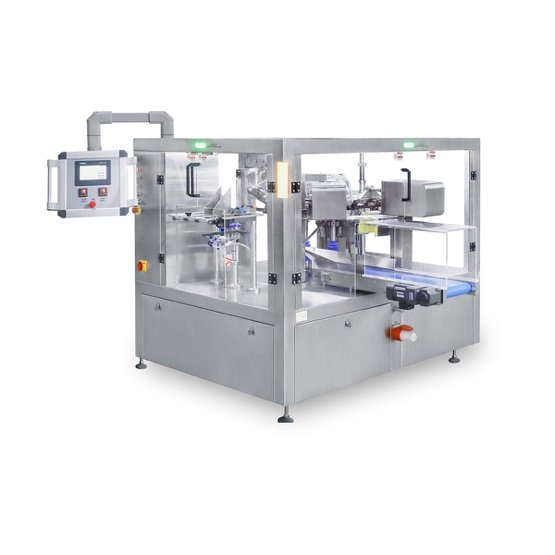
ZP rotary premade pouch machine for a coffee bean packaging configuration
Coffee-bean premade-pouch equipment referencePremade-pouch machine reference for a coffee-bean application. The delivered filler, pouch handling, closure features and acceptance criteria are confirmed for the submitted project.

Quick answer

Choose the package route before choosing the machine

A coffee pouch packing machine is not one universal configuration. It may form a bag from roll stock or open, fill and seal a supplied premade pouch. The correct route depends on the approved coffee, dose, package drawing, closure or valve, required presentation and acceptance method.

Use the coffee packaging machine hub to compare the wider coffee portfolio. Select the bag or pouch route using your actual coffee, dose, converter sample and required finished-pack presentation.

ROLL STOCKForm the bagForm → Fill → Seal

Roll-film bag route

Film handling, forming and registration.

Roll stockFormingRegistration
Read the route scope

The machine forms the package from approved roll stock, fills it, seals it and cuts the finished bag. Film, forming and print registration belong inside the project scope.

SUPPLIED POUCHESOpen the pouchOpen → Fill → Seal

Premade-pouch route

Supplied bags, opening and pouch presentation.

Premade pouchOpeningSeal area
Read the route scope

The machine separates, presents, opens, fills and seals supplied pouches. Pouch consistency and reliable opening become primary inputs.

Illustrations compare package routes, not approved bag drawings or finished test samples.

Not included by default

Roasting, grinding, bulk storage, secondary cartoning, case packing and finished-product release require separately confirmed scope.

Coffee product routes

Match the dosing system to your coffee.

Whole beans and coffee powders require different dosing reviews. Use these equipment references to prepare the application brief, then confirm the filler, pouch and connected equipment with production samples.

Coffee bean premade pouch packing machine equipment reference
WHOLE BEANS / WEIGHING REVIEW

Coffee bean pouch packing

ZP rotary familySelected weighing system

Review weighing, product supply and pouch opening together with the actual bean condition, dose and finished-pack requirements.

View the coffee bean machine →
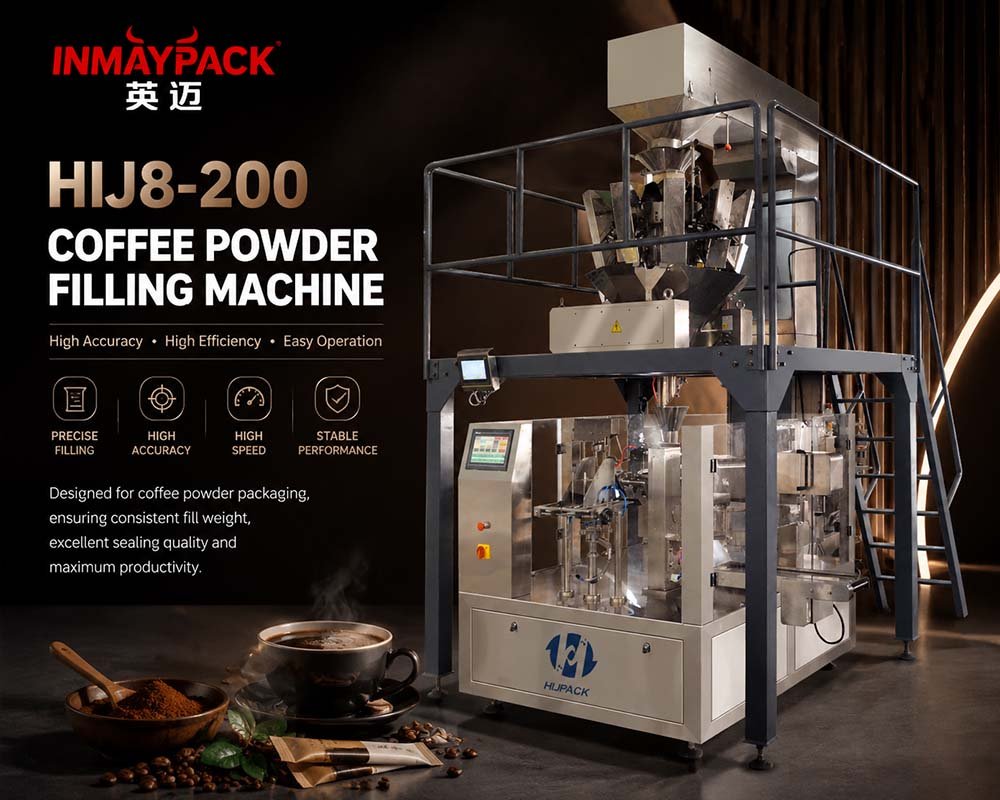
HIJ8-200 coffee powder pouch packing equipment reference
GROUND OR INSTANT / AUGER REVIEW

Coffee powder pouch packing

HIJ8-200Selected auger system

Review the selected servo auger, powder refill, settling and seal-area cleanliness as a coordinated pouch packing configuration.

View the coffee powder machine →
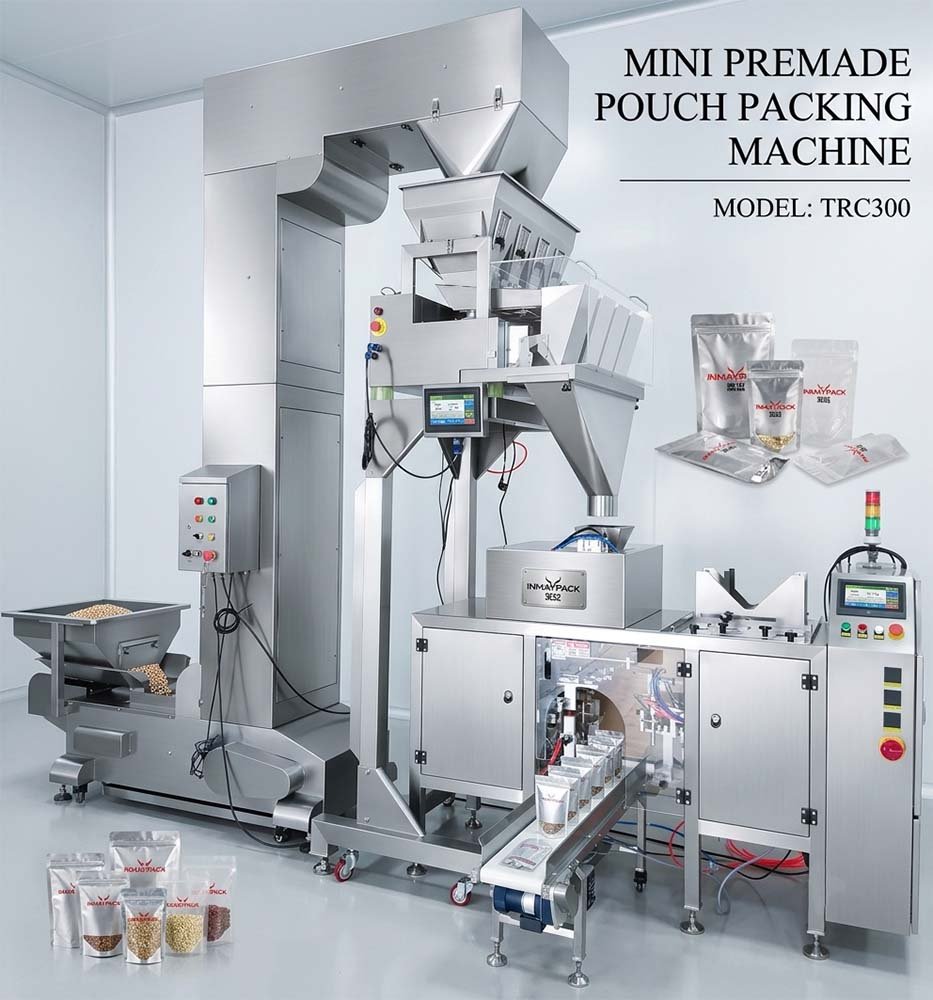
TRC300 mini premade pouch packing machine reference for a coffee pouch project
COMPACT / SUPPLIED PREMADE POUCHES

Mini pouch packing route

TRC-300 / TRC-4306–15 bags/min reference

Review a compact premade-pouch route with a selected linear weigher, multihead weigher or auger. Coffee compatibility, dose and accepted output require sample confirmation.

View the mini premade-pouch machine →

Coffee pouch machine specifications

Compare the model, pouch dimensions and dosing route.

Start with the finished pouch drawing. The compact TRC and rotary ZP or HIJ routes use supplied premade pouches. Their reference dimensions and speeds describe the named platform; the selected coffee, filler, closure and accepted-pack test define the delivered configuration.

COMPACT PREMADE POUCH6–15 bags/min

TRC-300 / TRC-430

Review the compact route when its reference capacity and supplied-pouch envelope suit the project. Select the weigher or auger separately.

Review the mini premade-pouch machine →
ROTARY PREMADE POUCH4 ZP models

Choose by pouch width.

ZP-8R200, ZP-10R200, ZP-8R260 and ZP-8R300 have distinct dimensions and reference speeds. Compare the named model with your pouch drawing.

Review the coffee bean route →
SELECTED COFFEE POWDER PROJECT100–1,000 g

HIJ8-200 with auger dosing

The documented coffee powder configuration combines premade-pouch handling, a selected auger filler and powder refill. Review each pack with the actual coffee.

Review the coffee powder configuration →
Open the seven-model pouch size and reference speed table
Premade-pouch platform reference specifications
Model Pouch width (mm) Pouch length (mm) Reference speed (bags/min) Dosing review
TRC-300 90–300 100–300 6–15 Selected linear weigher, multihead weigher or auger arrangement.
TRC-430 100–300 100–430 6–15 Selected filler and coffee dose reviewed with the longer pouch.
ZP-8R200 80–200 100–400 20–60 Whole-bean weighing route; exact filler and dose confirmed by project.
ZP-10R200 80–200 100–400 20–80 Whole-bean weighing route; distinct platform selection and output test.
ZP-8R260 130–260 100–400 20–50 Whole-bean weighing route for the confirmed pouch and fill requirement.
ZP-8R300 180–300 100–400 10–35 Wider-pouch reference; coffee fill range follows the selected filler.
HIJ8-200 80–200 100–400 20–60 Selected coffee powder auger system: 100–1,000 g.

Manufacturer reference specifications, not recorded coffee FAT results. Final pouch limits, selected options and accepted output are confirmed using the coffee, production pouch and connected equipment. Match the exact model name to the quotation; a reference photograph alone does not identify the supplied configuration.

Considering bags formed from roll film? Review the horizontal stand-up pouch packing route. HMK-2000 documentation describes a roll-film HFFS architecture with selected auger dosing. Coffee-specific weight, film, pouch dimensions and output require a separate application review.

250 g / 500 g / 1 kg coffee packs

Choose the pack weight. Confirm the pouch around it.

The HIJ8-200 coffee project identifies 250 g, 500 g and 1,000 g pack weights and a selected 100–1,000 g powder filling system. Pack weight alone does not determine pouch size: coffee density, settling, headspace and the closure change the required volume and opening.

DOCUMENTED COFFEE PROJECT WEIGHT250 g

Confirm the filling opening.

Submit the powder sample and pouch drawing together. Check auger clearance, dose setting and a clean sealing area.

DOCUMENTED COFFEE PROJECT WEIGHT500 g

Review volume and settling.

Confirm powder density, filled height, headspace and the selected settling arrangement using the production pouch.

DOCUMENTED COFFEE PROJECT WEIGHT1 kg

Validate refill and discharge.

Review hopper replenishment, required fill time, pouch support and downstream handling over the agreed production run.

These are documented project weights, not published accepted-output results. Whole-bean projects require their own weigher, pouch and sample confirmation.

Product definition

Define the real coffee condition supplied to the filler

“Coffee” does not describe the dosing task. Whole beans, coarse ground coffee, fine ground coffee and instant coffee can differ in flow, density, fines, dust, oil, aeration and settling. Provide representative production material and the condition in which it reaches the machine.

01

Product form

Whole bean, ground or instant coffee.

Coffee trial input

State whole bean, ground or instant product, including grind or particle range and any fragile pieces or fines.

02

Bulk behavior

Flow, density, settling and hopper behavior.

Coffee trial input

Record normal bulk density, aerated or settled condition, bridging, flooding, compaction and hopper-residence effects.

03

Oil and buildup

Contact-part buildup and cleaning needs.

Coffee trial input

Describe surface oil, product adhesion and buildup that can affect contact parts, cutoff, cleaning or sealing areas.

04

Temperature

Coffee temperature when it reaches the filler.

Coffee trial input

State the product temperature at filling and any conditioning time required after roasting, grinding or storage.

05

Dose range

Minimum, nominal and maximum net content.

Coffee trial input

Provide minimum, nominal and maximum target plus tolerance and the measurement method used for acceptance.

06

Supply route

Replenishment, product transfer and hopper signals.

Coffee trial input

Define the upstream container, conveyor, refill method, hopper signals, operator work and dust-control boundary.

Match the dosing method to your coffee. Review the dedicated coffee bean packing machine route for whole-bean equipment and the coffee powder filling machine Compare those configurations against your approved pouch, dose and finished-pack requirements.

Finished package

Release the bag or pouch drawing with the coffee sample

A machine quotation cannot be compared reliably when suppliers receive different packaging assumptions. Send the intended converter sample, drawing and material information together with the product and dose.

Roll-film bag

Confirm film structure, forming and print registration.

Premade pouch

Confirm supplied dimensions, opening and seal areas.

Closure features

Submit the zipper or valve position for a configuration review.

Representative pack illustrations. The approved pouch drawing, feature position and test samples define the actual supplied format.

01

Dimensions

Width, length, gusset, opening and seal dimensions.

Finished-pack detail

State finished width, length, gusset or bottom shape, seal areas, opening dimensions and permitted variation.

02

Material

Laminate, thickness and intended converter sample.

Finished-pack detail

Provide laminate, thickness, sealant, friction behavior, barrier basis and the approved supplier sample.

03

Valve or vent

Feature position and the agreed inspection criteria.

Finished-pack detail

If a one-way valve or vent is required, provide its position, dimensions, supply condition and inspection criteria.

04

Zipper or closure

Closure geometry and the available filling opening.

Finished-pack detail

Define zipper, press-to-close or other reclosure geometry and the open area required for filling and sealing.

05

Artwork and code

Print repeat, registration marks and code location.

Finished-pack detail

Give print repeat, registration marks, code area, readable-data requirement and acceptable code position.

06

Finished presentation

Fill height, headspace and accepted appearance.

Finished-pack detail

Define fill height, headspace, residual air, pack shape, seal appearance and every visible rejection rule.

Route comparison

Compare roll-film bags and supplied premade pouches on the same basis

Do not compare quoted cycle rates alone. Compare the complete product supply, filler, package handling, sealing, coding, inspection, changeover and accepted-output basis.

Open the full roll-film vs premade-pouch comparison
Decision Roll-film coffee bag route Premade coffee pouch route
Package supply Approved roll stock with confirmed roll, print and sealing data Finished empty pouches supplied within agreed dimensional and opening limits
Primary machine tasks Unwind, register, form, dose, seal, cut and discharge Separate, present, open, dose, close or seal and discharge
Critical package input Film tracking, forming behavior, repeat, seal window and roll consistency Pouch flatness, separation, opening, zipper or valve position and seal area
Changeover evidence Forming set, film path, registration, dose and seal release Pouch magazine, grippers, opening, filler, closure and seal release
Output basis Conforming finished bags after rejecting dose, registration, seal, code or cut defects Conforming finished pouches after rejecting feed, opening, dose, closure, seal or code defects
Best use of this comparison Send both candidate routes the same coffee, target dose, finished-pack requirements, run events and acceptance definition.

Pouch handling

Opening reliability starts with the supplied pouch

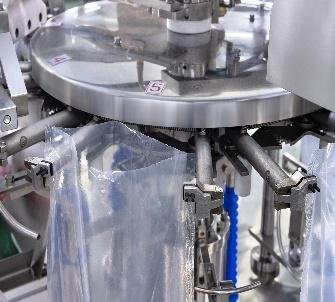
Premade pouches must separate, present and open consistently before dosing begins. A sample that opens by hand does not prove the complete stack will run under normal replenishment and production handling.

  • Provide pouches from the intended converter and normal production lot.
  • Define flatness, static, blocking, curl, zipper condition and permitted dimensional variation.
  • Confirm the opening method with the real pouch mouth, gusset and closure geometry.
  • Challenge pouch replenishment, planned stops and restart during the agreed trial.
  • Retain failed-to-feed, failed-to-open and damaged samples with cause and corrective action.
Premade coffee pouch opening station used to review separation and reliable opening before filling
Pouch-opening reference. Final gripper, opening, filling and sealing settings depend on the approved pouch lot and coffee application.

Air, gas and seal control

Convert freshness goals into testable machine inputs

Words such as “fresh,” “airtight” or “nitrogen ready” are not acceptance criteria. The buyer must define the product and shelf-life basis, while the project team converts it into package material, residual-air, gas, valve, seal and verification requirements.

01

Residual air

Define the acceptable finished-pack shape and the measurement or inspection method. Do not assume squeezing or settling behavior from another coffee.

02

Gas option

If gas flushing is required, state supply quality, pressure, connection, measurement point, target basis and test method.

03

Seal cleanliness

Challenge fines or beans near the closing area and define seal appearance, continuity, strength or leak evidence and rejection logic.

Package validation remains the buyer's responsibility. Machine FAT can demonstrate the agreed equipment and package process under a documented condition; it does not establish product shelf life or release a commercial coffee product.

RFQ control

Send one complete brief to every coffee-machine supplier

A comparable quotation uses the same product, dose, pouch or film, output and acceptance definition. Use the coffee packaging machine price guide to normalize included equipment, selected options, installation and delivery costs. If the powder dosing method is still open, use the auger filler vs weigh filler comparison to prepare a representative product trial.

01

Coffee

Product form, grind or particle range, density, fines, oil, temperature, sample and supply condition.

02

Dose

Minimum, nominal and maximum target, tolerance, measurement method and priority recipe.

03

Package

Route, drawing, material, closure, valve, artwork, code, headspace and approved production samples.

04

Output

Required conforming packs per minute or shift, run duration, refills, normal stops and staffing.

05

Factory

Layout, utilities, product supply, gas when required, cleaning, inspection and downstream handoff.

06

Evidence

FAT material, sample plan, defects, rejects, retained records, test methods and release criteria.

Factory acceptance

Approve conforming coffee packs, not theoretical cycles

Freeze the inputsRecord coffee lot and condition, dose, package lot and drawing, recipe, filler, tooling, utilities and downstream boundary.
Define a conforming packAgree weight, dimensions, presentation, residual air, closure or valve, seal, code and every rejection rule.
Run normal eventsInclude product and pouch or film replenishment, planned stop, restart, normal adjustment and downstream interruption.
Keep defect evidenceRetain feed, opening, dose, registration, closure, seal, code and appearance defects with cause and action.
Calculate accepted outputRemove rejected and nonconforming packs from gross discharge, then state run duration, staffing and normal interruptions.
Close deviationsDocument the changed setting, affected samples and repeated evidence before the configured project is released.

Line integration

Define what happens before and after the pouch machine

The primary packer is only one part of a saleable coffee-pack process. A complete scope may also require product supply, conveying, coding, checkweighing, metal detection, reject handling, accumulation, cartoning or case packing. Interfaces and responsibility must be named rather than assumed.

Coffee packaging line

Coordinate upstream supply, primary packing, inspection, discharge and downstream handling around the accepted pack.

Premade pouch machines

Review the broader supplied-pouch machine family after the coffee pouch and product have been defined.

Turnkey packaging solutions

Define ownership, interfaces, utilities, controls, documentation and acceptance across the complete project.

Buyer questions

Coffee pouch packing machine FAQ

Can one machine pack both whole beans and ground coffee?

Do not assume it. The dosing principle, product-contact parts, refill behavior, dust or fines, cleaning and acceptance test can differ. Submit both products, doses and package drawings for a configuration review.

Should I choose roll film or premade pouches?

Choose from the approved package, product, presentation, converter supply, changeover plan and accepted output. Roll film adds forming and registration tasks; premade pouches add separation and opening tasks.

Can the project include a zipper or one-way coffee valve?

It can be reviewed when the exact pouch or film construction, feature position, supply condition and inspection criteria are supplied. Do not describe a generic feature as confirmed equipment scope.

Does a gas-flush option guarantee coffee shelf life?

No. Shelf life depends on the product, package barrier, residual oxygen or air basis, valve or closure, storage and validation plan. The machine project can only be accepted against the agreed equipment and test criteria.

What should I send before requesting a quotation?

Send representative coffee, dose range, package drawing and samples, material data, closure or valve details, required conforming output, utilities, layout, inspection plan and FAT acceptance criteria.

How should machine output be compared?

Use conforming finished packs over an agreed run, including normal replenishment, stops, restart and rejects. Headline cycles or an unqualified maximum do not establish accepted production output.

Which machine should I review for 250 g, 500 g or 1 kg coffee pouches?

The documented HIJ8-200 coffee powder project lists 250 g, 500 g and 1,000 g packs with a selected 100–1,000 g auger system. For whole beans, review the selected weighing system and ZP or other premade-pouch platform separately. Confirm pouch dimensions, coffee density, closure and accepted output for every weight.

What packing speed can a coffee pouch machine achieve?

Reference speeds depend on the named platform: TRC-300 and TRC-430 list 6–15 bags/min; ZP-8R200 lists 20–60, ZP-10R200 20–80, ZP-8R260 20–50, ZP-8R300 10–35, and HIJ8-200 20–60. These are equipment references, not coffee FAT results. Compare accepted coffee packs over the agreed run, including dosing, refills, rejects and downstream events.

How much does a coffee pouch packing machine cost?

A current price follows the confirmed machine model, selected filler, pouch or film route, format parts, options, inspection, delivery and commissioning scope. Request quotations against the same coffee, finished pack and accepted-output basis. See the coffee packaging machine price guide for the comparison method.

Is TRC300 a roll-film bag-making machine?

The supplied TRC-300 and TRC-430 documentation describes mini premade-bag packing equipment. The machine handles supplied empty pouches with a selected filling device. Bags formed from roll stock require a separate form-fill-seal route.

Price, options and changeover

Get a quotation for the complete coffee pouch configuration.

The quotation should identify the named packer, selected filler, product supply, pouch or film handling, required coding, inspection, utilities and discharge boundary. A project price follows this confirmed scope and the required accepted output.

02

Specify the selected options.

Ask whether zipper opening, gas flushing, product settling, dust removal, coding and inspection are included, optional or supplied by others.

Review my required options →
03

Plan each coffee format.

List changes to pouch width, filler parts, settings, cleaning and verification. Record the first accepted pack after each changeover.

Prepare the format list →

Coffee sample review

Turn your coffee sample into a defined packing test.

Send representative coffee and production packaging samples with the priority recipe and required finished-pack appearance. Agree the run conditions and acceptance checks before recording an output result.

What to provide

Coffee condition, target weight and tolerance; approved pouch or roll film; closure or valve details; required output; available utilities and discharge requirement.

What to verify

Feeding and opening, dose consistency, settling, seal cleanliness, code position, reject response and normal refill or restart events.

What to agree as evidence

Recorded input materials, settings, test duration, accepted and rejected pack counts, retained samples and any agreed video or inspection records.

Discuss my coffee sample test →

Configuration review

Send your coffee, dose and finished-pouch definition

01 / COFFEE & DOSE02 / POUCH OR FILM03 / ACCEPTED OUTPUT

INMAYPACK will review the product condition, package route, dosing task, closure features, required output and acceptance scope before recommending an available configuration.

Tell Us About Your Packaging Project

Send your product and package details. INMAYPACK will review the application before recommending a machine configuration.

✓ Application reviewed before recommendation

✓ Project details stay private

✓ Configuration-specific technical reply