Coffee packaging procurement guide
A coffee packaging machine price is meaningful only after the package, product path and line boundary are defined. A premade-pouch line for whole beans, a multi-lane stick-pack machine and a capsule filling system solve different jobs, so their quotations should not be compared as if they were the same machine.
How much does a coffee packaging machine cost? There is no single price covering a bean pouch packer, a powder filling system, a stick-pack machine and a capsule line. This guide does not publish a current INMAYPACK price list. For a usable budget, request an itemized, dated quotation with its currency, validity, equipment boundary and acceptance conditions. An older proposal is evidence of that project’s scope, not a current selling price.
This guide shows how to compare scope, installed cost and acceptance evidence without relying on an artificial universal price range.
Quick answer: coffee packaging machine cost is driven by package architecture, filler, output basis, format range, gas handling, coding and inspection, secondary packaging, integration, FAT scope, delivery term, commissioning and spare parts. Ask every supplier to quote against the same product, package and line-boundary document. Then compare included scope and accepted output, not the headline number alone.
First define what “coffee packaging machine” means
The same search phrase can describe primary packs, secondary packs or a complete line. The first pricing decision is therefore architecture, not model number.
| Packaging route | Typical project boundary | Major scope decisions |
|---|---|---|
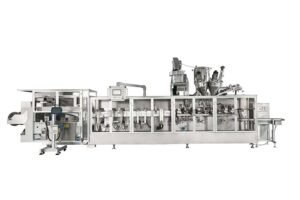
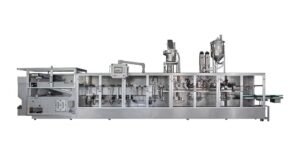
| Premade pouch for whole beans or ground coffee | Pouch feeding, opening, dosing, optional gas handling, sealing, coding and discharge. | Pouch style and size range, filler, degassing-valve requirement, nitrogen, zipper handling, inspection and downstream packing. |
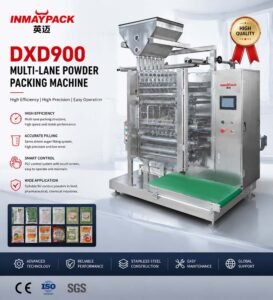
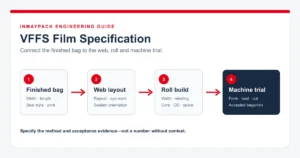
| Roll-stock stick pack or sachet | Film unwind, forming, parallel or single-lane dosing, sealing, cutting and discharge. | Lane count, film width, dose range, filler distribution, registration, tear feature, cartoning and lane-level FAT evidence. |
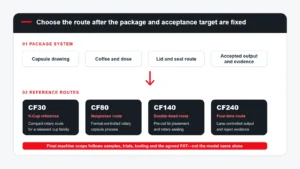
| Coffee capsule fill and seal | Empty-capsule handling, dosing, sealing-material handling, sealing, discharge and optional inspection. | Capsule format, cavity count, coffee preparation, dosing route, sealing material, nitrogen, reject logic and secondary packing. |
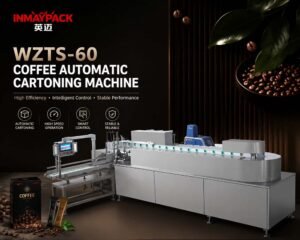
| Secondary cartoning or case packing | Receiving accepted primary packs, grouping, carton erection, loading, closing, coding and discharge. | Pack count, carton style, orientation, accumulation, line communication, inspection and change parts. |
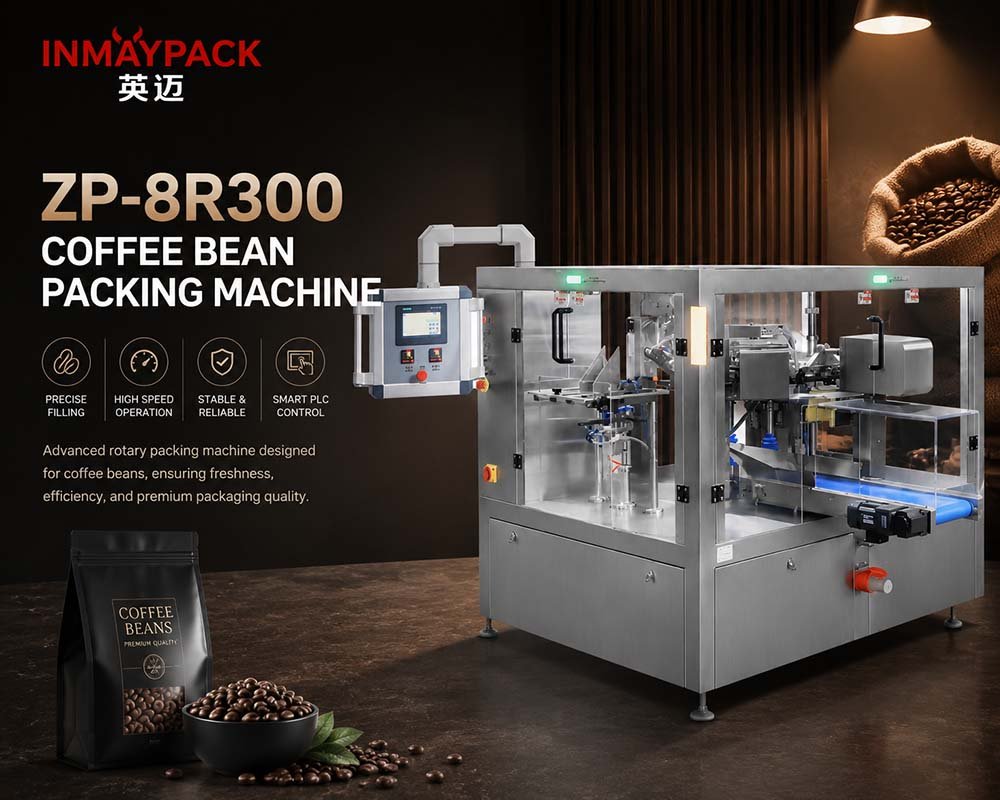
Use the coffee packaging machine overview to route the project to the appropriate primary-pack and secondary-pack equipment before requesting a price.
Coffee powder pricing: confirm the selected configuration
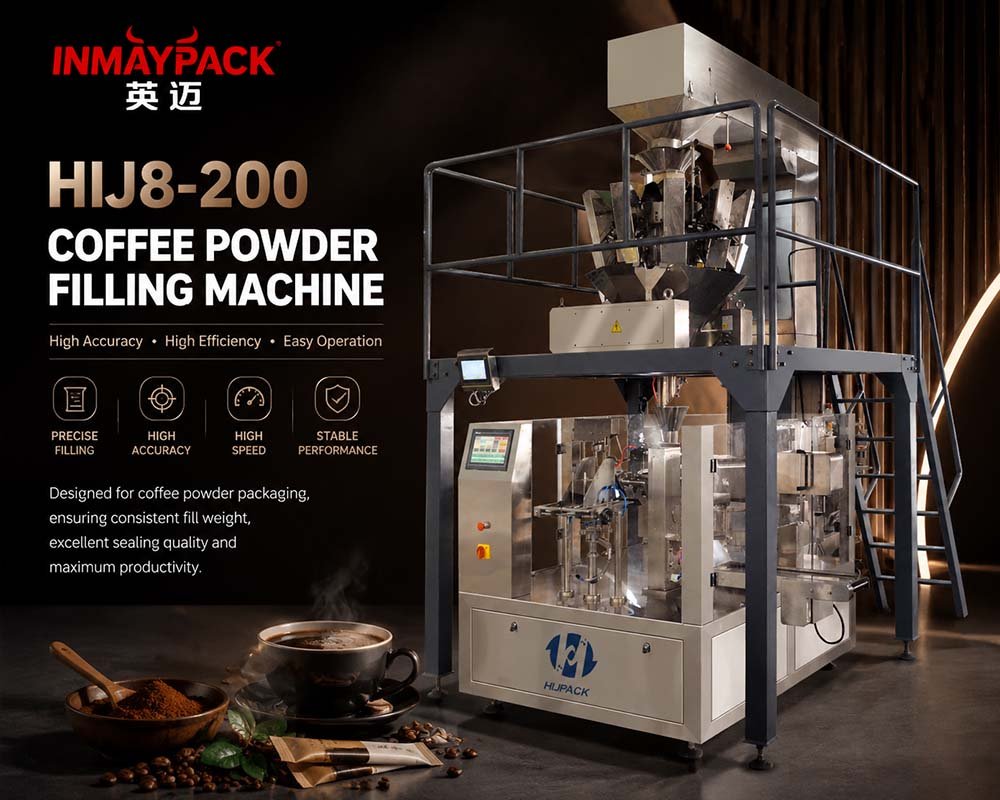
A model’s general platform range does not establish the scope of a particular coffee quote. The documented HIJ8-200 coffee powder filling configuration selects an auger conveyor and customized auger filler for 100–1,000 g, with 250 g, 500 g and 1,000 g coffee applications named in the proposal.
The wider 10–2,500 g platform reference is product-dependent and is not a guarantee for this powder system. A proposal that also lists a bean route needs separate equipment boundaries: a multihead weigher, its elevator and platform should not automatically be counted as part of the powder-only package.
Price the main pouch packer, selected powder conveyor and filler, pouch functions, dust-control equipment and any inspection or downstream equipment individually. The source proposal lists a vacuum cleaner as optional. Its air-exhaust station does not establish that a complete nitrogen system is included; gas hardware, interfaces and any residual-oxygen test must be agreed separately.
What changes the coffee packaging machine price?
Price moves when a requirement changes hardware, controls, tooling, validation effort or the supplier’s delivery boundary. These are the scope items that should be visible in a quotation.
Product and dosing
Whole beans, ground coffee and soluble products do not use one universal filler. Dose range, bulk density, flow, dust, oil, aeration and required cutoff affect the metering and product-contact path.
Package and materials
Premade pouches, roll film, capsules, lidding material and cartons require different feeding and sealing systems. Format range and special features add tooling and change parts.
Output basis
Target output must name the product, dose, package, accepted quality result and test condition. More lanes, cavities or parallel operations can change both machine architecture and inspection scope.
Atmosphere and product protection
Nitrogen, air extraction, degassing-valve handling and product conditioning should be defined as project requirements rather than assumed from the words “coffee machine.”
Quality control
Code verification, checkweighing, metal detection, seal inspection, reject confirmation and sample retention add devices, controls and acceptance tests.
Line integration
Feeders, elevators, conveyors, accumulation, cartoners, case packers, printers and plant systems change the electrical, mechanical, software and commissioning boundary.
Procurement note
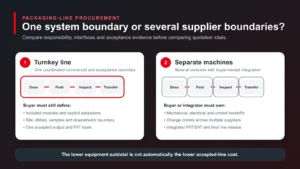
A lower headline price can reflect a shorter equipment scope. When one supplier excludes the filler, inspection, change parts, FAT materials, commissioning or spares, the buyer may still need to procure and integrate those items.
Normalize every offer to one controlled scope before negotiating price. A line item marked “optional” still needs an owner, an interface and a budget if the production process requires it.
Calculate landed and installed cost, not only machine price
The supplier’s equipment total is one part of the project. The buyer’s budget should also account for the work required to place the line into accepted production.
Taxes, duties, freight, insurance and local services depend on destination, contract and the chosen delivery rule. They should be calculated for the actual project, not copied from a generic example.
| Cost layer | Confirm in writing | Common boundary gap |
|---|---|---|
| Quoted equipment | Base machine, filler, tooling, change parts, safety devices, coding, inspection, reject and downstream equipment. | A headline price covers only the primary machine. |
| Export and delivery | Packing, inland movement, freight, insurance, named place and the exact Incoterms® 2020 rule. | Two quotations use different delivery points or risk-transfer boundaries. |
| Import and site receipt | Buyer-specific customs work, duties, taxes, unloading, rigging, storage and movement to the installation position. | Local charges are absent from the equipment comparison. |
| Utilities and site work | Power, compressed air, gas, extraction, drainage, network, foundations, access and environmental conditions. | The facility must add utility capacity or modify the room after arrival. |
| Commissioning and training | Travel, labor, duration, interpretation, product and packaging materials, operator training and maintenance training. | The quotation says “commissioning available” without defining days or exclusions. |
| Acceptance and lifecycle | FAT, site checks, documentation, initial consumables, commissioning spares, wear parts and critical spares. | The line starts production without an approved replenishment or recovery plan. |
The ICC Incoterms® 2020 guidance explains how the selected rule allocates costs, risks and obligations. State the chosen rule and named place in the quotation instead of using a three-letter abbreviation without a location.
Compare coffee packaging machine quotations on one basis
Create a comparison sheet before requesting revised prices. If a field is blank, mark it as not stated; do not assume it is included.
| Comparison field | Evidence required | Why it matters |
|---|---|---|
| Product and pack basis | Named coffee product, condition, dose range, package drawing and material specification. | Prevents suppliers from pricing different applications under the same title. |
| Accepted output | Output basis, test product, pack format, quality criteria, reject treatment and test duration. | Separates total machine cycles from accepted saleable packs. |
| Included equipment | Itemized machine, filler, feeder, gas system, coder, inspection, reject, conveyors and secondary equipment. | Exposes short-scope quotations and duplicate buyer-supplied items. |
| Format capability | Quoted formats, installed tooling, included change parts and items requiring future purchase. | Shows whether the offer covers launch only or the approved operating range. |
| Interfaces | Mechanical, electrical, software, utility and product-transfer boundaries. | Assigns ownership for integration work before the equipment arrives. |
| FAT and documents | Test scope, samples, materials, reports, drawings, manuals, certificates and backup files. | Converts promises into reviewable pre-shipment evidence. |
| Delivery and support | Lead-time basis, delivery rule, named place, installation scope, training, warranty, service route and spares. | Reveals cost and downtime exposure beyond the equipment total. |
Do not force every supplier into the same model number. Force every supplier to answer the same operating requirement. A different architecture can be a valid proposal when its exclusions, capacity basis and acceptance method are explicit.
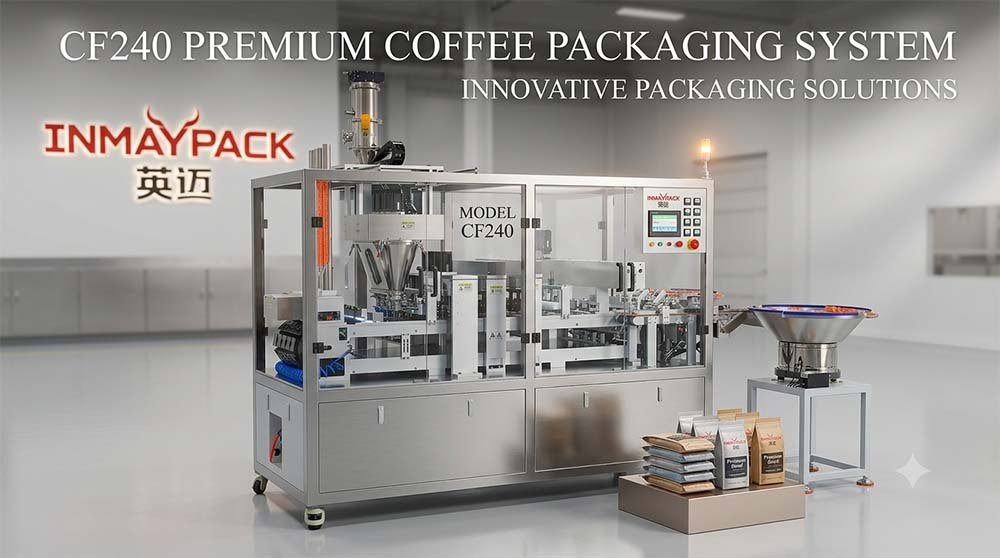
Give every line item a scope status
Included means the item is within the stated quoted total; confirm its quantity and specification. Optional requires a separate selection and price. By others identifies a buyer or third-party supply responsibility, but the integration work still needs an owner. Excluded records a deliberate omission. Not stated is an unresolved question, not a free item.
| Line item | Status to record | Evidence or owner |
|---|---|---|
| Main machine and filler | Included / Optional / By others / Excluded / Not stated | Model, quantity, selected configuration and quote revision. |
| Feeder, gas system and extraction | Record each item separately | Included hardware, utility supply and connection owner. |
| Coder, inspection and rejection | Record each device and its interface | Accepted checks, reject confirmation and responsibility for controls. |
| Format tooling and change parts | Name the launch and future formats | Included parts, additional cost and changeover demonstration. |
| Conveyors, cartoning and site integration | State both supply and integration status | Who supplies, installs, connects and tests each interface. |
| FAT, commissioning, training and spares | Itemize the service or part package | Materials, days, travel exclusions, documents and replenishment route. |
Add only the selected options and required buyer-side work that are absent from the equipment total. If a bundled quotation already includes a conveyor or coder, do not add its standalone price again. Keep recoverable taxes, financing assumptions and ongoing operating costs visible as separate budget lines instead of mixing them into an unexplained machine-price total.
Compare accepted output, with the same test boundary
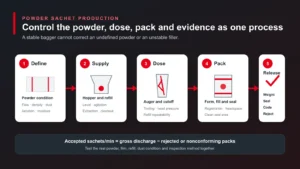
Cycles per minute, filler doses per minute and accepted finished packs per minute describe different results. Multi-lane output also depends on how many lanes are active and how many packs pass the agreed checks. Compare the complete route using the same coffee, dose, package materials and acceptance method.
For a witnessed factory acceptance test (FAT), agree the product and material lots, test duration, warm-up treatment, refill and stoppage treatment, fill-weight criteria, seal checks, coding, inspection and reject handling. Gas measurements belong in the test only where the project specifies them. Record settings and faults as well as the accepted count.
Accepted output per scheduled minute = accepted finished packs ÷ agreed scheduled test minutes. Use one definition of scheduled time for every proposal. If planned changeovers or startup are excluded, report those exclusions and durations separately.
Illustrative calculation, not a machine performance claim
Suppose a hypothetical 60-minute trial records 2,400 completed packs and 120 rejected packs. Accepted output is (2,400 − 120) ÷ 60 = 38 accepted packs/min. If running time was only 50 minutes, 2,400 ÷ 50 = 48 completed packs per running minute describes a different metric. Both calculations can be correct, but their denominators and quality treatment are different.
This example is arithmetic only. It is not an INMAYPACK capacity, yield or return-on-investment promise. Use results from the selected equipment and your agreed trial conditions before calculating the production hours needed for an order.
Separate purchase cost from operating cost
Keep the normalized installed budget beside recurring costs such as product giveaway, packaging waste, labor, power, compressed air, nitrogen where used, maintenance and wear parts. For an operating-cost comparison, divide the agreed period’s operating costs by accepted packs from that same period and disclose what the numerator includes. Include capital recovery only if the financial comparison defines its method and period explicitly.
Build a quotation request that produces comparable answers
A useful request does not need to prescribe every component. It needs to state the result, boundaries and evidence that matter.
Identify the product
Provide coffee type, condition, target dose range, available product data and representative samples for testing where required.
Control the package definition
Provide drawings and specifications for pouches, film, capsules, lids or cartons, including the required format range and features.
State the production result
Define target accepted output, quality checks, coding, atmosphere, inspection, reject handling and intended operating pattern.
Draw the line boundary
Show upstream supply, primary packing, secondary packing, utilities, data, conveyors and buyer-supplied equipment.
Define acceptance and support
State FAT materials, test duration, retained evidence, documents, training, commissioning, warranty and spare-parts expectations.
For architecture-specific review, use the coffee bean packing machine, coffee powder filling machine, coffee capsule filling and sealing machine, coffee stick packing machine and coffee automatic cartoning machine pages. For a project connecting several machines, define the wider boundary with the coffee packaging line guide.
Use the pouch packing machine spare-parts guide to separate commissioning, wear and critical spares before the purchase order is finalized.
Before approving a purchase or deposit
Review one dated quotation revision against the approved equipment list, layout, utilities, format list and acceptance plan. Record unresolved items explicitly. Confirm lead-time triggers, quotation validity, payment milestones, delivery rule and named place, commissioning exclusions, warranty terms and the service route in the current commercial documents. A historical deposit percentage or delivery period should not be carried into a new order without agreement.
Agree what happens if samples show an unsuitable filler, a difficult seal or a lower accepted output than required: who reviews the evidence, how configuration changes are priced, and how the revised test is approved. These are project decisions to settle in writing rather than assumptions to discover after shipment.
Reference
International Chamber of Commerce — Incoterms® 2020
Related INMAYPACK pages
Request a scope-based coffee packaging quotation
Send the coffee product, dose range, package drawings, material specifications, target accepted output, line boundary and required acceptance checks. INMAYPACK can review the packaging route and return a configuration-based quotation.