Premade retail pouches
Use supplied stand-up, zipper or flat pouches when the approved pouch construction and presentation are central to the project.
Packaging systems configured around your application Defined project scope

Compare pouch packaging routes for chips, puffed snacks, crackers, nuts, candy pieces and mixed snacks by product handling, dose, finished pack and accepted output.
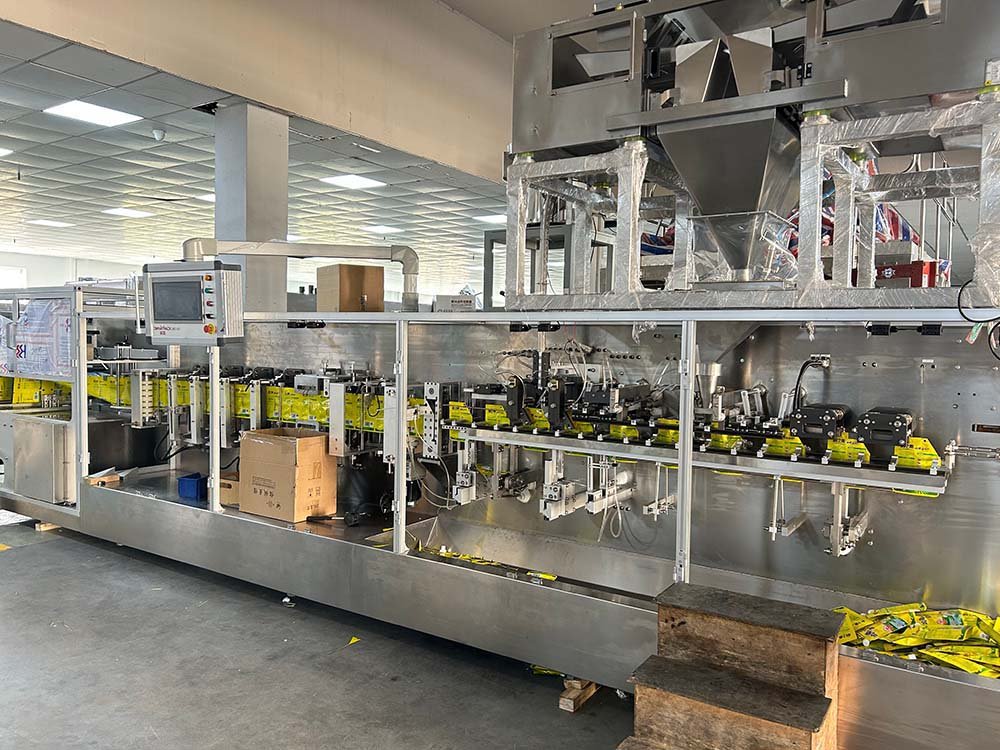
For this page, it is a project-matched line that feeds and doses snack pieces, handles or forms the pouch, protects the sealing area and releases accepted finished packs. It is not one universal machine for every snack. Individually wrapped bars and single pieces require a different wrapping architecture and are outside this pouch-machine selection page.
Pouch supply, product fragility, seasoning, dose and shelf presentation can change the complete line even when the snack name stays the same.
Use supplied stand-up, zipper or flat pouches when the approved pouch construction and presentation are central to the project.
Form compatible stand-up or flat pouches from roll stock when film, forming, product drop and sealing are controlled as one process.
Evaluate a matched sachet route for small nuts, candy pieces, toppings or inclusions after dose and lane balance are confirmed.
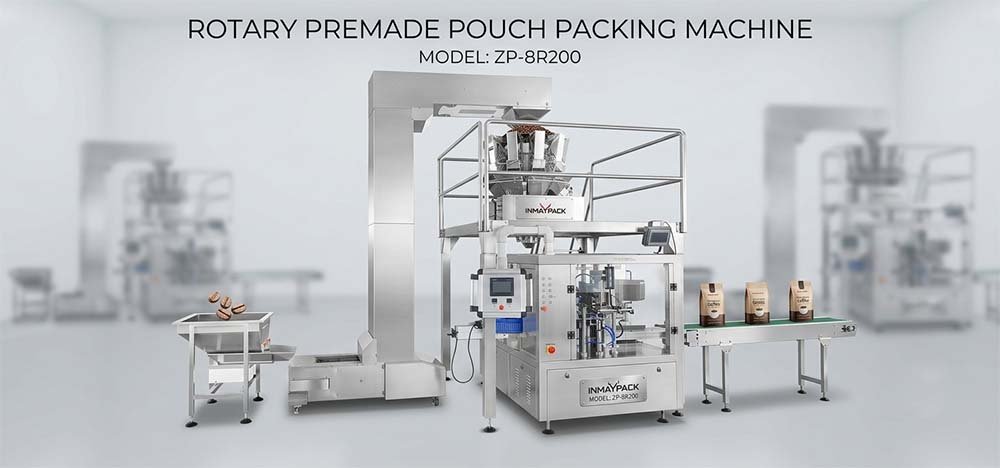
A rotary machine indexes supplied pouches through pickup, opening, filling and sealing. The actual snack, weigher, product feed, pouch and drop path must be tested together.
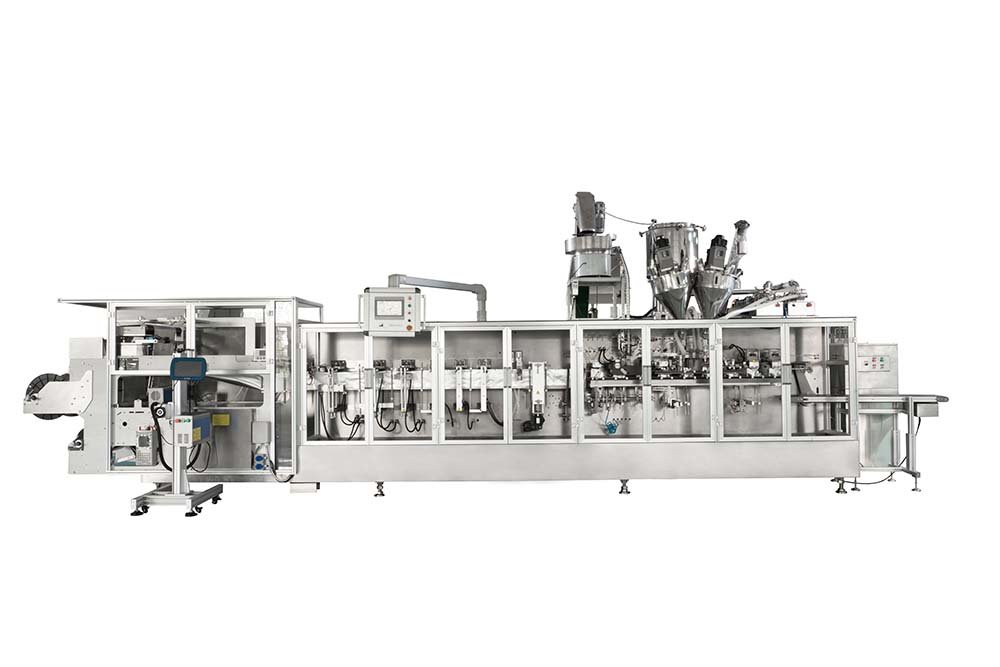
An HFFS system forms compatible pouches from roll film. Film tracking, pouch opening, product settling, headspace and seal cleanliness belong to the same acceptance test.
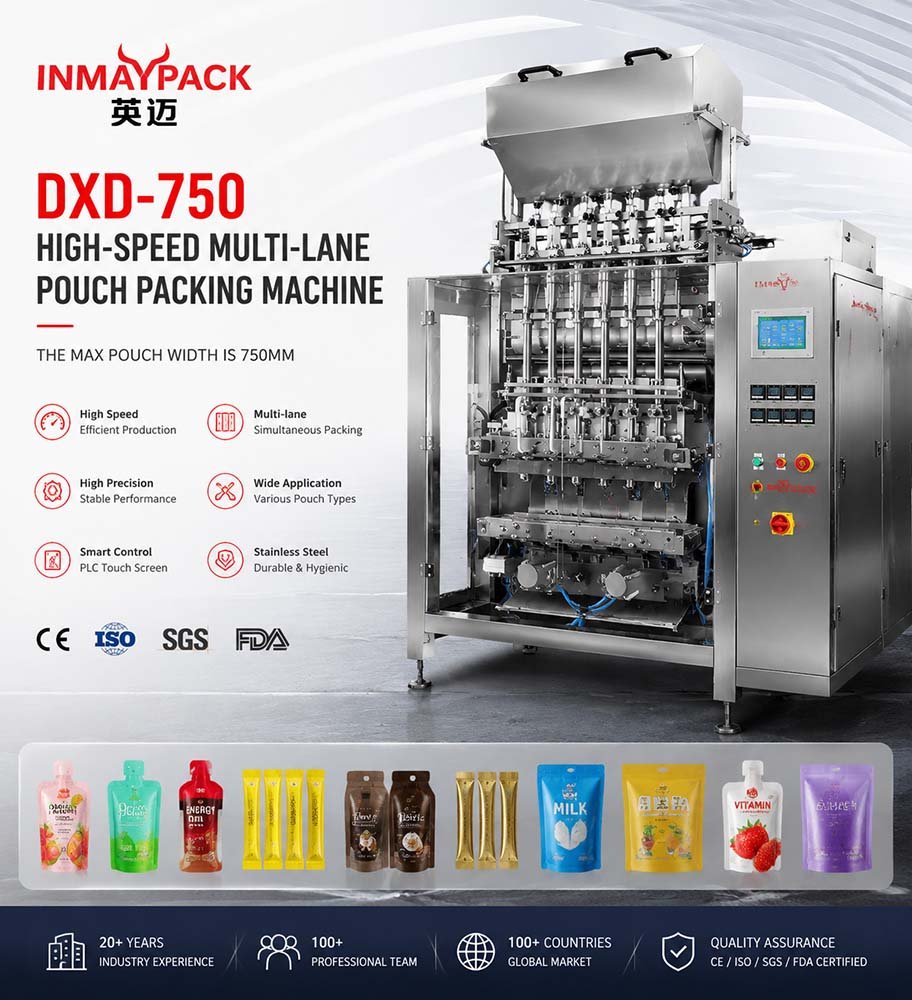
Lane count is fixed only after the product, dose, film layout, dosing repeatability, cross-lane balance and downstream collection method are confirmed.
Record piece dimensions, breakage limits, acceptable drop height, bridging and the effect of vibration before approving the feed and weighing route.
Review surface oil, seasoning dust, buildup, cleaning access and how crumbs reach the final seal area during continuous production.
Confirm bulk density, piece size distribution, inclusions, target dose, refill behavior and impact at transfer points.
Check stickiness, coating damage, piece variation, segregation and whether the accepted mix ratio is maintained through feeding and dosing. For a candy-specific choice between net weight, piece count, premade pouches, roll film and small sachets, use the candy packaging machine route.
| Decision factor | What to provide | Why it changes the system |
|---|---|---|
| Snack behavior | Piece size, bulk density, fragility, oil, dust, stickiness and mix composition | Changes feeding, weighing, transfer, drop height, cleaning and seal protection |
| Target dose | Minimum, maximum, nominal value and accepted verification method | Changes weigher range, discharge timing, settling and achievable accepted output |
| Finished pouch | Supply method, drawing, dimensions, film, zipper, headspace and seal area | Changes premade versus roll-film architecture, tooling, opening and sealing |
| Accepted output | Saleable packs per minute, test duration, allowed rejects and restart basis | Separates completed production from an empty mechanical-cycle figure |
| Quality controls | Breakage limit, fill checks, code, leak or seal test and required inspection points | Defines the evidence and downstream interfaces required at FAT |
| Line boundary | Infeed, elevator, weigher, bagger, coding, inspection, conveying and cartoning | Ensures quotations cover the same complete operating boundary |
Define refill, elevator or conveyor, level control, surge capacity and product-protection limits.
Confirm the actual snack, dose range, repeatability method, breakage and discharge timing. When weight-based filling is selected, review the multihead weigher packing machine as part of the complete pouch line. For a supplier-neutral dosing comparison, use the multihead versus linear weighing selection guide before fixing the snack feeder, target and pouch-line interface.
Control supplied-pouch pickup or roll-film forming, opening, filling access and the approved drawing.
Manage crumbs, seasoning, oil, product settling and headspace before the final seal closes.
Define coding, weight checks, seal tests and other project-required inspection points.
State discharge orientation, accumulation, case packing and supplier responsibility boundaries.
Use the food packaging machine selection guide when the application includes powders, liquids, sauces or other food forms beyond snack pieces.
When the product is supplied frozen or IQF, use the frozen food packaging machine guide to define product condition, frost, clumping, dosing, pouch and FAT requirements before selecting the line.
A line may cycle quickly without producing acceptable snack packs when breakage, long settling, dust, oil, headspace or seal contamination interrupts transfer and sealing. FAT should use the approved snack and pouch under one agreed production basis.
Use the stand-up pouch machine FAT checklist to define evidence before shipment.
Start with piece dimensions, bulk density, breakage limit, seasoning, target dose and finished pouch. A weigher can be evaluated with a premade-pouch or roll-film pouch machine, but the complete transfer and sealing route must be confirmed with the actual snack.
The same pouch platform may support more than one approved configuration, but product feeding, weighing, drop height, cleaning, change parts and acceptance conditions can differ. Each product family needs its own documented trial basis.
Premade pouches suit projects where supplied pouch features and shelf presentation are central. Roll-film HFFS forms compatible pouches in the line. Compare the approved pouch, tooling, product drop, accepted output, changeover and total line boundary.
No. This page covers snack pieces filled into pouches or sachets. Individually wrapped bars and single pieces require a separate wrapping architecture and should not be quoted as the same pouch-packing system. For cereal, protein, granola and similar bars, use the snack bar packaging machine selection guide to define the flow-wrap, infeed and line-integration route.
Use the approved snack, dose, pouch and line configuration. Record test duration, accepted output, fill checks, breakage, pouch appearance, seal testing, allowed rejects, restart criteria and downstream condition.
Send snack photos and samples, piece dimensions, bulk density, fragility or breakage limit, oil or seasoning condition, dose range, pouch drawing and samples, target accepted output and the complete line boundary.
Share the snack form, dose range, pouch drawing, accepted output and line boundary. INMAYPACK will compare the relevant dosing and pouch routes before recommending a configuration.