Flow-wrap selection guide · Horizontal packaging
Start with product presentation and the finished three-seal pack—not the words “horizontal machine.”
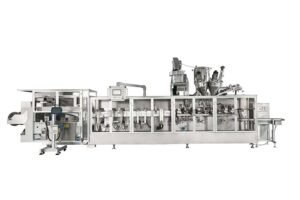
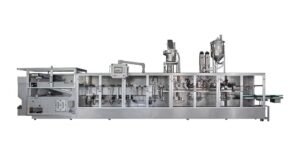
Flow wrap packaging feeds a discrete product horizontally while roll film is formed around it, closed with a longitudinal seal, then cross-sealed and cut into a three-seal pillow pack. It is a different buying route from a horizontal doypack machine that forms an empty pouch before opening and filling it. Confirm product pitch, film position, seal geometry, infeed control and accepted-output evidence before selecting either route.
Process boundary
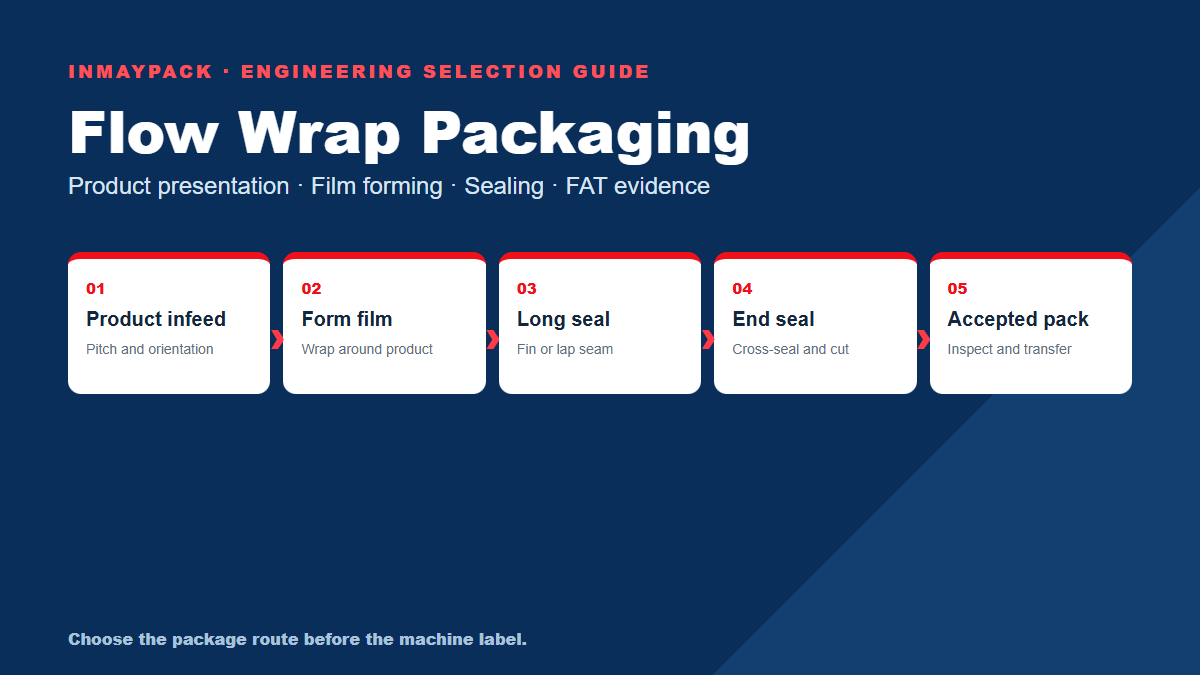
How a horizontal flow wrapper makes one package
The machine wraps a product that has already been presented to the infeed. The product flow, film flow and sealing jaws must arrive at the same position and time.
Architecture decision
Flow wrap, doypack HFFS, VFFS and premade pouches are not interchangeable
| Route | What enters the primary machine | How product enters the package | Typical starting requirement |
|---|---|---|---|
| Horizontal flow wrap | A discrete product, tray or controlled group plus roll film. | Film is formed around the product as it travels horizontally. | A three-seal pillow pack around an item that can be presented at controlled pitch. |
| Horizontal doypack HFFS | Roll film plus a separate product dosing path. | The web forms a pouch that is cut, presented, opened and filled. | Stand-up, zipper, spout or shaped pouch geometry formed from roll stock. |
| VFFS | Roll film plus product delivered through a vertical forming tube. | Product normally drops through the forming tube into the bag. | Pillow or machine-specific vertical bag formats for granules, powders or other validated products. |
| Premade pouch | Finished empty pouches plus a separate dosing path. | The machine picks, opens, fills and seals supplied pouches. | Preconverted pouch features or lower roll-film conversion complexity. |
Application fit
A flow-wrap project begins with a product that can be presented
Individual products
Bars, bakery items, confectionery pieces, hardware or other discrete units may be reviewed when orientation and pitch can be controlled. For cereal, protein, granola, fruit and nutrition bars, continue with the snack bar flow-wrap selection guide. For single cookies, biscuit stacks, tray-supported products and loose mini biscuits, use the cookie and biscuit packaging machine guide to define breakage, crumbs, infeed and downstream acceptance.
Trays and supported products
A tray or carrier can stabilize a product, but film path, underside seal, gas or leak requirements and tray transfer remain application-specific.
Counted or grouped products
A group may be wrapped only after counting, accumulation, collation and transfer are defined as part of the line boundary.
Irregular or fragile products
Review conveyor friction, product contact, lower- or upper-reel film presentation and sealing-jaw clearance using real samples.
Loose powders and liquids
These normally require a controlled dosing container or pouch route; they are not converted into a flow-wrap project by changing only the film.
Stand-up or reclosable packs
When stand-up geometry, zipper, spout or a shaped pouch is essential, compare the doypack machine route.
Web control
Printed film must stay aligned with the moving product
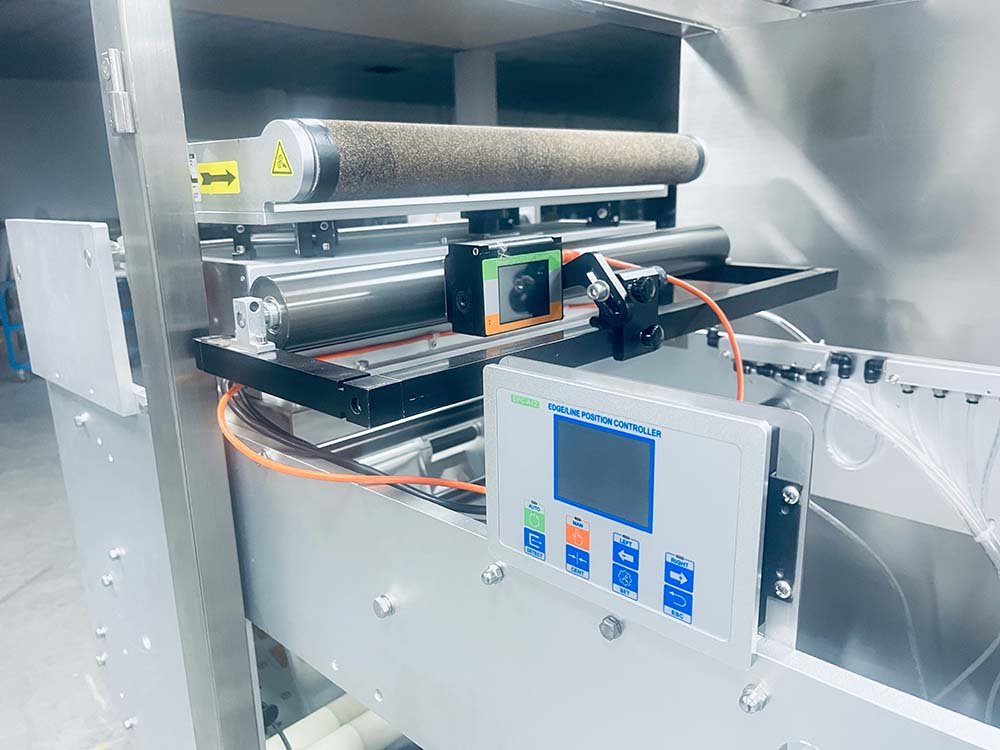
Confirm film width, roll direction, print repeat, registration mark, coefficient of friction, thickness, sealant layer, splice condition, core and roll limits. The machine must control web position while the infeed maintains product pitch.
Top-reel and bottom-reel flow wrappers present film differently. Bottom-reel layouts may be reviewed for irregular or difficult-to-transfer products because film can approach from below, but the choice must follow the real product, sanitation, seal and line-access requirements.
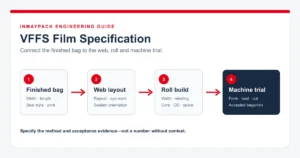
Use the HFFS film specification guide for the broader supplier-data checklist; confirm which fields and tests apply to the selected flow-wrap architecture.
Sealing window
Longitudinal and end seals fail for different reasons
Longitudinal seal
Confirm seam type, overlap, film face, wheel or shoe contact, temperature, pressure and appearance on the approved pack drawing.
Cross-seal and cut
The jaws must close between products, form the leading and trailing seals, cut at the agreed position and avoid product damage or contamination.
Required integrity
Define the applicable visual, peel, burst, leak or other test method and acceptance limit. Modified-atmosphere or hermetic claims require configuration-specific validation.
Continue with the flexible package seal-integrity guide for test planning rather than approving seals by appearance alone.
The wrapper cannot correct an uncontrolled infeed
A supplier can demonstrate stable film and jaws while the production line still loses output because products arrive touching, rotated, doubled or at changing pitch. I would include the feeder, accumulation, product detection, gap control and downstream acceptance state in the same production basis before fixing a speed value.
Request for quotation
Put these inputs into the flow-wrap URS
| URS section | Minimum input | Decision it changes |
|---|---|---|
| Product | Samples, dimensions and tolerances, weight, fragility, surface condition, temperature and orientation. | Infeed, guides, film presentation, jaw clearance and handling speed. |
| Package | Controlled drawing, seam position, cut, opening feature, coding area, headspace and display requirement. | Forming box, film width, sealing geometry and discharge condition. |
| Film | Structure, thickness, sealant, roll direction, print repeat, mark, friction, roll and splice limits. | Unwind, web control, registration and sealing recipe. |
| Product supply | Manual or automatic loading, upstream rate variation, pitch, accumulation and changeover boundary. | Conveyor length, sensors, gap control, buffering and line ownership. |
| Accepted output | Saleable packs per minute for each priority format, test duration, acceptable rejects and refill assumptions. | Motion and sealing architecture plus the commercial performance basis. |
| Inspection and downstream | Code, seal, weight or contaminant checks; reject path; cartoning, case packing or collection state. | Discharge spacing, signals, accumulation and acceptance-test scope. |
Factory acceptance
Count saleable packs, not empty jaw cycles
- Controlled basis: identify product, film, artwork, package drawing, recipe and infeed condition.
- Sustained run: agree duration, replenishment, operator actions, planned stops and downstream state.
- Output record: count accepted packs separately from empty cycles, film-only runs, rejects and scrap.
- Quality sampling: check dimensions, registration, seam position, code, appearance and the agreed seal test.
- Challenge conditions: test missing product, close product, registration loss, film end, guard access, blocked discharge and controlled restart when included.
- Changeover: demonstrate priority format parts, recipe control and first-off release where required.
Use the packaging machine FAT checklist to assign samples, responsibilities, pass criteria and evidence before testing.
Related decision paths
Continue with the route supported by the real product and pack
Return to the form fill seal machine selection guide when the project still needs a direct comparison of flow wrap, HFFS pouch, VFFS bag and sachet routes.
Buyer questions
Flow wrap packaging FAQ
What is flow wrap packaging?
Is a flow wrapper the same as every HFFS machine?
Which products are suitable for a flow wrap machine?
What is the difference between top-reel and bottom-reel flow wrapping?
How should flow-wrap speed be compared?
Does INMAYPACK supply a flow wrap machine?
Primary technical references
Flow-wrapper operating principles used in this guide
- Syntegon, horizontal flow-wrapper operation from infeed through longitudinal and end sealing.
- ULMA Packaging, entry-level horizontal flow wrapper and three-seal pillow-pack architecture.
- ULMA Packaging, bottom-reel flow-wrapper example for irregular or difficult-to-transfer products.
These references explain established flow-wrapper principles and third-party application examples. They do not establish an INMAYPACK model, performance value or supplied scope. Confirm all commercial facts in the issued project quotation.
Confirm the package route before requesting a machine model
Send the product sample or dimensions, finished-pack drawing, film specification, loading method, required accepted output and downstream condition. INMAYPACK will review whether the project belongs to flow wrap, doypack HFFS, VFFS or a premade-pouch route; equipment availability remains subject to the confirmed quotation.