Technical explainer | Published July 30, 2026
The words "full servo" do not identify which machine motions are servo-driven, what feedback closes each loop, which settings belong to a recipe or how the system will be accepted. A useful URS converts the label into an axis register, operating requirements, recovery rules and FAT evidence.
Quick answer: require the supplier to list every controlled axis, its actuator and feedback device, the motion it performs, its master or synchronization reference, the recipe parameters available to users, the protected commissioning parameters, the alarm and recovery behavior, and the FAT test that proves the required result. Keep pneumatic or simple electric actuators where they are appropriate; do not add a servo merely to increase the axis count.
Turn the full-servo claim into an axis register
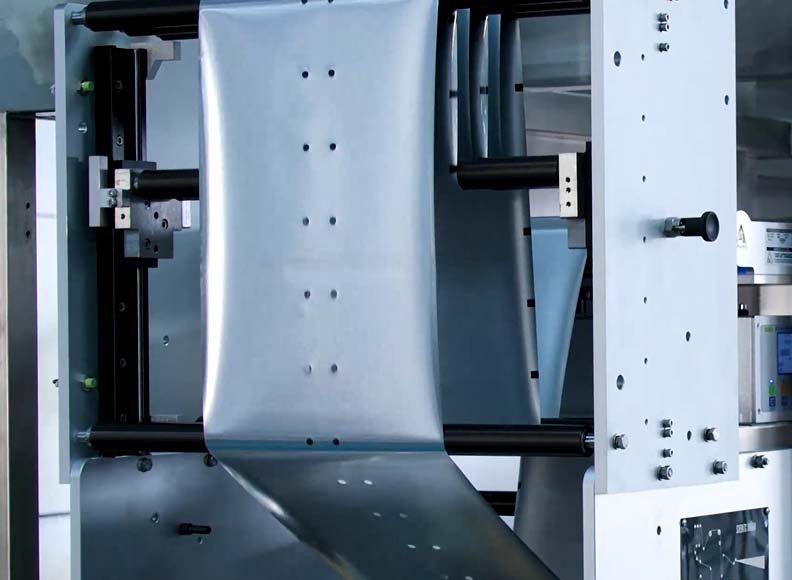
A doypack HFFS line combines continuous and intermittent motion. Film must unwind and track, the web must index to a controlled length, a pouch may be cut and transferred, a filler must meet the available cycle, seals must close under a validated process window, and optional spout or cap operations must stay synchronized with pouch position.
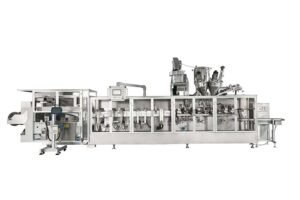
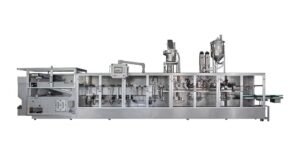
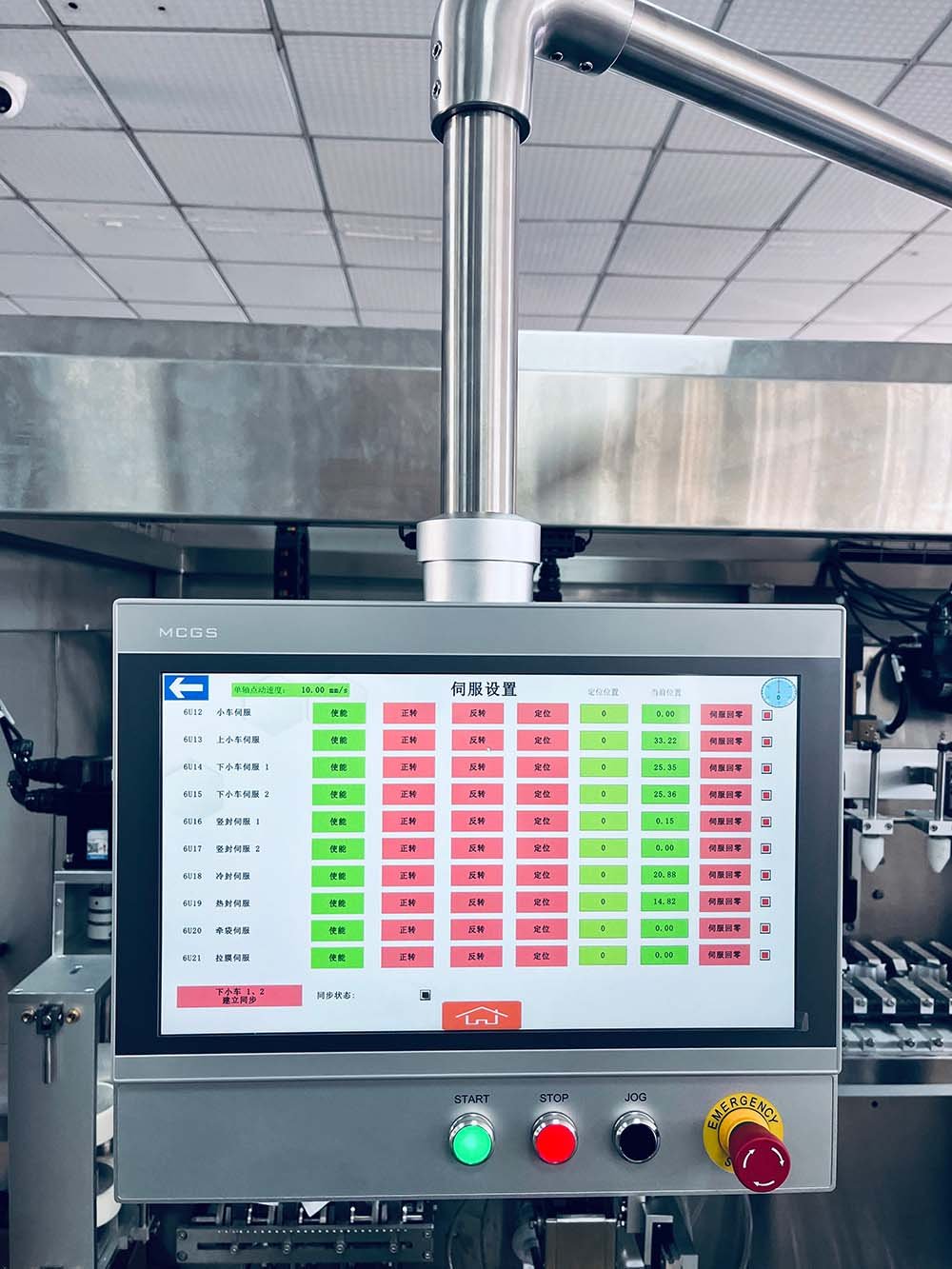
The HMS320 full-servo doypack packing machine uses servo-controlled functions for a roll-stock top-spout pouch process. A buyer evaluating this or another architecture should still ask for the project-specific axis list because supplied options, pouch formats and filling systems can change the final control scope.
For each function, record the actuator, drive, feedback device, communication interface and mechanical transmission. A motor brand by itself does not show whether the axis is closed-loop, synchronized, recipe-controlled or accessible to plant maintenance.
My Insight
Treat "full servo" as the start of a technical question, not the end of supplier evaluation. The shortest useful question is: "Please provide the axis register and show which accepted pouch characteristic each axis controls." That connects automation architecture to film pitch, pouch position, fill performance, seal presentation, cap torque or another measurable result.
Use the actuator that matches the motion task
Servo control is valuable where position, speed, acceleration, torque or coordination must change under program control. It is not automatically the best choice for every clamp, gate or short end-to-end movement. Pneumatics can remain practical for simple high-force motions when intermediate positioning and coordinated profiles are not required.
| Decision factor | Servo is useful when | Pneumatic or simpler motion may be suitable when | URS evidence |
|---|---|---|---|
| Position | Multiple positions, electronic format adjustment or position correction are required. | The movement is repeatable between two mechanical end stops. | Positions, tolerances, feedback and homing method. |
| Synchronization | The axis must follow a virtual master, web position, registration mark or another axis. | The action is triggered independently and only needs end-position confirmation. | Master reference, phase adjustment and permitted following error. |
| Motion profile | Velocity, acceleration, deceleration or dwell must change by recipe. | Fixed travel and flow-controlled speed meet the process need. | Editable recipe fields and protected commissioning limits. |
| Force or torque | Controlled torque, programmable force-related behavior or motion monitoring is required. | Available air pressure and actuator sizing provide the defined force at the endpoints. | Control method, limit, calibration or verification test. |
| Diagnostics | Position, speed, load, following error or drive status is needed for fault isolation. | Valve command and end sensors provide enough information for the risk and task. | Available tags, alarm thresholds and history retention. |
| Lifecycle support | The plant can support the selected drive, motor, network, software and backup method. | The plant favors simple components and the process does not need advanced motion. | Approved component list, software ownership, backups and spare strategy. |

Engineering basis: ISA - Servo motion control basics; Festo - Selecting linear motion technology.
Write a URS that can be checked against the delivered machine
A URS should state the required production result and the evidence needed to accept it. Avoid prescribing a drive count without understanding the mechanism. Instead, require the supplier to return a completed axis register during design review and update it to the as-built condition before shipment.
| Axis-register field | What to require | Why it matters |
|---|---|---|
| Axis identity | Unique tag, machine station and physical motion. | Connects drawings, software, alarms, manuals and spare parts. |
| Actuation | Motor or actuator, drive, transmission and brake where applicable. | Defines the actual hardware rather than a generic servo claim. |
| Feedback | Encoder, sensor, load or torque-related feedback and reference method. | Shows how the controller knows the required state was reached. |
| Control relationship | Independent axis, virtual master, electronic cam, gearing or phase relationship. | Defines how coordinated motions remain synchronized. |
| Production parameters | Recipe-controlled position, speed, acceleration, dwell, offset or limit. | Separates operator format settings from fixed commissioning data. |
| Limits and protection | Software limits, mechanical limits, access level and safe setup behavior. | Prevents unauthorized or damaging adjustment. |
| Fault response | Alarm, controlled stop, interlock, reset condition and recovery path. | Makes failure behavior reviewable and testable. |
| Acceptance evidence | Dry-cycle check, format trial, measurement, trend, challenge test or retained record. | Links architecture to the agreed production requirement. |
Example requirement: "The supplier shall provide an as-built axis register identifying every servo-controlled motion, its drive and feedback device, recipe-adjustable parameters, protected limits, alarm behavior and FAT verification. Any difference from the approved register shall be recorded in the project deviation log."
Electronic camming and coordinated positioning can simplify format-dependent motion when correctly engineered. Mitsubishi Electric describes packaging functions that support cam generation and positioning compensation from the operator interface. The project still needs its own approved ranges, access permissions and tests.
Technical reference: Mitsubishi Electric - iQ Monozukuri PACKAGING.
A recipe must define ownership, not just store numbers
Recipe-based changeover can reduce repeated manual adjustment, but only if the stored values are tied to a controlled pouch, film, product and filler condition. A recipe name without revision control or acceptance evidence can reproduce the wrong setup very efficiently.
Production recipe
Released format identifier, pouch pitch, registration offset, transport positions, speed target, filler interface, seal settings and other approved operating values.
Commissioning parameters
Motor data, tuning, electronic-cam relationships, homing details, limits and protected values that should not be changed during routine production.
User access
Defined permissions for selecting a released recipe, adjusting an approved window, creating a new format and changing protected motion data.
Change record
Recipe identity, revision, editor or approver where required, backup date and the validation result used to release the setting.
Use the pouch packing machine changeover guide to define the timer boundary, controlled format pack and first-approved-pack release. Servo axes can automate settings, but they do not remove film loading, product change, cleaning, inspection or quality approval.
Diagnostics and recovery are part of the motion system
Closed-loop drives can provide position, speed, status and fault information, but useful diagnostics depend on how those values are connected to machine states, alarm messages and recovery instructions. A raw drive code is not enough for an operator to identify the affected station or a technician to restore production safely.
Servo drives can add useful diagnostic data, but they also add software, networks and commissioning dependencies. Include motors, drives, feedback devices and required support tools in the machine-specific spare-parts strategy, and use the pouch machine troubleshooting guide to separate axis faults from film, product and process symptoms.
Verify the full-servo scope during FAT
FAT should compare the approved axis register with the delivered machine, then demonstrate the required functions under controlled conditions. A successful empty-machine jog proves motion direction; it does not prove format repeatability, product handling or accepted pouch output.
- Reconcile the as-built register. Confirm tags, stations, actuators, drives, feedback devices, networks and drawing references.
- Challenge manual and setup modes. Verify direction, access level, speed restriction, interlocks and permitted recovery behavior for each relevant axis.
- Load released recipes. Confirm the correct positions and settings are recalled for the agreed pouch formats without changing protected commissioning data.
- Run the approved product and film matrix. Measure the package result controlled by each relevant motion, not only whether the axis moves.
- Test alarms and recovery. Challenge agreed loss-of-reference, drive fault, sensor, communication or following-error conditions where safe and supported by the design.
- Verify backup and restore. Record version identifiers and demonstrate the contractually supplied recovery method.
- Close deviations. Record any difference between the approved requirement and delivered behavior with owner, action, deadline and closure evidence.
Acceptance principle: approve a servo axis because it produces and preserves the required pouch or process result under the agreed conditions, not because a drive appears in the electrical cabinet.
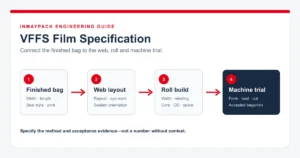
Use the stand-up pouch machine FAT checklist for the wider equipment review, including utilities, guarding, alarms, samples, seal testing, documentation, deviations and the SAT boundary. For roll-stock trials, freeze film and registration inputs with the HFFS film specification guide.
Technical references
International Society of Automation - Servo motion control basics
Mitsubishi Electric - iQ Monozukuri PACKAGING
Festo - How to select the optimal linear motion technology
Nidec Drives - Packaging machinery motion control
Related INMAYPACK guides
Send the axis and format requirements before quotation
Share the product, pouch drawing, film specification, fill range, required output, changeover expectations, preferred controls platform and FAT requirements. INMAYPACK will return a project-specific machine and motion-control proposal.
Reply: sales@ewpackmachinery.com | WhatsApp: +86 18658799162