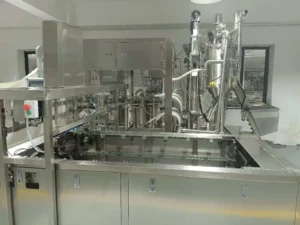
Liquid pouch process guide
A liquid form fill seal machine forms a package from roll film, meters the product, closes the pack and discharges it for inspection. The useful purchasing decision is broader than choosing a pump or a headline speed: product behavior, pack geometry, film, seal contamination, cleaning, inspection and line interfaces must work together.
Use a liquid sachet route for small flat portions, a roll-film HFFS doypack route when stand-up pouch formation is part of the process, or a premade-pouch route when the approved package arrives already converted. Viscosity alone does not decide the route. Confirm particulates, temperature, aeration, fill range, package drawing, seal requirement and the definition of an accepted pack.
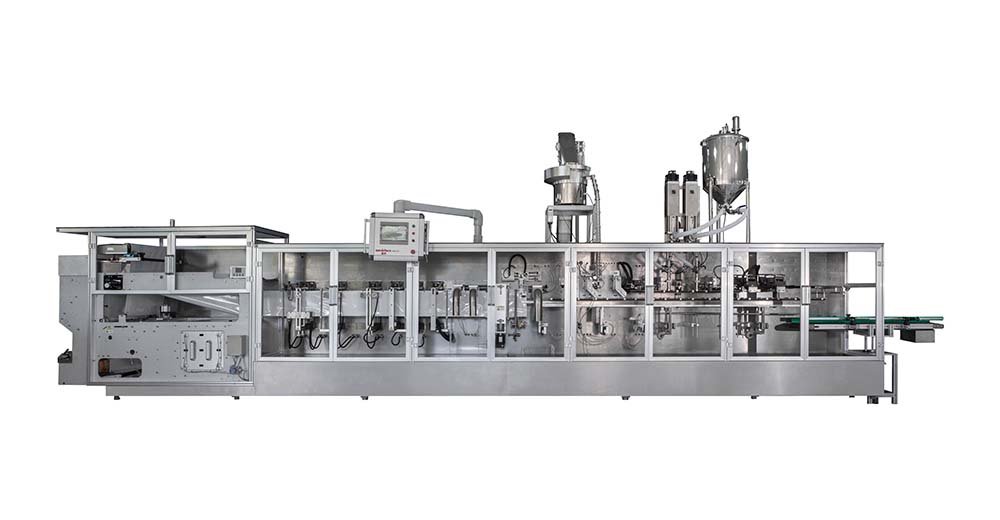
Architecture decision
Sachet, roll-film doypack or premade pouch?
The three routes can all package liquids, but they solve different package and production tasks. Compare them against the same product, fill range, finished-pack drawing and acceptance basis.
| Route | What the machine receives | What must be confirmed |
|---|---|---|
| Liquid sachet machine | Roll film plus product | Flat-pack dimensions, fill volume, film web, dosing cutoff, seal cleanliness, tear feature, coding and accepted sachets per minute. |
| Roll-film liquid doypack HFFS | Roll film plus product, with pouch forming inside the platform | Web layout, bottom and side gusset geometry, forming stability, opening, filling, top sealing, cooling, inspection and downstream transfer. |
| Premade pouch filling | Converted empty pouches plus product | Pouch separation, pickup, opening, position, fill clearance, zipper or spout geometry, top-seal area, pouch variation and reject handling. |
If the finished pack has a cap or fitment, review whether the project needs supplied premade spouted pouches, pouch opening and filling, cap feeding and closure control, or a different spout-insertion process. The spout pouch filling route and the premade spout-pouch filling and capping route should not be treated as the same scope.
Product definition
Define the liquid under its real production conditions
A room-temperature water trial cannot establish how a sauce, detergent, dairy product or aerated liquid will feed, meter and leave the filling nozzle. Send representative product and state the operating range instead of one ideal value.
Viscosity and temperature
Record the relevant temperature range and how flow changes during production, recirculation or waiting. State whether heating, cooling, agitation or a supply tank is inside the project boundary.
Particles, fibers and inclusions
Provide maximum particle size, shape, concentration and damage limits. These inputs affect the product path, valve choice, nozzle clearance and the risk of material entering the seal area.
Foam, strings and drips
Identify aeration, stringing, splashing, tailing and settling. The test should include startup, normal running, refill and stop/restart rather than only a short steady sample.
Cleaning and changeover
State the approved cleaning method, product-contact scope, drain and recovery expectations, allergen or cross-contact controls, inspection access and the evidence required before release.
Application pages help define additional variables for sauce packaging, detergent pouches and dairy packaging. For emulsified products, the mayonnaise packaging machine application page connects product, package and FAT inputs without turning one pump setting into a universal promise.
INMAYPACK engineering note
The filler and pouch machine must be tested as one timed process
A dosing unit can repeat well into an open container and still perform poorly when synchronized with a moving pouch, restricted fill opening or short seal-settling time. The useful result is the number of conforming finished packs under the agreed product, package and run conditions. Record the filler command, pouch position, cutoff behavior, seal contamination, rejects and restart response together.
Metering and transfer
Match the metering system to the product and acceptance rule
The bagger forms or handles the package. The dosing system measures and transfers product. Keep their specifications and responsibilities separate, then verify the complete line against the finished-pack requirement.
Measurement basis
Define whether acceptance uses mass, volume or another controlled basis. State nominal, minimum and maximum fills, tolerance, sample size, instrument and treatment of startup or rejected packs.
Supply conditions
Describe feed pressure, head, refill method, tank level variation, recirculation, product temperature and upstream interruptions. A stable bench supply may not represent the factory process.
Nozzle and cutoff
Confirm nozzle count, pouch opening clearance, diving or fixed position if applicable, suck-back or cutoff behavior, drip capture and the cleaning or change-part procedure.
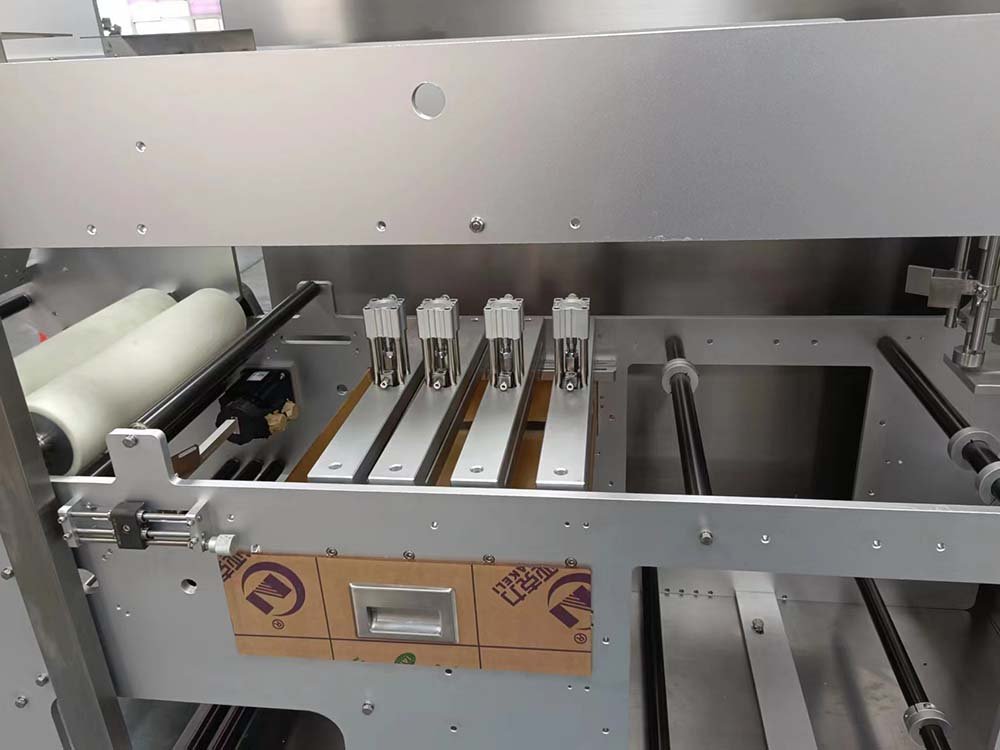
Film and package integrity
Keep product out of the seal and define how the seal is accepted
A closed-looking pouch is not automatically a conforming pouch. The film or premade package, fill position, headspace, seal surfaces, temperature, pressure, dwell, cooling and inspection method must be evaluated together.
Approve the package drawing
Control overall dimensions, gusset or spout geometry, seal widths, fill opening, tear or zipper features, print registration, coding area and the location of every product-contact seal.
Approve the actual material
Provide the laminate or pouch specification, sealant face, thickness, friction or stiffness information available from the converter, roll or pouch tolerances and representative production samples.
Challenge contamination and restart
Include realistic drips, foam, particles, refill interruption and stop/restart conditions. Record whether the system suppresses, rejects or releases packs after each event.
Use a written acceptance method
State the visual, seal-strength, leak, burst or other applicable checks, conditioning, sample plan and limits. Use the seal-integrity testing guide to separate seal strength, continuity and whole-package performance.
For roll-film HFFS projects, the doypack film specification guide explains roll direction, web layout, eye marks, sealing data and production-trial control in more detail.
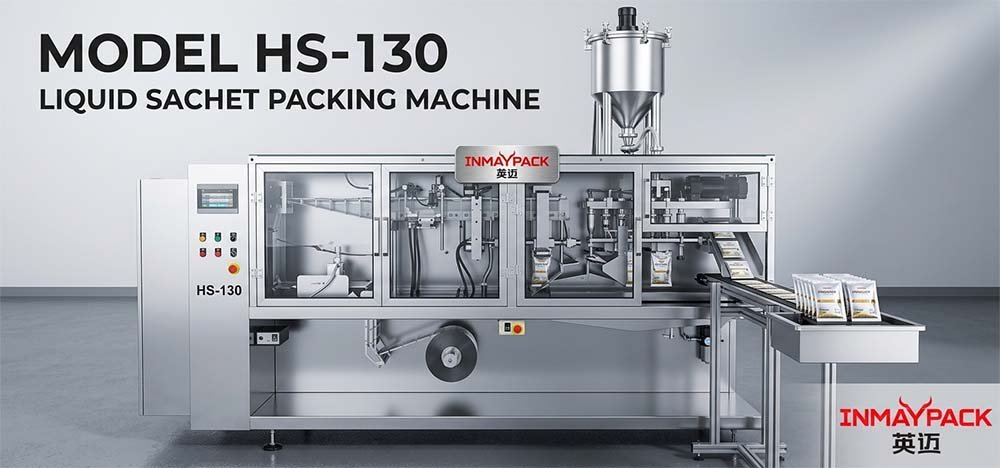
Failure diagnosis
Common symptoms point to different parts of the process
| Observed symptom | Check first | Evidence to retain |
|---|---|---|
| Fill variation | Product temperature and consistency, supply pressure or head, refill behavior, air in the product, dosing setup and measurement method | Time-stamped weights or volumes, product condition, filler settings, refill events and affected pouch lane or station |
| Drip or product in seal | Nozzle position, cutoff timing, stringing, pouch opening, splash, fill level and time before sealing | Video of the fill-to-seal handoff, rejected samples and the corresponding recipe and product state |
| Wrinkle or open seal | Package position, contamination, film or pouch variation, temperature, pressure, dwell, cooling and jaw condition | Marked samples, material lot, seal settings, failure mode and results from the approved check |
| Output below target | Product starvation, refill stops, pouch opening, filler dwell, sealing, inspection rejects and downstream blocking | Good packs, rejects, stop time and cause by subsystem; use the line bottleneck method |
Request for quotation
Send the inputs that change the machine configuration
A useful quotation should expose assumptions and responsibility boundaries. Send enough information for suppliers to quote the same task instead of comparing different package routes and test conditions.
- Product name, composition relevant to handling, viscosity or flow range under stated conditions, temperature, particles, foam, air, strings, drips and cleaning concerns.
- Nominal, minimum and maximum fill; tolerance; measurement method; required sample size; expected number of products or recipes.
- Finished-pack drawing, accepted samples, fill opening, spout or zipper data, seal widths, coding area and display orientation.
- Roll-film or premade-pouch specification, converter samples, web layout or pouch tolerances, print registration and expected material lots for the test.
- Target conforming packs per minute, production pattern, refill method, upstream supply, inspection, rejection, downstream handling and planned changeovers.
- Site voltage, frequency, phase, compressed air, available floor plan, environmental conditions, documents, FAT, shipment and site-service boundary.
Use the packaging machine RFQ builder if you need a structured brief before asking for a technical review.
Factory acceptance test
Test normal production events, not only a short steady run
The FAT should use approved product and package materials under a written protocol. It must distinguish gross cycles from conforming finished packs and retain the reasons for rejects and stops.
Materials and configuration
Identify product batch and condition, film or pouch lot, installed filler, nozzles, change parts, recipe, inspection equipment and software or drawing revisions.
Run sequence
Include warm-up, normal running, refill, starvation, blocking, planned stop, restart, recipe or format change where required, and release of the first acceptable packs.
Quality evidence
Retain fill results, seal and package checks, codes, rejected samples, alarm and reject response, total packs, conforming packs and deviations against the approved protocol.
Commercial boundary
Close open points for supplied equipment, buyer-supplied utilities and materials, documents, training, spare parts, shipment, site work and final acceptance responsibility.
Related decision paths
Continue with the page that owns the next decision
Buyer questions
Liquid form fill seal machine FAQ
What is a liquid form fill seal machine?
It is a packaging system that forms a package from roll film, meters liquid or paste into the formed package, seals it and discharges it for inspection. The machine may form flat sachets, stick-style portions or stand-up pouches depending on its architecture. The dosing system and packaging platform must be selected and tested together.
Is HFFS always the best route for liquid pouches?
No. HFFS is useful when the package is formed from roll film inside the line. Premade pouches may be preferred when the approved package has complex converted features or when the buyer wants to source ready-made pouches. Small flat portions may use a liquid sachet platform. Compare the complete package, material supply, changeover and FAT task.
Which filler is suitable for a viscous sauce?
The answer depends on the real product, viscosity range at operating temperature, particles, aeration, fill range, cleaning method and acceptance rule. A piston or another pump-based route may be evaluated, but no filler should be selected from the word “viscous” alone. Test the product through the confirmed path and package opening.
How can liquid be kept out of the seal area?
Control pouch opening and position, nozzle location, fill cutoff, drips, strings, foam, splash, fill level and the time between filling and sealing. Use realistic product and stop/restart conditions during the trial. Define how contaminated seals are detected, rejected and recorded.
What speed should be written in the RFQ?
State the required conforming finished packs per minute for each priority product and package. Also provide fill range, film or pouch, planned run duration, refill and changeover conditions, inspection and defect rules. A cycle rate without these conditions is not a comparable production requirement.
What samples are needed before quotation or FAT?
Send representative product from normal and difficult operating conditions, approved finished packs, controlled drawings, production film or premade pouches, converter data and the planned range of SKUs. The supplier should state the quantity and condition required for testing.
Technical references
Sources supporting the process and acceptance framework
- OMRON, horizontal form fill and seal machine controls case study.
- ISO, ISO 12100:2010 machinery risk assessment and risk reduction.
- ASTM International, ASTM F88/F88M-23 seal strength of flexible barrier materials.
- ASTM International, ASTM F2029 laboratory heat seals for determination of heat sealability.
These sources support general machine-risk, control and flexible-package test principles. They do not establish an INMAYPACK model specification, supplied project scope or guaranteed production result. Confirm project facts in the issued quotation, drawings and approved FAT protocol.
Prepare a comparable request
Request a liquid pouch process review
Send the product condition and fill range, finished-pack drawing, film or premade-pouch data, target conforming output, cleaning method and FAT expectations. INMAYPACK will review the inputs needed to define a project-specific packaging route.