Is the mouth usable?
The pouch must arrive open, supported and positioned for the selected nozzle, funnel or chute.
Packaging systems configured around your application Defined project scope

Selection guide: filling system integration
Select the filler from product behavior and the pouch interface, not from the product name alone. Product flow, target dose, pouch opening, contamination risk and the required acceptance test determine which dosing method can be integrated into the packaging line.
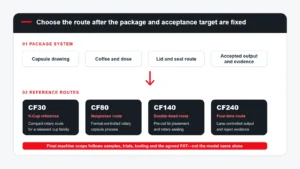
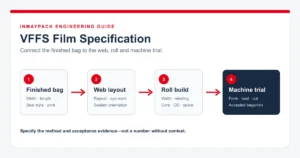
Before comparing fillers, define whether the project uses a rollstock bag or a premade pouch and confirm the finished-pack drawing.
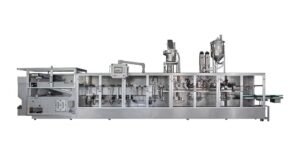
This guide focuses on the filling decision. For the roll-stock pouch platform itself, review the stand-up pouch packing machine.
| Input | Why it changes the filling decision |
|---|---|
| Product flow behavior | Free-flowing, viscous, aerated, dusty, fragile and particulate products do not move or stop in the same way. |
| Target dose and permitted variation | The required measurement method and control strategy depend on what must be accepted at the finished pouch. |
| Pouch mouth and support | The filler must enter or approach the opening without displacing the pouch or contaminating the seal area. |
| Product-contact and cleaning requirements | Contact parts, access, changeover and cleaning procedures must match the intended product and the buyer's own hygiene review. |
| Line acceptance method | A machine trial needs agreed checks for dose, pouch condition, seal area and repeatability rather than a vague “runs well” judgment. |
Liquid filling route
Liquid filling begins with control of the product supply and cutoff at the nozzle. Flow rate, viscosity, temperature, foam, particulates and stringing behavior can influence how the product enters the pouch and whether residue reaches the future top-seal area.
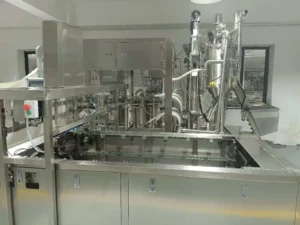
A pump- or piston-based system is one possible route, but the decision is not complete until nozzle position, pouch support, filling timing and cleaning access are reviewed together. For a focused application discussion, see the liquid stand-up pouch packing machine guide and the liquid doypack packing machine. When the supplied pouch already has a fitted spout, compare the premade spout pouch filling and capping configurations after the product, dose, pouch and cap samples are defined. Then use the documented 12-head engineering build record to distinguish visible machine scope from output that still requires an agreed FAT.
Use the liquid packaging machine selection guide to compare liquid sachets, roll-stock doypacks, spout pouches and premade pouch systems before fixing the dosing device or pouch supply method.
Powder filling route
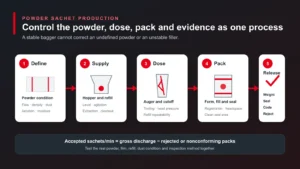
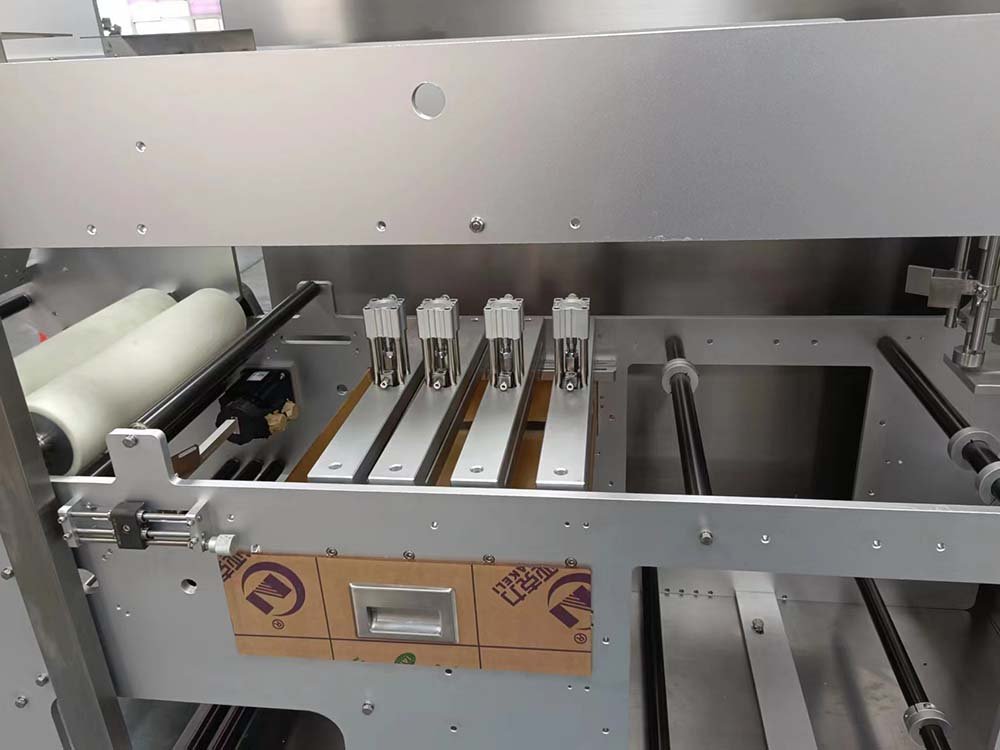
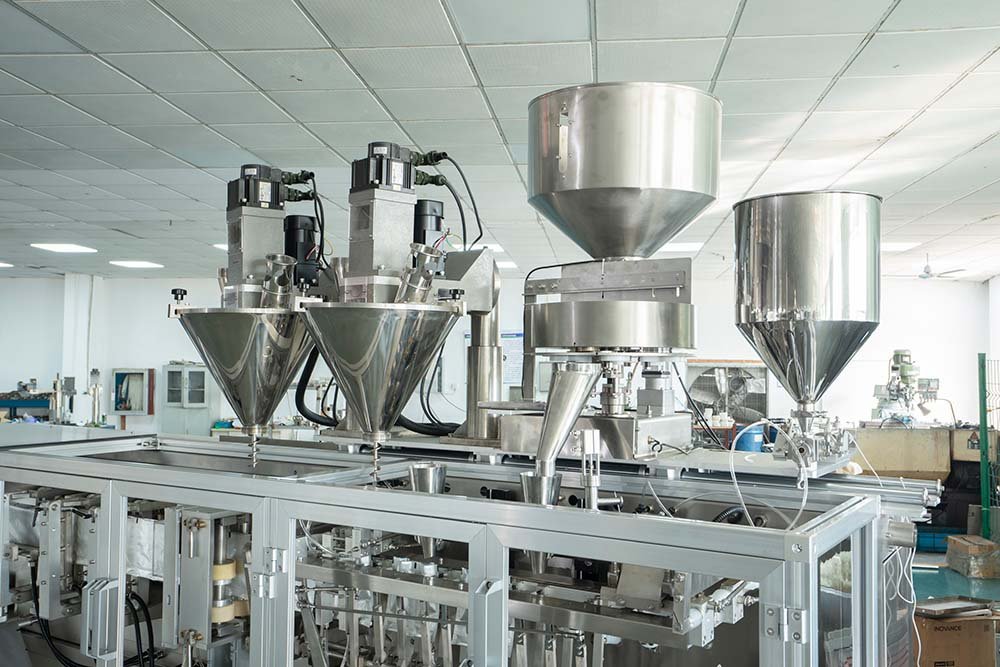
Powders can bridge, aerate, compact or create airborne dust. An auger-based approach is commonly considered when controlled screw delivery suits the product, but the auger geometry, agitation, hopper condition and product head must be matched to the actual powder.
The pouch interface matters just as much. Dust extraction, funnel position, pouch opening and the delay before top sealing may determine whether the seal area arrives clean enough for the intended closing process.
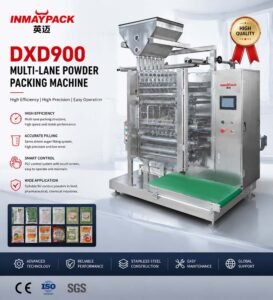
When powder is the priority product, continue to the powder filling machine selection page. It compares single-lane sachets, multi-lane sachets, stick packs and premade pouches by powder behavior, dose, package format and accepted output.
Granule filling route
Granular products may be dosed by weighing or volumetric methods depending on product uniformity, fragility, target dose and the buyer's acceptance criteria. The upstream feed and discharge path must prevent uncontrolled surges while the pouch remains correctly presented below the filling interface.
Large pieces, mixed products and fragile inclusions need additional review because a nominal product category does not describe how the material behaves through a hopper, feeder and discharge chute.
For free-flowing granules and solid pieces, the granule packaging machine selection guide compares weigh-based and volumetric dosing across flat sachets, stick packs, roll-film doypacks and premade pouches.
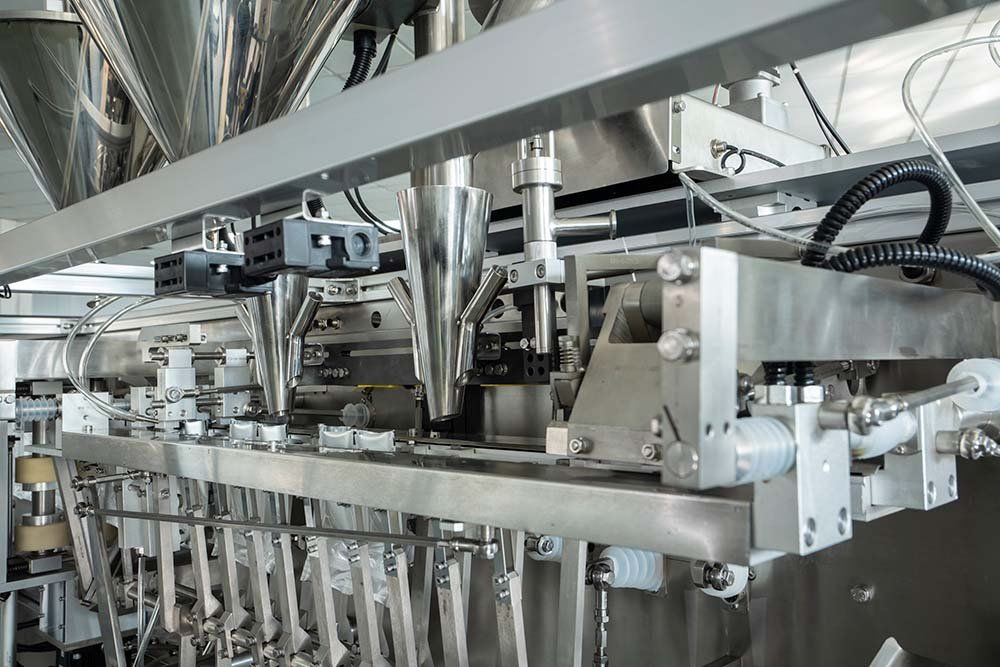
The pouch must arrive open, supported and positioned for the selected nozzle, funnel or chute.
Review product fall, splash, dust, strings and the timing required before the pouch moves onward.
Top-seal performance depends on the actual film layers, jaw process and contamination arriving from filling.
Where flat-sachet formats and changeover scope are shared, review the HS-180 multifunction sachet pouch packing machine. Its auger, pump, cup or weighing route still has to be confirmed against the real product, pouch and FAT target.
The detailed handoff is covered in Stand-Up Pouch Opening and Filling. For sealing acceptance, use the stand-up pouch seal integrity guide.
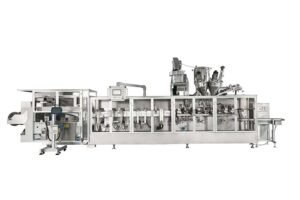
If the project uses supplied pouches and the pouch geometry, SKU matrix and filling interface are controlled, compare the SG-series high-speed premade pouch packing route by pouch size, fill volume and FAT-defined accepted output.
I treat the dosing device and the pouch machine as one timed process. A filler may repeat accurately on a bench yet produce poor finished pouches if its discharge disturbs the pouch, leaves product at the mouth or requires more settling time than the transfer sequence allows. Trial acceptance should therefore measure the filled and sealed pouch, not only the filler output in isolation.
If the project uses supplied premade pouches instead of roll stock, also review the premade pouch packing machine route because pouch feeding and handling are different.
INMAYPACK can review product behavior, filling interface and pouch-machine handoff before a trial scope is defined.
Reply: sales@ewpackmachinery.com | WhatsApp: +86 18658799162