
A modified atmosphere packaging machine is not one universal machine type. It is a packaging system that replaces or reduces the air around a food with a controlled gas environment, then forms a package that can retain the intended atmosphere for the defined shelf-life study.
The machine route may be roll-film HFFS or VFFS, a premade-pouch system, a chamber vacuum route or another validated architecture. Selection begins with the food risk, gas recipe, package volume, film barrier, seal geometry and residual-oxygen method—not with a nitrogen nozzle added to a standard quotation.
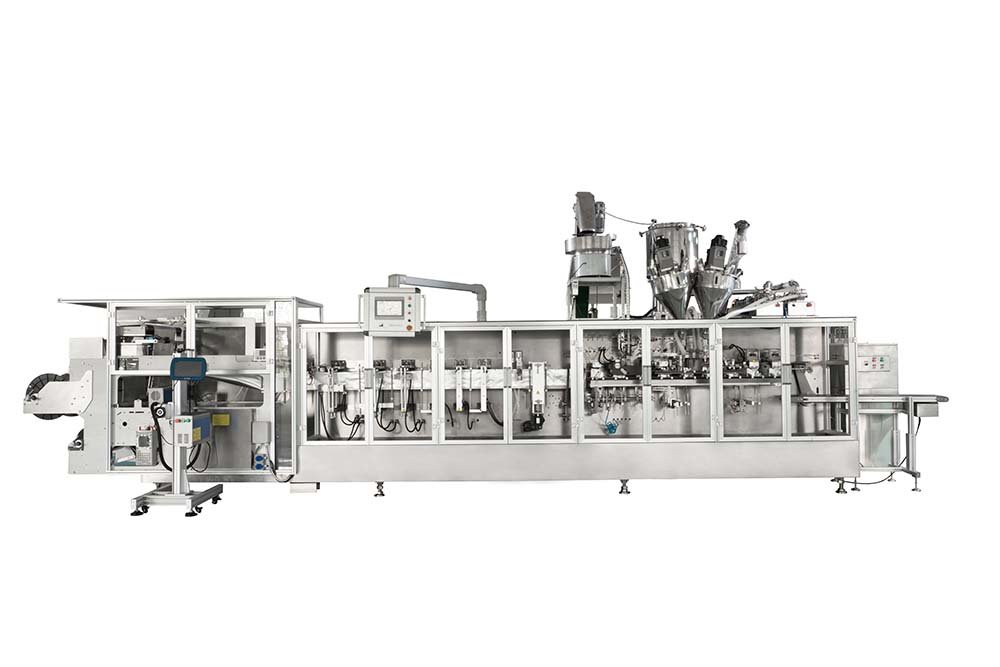
MAP changes the package atmosphere; vacuum packaging removes air by a different route
Modified atmosphere packaging, commonly shortened to MAP, changes the gases surrounding the product before the package is sealed. Nitrogen may be used to displace oxygen or support a package shape. Carbon dioxide, oxygen or a mixture may be appropriate in other food applications. The correct composition belongs to the food process and shelf-life plan; it is not a default machine setting.
Quick answer: specify the finished-package result first. A useful request identifies the approved food, temperature, package, headspace, gas recipe and supply quality, target residual oxygen, measurement point, sampling plan, seal test and storage study. The machine supplier can then define the gas delivery and sealing hardware that must be tested.
Replace the headspace gas
The package is flushed or otherwise conditioned with a defined gas before final sealing. The package must retain the intended atmosphere within the accepted test boundary.
Remove air before closure
A vacuum packaging machine route evacuates the package before sealing and may or may not add a gas-backfill step. Vacuum appearance and MAP performance are not interchangeable claims.
Define the food-safety and shelf-life basis before fixing the equipment scope
Reduced-oxygen conditions can change microbial hazards as well as oxidation and quality behavior. Product formulation, water activity, pH, temperature control, storage, distribution, consumer handling and the applicable market rules must be assessed by the product owner and qualified food-safety specialists. The equipment supplier should not invent a gas recipe or shelf-life claim from the machine category.
The US FDA Food Code treats modified-atmosphere packaging as one form of reduced oxygen packaging in retail and food-service contexts. That Food Code is a model for those operations, not a universal equipment specification. Industrial manufacturers and exporters must determine which regulatory, customer and validation requirements apply to their product and destination.
Choose the package route after the product, gas task and finished pack are defined
MAP can be integrated into more than one packaging architecture. The important comparison is how each route controls product transfer, package volume, air displacement, gas containment, sealing and inspection with the intended food.
Swipe horizontally on a small screen to review the full comparison.
| Route | Where it can fit | Questions to resolve |
|---|---|---|
| Roll-film HFFS | Forms a pouch from approved roll stock and coordinates product loading, gas delivery and sealing in a horizontal path. | Package volume, web control, opening/forming method, gas containment, product exposure, seal contamination and dwell time. |
| Roll-film VFFS | Forms a bag around a vertical product flow and may introduce gas through a lance or tube arrangement before the final cross seal. | Product displacement of gas, purge position, bag inflation, dust or fines, seal-jaw contamination and gas use during intermittent flow. |
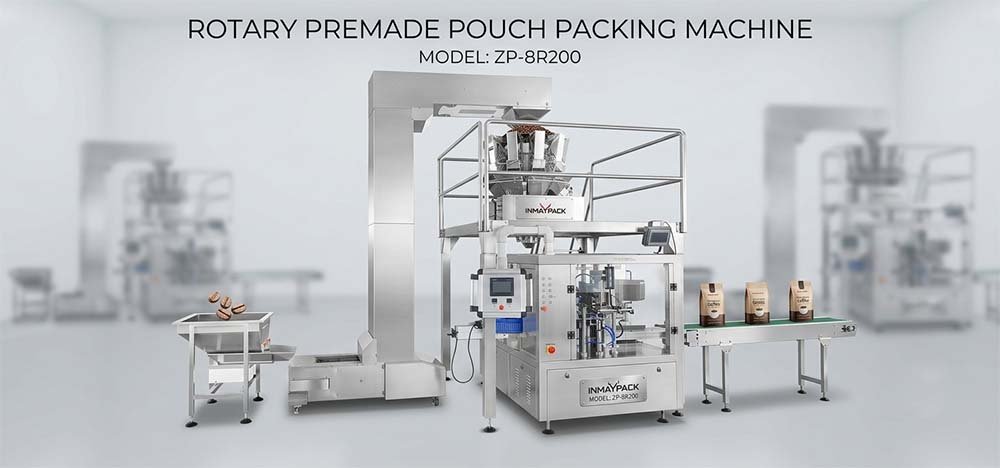
| Premade pouch | Receives supplied pouches, opens and fills them, then performs gas flushing or air removal before top sealing. | Pouch opening, headspace access, pouch support, flush time, zipper or fitment position, seal cleanliness and reject logic. |
| Vacuum or vacuum-gas | Removes air in a chamber or controlled station and may add gas before closure. | Product deformation, liquid movement, evacuation endpoint, gas backfill, package appearance, cycle time and closure verification. |
Review the horizontal form-fill-seal machine family for roll-film pouch architecture and the premade pouch packing machine family for supplied pouches. These commercial pages show packaging routes; they do not by themselves confirm a MAP configuration for a particular food.
A stable gas supply does not guarantee the atmosphere inside every finished pouch
The gas panel, regulator, valves and nozzle deliver gas to the packaging zone, but the finished result also depends on package volume, product displacement, fill level, gas entry position, purge time, ambient air entrainment, machine motion and the delay before sealing. A supply-side flow reading cannot replace measurement of the closed package.
Specify the incoming gas
Record the approved gas or mixture, purity or composition tolerance, pressure and flow range, connection, filtration and monitoring expected at the machine boundary.
Map the purge path
Show where gas enters, how displaced air exits, whether product or packaging blocks the flow and when the package becomes substantially enclosed.
Control machine states
Define gas behavior during startup, starvation, waiting, normal running, refill, planned stop, fault, emergency stop and restart. Avoid uncontrolled gas use and unverified first-off packs.
Detect loss of supply
Agree on pressure, flow or composition monitoring, alarm thresholds, interlocks, affected-pack tracking and the reject or hold response.
Film barrier and seal integrity determine whether the atmosphere can be retained
A good purge can be lost through unsuitable barrier properties, pinholes, channel leaks, contaminated seals, poor zipper or fitment integration, damaged gussets or excessive product in the sealing zone. Film selection must therefore connect the intended gas and shelf-life study with the package converter’s controlled specification.
For a roll-film route, define structure, thickness, sealant layer, oxygen and moisture barrier data where relevant, roll direction, print repeat, coefficient of friction, core and roll limits, splice rules and the forming/sealing window. For a premade pouch, add the pouch drawing, gusset behavior, zipper or spout details, top-seal allowance, converter tolerances and production-intent samples.
Ask the converter for controlled data
Record the exact construction and test conditions rather than relying on “high barrier” as a generic description. Changes in layer, gauge, adhesive, treatment or converter can require review.
Define more than appearance
Visual acceptance may be combined with applicable peel, burst, leak, dye or other package tests. The product owner must select methods and limits that fit the package and risk.
Use the HFFS Doypack film specification guide to prepare roll-stock data, and the stand-up pouch seal-integrity guide to connect material, sealing conditions and package evidence.
Residual oxygen is a finished-package result, not a gas-nozzle setting
Residual oxygen should be measured at an agreed time and location using a defined instrument and sampling method. The plan should state sample frequency, package conditioning, destructive or non-destructive method, instrument calibration and uncertainty, permitted limits, retained records and the response to an out-of-limit result.
Build the FAT around repeatable finished packages and traceable deviations
A useful FAT demonstrates the issued machine configuration with controlled inputs and normal production events. It does not replace commercial shelf-life validation, but it should establish whether the equipment delivers, seals, measures and rejects packages in the agreed way.
Swipe horizontally on a small screen to review the full FAT matrix.
| FAT element | Define before testing | Retain as evidence |
|---|---|---|
| Controlled inputs | Food lot and condition, film or pouch lot, gas specification, recipe, utilities and analyzer. | Certificates or records, drawings, settings, calibration status and sample identity. |
| Gas sequence | Supply limits, valve timing, purge position, startup, starvation, stop and restart behavior. | Alarm challenges, trend or readings, affected-pack response and first-off results. |
| Package quality | Fill, contamination, seal appearance, integrity method, code, pouch condition and rejects. | Samples, measurements, photos, reject counts and defect causes. |
| Residual oxygen | Instrument, sampling method, timing, sample frequency, limits and disposition. | Pack-linked results, calibration record, outliers, investigation and retest. |
| Accepted output | Run duration, normal interventions and definition of a conforming finished package. | Gross cycles, rejects, nonconforming packs, stops and accepted packs by cause. |
| Open deviations | Owner, action, due date, retest method and release authority. | Controlled deviation list and signed closure evidence. |
The stand-up pouch machine FAT checklist provides a broader trial structure for pouch handling, filling, sealing, inspection and evidence.
Send a process brief, not only the words “add nitrogen flushing”
A qualified quotation needs enough information to select a machine route and define the validation boundary. Send the approved food and temperature, package drawing and material, fill range, headspace, gas recipe owner, gas supply, residual-oxygen method, seal tests, target accepted output, utilities, layout, inspection, FAT and destination requirements.
If the package architecture is not yet fixed, use the packaging machine RFQ builder to organize the product, package, output and evidence inputs. For gas-sensitive snacks, the snack packaging machine application page connects product handling with roll-film and premade-pouch options.
Modified atmosphere packaging machine FAQ
Is nitrogen flushing the same as modified atmosphere packaging?
Nitrogen flushing is one possible gas-delivery method. MAP requires a controlled finished-package atmosphere, compatible product and package, reliable sealing, an agreed measurement plan and a validated shelf-life process. Adding a nitrogen connection does not by itself establish those results.
Which gas mixture should a MAP machine use?
There is no universal mixture. The responsible food technologist or product authority should approve the gas composition for the food, process, package, storage and market. The equipment supplier then configures and tests the delivery system against that issued requirement.
Can a premade pouch packing machine use MAP?
A premade-pouch route can include air removal or gas flushing before top sealing when pouch geometry, headspace access, gas containment, seal cleanliness and cycle time permit. The actual configuration and finished-package result require a product-specific trial.
Can HFFS or VFFS equipment perform gas flushing?
Both horizontal and vertical form-fill-seal architectures may support a gas-delivery arrangement, but the purge path, product displacement, film behavior, package volume, sealing sequence and analyzer results must be confirmed for the selected machine and food.
What should be measured during a MAP machine FAT?
Record gas supply and sequence, package formation or pouch handling, fill and seal quality, residual oxygen using the agreed method, alarm and reject behavior, normal stops and restarts, accepted output and every deviation. Retain package-linked results rather than only a machine-speed video.
Does machine FAT prove shelf life?
No. FAT can show that the issued equipment configuration produces packages within agreed machine and package tests. Shelf life and food safety require the product owner’s controlled validation across production, storage and distribution conditions.
Sources used for the MAP selection framework
Current model guidance for retail and food-service operations, including reduced oxygen packaging context and the limits of applying it as an equipment specification.
Official summary confirming revisions to reduced oxygen packaging definitions and Annex guidance.
Primary text for the reduced-oxygen packaging definitions, process context and food-safety control framework referenced in this guide.
Equipment-manufacturer examples showing that MAP can be paired with a defined package and flow-wrap architecture rather than treated as one generic machine category.
Continue with the package route and acceptance task
Define the finished atmosphere before selecting the machine route
Send the food and temperature, package drawing and material, headspace, approved gas requirement, target residual-oxygen method, seal tests, accepted output and FAT scope. INMAYPACK will review which available pouch-packaging route can be evaluated and which gas, analyzer or validation responsibilities must remain separately defined.







