Coffee Capsule Filling Machine FAT Checklist: 12 Tests Before Shipment
Updated: September 15, 2026
About INMAYPACK Engineering Team
INMAYPACK is a packaging machinery brand based in Shanghai, China, founded in 2009. The INMAYPACK Engineering Team publishes practical guidance on doypack, sachet, premade-pouch and coffee packaging. Machine suitability, performance and service terms depend on the confirmed model, configuration, product, package and agreed project scope.
Factory acceptance · Coffee capsules
Quick answer: approve a coffee capsule filling machine from conforming finished capsules, not an unloaded cycle rate.
Use the approved capsule, lid, coffee and utilities. Record feeding, lane-by-lane dose, flange cleanliness, nitrogen condition, lid placement, seal integrity, rejects, sustained accepted output and recovery after a planned stop. Put the test method and release threshold in the protocol before the factory test begins.
Approved materialsControlled capsule, lid and representative coffee lot
Four-lane evidenceResults retained by lane rather than one combined average
Accepted outputOnly conforming capsules counted after rejects
Seal verificationDefined method, conditioning and failure classification
Fault challengesAlarm, reject and recovery response demonstrated
Signed boundaryMachine, utilities, auxiliaries and downstream scope identified
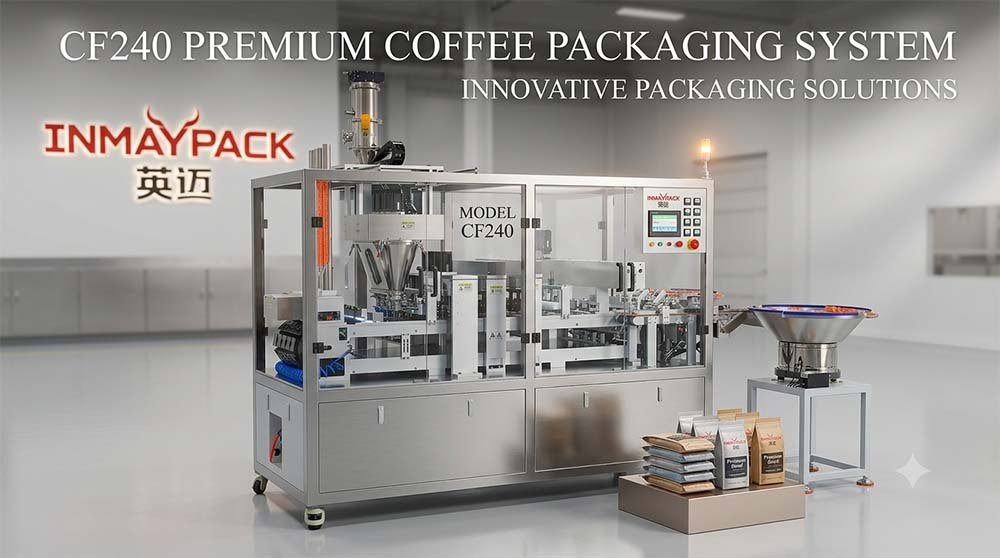
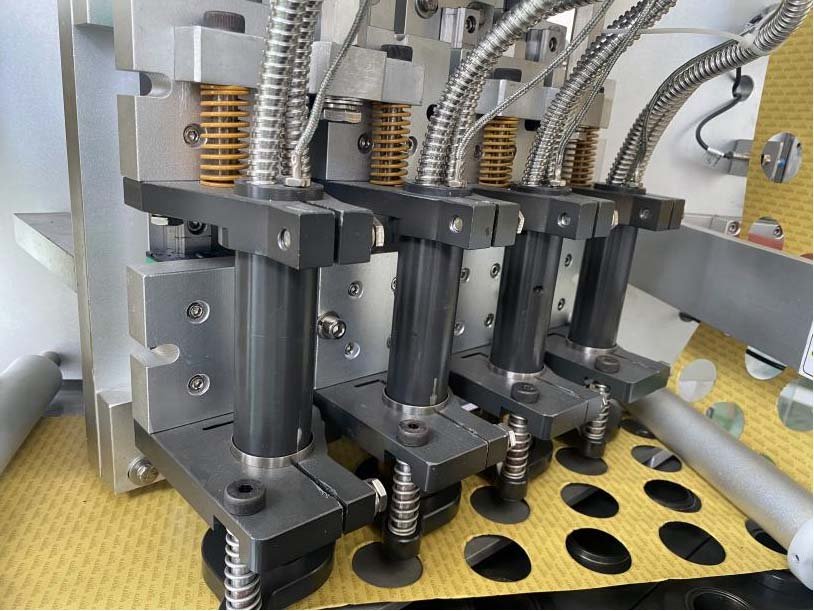
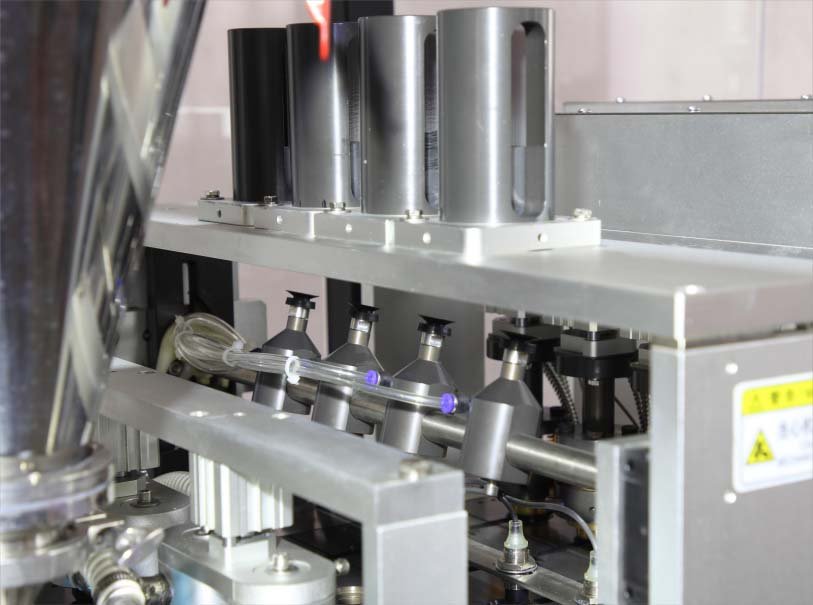
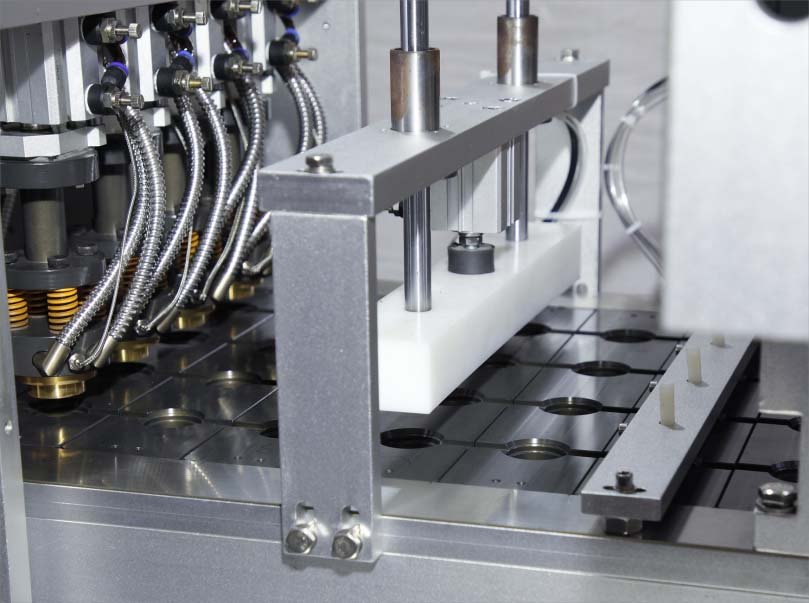
A factory acceptance test should follow the complete capsule path. The machine shown is a CF240 reference configuration; the approved project scope controls the actual stations and criteria.
Before the test
Freeze the material and acceptance definitions first
A FAT cannot resolve an undefined package. Coffee capsules with similar retail names can differ at the outer diameter, height, flange, wall stiffness, nesting behavior and lid interface. Coffee can change with roast, grind distribution, bulk density, oil, moisture and aeration. If these inputs change during testing, the result no longer describes one controlled configuration.
Buyer-controlled inputs
Capsule and lid drawings with revision identifiers
Production-intent physical samples in sufficient quantity
Representative coffee lot, target mass and accepted range
Residual-oxygen target and agreed measurement method when required
Destination electrical, compressed-air and nitrogen conditions
Required coding, inspection, collection and cartoning interfaces
Supplier-controlled records
Machine model, format parts and software or recipe revision
Installed filling, lid-handling and sealing configuration
Calibration status for test scales and oxygen instruments
Test sequence, sampling plan and defect classification
Alarm and reject logic included in the project
Open actions, owners and closure evidence before shipment
Do not accept “Nespresso-compatible,” “K-Cup” or “custom capsule” as a drawing. The controlled dimensions and physical sample release the feeder, mold, lid placement and heat-seal process. Use the coffee packaging machine comparison if the capsule architecture is still undecided.
Tests 1–3 · Feed and fill
Prove capsule presentation and coffee dosing by lane
The first three tests establish whether each empty capsule reaches the correct position and receives the required dose. A combined average can conceal one lane that repeatedly underfills or one magazine position that intermittently double-feeds.
Capsule release
Run the approved empty capsules through normal replenishment. Record nesting, double pickup, orientation faults, damage and interruptions.
Retain: supply condition, fault count, affected lane and corrective action.
Mold seating
Verify every capsule enters the matching carrier without tilt, flange damage or incomplete seating. Challenge the detection included in the project.
Retain: seated samples, detected faults, alarm or reject response.
Dose by lane
Measure empty and filled capsules with lane identity preserved. Compare mean, spread and out-of-range count against the agreed mass limits.
Retain: individual readings, scale resolution, sample timing and recipe.
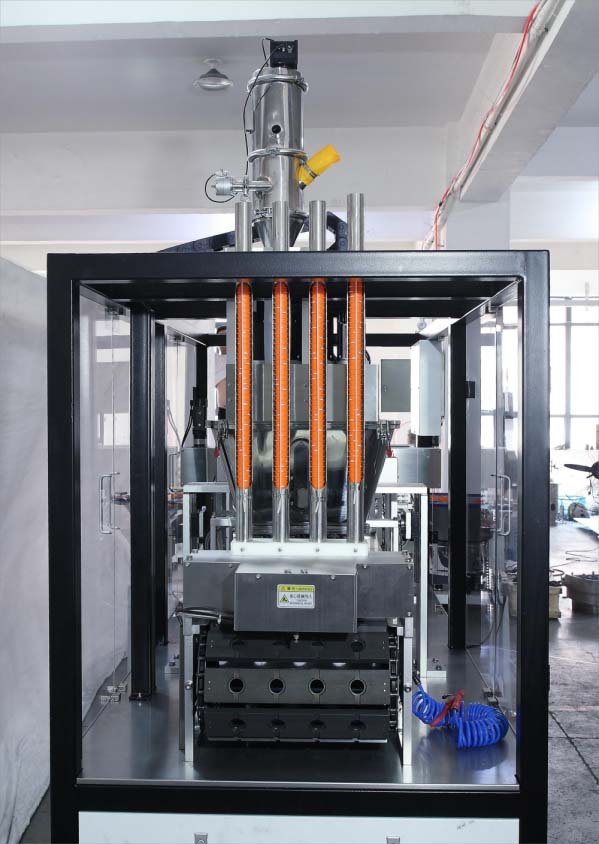
Feeding evidence must include normal replenishment and lane identity, not only a short run with a full magazine.Auger settings belong to the tested coffee condition, target mass, hopper level and sampling method.
Tests 4–6 · Product and gas
Test refill recovery, flange cleanliness and nitrogen together
Stable dosing at one hopper level does not prove stable production. The test should include a planned refill and restart. Coffee dust or an overfilled capsule can contaminate the flange and disturb both lid placement and sealing. A nitrogen connection must be evaluated at the finished-capsule level when a residual-oxygen requirement applies.
Refill and restart
Record the dose result before and after a normal hopper refill and after one planned stop. Define when production is released again.
Retain: stop reason, refill level, restart time and first accepted samples.
Flange cleanliness
Inspect coffee on the sealing surface by lane and cycle condition. Separate dosing cutoff or settling causes from the heat-seal setting.
Retain: defect images, frequency, lane and the first abnormal process event.
Nitrogen result
When required, test with the agreed purity, flow, headspace, sampling delay and instrument. Do not infer the result from gas supply alone.
Retain: utility condition, settings, sample identity and measured oxygen.
Residual oxygen is a package result. Coffee mass, headspace, nitrogen exposure, lid placement and final seal integrity affect it together. A supplier statement such as “nitrogen ready” is not an acceptance result.
Tests 7–9 · Lid, seal and reject
Challenge lid placement, sealing and reject containment
A visually centered lid can still produce an unacceptable seal, and a strong-looking seal can conceal a channel caused by coffee on the flange. Define the lid-placement tolerance and seal test separately. Then introduce agreed faults to prove they are detected and contained.
Lid pickup and placement
Observe lid separation, double pickup, curl, rotation and flange overlap at normal conditions. Record placement faults by lane.
Retain: lid lot, placement criteria, fault count and challenged samples.
Seal integrity
Use the approved test after the agreed conditioning time. Link failures to actual temperature, pressure, dwell and flange condition.
Retain: test method, results, recipe and classified failure mode.
Detection and rejection
Challenge missing capsules, missing lids or other included detectable faults. Verify reject confirmation, counting and physical segregation.
Retain: induced fault, machine response, reject destination and alarm record.
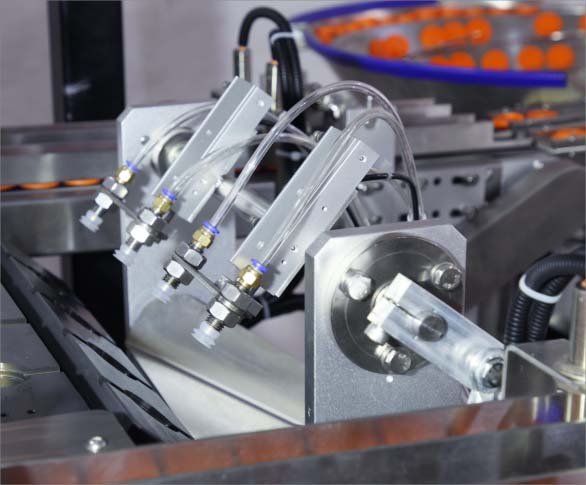
Lid stiffness, curl, pickup surface and flange geometry influence placement reliability.Release the sealing window from measured results, not appearance or temperature setpoint alone.
Tests 10–12 · Production behavior
Calculate accepted output and verify changeover and handoff
Mechanical cycles do not equal saleable output. Count conforming capsules after rejects during a stated test interval. The final tests check whether the line returns to an approved state after a format or recipe change and whether accepted capsules can leave the machine without losing identity or control.
Sustained accepted output
Run long enough to include normal operating conditions agreed in the protocol. Subtract every rejected or nonconforming capsule.
Retain: run time, total made, good count, rejects by reason and accepted capsules/min.
Change and first-off release
Use the approved tools, parts, cleaning and recipe procedure. Verify the first pieces before normal production resumes.
Retain: parts changed, settings, elapsed time, startup rejects and release sample.
Downstream handoff
Confirm discharge orientation, accumulation, counting and signals to inspection or cartoning equipment included in the line.
Retain: interface test, blocked-downstream response and accepted transfer condition.
Accepted discharge and reject containment must remain distinct before the downstream counting or cartoning interface is approved.
Calculation
Use one accepted-output equation across suppliers
For a timed production interval, calculate accepted capsules per minute from capsules that meet every agreed criterion. Do not count missing lids, mass failures, seal failures, oxygen failures, damaged capsules or uncontained test pieces as good output.
Accepted capsules/min = conforming finished capsules ÷ measured production minutes. Report the gross count, each reject category, planned exclusions and actual measured time beside the result. If a supplier uses a different denominator, the quoted numbers are not directly comparable.
Swipe horizontally to review the evidence table.
Record
Required context
Reason
Material identity
Capsule, lid and coffee lot plus drawing revisions
Prevents a result from being applied to a different package or product
Recipe and machine state
Relevant settings, format parts and software/recipe revision
Makes the accepted run reproducible
Lane-level fill data
Individual weights with time and lane identity
Reveals persistent lane imbalance hidden by a combined average
Seal and oxygen results
Method, instrument, conditioning and sample identity
Connects the package result to an agreed measurement basis
Reject log
Count, reason, lane, detection and containment response
Separates machine cycles from conforming output
Stops and recovery
Cause, duration, operator action and first-off release
Shows how normal interruptions affect accepted production
Open actions
Owner, due date, closure evidence and shipment gate
Prevents unresolved failures from disappearing after the demonstration
Sampling and evidence
Build a FAT record another engineer can review later
A passing demonstration is useful only when the test can be traced to the material, machine state and measurement method. Before running, create a sample-identification rule that connects every retained capsule to its lane, collection time, recipe and test condition. Keep startup, steady-state, post-refill, post-stop and challenged-fault samples separate. If samples are mixed in one bag or only the best pieces are photographed, a later reviewer cannot tell whether the result represents normal production.
Define the sampling plan before production
State which lanes are sampled, how many capsules are collected, the collection interval and who witnesses each check. Identify the instruments, resolution, calibration status, conditioning time and calculation rule. The plan should also say what triggers an expanded sample or a repeat test. This prevents the method from changing after an unfavorable result appears.
Preserve failures as well as passing samples
Keep representative underweight, overweight, misplaced-lid, contaminated-flange, seal-failure and reject-challenge samples when practical. Photograph the defect with lane and time identification, then connect it to the alarm history and corrective action. A complete record shows what failed, why it failed and how the repeated test closed the issue.
Carrier and mold identity belongs in the test record because capsule seating, flange support and release are format-dependent.
Minimum handover pack: signed protocol, approved material list, machine and recipe revision, raw lane-level readings, accepted-output calculation, seal and oxygen records when applicable, alarm and reject challenges, photographs or video references, open-action log and signed closure. Store the files under one project identifier rather than sending disconnected screenshots through chat.
If the buyer cannot attend in person, agree the remote-witness sequence before the FAT. The camera should show the controlled materials, relevant machine stations, operator panel, sample collection and measurement—not only the finished capsules. Record who selected each sample and keep the original data file. Remote viewing does not change the acceptance boundary: unresolved actions still need an owner, due date and evidence before the agreed shipment gate.
Separate a pass from a conditional release
A pass means the defined test was completed with the approved inputs and every release criterion was met. A conditional release means an item remains open but the buyer has explicitly accepted a controlled closure route. Record the exact deviation, affected function, interim control, owner, due date and evidence needed for closure. Do not convert a failed seal, missing safety function or unresolved reject path into a vague “minor point.” The commercial agreement should define which deviations block shipment and which can be closed by document, video or witnessed retest.
Retest the affected chain, not one isolated setting
When a defect is corrected, repeat enough of the process to prove the correction did not move the problem elsewhere. A dosing change can affect flange cleanliness; a sealing adjustment can affect lid appearance or capsule deformation; a reject-logic change can affect counting and downstream handoff. Identify the original failure, correction, impacted stations and new sample set. Keep the first result beside the retest instead of replacing it, so the final record shows both the cause and the verified recovery.
Close the meeting with one signed summary: tests passed, tests failed, approved deviations, parts or documents still due, and the next shipment decision. The summary should point to the raw evidence rather than repeat every measurement. This makes the FAT useful to the installation team, because they can distinguish factory-proven functions from site-dependent utilities, integration and performance that still require a site acceptance test.
Model boundary
Apply the checklist to the approved capsule-machine configuration
The test logic stays consistent, but the exact feeder, lane count, format tooling, dose system, nitrogen scope, lid station and reject functions depend on the selected model and signed project quotation. Use the product pages for model-specific reference data, then carry only the approved configuration into the FAT protocol. A buyer considering an intermediate rotary route can also review the CF140 pre-cut-lid capsule machine.
Compact K-Cup route
Review CF30 when a compact rotary configuration and confirmed cup family match the project.
Attach the FAT protocol to the machine and line scope
Two quotations with the same model name may include different mold sets, feeders, nitrogen equipment, inspection devices or downstream controls. Mark every item as included, optional, supplied by the buyer or excluded. State who supplies production samples, utilities and test instruments. Connect the final payment or shipment gate to the agreed acceptance record in the commercial documents rather than relying on a generic demonstration.
Primary machine boundary
Capsule supply, carrier molds, coffee dosing, nitrogen entrance, lid handling, sealing, detection, reject and discharge functions included in the approved model.
Line integration boundary
Coffee transfer, nitrogen generation, coding, weighing, vision, leak testing, accumulation, counting and cartoning equipment plus the signals between them.
For a connected line, use the packaging system integration checklist to test starved-upstream, blocked-downstream, inspection, reject and restart behavior beyond the capsule machine.
Buyer questions
Coffee capsule filling machine FAT FAQ
How long should a coffee capsule machine FAT run?
There is no universal duration. Set a duration that includes the agreed operating condition, normal replenishment, sufficient samples by lane and the planned fault or restart checks. Record exclusions and stops so accepted output is calculated on the same basis across suppliers.
Should empty machine speed be part of acceptance?
It may help diagnose mechanical motion, but it does not prove capsule feeding, dose, lid placement, sealing, oxygen result or accepted finished output. Release should rely on production-intent materials and conforming capsules.
How should filling accuracy be checked on a multi-lane machine?
Weigh identified samples from each lane using the agreed instrument, interval and sample size. Compare lane means, variation and out-of-range counts. Do not accept only one combined average.
Does a nitrogen connection prove the residual-oxygen target?
No. The finished result also depends on gas purity and flow, capsule headspace, coffee mass, timing, lid placement, seal integrity, sampling delay and the measurement method.
What seal test should be used?
Use the method defined by the buyer for the approved capsule and lid. State conditioning, sample preparation, acceptance threshold and failure classification. Visual appearance alone is not enough.
Should a format change be included?
Include it when the approved project contains more than one format or change-part set. Define the starting state, parts, cleaning, settings and first-off release checks before timing the change.
What happens when a FAT item fails?
Record the sample, test condition, failure, owner and corrective action. Repeat the affected test after correction and retain the closure evidence. Do not hide a failure inside a later successful gross-speed demonstration.
Send the capsule, lid, coffee and acceptance method before the factory test
INMAYPACK will review the approved materials, machine configuration, utilities, sampling plan, defect criteria and downstream boundary before the FAT protocol is finalized.