
INMAYPACK · Flexible-pouch liquid packaging
Liquid Packaging Machine for Sachets & Pouches
Your liquid. Your package. A configured packing system.
Compare equipment for liquid portions, sauces, stand-up pouches and spout packs. Start with the finished package, then match the filling system, cleaning and production scope to your real product.
- Liquid sachets
- Roll-film doypacks
- Spout pouch systems
- Premade pouches
Send product conditions, fill amounts, the pouch drawing and your required accepted output.
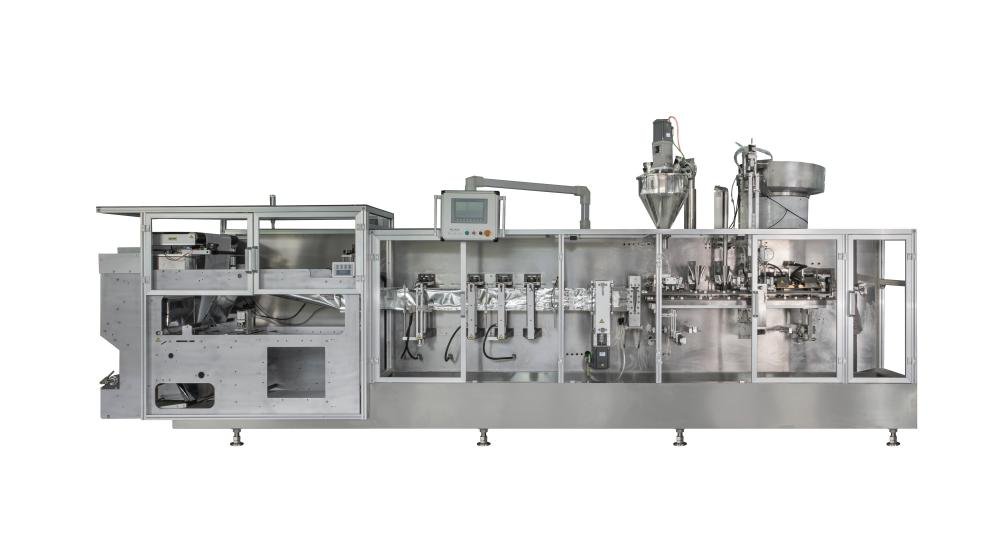
Liquid packaging machine selection
Choose the package. Then engineer the liquid path.
A liquid packaging machine combines product dosing with equipment that forms a flexible pack or handles a premade pouch and closes it after filling. A liquid pouch filling machine may therefore use a flat-sachet, stand-up pouch or spout-pouch architecture.
This INMAYPACK selection hub focuses on flexible packages. Use the route comparison to select a starting point, then use the linked equipment page to review the model and functions. Bottle and rigid-container projects require a separate equipment review.
Five liquid packaging routes
Start with the pack your customer will use.
Package-family illustrations explain the route; the controlled drawing and physical samples define the actual machine fit.
Roll film · portion packs
Flat liquid sachets
Form, dose and seal small flat sachets with the film and liquid matched to the filling cycle.
Liquid Sachet Machines →Roll film · stand-up packs
Roll-film liquid doypacks
Make the stand-up pouch on the line, present it for filling and complete the top seal.
Liquid Doypack Machines →Roll film · selected fitment functions
Roll-film spout pouches
Define pouch forming, spout insertion or welding, filling access and the required cap-handling scope.
Roll-Film Spout Machines →Supplied pouches · opening and sealing
Premade liquid pouches
Pick up and open a separately manufactured pouch, fill the product and complete the selected seal.
Premade Pouch Systems →Fitted spout · filling and capping
Premade spout pouches
Use supplied pouches with the spout already attached. Fill through the spout and apply the matched cap.
Spout Pouch Filling & Capping →A machine that welds a spout into a pouch has a different scope from a filler/capper for pouches that arrive with the spout already fitted. Specify the incoming package condition before requesting a quote.
See the equipment behind each route
Compare liquid packing systems with real machine references.
Existing site photographs show the platform or mechanism. The selected machine, tooling, filler and included modules are defined in the current proposal.
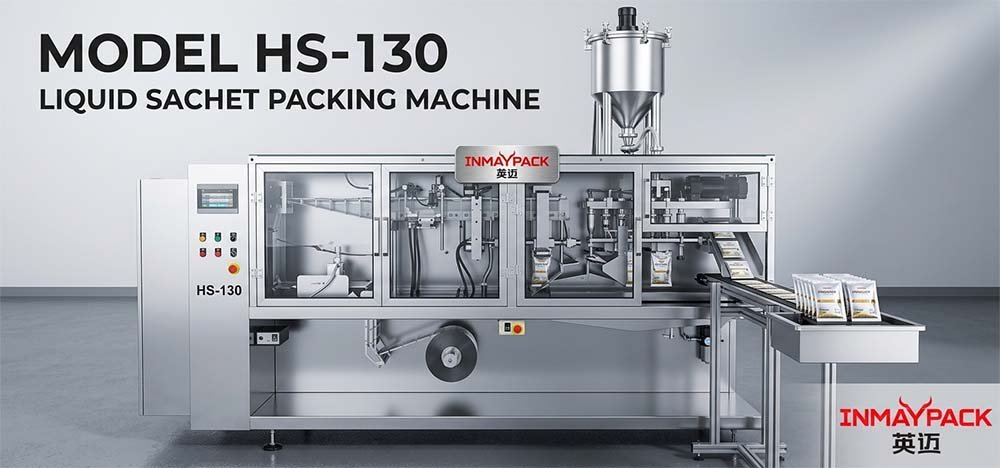
Roll film · portion packs
HS-130 liquid sachet platform
Horizontal flat-sachet route. Review every fill volume, sachet drawing and liquid configuration on the dedicated HS-130 page.
Liquid Sachet Machines →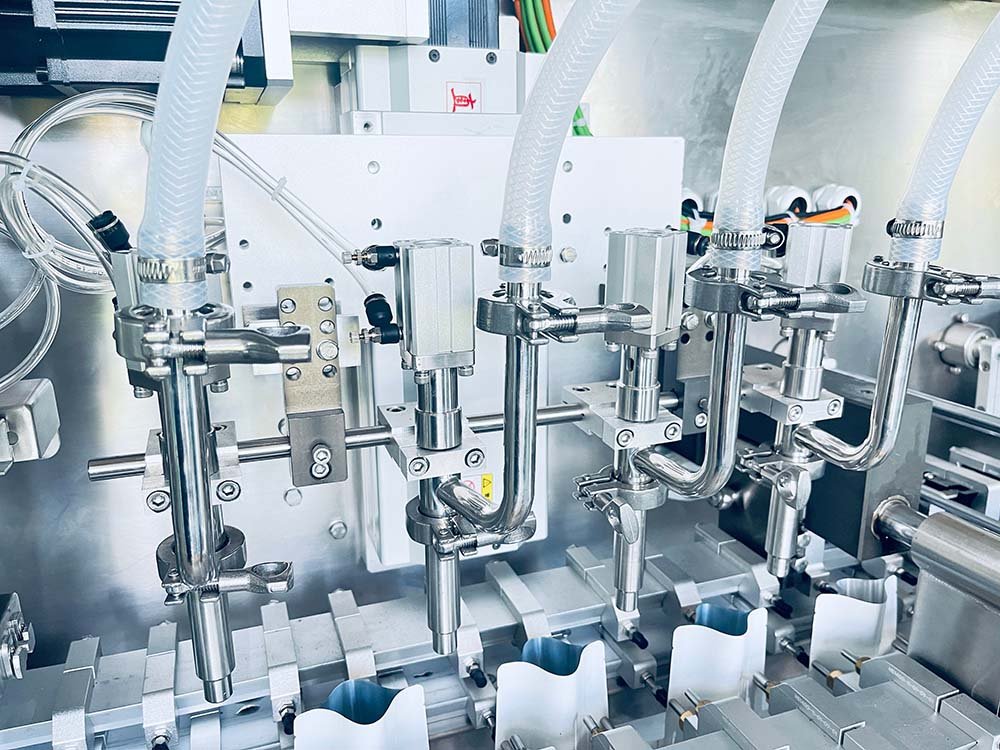
Roll film · stand-up packs
Liquid doypack filling arrangement
Roll-film stand-up pouch route. Match forming tools, opening, product feed, liquid cutoff and the final top seal.
Liquid Doypack Machines →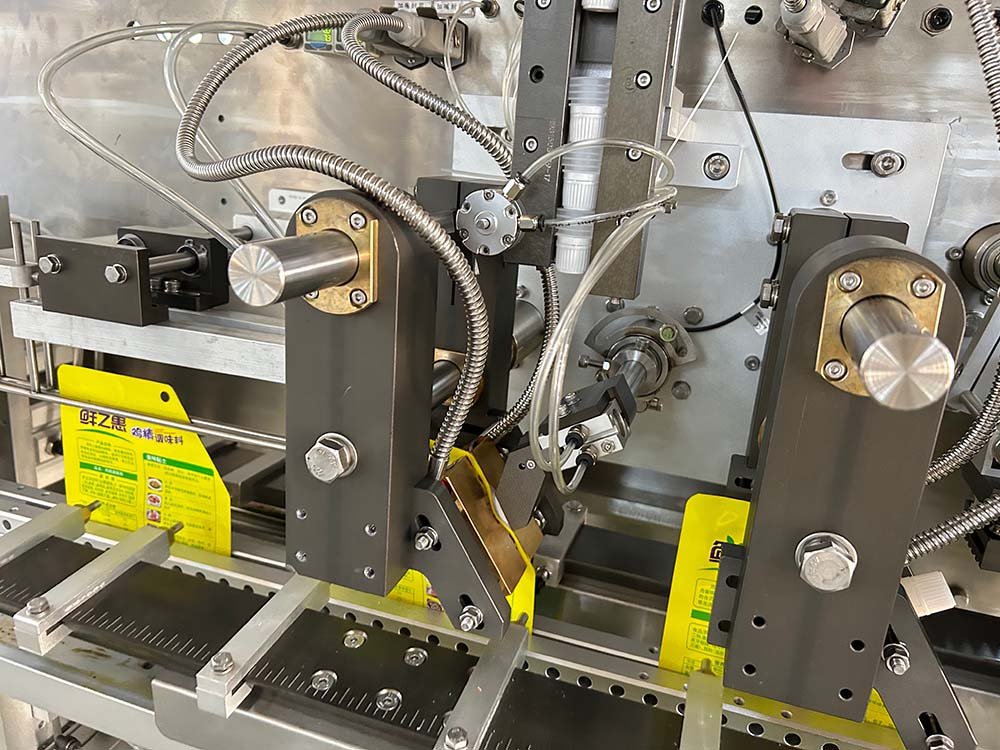
Roll film · selected fitment functions
HMS160 spout-handling arrangement
Review the HMS160 route with the actual pouch, spout and cap. The proposal must define the supplied station sequence and closure functions.
Roll-Film Spout Machines →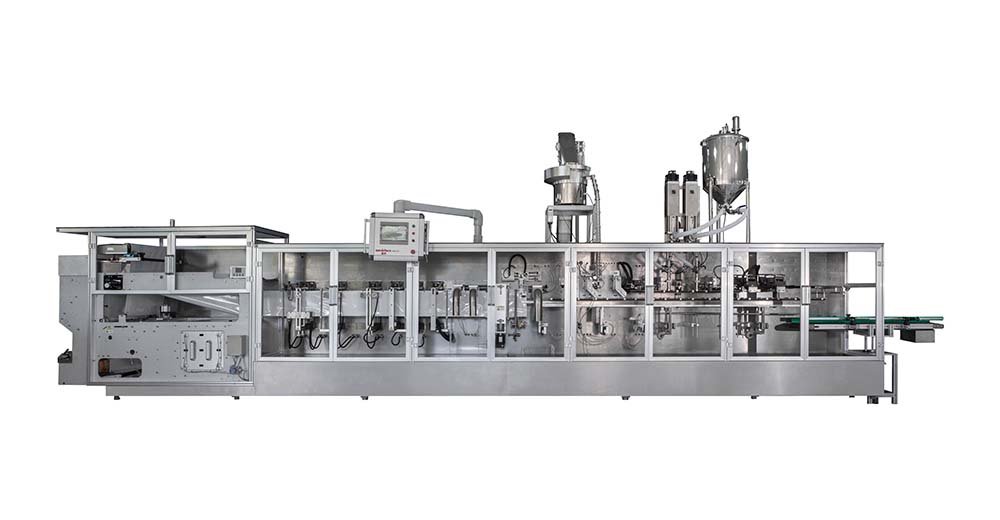
Supplied pouches · opening and sealing
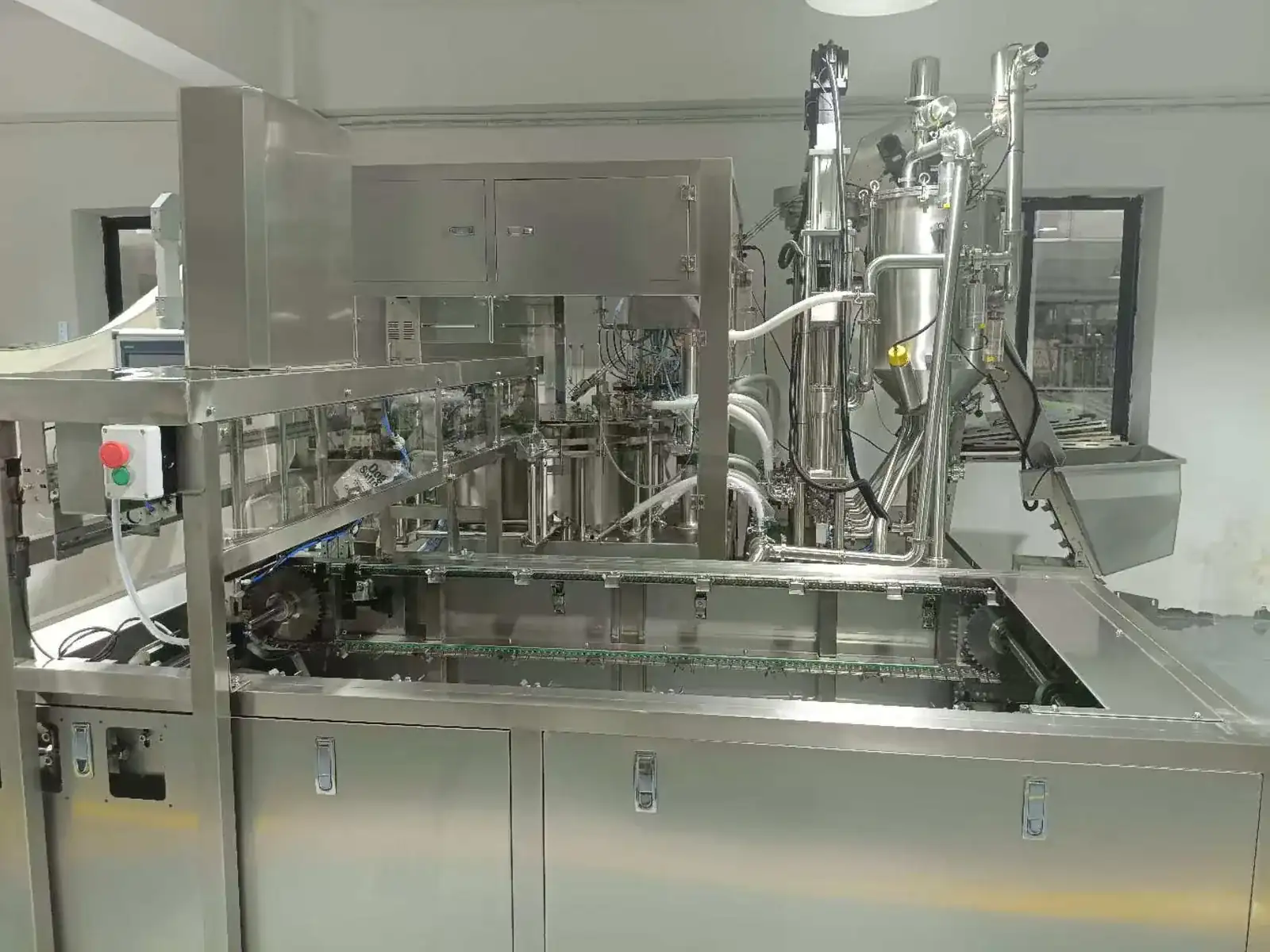
Premade pouch liquid filling platform
Pouch handling and filling reference. Confirm whether the selected build top-seals the pouch, adds a side spout or includes other functions.
Premade Pouch Systems →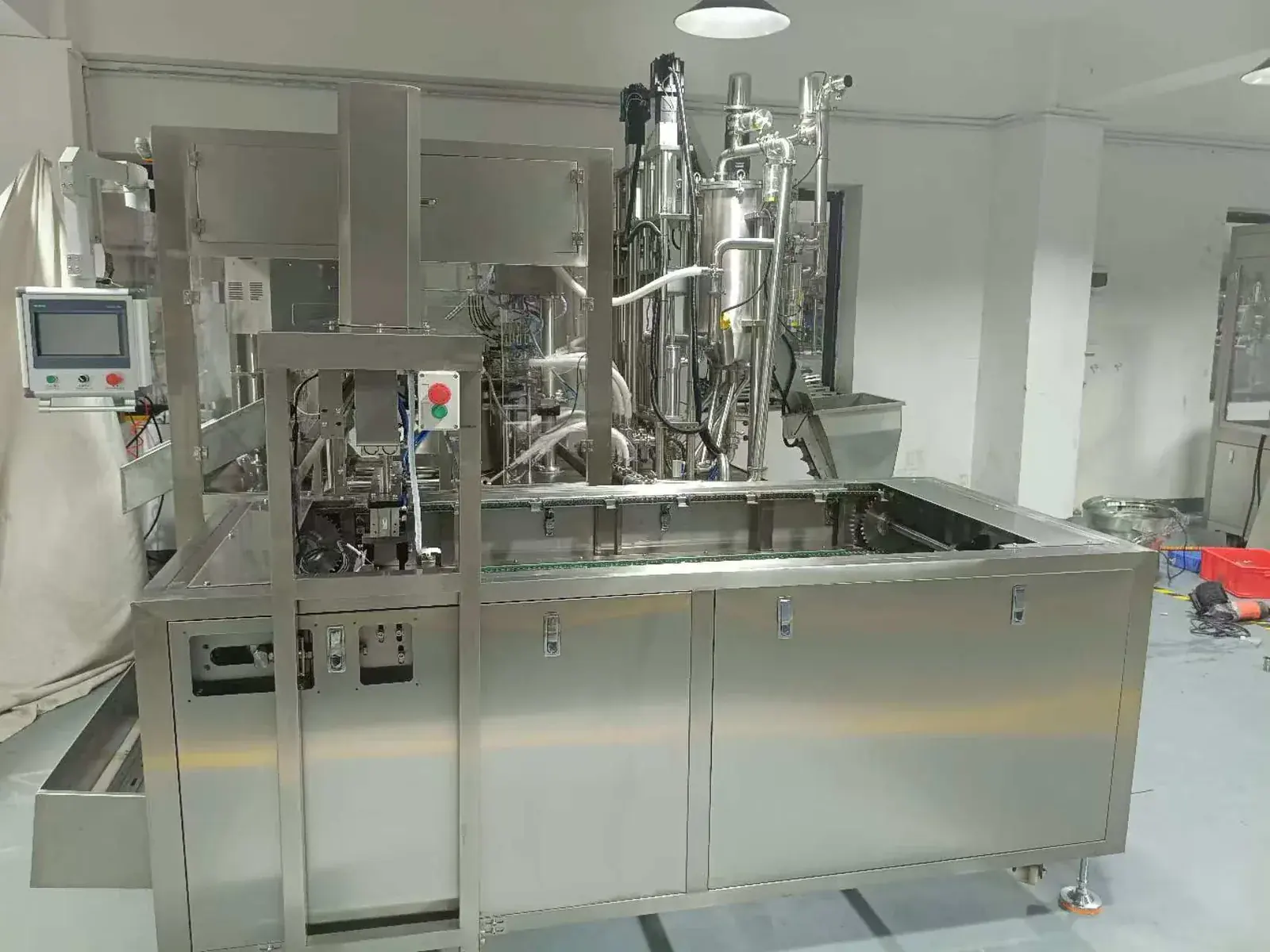
Fitted spout · filling and capping
6, 8 & 12-head filler / capper series
Compare the three head-count configurations on their own product and dose basis. The photo shows the documented 12-head platform, not every series build.
Spout Pouch Filling & Capping →Liquid packaging machine comparison
Compare the process boundary before comparing a quotation.
Align the incoming pouch, closure functions and product conditions so that equipment proposals cover the same work.
| Your package requirement | Starting machine route | Incoming material / pack | Selection points |
|---|---|---|---|
| Small flat liquid portion | Liquid sachet packing machine | Roll film → flat sachet | Dose, filling time, cutoff, seal area and collection |
| Stand-up pack from roll film | Liquid doypack packing machine | Roll film → stand-up pouch | Gusset, opening, fill access, headspace and top seal |
| Spout installed on the line | Roll-film spout pouch machine | Roll film + separate fitment | Insertion/welding, fill sequence, cap handling and leakage checks |
| Supplied pouch to be filled | Premade pouch filling system | Premade pouch → selected final closure | Pickup, opening, filler, seal or selected spout functions |
| Supplied pouch with fitted spout | Spout pouch filling and capping | Already-spouted pouch + separate cap | Pouch carrier, filling heads, cap feeding, seating and torque |
Machine speed, pump capacity and accepted finished-pack output are different measures. Each product and dose needs its own filling-time and quality review; this hub does not combine the maximum figures from different models.
Applications for product review
Use the formulation to select the filling system.
These product categories are starting points for a sample review. The product name alone does not define a suitable pump or complete machine.
Food liquids
Sauces, ketchup & dressings
Review viscosity at filling temperature, particles, separation and nozzle cutoff. Match the final pack and cleaning procedure to the recipe.
Viscous products
Honey, syrups & pastes
Review product transfer, temperature, filling time and stringing. Agree any conditioning and the usable dose window before specifying a filler.
Beverage pouches
Juice & beverage concentrates
Review foam, pulp, product temperature, contact materials and closure quality. Explore beverage pouch packaging →
Product inclusions
Wet pet food & gravy
Send particle size, concentration and temperature. Review the product path, hygienic access and the closing area. Compare pet food machine routes → Review wet-food filling considerations →
Personal care
Shampoo, lotion & refill packs
Review foam, stringing, contact compatibility and recipe changes with sachet, doypack or spout formats. Compare cosmetic packaging routes →
Technical liquids
Lubricant & technical liquids
Review material compatibility, temperature, transfer and the flexible package. Explore lubricant pouch equipment →
Liquid filling and dosing
Match the filler to the operating window.
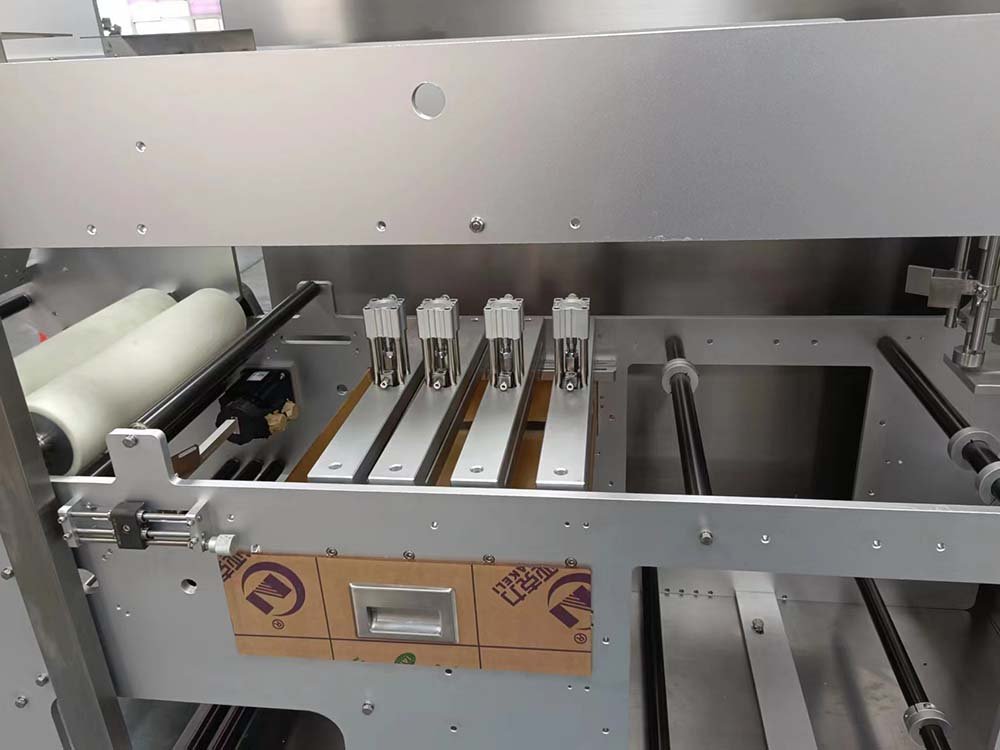
Piston filling is one documented route for liquid and paste projects. Other metering choices, including selected pump systems, need their own review of flow behavior, usable dose range and cleaning access.
- Viscosity, density and temperature during filling
- Particle dimensions, settling and shear sensitivity
- Foaming, splashing, dripping and stringing
- Feed pressure, refill behavior and product-level changes
- Dose-check method and agreed acceptance tolerance
State the fill amount in mass or volume and name how it will be checked. A stable dose on a bench is only one part of the complete pouch cycle.
Filling, sealing and capping details
Connect the liquid path to the package closure.
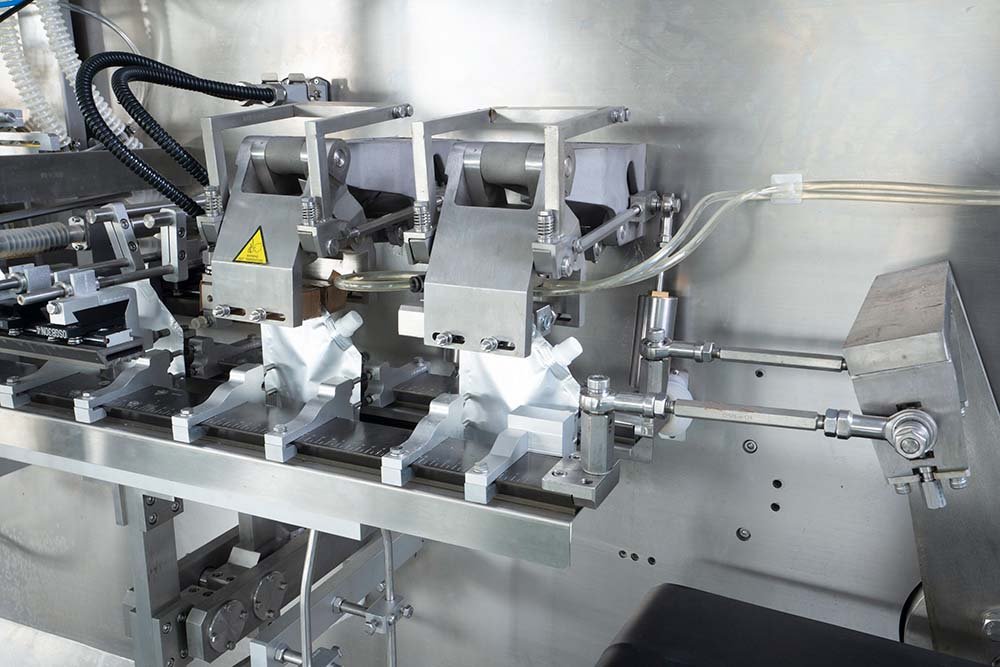
Mechanism photographs identify review points; they do not establish the exact number of heads or parts supplied on every machine.
Metering & product supply
Coordinate product transfer
Review the selected hopper or tank, liquid supply, level control and metering cycle so that refill conditions support the agreed dose.
Nozzle & final closing
Protect the closure area
Match nozzle access, product release and cutoff to pouch movement. Review residue, wrinkles, the seal or fitted-spout closure with actual samples.
Spout & cap handling
Approve the closure components
Provide the spout and cap pair, drawings and samples. Define insertion or welding when required, cap presentation, seating, torque and leak checks.
Official machine video
See one viscous-liquid pouch route in operation.
This footage shows a specific HFFS configuration for tomato paste with a center cap. Use it to review the relationship between pouch transport, filling and package handling.
For your own product trial, review product supply, filling cutoff, pouch stability, closure quality and the accepted-output result. The video represents the configuration shown.
From application to equipment
Turn your pack idea into a defined machine project.
Define product & pack
Send the formulation, fill amounts, operating conditions, drawings and representative packaging samples.
Select the route
Compare roll-film sachets, doypacks, spout handling or supplied premade pouches using the required closure.
Specify the configuration
Name the filler, tooling, cleaning, coding, inspection, utilities and connected equipment.
Test the finished packs
Agree the run conditions, dose and closure checks, output counting and handover evidence.
Liquid packaging line scope
Plan cleaning and interfaces alongside the primary machine.
Before filling
Product supply
Specify any tank, agitation, heating, recirculation or upstream connection. Agree buyer-supplied equipment and the refill conditions.
Between products
Cleaning & changeovers
Define contact materials, removable parts, flushing and any requested CIP boundary. Review drainage, access and the release of the next recipe.
After closing
Inspection & discharge
Define coding, weight or dose checks, leak checks, rejection, accumulation and secondary packing. Name line signals and downstream capacity.
Use the turnkey packaging solutions page for connected equipment. State which modules are included and how each interface will be accepted.
Product trial and factory acceptance
Test your liquid with the production package.
Agree the representative inputs and acceptance method before the run.
Fix the inputs
Identify the product batch, temperature, dose, film or premade pouch, spout and cap where applicable.
Run normal events
Include product refill, pouch or cap replenishment, startup, stops, restarts and selected changeovers.
Check finished packs
Agree fill variation, appearance, code, seal or cap integrity and the retained-sample method.
Count accepted output
Record conforming packs, rejects, startup waste, conditions and run duration on the same production basis.
Liquid packaging machine price
Request a quote for the complete configuration.
The price depends on the pouch route, filler, tooling, closure functions and selected line scope.
Primary machine and liquid path
Define the supplied equipment
- Selected machine and package format
- All fill amounts and product conditions
- Hopper or tank, filler, valve and nozzle
- Contact materials and cleaning arrangement
- Film tooling or premade-pouch change parts
Options, testing and handover
Define the project scope
- Spout, cap, coding and inspection functions
- Collection and connected line equipment
- Utilities, layout and destination requirements
- Representative trial and acceptance evidence
- Documents, commissioning and service terms
Compare itemized proposals using the same product, package and output basis. The packaging machine RFQ brief builder can help organize your requirements.
For premade pouches with the spout already fitted, the spout pouch filling and capping quotation guide helps compare dosing, pouch loading, cap supply, cleaning and acceptance on the same equipment boundary.
Your INMAYPACK project
Connect product review to the equipment proposal.
Send INMAYPACK one application brief for the liquid, package and production requirement. The proposal can then identify the selected machine route, filling arrangement, included modules and trial scope.
- Clear product and package inputs
- Configuration-specific machine and option scope
- Agreed quality and accepted-output checks
- Defined utilities, documents and handover requirements
Use service and support to prepare the testing, training and project responsibilities. Lead time, warranty and support terms belong in the current proposal.
Liquid packaging machine FAQ
Settle the route before selecting the model.
What is a liquid packaging machine?
How do I choose between a sachet and a stand-up pouch?
What is the difference between roll film and premade pouches?
Does every spout pouch machine install the spout?
How should I select a sauce filling machine?
Can one liquid machine handle different products?
Which filling system is suitable for liquid pouches?
What determines the liquid packaging machine output?
Is automatic CIP included with every liquid filler?
Can I compare 6-, 8- and 12-head spout pouch machines here?
What affects the liquid packaging machine price?
What should I send for a liquid packaging machine quotation?
Build your liquid pouch project
Send your liquid and package. Get a matched proposal.
Product condition · fill amounts · pouch drawing · film or pouch samples · spout and cap · accepted output · cleaning · line scope.