Technical explainer · Updated September 16, 2026
A pouch packing machine spare-parts list should be a recovery plan, not a catalog copied from the bill of materials. The useful list identifies what can stop production, what wears during normal operation, what is needed for commissioning, and exactly which installed component each spare replaces.
Quick answer: classify spares by failure consequence, replenishment lead time, consumption pattern, repairability and substitution risk. Tie every stocked item to the as-built machine, station, OEM or machine part number, revision and approved alternative. Buy critical and commissioning spares before shipment; set wear-part quantities from actual duty and replacement evidence; review electronic and automation items for lifecycle status. A generic “one-year spare kit” is not enough unless its contents and assumptions are documented.
Critical, wear and commissioning spares solve different problems
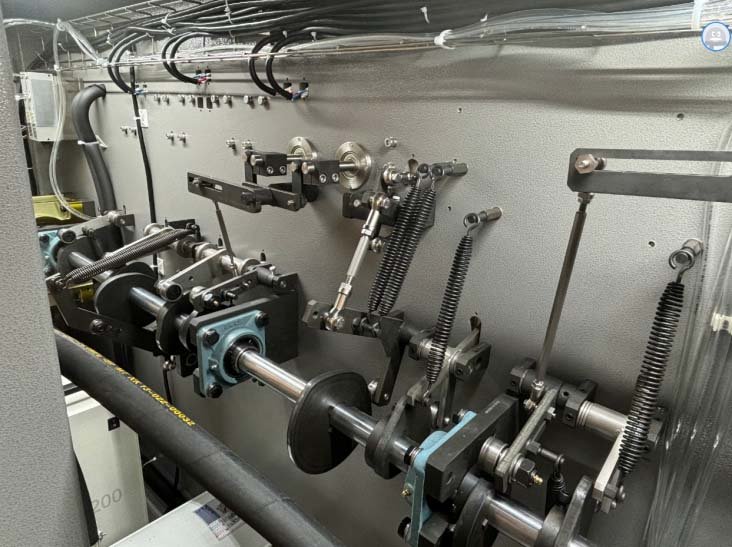
One part can appear in more than one planning class, but the reason for stocking it must be clear. A seal-jaw cover may be a predictable wear item. A custom-machined gripper arm may be critical because a single failure stops the line and replacement lead time is long. A sensor used while establishing a new format may be a commissioning spare even if it rarely fails later.
| Spare class | Question it answers | Pouch-line examples | Stocking logic |
|---|---|---|---|
| Critical spare | What single failure could stop or severely restrict production before a replacement can arrive? | Machine-specific shaft or cam, servo or drive with no approved local substitute, safety device, control component, special sealing or cutting assembly. | Hold on site when consequence and lead time exceed the accepted recovery window. |
| Wear or consumable spare | What is expected to deteriorate, be damaged by normal use, or be replaced during planned work? | Vacuum cups, jaw covers, blades, filters, seals, belts, bushes, springs or approved product-contact seals. | Set min/max stock from installed quantity, usage history, interval, scrap risk and replenishment time. |
| Commissioning spare | What could be needed while installing, trialing or stabilizing the delivered formats? | Sensors, heaters, thermocouples, fuses, tubing, fittings, cups, covers and other items exposed during setup and trials. | Agree before FAT and ship with the machine so startup is not delayed by a small damaged item. |
| Insurance or strategic spare | What is unlikely to fail but has an unacceptable procurement, repair or obsolescence exposure? | Obsolete or long-lead automation hardware, custom controller, special motor, custom casting or imported assembly. | Decide from lifecycle status, repair route, interchangeability, carrying cost and business consequence. |
| Operating supply | What must be available for routine machine care but is not normally a replacement component? | Approved lubricants, cleaning materials, release films, test materials or specified tooling consumables. | Control by specification and storage condition; do not mix it into the machine BOM without ownership. |
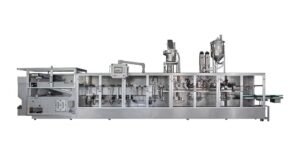
The HFFS packaging machine components guide helps map the stations and functions before the list is classified. The pouch packing machine preventive maintenance guide then shows which parts are consumed by planned work and which replacements should be triggered by condition.
Rank a spare by recovery risk, not by purchase price
A low-cost sensor can stop the whole line. A high-cost assembly may not need to sit on the shelf if it is repairable, redundant, locally available or supported by a proven temporary recovery method. The decision should make the accepted downtime exposure visible.
Practical decision: stock the part when the expected failure consequence and realistic recovery time exceed the plant’s accepted interruption. Do not call a part “critical” only because it is expensive or because it appears on a supplier’s standard list.
| Decision factor | Questions to record | What increases stocking priority |
|---|---|---|
| Production consequence | Does failure stop all formats, one format, one lane or only reduce speed? | No bypass, no redundancy and high lost-production consequence. |
| Detection and warning | Is deterioration visible in inspection, alarms, trends or package defects? | Sudden failure with little warning and no safe condition-based trigger. |
| Total recovery time | How long to identify, approve, order, ship, clear customs, install and validate? | Long or uncertain lead time, international shipment, custom manufacture or specialist installation. |
| Interchangeability | Is there an approved equivalent? Does it require software, parameters, machining or wiring changes? | Machine-specific revision, locked configuration or substitute not yet validated. |
| Repair route | Can the failed unit be repaired or exchanged? Is a loan unit available? | No repair path, no exchange pool and no recoverable subassembly. |
| Failure exposure | How many identical positions are installed, and do they share the same duty? | Multiple installed units, high cycling, contamination, heat, vibration or known damage mechanism. |
| Lifecycle status | Is the automation or control item active, mature, end-of-life or discontinued? | Discontinued product, shrinking support route or untested migration path. |
| Storage risk | Does shelf life, corrosion, battery condition, contamination or calibration limit storage? | Storage condition can silently make the spare unusable when needed. |
Rockwell Automation recommends lifecycle analysis of installed equipment, spare parts and software when assessing obsolescence risk. Siemens describes service-parts management as balancing availability against unnecessary inventory. These principles support a risk-based register; they do not decide the correct part or quantity for a specific machine.
References: Rockwell Automation — Migration & Modernization; Siemens — Service parts management.
Build the spare-parts register from the as-built machine
A commercial model name is not enough to order a replacement. Pouch machines can vary by voltage, controls, safety devices, filler interface, pouch format, lane count, sensor type, sealing arrangement and project revision. The register must point to the exact delivered configuration.

My Insight
The best spare-parts list is a recovery instruction hidden inside an inventory record. When a line is stopped, the useful row does more than name a component: it tells the technician where it is installed, why it is critical, whether a substitute is allowed, which settings must be protected, and what must be verified before production resumes. If the row cannot support that decision, the list is still only a shopping list.
Create a quote-ready identification pack before requesting a spare
Packaging machine spare parts cannot be identified reliably from appearance alone. HFFS machine parts, premade-pouch grippers, heaters, sensors, valves and drives can look similar while using different dimensions, voltage, porting, firmware, parameters or mounting. Send the machine identity and installed position first, then add the markings, measurements and symptom that distinguish the required item.
This worksheet creates a plain-text request on your device. It does not upload or submit the entered information. Copy the summary, then attach the nameplate, installed-position and damaged-part photos when you contact INMAYPACK.
Spare-parts identification worksheet
Enter the available identifiers. Unknown fields can remain blank.
Do not discard the removed part before identification is complete. Keep labels, plugs, shafts, seals, brackets, fasteners and failure evidence together. A photo of the whole station plus close-ups of the markings and connection details is normally more useful than a single cropped component photo.
Set spare quantities from exposure, lead time and evidence
No universal “one-year kit” can represent every product, shift pattern, environment and pouch format. Start with the delivered machine’s recommended list, then document the assumptions behind each quantity. Update the level after commissioning and again when actual consumption or lead time changes.
Before shipment
Confirm critical, commissioning and first planned-maintenance items against the as-built configuration. Verify that part numbers, descriptions, quantities and storage needs match the packed items.
After commissioning
Record what was consumed, damaged, substituted or added during installation and trials. Reset minimum quantities before routine production begins.
During production
Review withdrawals by failure mode and station. Separate planned wear consumption from repeated failures that need root-cause correction.
At lifecycle review
Check automation, controls and purchased assemblies for discontinuation, repair availability and approved migration options before supply disappears.
Do not increase stock to hide a chronic fault. If cups, heaters, blades, bearings or valves are consumed faster than the validated expectation, use the stand-up pouch machine troubleshooting guide to isolate the first unstable variable. Inventory can shorten recovery; it cannot correct misalignment, contamination, incorrect settings or poor utility condition.
Close the spare-parts scope before FAT and shipment
The buyer and machine supplier should agree what is included, what is recommended, what remains optional and which assumptions drive the quantities. The physical items, packing list and electronic register must agree before the machine leaves the factory.
| Handover check | Evidence to receive | Reject or clarify when |
|---|---|---|
| As-built match | Part number, description, manufacturer reference, installed position and applicable revision. | The list is generic, copied from another model or contains parts not installed on the delivered machine. |
| Classification | Critical, wear, commissioning or strategic designation with stocking reason. | Every item is called critical or no recovery consequence is stated. |
| Quantity basis | Installed quantity, expected consumption or risk assumption and replenishment lead time. | “One year” appears without duty, interval or usage assumptions. |
| Automation recovery | Approved hardware revision, backups, parameter files, software version and restore method. | A replacement drive, controller or HMI cannot be commissioned from the supplied records. |
| Storage and preservation | Packaging, environmental limit, shelf-life or periodic inspection requirement where applicable. | Seals, batteries, electronics or corrosion-sensitive items have no storage control. |
| Installation and release | Replacement instruction, torque or setting source, safety step and post-installation test where required. | The item can be fitted physically but there is no approved way to restore or validate the function. |
| Packing verification | Marked packages checked against the final list before shipment. | Labels, quantities or part numbers do not match the register. |
Use the stand-up pouch machine FAT checklist to make the spare-parts register, backups, manuals and training part of acceptance—not an email exchange after shipment. PMMI’s OpX FAT guidance uses a playbook and checklist approach for structured acceptance work; the project-specific scope still needs agreement between buyer and OEM.
Reference: PMMI — Conducting Virtual FATs: Best Practices.
A spare part is not production-ready until replacement is verified
The replacement task may expose personnel to electrical, pneumatic, thermal, gravitational, spring or other stored energy. Follow the machine manual, component instructions and the site’s approved energy-control procedure. A stop command, HMI stop or emergency stop is not automatically an energy-isolation method.
- Confirm the failure and protect evidence before removing the original part.
- Verify the replacement identity, revision, condition and approved substitution status.
- Apply the required energy-control procedure and verify isolation before covered work begins.
- Protect mechanical positions, wiring references, parameters, recipes and calibration data needed for restoration.
- Install using the approved drawing, component instruction and specified tools or settings.
- Restore guards, utilities, control files and mechanical references; remove loose tools and temporary items.
- Test the affected function, then run the approved pouch and product verification before production release.
- Record the removed-part failure mode, installed spare, settings, test result and new stock balance.
Component replacement is maintenance work, not a normal production adjustment. In the United States, OSHA 29 CFR 1910.147 covers servicing and maintenance where unexpected energization, startup or release of stored energy could cause injury. Other locations and sites may impose different or additional requirements.
Safety reference: OSHA 29 CFR 1910.147 — The control of hazardous energy.
Connect the spare-parts register to the complete machine lifecycle
The register should be reviewed when a format or filler is added, a component is replaced by a new revision, a recurring failure is corrected, lead time changes or an automation product enters a new lifecycle stage. Keep the drawing set, backups, maintenance plan and spare register under the same change control.
Technical references
- Occupational Safety and Health Administration, 29 CFR 1910.147 — The control of hazardous energy.
- PMMI, The Association for Packaging and Processing Technologies, 2025 Aftermarket Parts & Services report overview.
- Siemens, Service parts management.
- Rockwell Automation, Migration & Modernization.
Need a spare-parts register matched to your delivered pouch line?
Send the machine model, serial number, project number, installed options, pouch formats, operating pattern and accepted downtime window. INMAYPACK can review critical, wear and commissioning spares against the actual configuration.
Reply: sales@ewpackmachinery.com · WhatsApp: +86 18658799162