Doypack Bottom Gusset Forming: Geometry, Seals and Stability

A pouch can be sealed and still fail to stand. Bottom-gusset performance is created by the combined geometry of the fold, side seals, bottom seal, corner transitions and the filled product—not by one gusset-depth number.
Quick answer: doypack bottom gusset forming converts a folded area of the film web into an expandable base. The fold must stay centered and repeatable, the multi-layer seal transitions must close without channels, and the filled pouch must open into the intended footprint. Approve the geometry with the actual film and product; there is no universal gusset depth, fold position or sealing setting that works for every pouch.
This guide is for roll-stock stand-up pouch forming on HFFS equipment. It focuses on the engineering decisions that should be resolved before a film order, tooling approval or factory acceptance test.
What the bottom gusset actually does
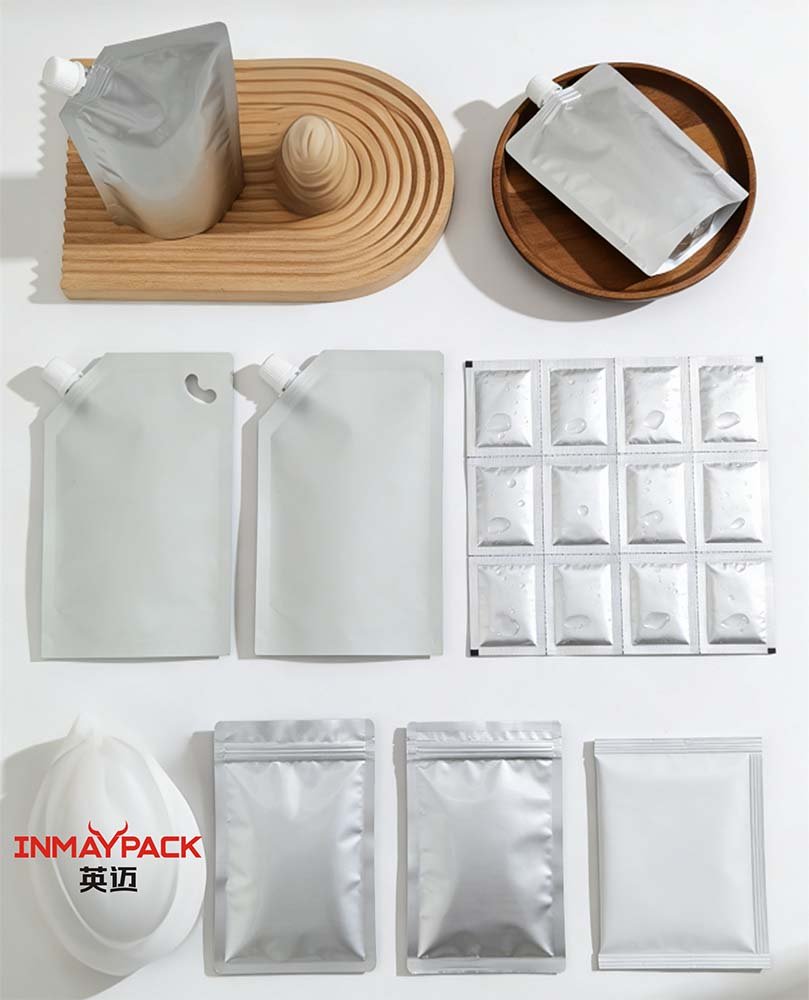
A flat, unfilled doypack has its gusset folded between the front and back panels. During opening and filling, those layers separate and the gusset unfolds to create a base. The resulting contact area depends on pouch width, gusset geometry, corner shape, seal pattern, product distribution and laminate stiffness.
Fold center and symmetry
If the fold walks laterally or its two sides are unequal, the base can open asymmetrically. The first check is the relationship among web centerline, forming guide, registration and transport path.
Corner transition
The bottom corners combine more film layers than the pouch body. Their contour and sealing pattern determine whether the base opens smoothly or rests on two stiff points.
Usable base footprint
A deeper nominal gusset does not automatically create a wider usable base. Sealed areas, product shape and incomplete opening may reduce the actual contact footprint.
Product distribution
Powder, granules, solids and viscous products load the base differently. Fill volume, bulk density, headspace and settling behavior must be part of the pouch approval.
A published stand-up-pouch patent describes the folded gusset between the front and back panels and explains that the gusset unfolds into a supporting bottom surface when the pouch opens. It also shows why support concentrated at two corners can increase leaning risk. This is a useful geometry reference, not a substitute for testing the final package.
Bottom-gusset forming is a sequence, not a single station
- Web control: the roll is unwound under stable tension and guided so the print repeat, seal map and fold references remain in position.
- Folding and pre-forming: guides or a forming plow establish the center fold and the intended gusset shape without scoring or stretching the laminate.
- Seal preparation: the web reaches the sealing area with the correct layers presented to one another. Wrinkles or debris at this point become structural defects.
- Side and bottom sealing: the seal pattern closes two-layer and multi-layer areas while preserving the part of the gusset that must unfold.
- Opening and shaping: the pouch is opened and its lower geometry is supported so the filling system can load the product into the intended cavity.
- Cooling and transfer: seals must stabilize before downstream pulling, opening and filling loads distort them.
Why the multi-layer transition deserves special attention
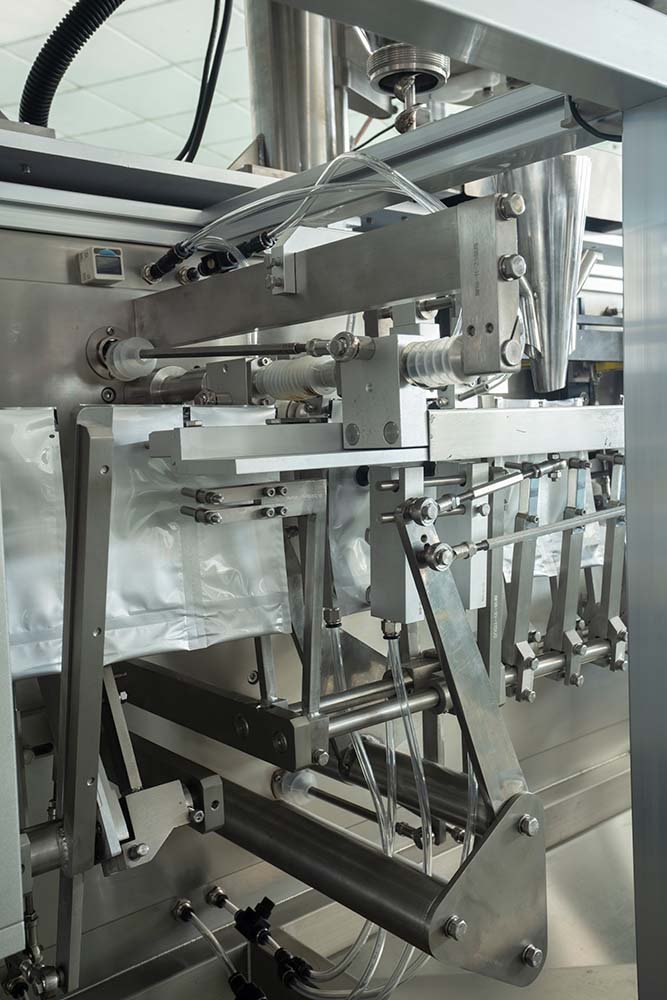
Above the gusset fold, the pouch body may present two main film layers. Around the folded bottom and side-seal intersection, the sealing jaws can encounter more layers and abrupt thickness changes. That transition can create an incomplete seal, a wrinkle, a hard corner or a channel if geometry, pressure distribution, heat transfer and cooling are not matched.
The solution is not automatically “more temperature.” Excess heat can distort the base, shrink the seal area or narrow the usable process window. Diagnose layer presentation, contamination, jaw contact and actual seal response before changing settings.
Diagnose the symptom at the base, then move upstream
A pouch that leans is not automatically a “gusset too small” problem. Use the filled package to identify the symptom, then isolate geometry, web control, seal formation and product distribution in that order.
| Observed symptom | Likely process family | First checks |
|---|---|---|
| Pouch leans consistently to one side | Asymmetric fold, web tracking or uneven product distribution | Compare fold center to print and pouch centerlines; check left/right base opening on empty and filled samples. |
| Base remains partly closed | Insufficient opening, excess sealed area, stiff laminate or product bridging | Observe the opening sequence; compare the approved seal map with the produced pouch; test with the real product. |
| Bottom corners wrinkle or curl | Layer presentation, heat distortion, jaw contact or cooling | Inspect wrinkle direction, seal impression and cooling before increasing heat or pressure. |
| Leak begins near gusset/side-seal intersection | Multi-layer transition, contamination or incomplete seal | Section the failure area, verify sealant-to-sealant contact and compare quantitative seal results by location. |
| Good empty pouch, unstable filled pouch | Package geometry and product interaction | Review fill mass, bulk density, headspace, settling and the real contact footprint after handling. |
| Position changes through the run | Web tension, registration, guide drift or thermal stabilization | Trend fold position and seal location over time; do not judge only the first few samples. |
For broader fault isolation—film drift, registration, opening, filling contamination and cutting—use the HFFS stand-up pouch troubleshooting guide.
Validate the formed pouch with the actual use case
A reliable approval process separates dimensions, process capability, package integrity and distribution performance. “It stands on the bench” is a useful observation, but it is not a complete acceptance criterion.
Information to send before machine or tooling approval
- dimensioned pouch drawing and physical approved sample;
- film laminate specification, sealant side and winding direction;
- product name, bulk density or flow behavior, target fill weight/volume and headspace;
- all pouch sizes, print files and registration-mark details;
- required output, filling system and downstream equipment;
- defined seal-strength, leak, drop, transport and shelf-stability requirements;
- food-contact or market-specific compliance documents required for the intended use.
Compliance note: the packaging owner and material supplier must confirm that every component is suitable and authorized for the intended food type and conditions of use. Machine compatibility does not itself establish food-contact compliance.
For the roll specification fields that should accompany the pouch drawing, see the doypack film specification guide for HFFS machines.
Approve the pouch, film and machine as one system
The best time to resolve gusset geometry is before production film is ordered. Send the approved pouch sample, flat drawing, laminate specification and product data so the forming path, sealing arrangement, opening method and validation plan can be reviewed together.
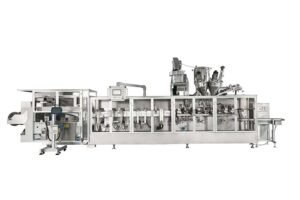
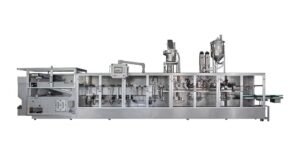
INMAYPACK’s automatic doypack packing machine platform forms stand-up pouches from roll stock. Final compatibility and output depend on the confirmed format, film, product and filling configuration.
Need a bottom-gusset forming review?
Send your pouch drawing, physical samples, film structure, product details, target fill and required speed. Our engineers will review the application and identify what must be confirmed by sample testing.
Technical references
Google Patents, US20040025476A1: Stand-up pouch forming, filling and sealing—reference for an in-line sequence that folds a web into a bottom gusset, seals, opens, fills and closes the pouch.
Google Patents, US20140248005A1: Stand-Up Pouch—reference for the relationship among bottom-gusset geometry, contact footprint and standing stability.
ASTM International, ASTM F88/F88M-23—seal-strength measurement for flexible barrier materials. The applicable test plan and acceptance limits must be defined by the package owner.
U.S. Food and Drug Administration, Determining the Regulatory Status of Components of a Food Contact Material—reference for component authorization, specifications and conditions of use.
Need a Technical Opinion?
You Might Also Find Helpful

Auger Filler vs Weigh Filler for Powder Packaging
Compare auger and weigh fillers by powder flow, bulk density, dust, dose, refill behavior and acceptance testing before choosing aRead more
Modified Atmosphere Packaging Machine Guide for Pouches
Specify a modified atmosphere packaging machine by food risk, gas recipe, film barrier, seal integrity, residual oxygen checks and FATRead more
How to Choose a Coffee Capsule Filling Machine
Compare CF30, CF80, CF140 and CF240 coffee capsule filling machine routes by capsule, lid, dose, accepted output, tooling and FATRead more
VFFS Film Specification Guide
Define VFFS rollstock by bag geometry, web width, repeat, winding, COF, seal window, roll build and machine-trial acceptance.Read more
End-Load vs Vertical Cartoning Machine: Selection Guide
Compare end-load horizontal and vertical cartoning machines by product infeed, loading direction, carton format, line integration and FAT evidence.Read more
Liquid Form Fill Seal Machine Guide: Sachet, Doypack or Premade Pouch?
Compare liquid sachet, roll-film doypack and premade pouch routes by product flow, dosing, film, sealing, cleaning, RFQ inputs and FATRead morePowder Sachet Manufacturing Process: Equipment and Quality Guide
Follow powder sachet manufacturing from product definition and auger dosing through film forming, dust control, sealing, inspection and FAT.Read moreTurnkey Packaging Line vs Separate Machines: Buyer Decision Guide
Compare a turnkey packaging line with separate machines by responsibility, interfaces, FAT, schedule, total cost and lifecycle support.Read more