
INMAYPACK · Compact coffee packaging options
Small Coffee Packaging Machine
Start with the right pack. Build around your space.
Choose a compact route for coffee capsules or powder portions. Compare CF30 capsule filling and sealing with YS-61 roll-film packing, then match your finished pack, daily demand and available production space.
- Coffee capsule route
- Powder portion route
- Layout & utility review
- Project-specific quotation
For small coffee brands and new production projects. Send your pack drawing, coffee sample and target output to begin.
What is a small coffee packaging machine?
A compact starting point for a defined coffee pack.
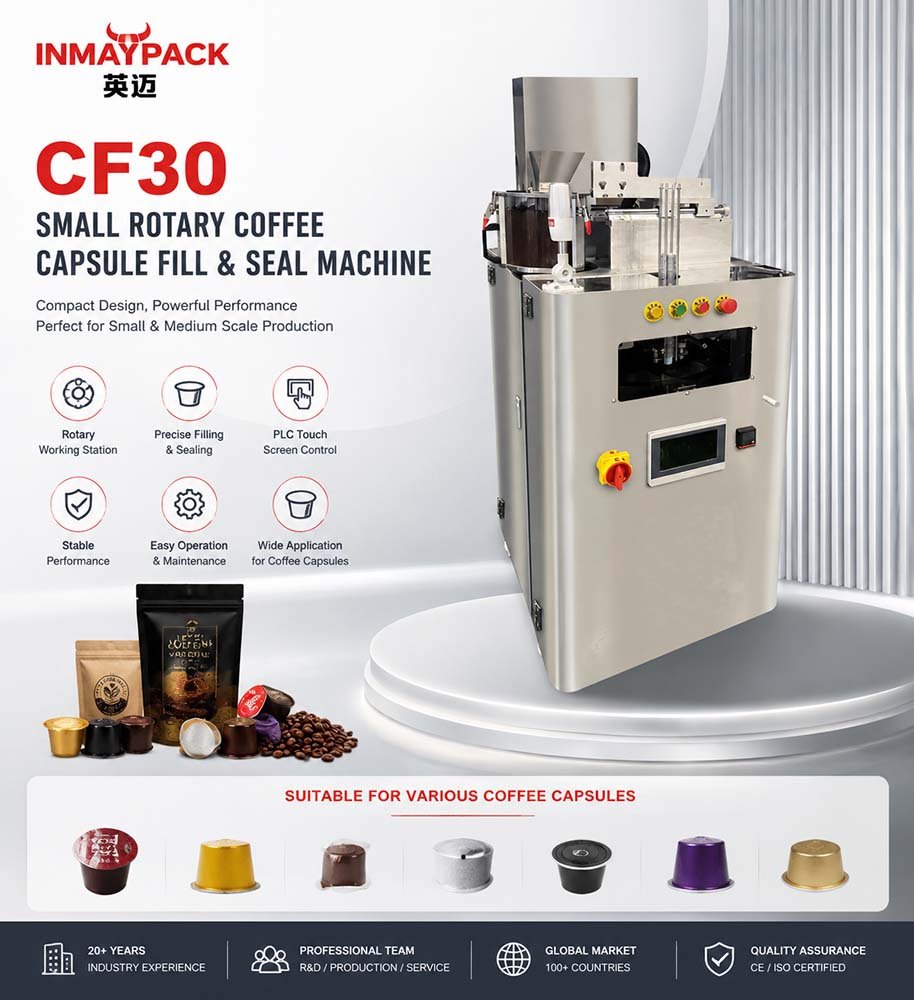
A small coffee packaging machine is equipment selected for a limited production space and a defined packaging task. For the options on this page, CF30 fills and seals coffee capsules, while YS-61XBF forms roll-film packs and fills powder portions. They serve different finished products.
Choose the pack before the machine: capsule dimensions and lids lead to one route; powder flow, portion weight and film lead to another. Whole coffee beans in retail pouches require a weighing and pouch-packing assessment.
Already choosing between bag formats? Review the coffee packaging machine overview before selecting a compact configuration.
Two compact equipment routes
Different packs. Different machine choices.
Use the equipment references to start a selection discussion. Confirm the coffee, package, tooling and accepted output for your project.
01 · Coffee capsules
CF30 Capsule Filling & Sealing
A small indexed rotary machine for filling coffee into capsules and sealing with pre-cut lids. A practical route when your finished product is a defined capsule format.
- 30 capsules/min reference capacity
- 800 × 800 × 1500 mm machine body
- 220 V single-phase · 2 kW total
- Cup and lid drawings determine the tooling
02 · Powder portions
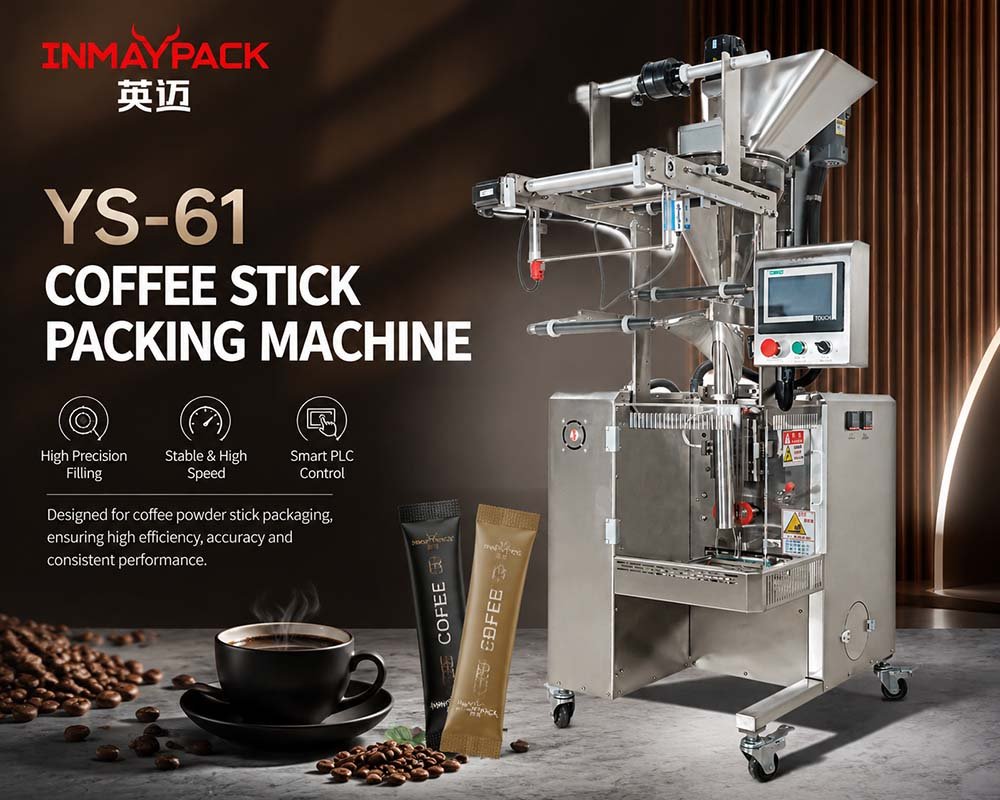
YS-61 Roll-Film Coffee Packing
The YS-61XBF back-seal configuration combines bag forming, auger dosing, filling, sealing and cutting. Review your coffee powder and bag drawing for the selected portion format.
- 1–100 g reference filling range
- 30–70 bags/min reference speed range
- 730 × 1000 × 1600 mm machine body
- 220 V · 50–60 Hz · 2.2 kW
Listed speeds and ranges are source specification references. Coffee properties, dose, package dimensions, film and agreed test conditions determine the accepted operating result. The YS-61 range does not establish compatibility with every narrow stick format.
Send the pack you want to sell.
We can review the appropriate compact route and the configuration it needs.
Compare the equipment references
Choose by finished pack, output and site fit.
Capsules per minute and powder bags per minute describe different products. Compare the accepted packs your business needs, rather than treating the speed figures as interchangeable.
| Selection item | CF30 capsule route | YS-61XBF powder route |
|---|---|---|
| Finished package | Filled and sealed coffee capsule | Roll-film powder portion; YS-61XBF back-seal reference |
| Product and package input | Coffee, empty capsules and compatible pre-cut lids | Coffee powder and compatible heat-sealable film |
| Reference output | 30 capsules/min listed capacity; source running range 25–35 cups/min | 30–70 bags/min listed range |
| Fill / package reference | Cup outer diameter 37–68 mm; height 28–50 mm. Listed lid outer diameter 37–54 mm | 1–100 g; bag length 30–170 mm, width 30–130 mm |
| Machine body: L × W × H | 800 × 800 × 1500 mm | 730 × 1000 × 1600 mm |
| Electrical reference | 220 V single-phase; total 2 kW | 220 V; 50–60 Hz; 2.2 kW |
| Other preparation | Compressed air reference 0.6–0.8 MPa; confirm supply demand and selected nitrogen equipment | Confirm the supplied utility schedule, film specification and selected printing options |
| Trial priorities | Cup handling, lid alignment, dose, seal cleanliness and finished-capsule integrity | Powder flow, dose, bag size, seal cleanliness and finished-pack integrity |
On a phone, swipe within the table to compare both routes. Dimensions describe the machine body, excluding ancillary equipment and operating clearances. Cup, lid and bag ranges require a matched configuration; not every combination within the listed limits is supported.
Specification basis: supplied CF30 and YS-61 technical documents. See the linked machine pages for route details, and request the current configuration sheet for your quotation.
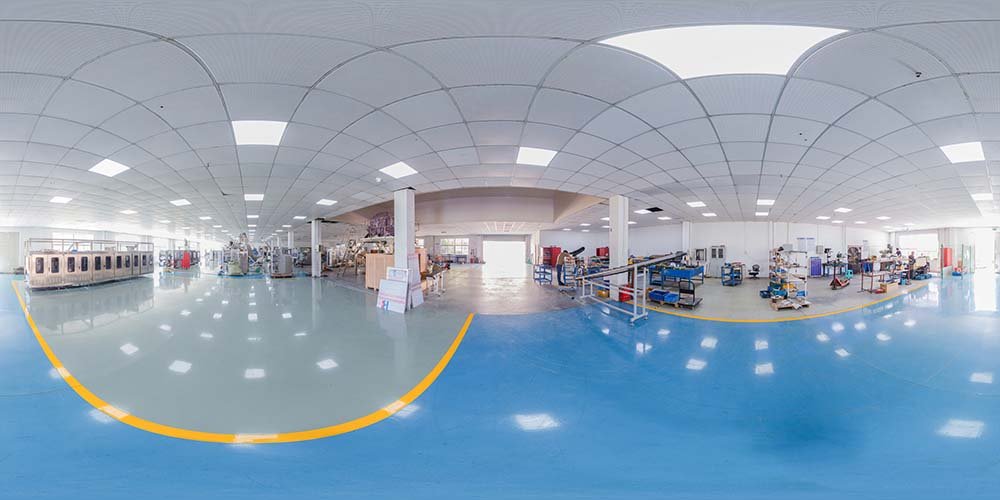
Small machine, complete work area
Plan the space around the production task.
A compact machine body is one part of the layout. Leave room to replenish material, collect finished packs, clean the equipment and reach service points.
Small coffee packaging machine price
Price the complete starting setup. Know what is included.
A useful quotation connects the machine to your package, production target and installation conditions. The selected tooling and auxiliaries can change the total investment.
01 · Core equipment
Machine and package tooling
Define the capsule-and-lid tooling or powder bag format, filler and controls. Include the package parts and changeover items that your launch requires.
02 · Connected items
Utilities and selected options
Review the compressor, air treatment, nitrogen equipment, feeder and printing options where applicable. Identify what you already have and what must be supplied.
03 · Production readiness
Trial, delivery and startup
Agree samples, trial checks, shipping terms, installation responsibilities, training and initial spares. Separate included items from optional or site-supplied work.
Request a current, itemized project quote.
Share your pack, target dose, daily output and destination. Compare included equipment, options and site responsibilities.
For budget planning, use the coffee packaging machine price guide. Current pricing and commercial terms follow the valid project quotation.
Real equipment details
Good selection starts with the coffee and the pack.
Bring drawings and samples into the discussion early. The images below illustrate capsule-family mechanisms for package and dosing review.
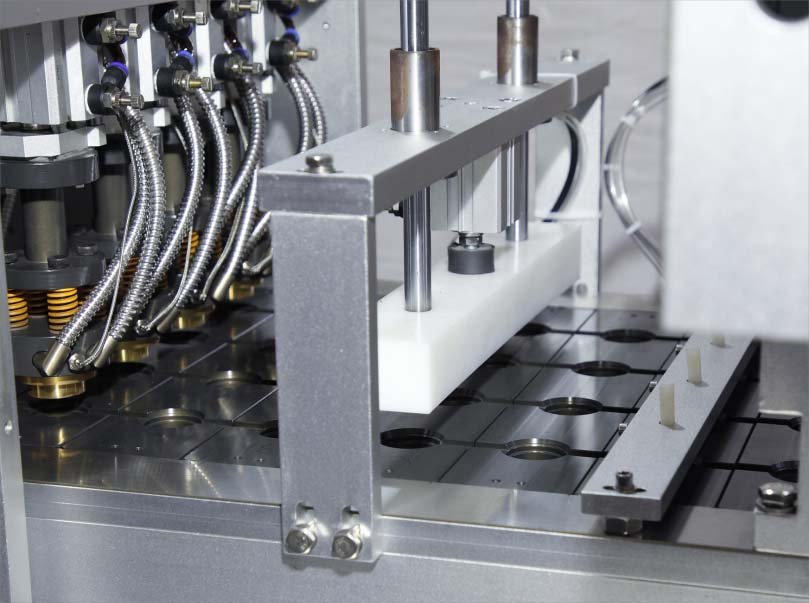
Package fit
Match capsule and lid tooling
Cup dimensions, material, rim geometry and lid construction affect handling and sealing. Send component drawings and samples so the proposed tooling can be reviewed.
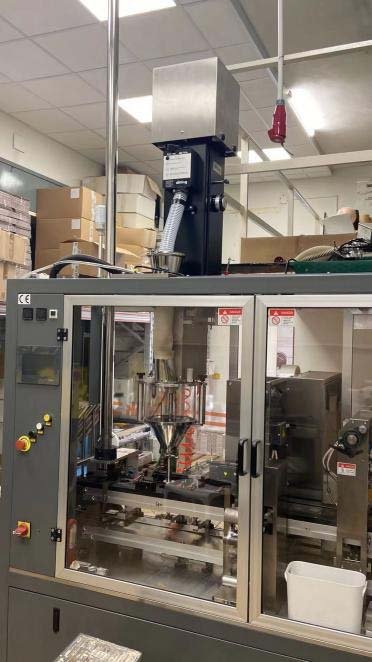
Product fit
Review powder dosing and the seal area
Coffee grind, flow, bulk density and static behavior can affect auger dosing and cleanliness around the sealing area. Use the actual coffee and package during an agreed trial.
From enquiry to an equipment proposal
Turn your launch plan into a machine brief.
Define the finished pack
Send capsule and lid drawings or the powder bag size, film structure and target dose. Include each format you expect to run.
Set the production target
State accepted packs per shift, shift length, product changes and expected demand. Include time for replenishment and cleaning.
Review the site
Share a floor plan, destination, power and available utilities. Identify connected equipment and operator responsibilities.
Agree the sample trial
Confirm materials, dose and seal checks, run conditions and accepted-output criteria. Review the results against your launch requirements.
Choose for today and the next stage
Know when a compact setup needs a different route.
Growth can mean a different pack, more accepted output or additional line equipment. Keep the decision connected to your product and workflow.
Next-stage planning
Retail beans or ground coffee
Assess the pouch route For retail coffee bags, compare premade-pouch handling, a suitable weighing or auger filler, bag size and downstream work. Explore coffee pouch packing.
Next-stage planning
Higher capsule demand
Compare a larger capsule route When accepted daily output exceeds a compact setup, compare a higher-output capsule machine and its feeding, discharge and site requirements. Review the CF80 capsule route.
Next-stage planning
Connected production
Plan the whole line If conveying, inspection, accumulation or secondary packing becomes part of the project, review equipment interfaces and the full layout. Review coffee packaging lines.
For whole-bean retail packs, see coffee bean packing machines; for premade ground-coffee pouches, see coffee powder filling machines. These are separate packaging assessments, rather than interchangeable compact capsule or portion configurations.
Work with INMAYPACK
Connect machine selection with production preparation.
Bring the coffee, packaging materials, layout and output target into one equipment discussion. A clear proposal identifies the selected machine, tooling, utilities, options and trial expectations.
Include installation, training and spare-parts planning before shipment so your team can prepare for the delivered configuration.
Questions from small coffee businesses
Small coffee packaging machine FAQ.
Which small coffee packaging machine should I choose?
Choose by the finished package. CF30 is the compact capsule filling and sealing route on this page. YS-61XBF is a roll-film powder-portion route. Share your coffee, dose, package drawing, daily output and available space so the configuration can be reviewed.
How much does a small coffee packaging machine cost?
The current price depends on the machine, tooling, package format, selected auxiliaries and delivery/startup scope. Request an itemized quotation showing the base equipment, included parts, optional items and site responsibilities.
Can one small machine pack capsules and coffee sticks?
The two routes use different package handling and sealing processes. CF30 fills preformed capsules and seals lids; YS-61XBF forms packs from film and fills powder. Select the route for your product, rather than assuming one supplied machine can do both.
Can YS-61 pack every stick or sachet size?
No universal format compatibility is stated. The supplied YS-61XBF reference lists 1–100 g and bags 30–170 mm long and 30–130 mm wide. Confirm the bag drawing, sealing configuration, coffee and film for the format you intend to sell, including any narrower stick pack.
Can a compact machine pack whole coffee beans?
The powder-portion route shown here is an auger-based powder configuration. Whole beans in retail pouches require a suitable weighing and pouch-packing assessment. Share the bag type, weight and output target for that separate route.
How much floor space is required?
The listed body dimensions are 800 × 800 × 1500 mm for CF30 and 730 × 1000 × 1600 mm for YS-61. Total operating space must also include access, materials, connected equipment, utilities and cleaning/service clearances. Confirm the final layout before installation.
Will the reference speed match my coffee and package?
Accepted output depends on the coffee, dose, pack dimensions, materials, settings and run conditions. Agree the sample trial and quality criteria before finalizing the production requirement. Capsule counts and powder-bag counts represent different finished products.
What should I send to request a compact machine quote?
Send the coffee type, pack drawing or sample, dose, accepted packs per shift, formats, destination, available floor plan and utilities. Add any required printing, nitrogen, installation, training and spare-parts needs so the proposal can show the complete scope.
Continue your equipment selection
Useful routes for your coffee project.
Your next production step
Send your pack.
Get a compact route.
Share your coffee, dose, package drawing, daily output, available space and destination. Ask INMAYPACK for the selected machine, tooling, options and startup scope.