
A coffee capsule filling machine price becomes useful only after the capsule, lid, coffee, dose, output, nitrogen method, inspection and delivery boundary are fixed. A compact rotary machine and a four-lane production platform can both answer the same search phrase while carrying very different tooling, utilities and factory-acceptance scope.
This guide helps roasters, private-label brands and co-packers compare quotations without publishing an invented universal price range. The useful comparison is the complete configured project and its accepted output.
Choose the capsule platform before comparing price
The model decision starts with the approved capsule and lid, required accepted output, dose control and planned operating pattern. The reference values below come from current INMAYPACK product documentation. They are selection boundaries, not unconditional production promises.
| Selection point | CF30 reference | CF80 reference | CF240 reference |
|---|---|---|---|
| Architecture | Compact rotary capsule filling and sealing machine. | Rotary multi-station, single-head platform. | Project-configured four-lane rotary platform. |
| Documented capacity | 30 capsules/min; source range 25–35 depending on fill weight. | 60 capsules/min. | 120 capsules/min documented actual-capacity reference. |
| Capsule reference | Outer diameter 37–68 mm and height 28–50 mm. | Outer diameter 37–54 mm and height 28–50 mm. | Outer diameter 37–54 mm and height 28–50 mm. |
| Commercial effect | Compact machine, one approved mold basis and simpler production boundary. | Higher rotary output, automatic product supply and multi-format tooling decisions. | Parallel capsule handling, dosing and sealing with lane-level acceptance evidence. |
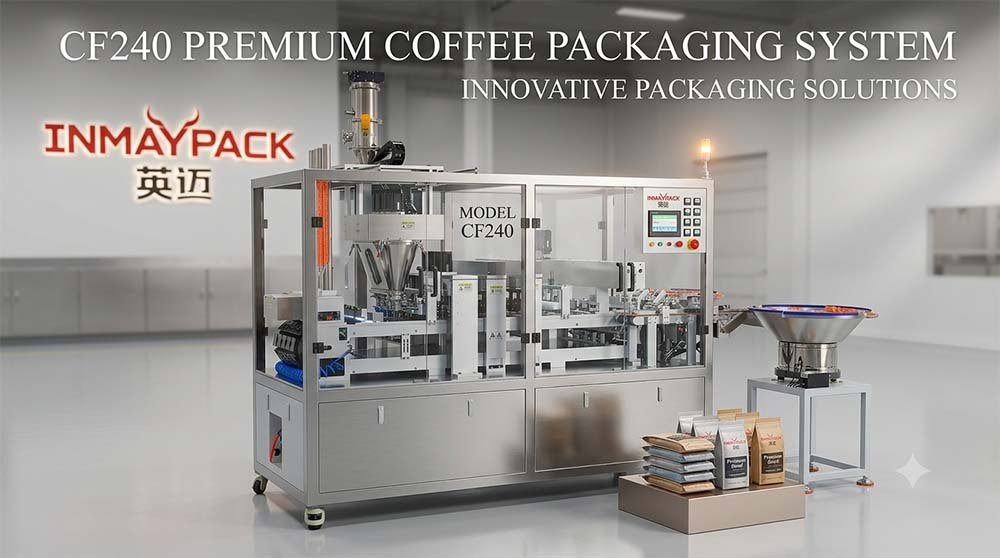
Review the CF240 coffee capsule machine, CF30 K-Cup machine and CF80 Nespresso-compatible machine after the package format and required output are controlled.
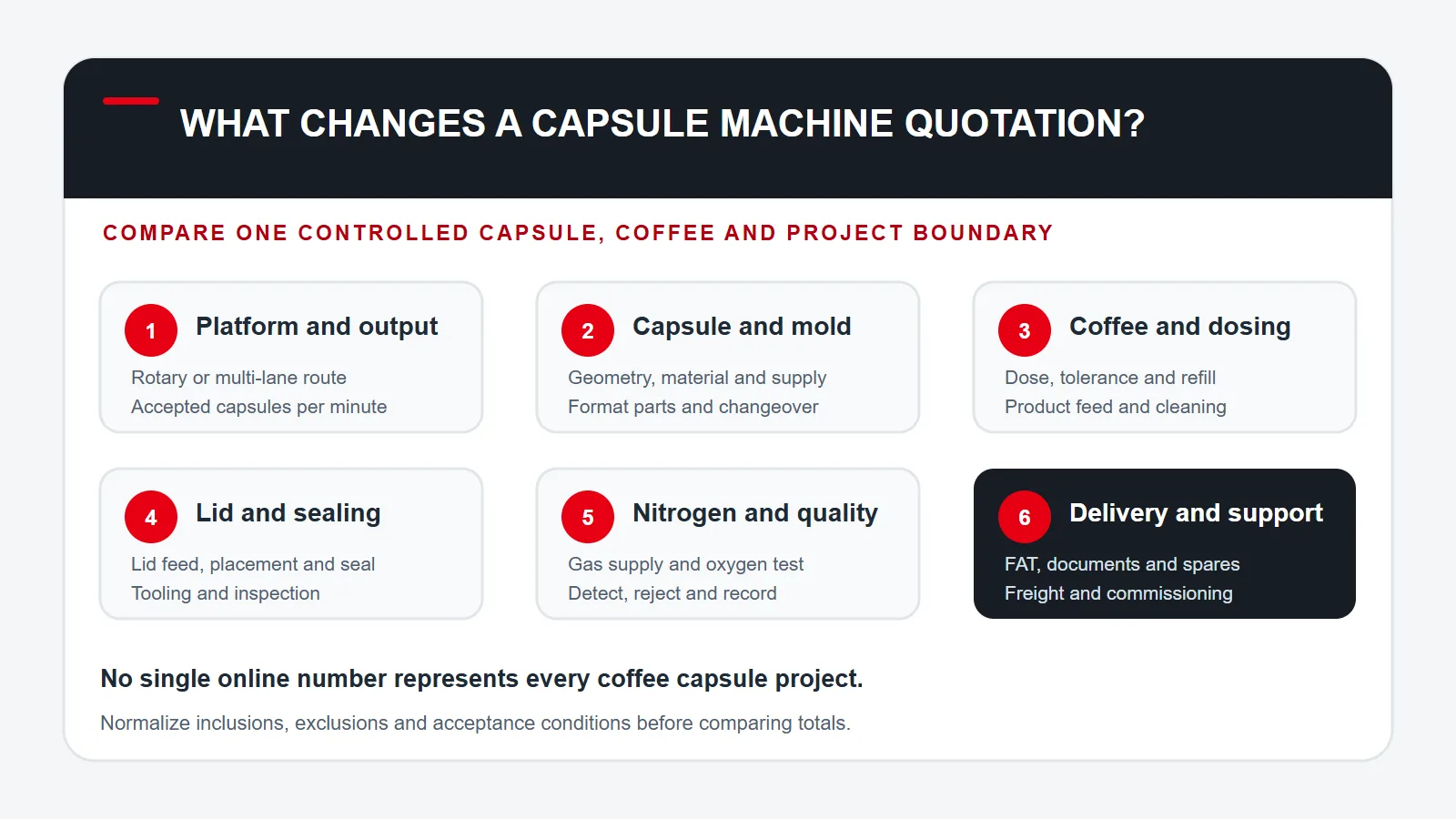
Eight decisions change the capsule machine quotation
A requirement changes cost when it adds tooling, stations, controls, utilities, testing or supplier responsibility. Each item should appear as an inclusion, option, exclusion or buyer-supplied item.
Geometry controls the handling route
Outer diameter, height, flange, wall stiffness, nesting, static, dimensional variation and supplier tolerance affect capsule separation, release, seating and mold design.
Product behavior selects the filler
Ground coffee density, particle distribution, oil, aeration, flow, target mass and tolerance affect hopper design, auger tooling, refill and cutoff behavior.
Pre-cut or other approved supply
Lid diameter, material, print orientation, curl, static, magazine behavior and sealing layer affect feeding, placement, detection and sealing tooling.
Gas supply needs a test method
Nitrogen connection, generator, dryer, flow control, extraction and residual-oxygen measurement must be defined together. A gas port alone does not prove the finished result.
Detect, reject and verify
Empty-capsule checks, fill-weight inspection, lid presence, seal checks, code verification and reject confirmation add devices, controls and acceptance work.
Accepted capsules, not empty cycles
Required production must include normal refill, capsule and lid replenishment, planned checks, rejects, stops, restart and downstream accumulation.
Every format needs controlled parts
Additional capsule families can require new molds, feeders, lid parts, recipes and release checks. Cleaning and allergen controls also affect time and documentation.
FAT, documents, spares and support
Trial materials, run duration, evidence, manuals, drawings, backups, training, commissioning and initial spares belong in the commercial comparison.
Capsule, lid and coffee must be approved as one system
A machine cannot correct an unstable empty capsule, inconsistent lid release or coffee that changes flow during production. The quotation should identify the exact materials used for design approval and FAT.
Control the production supply
Retain drawings, samples, lot identity and agreed dimensional or material tolerances. Confirm whether the intended production supplier matches the trial material.
Keep faults traceable
On a parallel machine, dose, lid placement, seal, reject and residual-oxygen evidence should preserve the affected lane and time within the test.
Build the budget beyond the base capsule machine
A useful budget follows the project from controlled samples to accepted operation. Duties, taxes, site utilities and local services vary by destination, so one online number cannot represent every delivered project.
Primary machine + molds and change parts + coffee feed and dosing + lid supply + nitrogen + inspection + FAT + delivery + commissioning + initial spares + buyer-side site work.
| Budget layer | Confirm in writing | Common comparison gap |
|---|---|---|
| Primary machine | Platform, stations or lanes, capsule feed, controls, guarding and standard documentation. | Model names match while the included stations do not. |
| Tooling and formats | Approved capsule and lid family, mold sets, feeders, seal tools, recipes and change parts. | Only one format is included although several SKUs appear in the inquiry. |
| Coffee path | Product feed, hopper, auger or filler, refill control, contact parts, extraction and cleaning boundary. | The filling head or upstream transfer remains an undefined option. |
| Gas and utilities | Nitrogen source, dryer, flow and pressure, compressed air, power, extraction and site connections. | A nitrogen port is included but the production supply and test method are not. |
| Quality and downstream | Weight check, lid or code inspection, reject, accumulation, counting, cartoning and line signals. | Output ends at capsule discharge while inspection and retail packing sit outside the total. |
| FAT and handover | Materials, run duration, sampling, defects, accepted output, records, training and retest rules. | “Factory tested” has no controlled product, sample plan or pass criterion. |
| Delivery and lifecycle | Incoterms® rule and named place, export packing, freight, commissioning, spares, manuals and support. | Suppliers use different delivery and recovery boundaries. |
Compare accepted capsules per minute and lifecycle cost
Headline capacity does not show how many capsules meet the agreed dose, lid position, seal, code and residual-oxygen requirement. Record gross discharge, accepted capsules, rejects, rework, coffee loss, lid loss, stops and causes during one controlled run.
Use the coffee capsule machine FAT checklist to define the run and retained evidence. Use the coffee packaging line guide when inspection, accumulation or cartoning is part of the investment.
Include the recurring cost of producing accepted capsules
The purchase price is paid once, but capsule components, lids, coffee loss, gas, labor, changeover and downtime continue through the life of the line. A lower-capital machine can still be the more expensive route when normal production creates more rejects, slower recovery or extra downstream handling.
Capsules, lids and coffee loss
Record damaged or unseated capsules, misplaced lids, seal rejects, startup coffee, purge material and samples. Use accepted capsules as the denominator.
Power, air and nitrogen
Compare the complete installed supply, not only the main machine rating. Include generators, dryers, compressors, extraction and the operating condition used for the accepted result.
Replenishment and inspection
Count operators needed for capsule, lid and coffee replenishment, quality checks, reject handling, collection, cartoning, cleaning and material change.
Time, parts and release
Measure removal, cleaning, mold or feed-part replacement, recipe loading, first-off inspection and material consumed before production is released.
Wear parts and recovery time
Identify high-consequence components, recommended initial spares, diagnostic access, backup requirements and the responsibility for replacement-part confirmation.
Accumulation and retail packing
A fast primary machine can transfer cost to manual counting, tray loading or cartoning. Confirm whether downstream equipment can receive the accepted capsule flow.
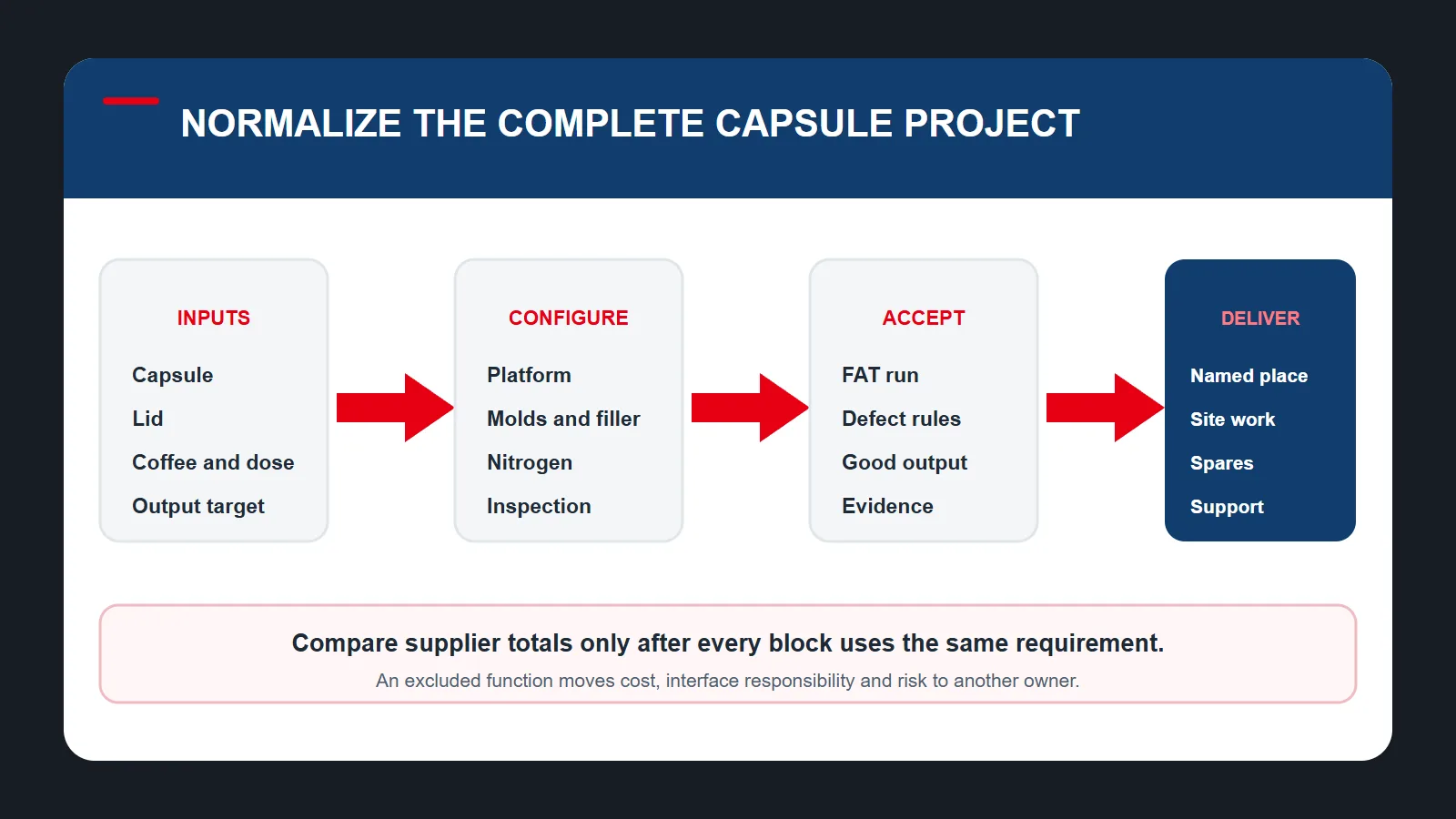
Put every capsule machine quotation into one structure
Issue one controlled requirement revision
Send every supplier the same coffee, dose, capsule, lid, output, nitrogen, inspection, destination and FAT requirement.
Separate included, optional and buyer-supplied items
Assign a status to molds, product feed, filler, lids, nitrogen, coding, inspection, reject, accumulation, cartoning, spares and commissioning.
Normalize accepted output
Compare the same materials, operating duration, replenishment, defect rules and downstream condition. Keep empty-cycle speed separate.
Normalize delivery and service
Use the same Incoterms® rule and named place. Add buyer-side site costs and excluded work before comparing the project total.
Resolve deviations before price negotiation
Close capsule, lid, sealing, nitrogen, safety, interface and acceptance gaps before treating a discount as a real saving.
Send these inputs for a useful capsule machine proposal
Drawing and samples
Provide format, material, dimensions, flange, nesting condition, supplier, priority SKUs and representative production samples.
Structure and supply
Send dimensions, laminate, sealing layer, print orientation, curl condition, supplier information and production samples.
Product and dose
Name the coffee, grind distribution, density if known, oil and flow behavior, target dose, tolerance and sample availability.
Accepted production target
State accepted capsules per minute or hour, shifts, replenishment pattern, planned formats and downstream condition.
Utilities and layout
Confirm power, compressed air, nitrogen source and quality, extraction, available space, access and line direction.
FAT and handover
Define test duration, sample plan, defect criteria, oxygen method, inspection, documents, training, spares, delivery and support.
The packaging machine RFQ builder can organize the requirements before supplier contact. The coffee packaging machine hub compares capsule, stick, bean, powder and cartoning routes.
Know whether the number is a budget estimate or a firm quotation
An early budget can help a buyer compare production routes, but it should state its assumptions. At minimum, record the capsule family, target dose, approximate output class, intended lid method, principal options, currency, delivery basis, validity and exclusions. Do not use an early planning figure as evidence that a final configured line will have the same total.
A firm quotation needs controlled capsule and lid information, representative coffee, confirmed formats, utilities, line interfaces and an agreed acceptance basis. It should identify the selected platform, molds, filling equipment, gas boundary, inspection, downstream scope, documentation, FAT inputs, delivery term and every item supplied by others.
If two suppliers have not quoted the same package materials, production condition, quality checks and delivery boundary, their totals are not yet comparable. First close the technical deviations. Then compare the commercial result.
Keep the quotation revision attached to the final machine configuration and FAT protocol. If the capsule supplier, lid construction, coffee dose, required output or downstream line changes, record whether tooling, testing, schedule and price must be revised. This prevents an outdated budget from being treated as an approved production scope.
Coffee capsule filling machine price FAQ
How much does a coffee capsule filling machine cost?
There is no reliable universal price without an approved capsule and lid, coffee and dose, required output, nitrogen method, inspection, FAT and delivery scope. Request a project-specific quotation against one controlled requirement.
Why do capsule machine quotations differ so much?
They may include different platforms, mold sets, fillers, product feeding, lid systems, nitrogen equipment, inspections, downstream modules, testing, delivery points and services. Normalize these items before comparing totals.
Is the highest-output machine always the best investment?
No. The correct platform must fit the planned production volume, capsule range, changeovers, accepted output, material loss, labor, downstream capacity and maintenance plan. Unused capacity and complex changeover can weaken the business case.
Should nitrogen equipment be included in the quotation?
The quotation should state the boundary explicitly. A connection port, generator, dryer, gas controls and residual-oxygen testing are different items. Define the production gas supply and acceptance method.
What should be tested before shipment?
Run the approved coffee, capsules and lids under the confirmed configuration. Record dose, lid feeding and placement, seal results, residual oxygen when required, rejects, accepted output, replenishment, stops, restart and retained samples.
Sources used for the quotation framework
Official reference for machinery risk-assessment and risk-reduction principles.
Official reference for electrical, electronic and programmable electronic equipment of machines.
Seal-strength test reference; the project must still define the applicable capsule-lid sample and acceptance limits.
Official source for defining delivery tasks, costs and risks with a named place.
Continue with the task that matches the project stage
Send the capsule, lid, coffee and accepted-output target
INMAYPACK will review the applicable capsule platform, molds, dosing, nitrogen, inspection, interfaces and FAT basis before preparing a configuration-specific quotation.







