Product behavior
State whether the product is a free-flowing granule, cohesive powder, aerated blend, liquid, paste or another material. Include temperature, dust, oil, foam and settling behavior.
Packaging systems configured around your application Defined project scope

Compare the DXD-320 and DXD-750 roll-film platforms by product behavior, dose, finished stick width, lane count, film specification and accepted-output test. INMAYPACK selects the dosing and machine configuration only after reviewing the real product and pack drawing.
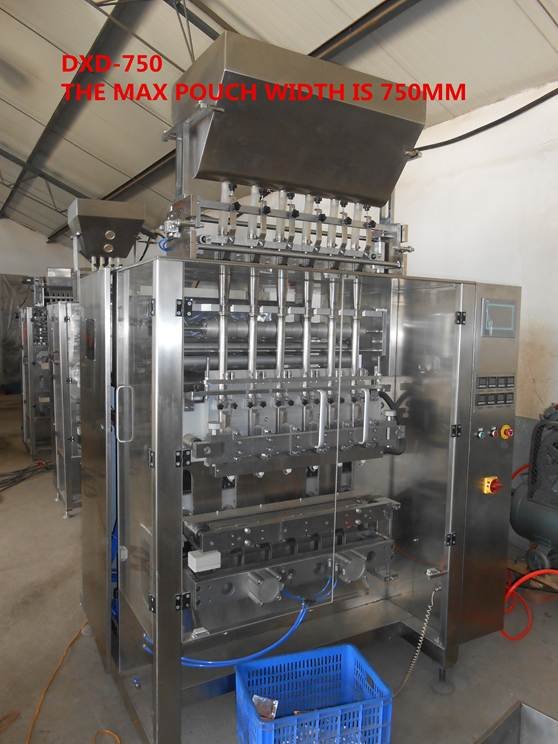
A stick pack machine forms narrow packages from heat-sealable roll film, meters product into parallel forming tubes, makes the longitudinal back seal, closes the ends and cuts the finished sticks. The useful output is not an empty-cycle number: it is the accepted number of filled, sealed and correctly cut sticks produced with the agreed product, film, lane layout and test method.
Lane count is a result of the product, dose and package geometry. Send these six inputs before requesting a model, speed or quotation.
State whether the product is a free-flowing granule, cohesive powder, aerated blend, liquid, paste or another material. Include temperature, dust, oil, foam and settling behavior.
Provide the target dose, permitted variation and how it will be checked. Volume alone does not define mass accuracy when bulk density changes.
Confirm finished width, length, longitudinal back-seal position, end-seal area, tear feature and the usable space available for the product.
Send the structure, thickness, web width, repeat length, print registration, coefficient of friction, sealing window and a production roll for testing.
State accepted sticks per minute or hour, shift pattern, refill method, planned stops, downstream handling and the maximum allowed rejects.
Agree the run duration, sample quantity, weight checks, seal checks, code inspection, reject rules and recorded evidence before the FAT begins.
These values come from the available DXD series documentation. They are selection boundaries, not interchangeable production guarantees.
| Parameter | DXD-320 | DXD-750 | Quotation decision |
|---|---|---|---|
| Finished package | Back-seal stick bag | Back-seal stick bag | Confirm the controlled drawing and supplied samples. |
| Maximum film width | 320 mm | 750 mm | Usable web width depends on lane pitch, seals, trim and registration. |
| Documented bag boundary | Width ≥15 mm; length ≥80 mm | Width ≥15 mm; length ≥80 mm | Minimum values do not prove that every product and dose will fit. |
| Documented lane range | 1–4 lanes | 6–10 lanes | Final lane count follows the approved stick width and web layout. |
| Documented aggregate output | 20–160 bags/min | 280–480 bags/min | Validate accepted output using the real product and film. |
| Documented filling range | 1–40 ml | 2–40 ml | Confirm usable mass or volume through the selected filler and trial. |
| Documented accuracy reference | ±1–5%, depending on filling characteristics | Define the measuring method, sampling plan and allowable variation. | |
| Horizontal cutting frequency | 20–50 cycles/min | Do not treat mechanical cycles as accepted sticks per minute. | |
| Machine dimensions | 1200 × 1200 × 2400 mm | 1300 × 1700 × 2500 mm | Add access, product refill, film handling and service clearance. |
| Machine weight | 700 kg | 1900 kg | Confirm floor loading, handling and installation route. |
Swipe the table horizontally to compare all columns.
Scope note: do not transfer the DXD900 or DXD1200 four-side-seal sachet values onto this page. Those models belong to the wider multi-lane flat-sachet route.
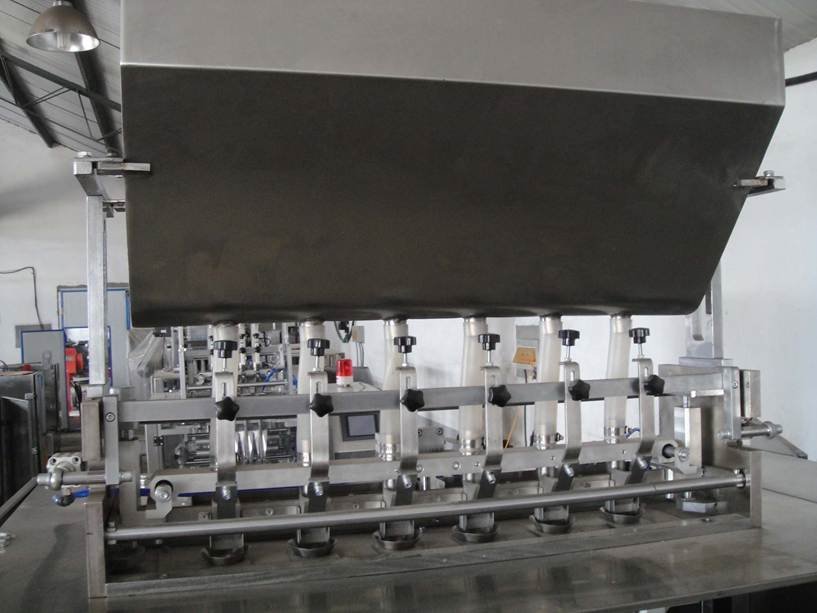
A narrow stick can contain powder, granules or liquid, but the dosing system and contamination risks are different.
For powder projects, use the auger filling machine configuration guide before fixing the screw and refill boundary. For narrow single-dose applications, review the supplement powder stick pack machine route with the actual formula, target dose, film and acceptance method.
Stable output depends on every product and film handoff—not simply on adding more forming tubes.
Control roll tension, web tracking and print registration.
Divide the web and product path consistently across lanes.
Create each narrow tube around its forming set.
Synchronize filler cutoff with available stick volume.
Control back seal, end seals, code and cut position.
Count, collect and transfer accepted sticks downstream.
Record the real product condition, refill method, film, lane availability, planned stops, rejects and test duration. A higher lane count is valuable only when filling, sealing and discharge remain stable.
Do not select the machine family before confirming the finished pack. These formats use different forming and sealing architectures.
Use the DXD-320 or DXD-750 route when the approved package is a slim tube with a longitudinal back seal and end seals.
Compare stick pack and sachet formats →Use the flat-sachet route when the package drawing requires separate perimeter seals and a wider face for product or graphics.
Review flat-sachet machinery →Film rule: confirm heat-seal layer, barrier structure, thickness, roll geometry, repeat length, registration marks and a usable sealing window with the actual supplier material. Paper appearance, recyclability or barrier performance cannot be inferred from the machine alone.
These DXD-750 source photographs show the equipment areas that should be reviewed during configuration and FAT.
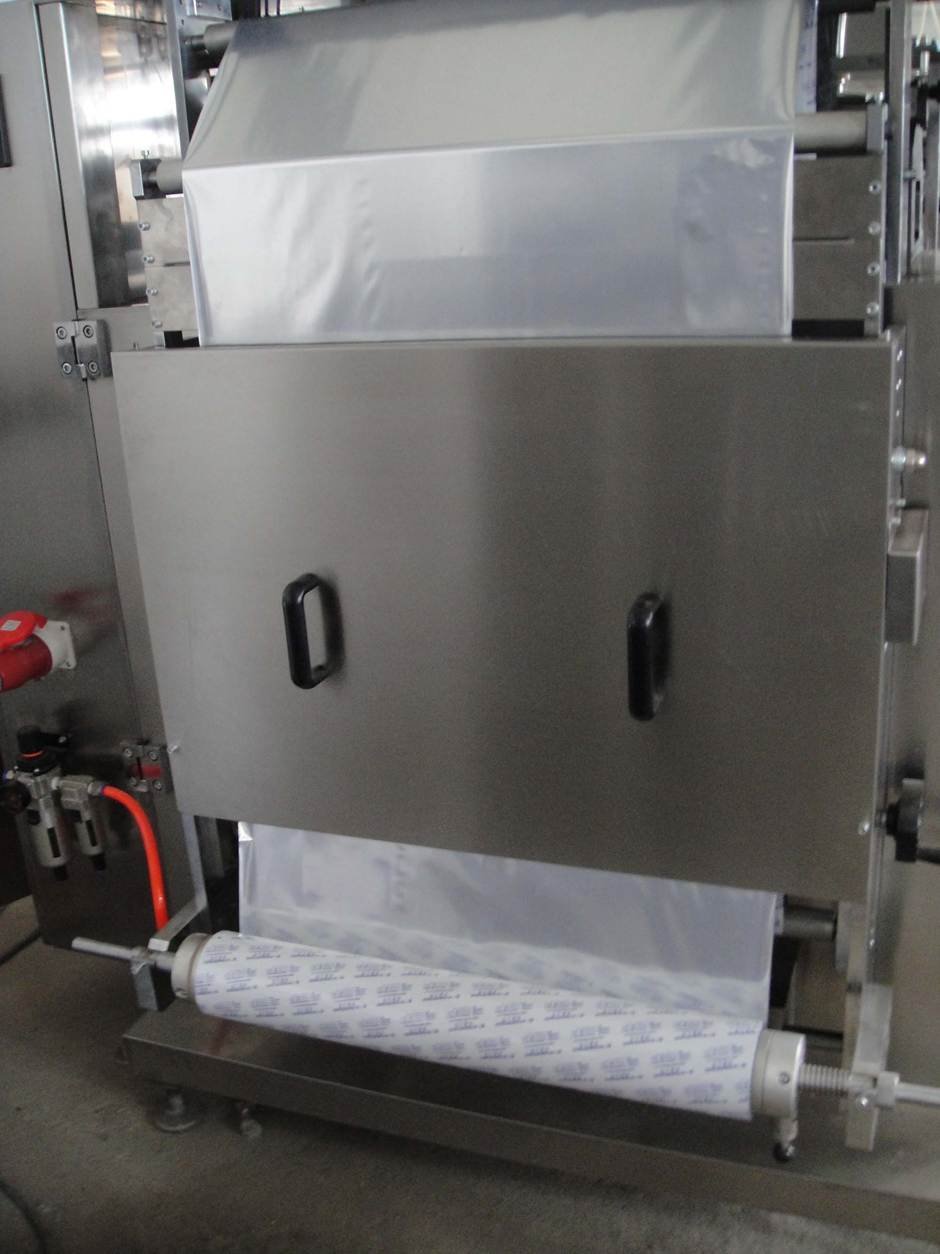
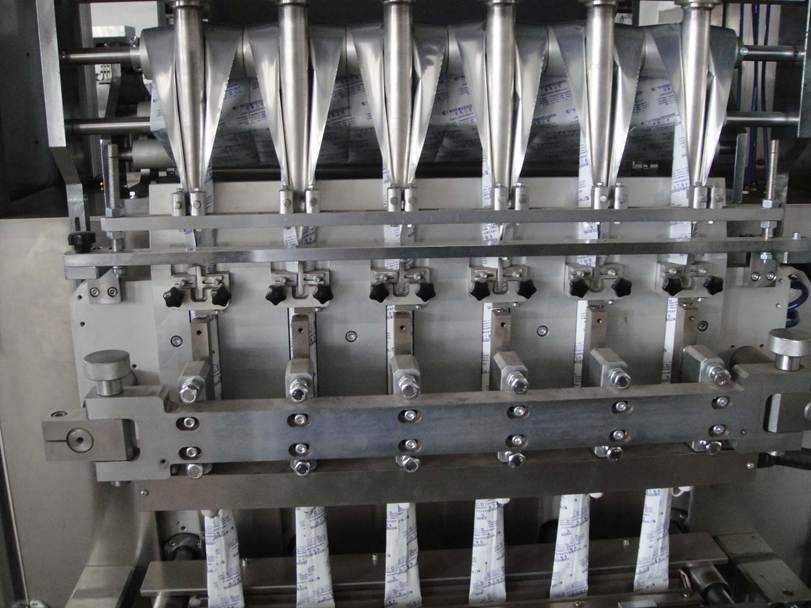
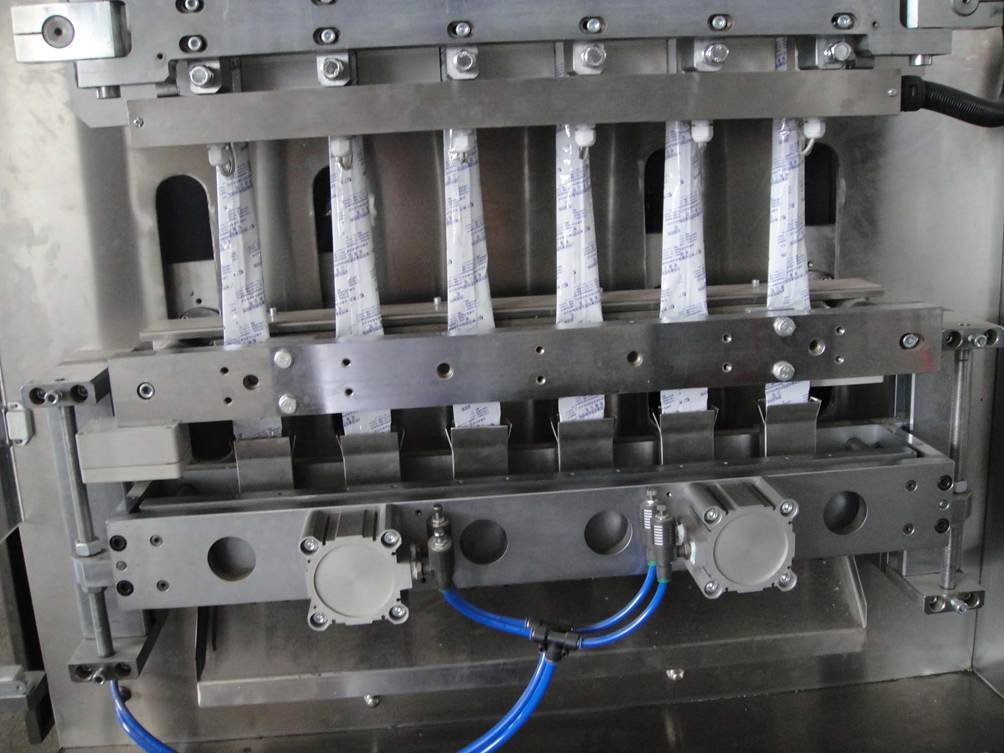
List forming sets, sealing components, cutters, lane guides and film-width changes. Confirm which parts are included for every approved SKU.
Identify hoppers, feeders, screws, pumps, cups, tubes and nozzles that contact the product, plus their removal and cleaning method.
Define first-off inspection, recipe confirmation, seal-temperature stabilization, purge or refill steps and production-release responsibility.
Changeover time should be measured from the last accepted stick of one SKU to the first released stick of the next—not only the mechanical part-swap time.
Use the packaging system integration checklist to define each supplier boundary before comparing quotations.
A useful FAT recreates the product, film, operating basis and downstream condition expected in production.
Approve the product lot, film roll, pack drawing, dose, active lanes, filler setup, coding, run duration and allowed operator interventions.
Record cycles, active lanes, refills, stops, rejects, dose samples, seal checks, registration and discharge condition at agreed intervals.
Calculate accepted output, retain samples and issue photos, videos, settings, alarm records and an open-item list for anything not demonstrated.
For process detail, read how a multi-lane stick pack machine works. For commercial comparison, use the sachet and stick pack price guide.
I would approve a stick pack configuration only after the same product lot, film, refill method, active-lane layout and defect rules have been used in one agreed run. A machine with more lanes can still produce fewer accepted sticks if product distribution, sealing or discharge is unstable.
INMAYPACK will review the DXD-320 or DXD-750 route, lane layout, dosing system, film boundary, interfaces and FAT basis before preparing the configuration and quotation.