
INMAYPACK · Premade-bag powder packaging
Powder Pouch Filling Machine
Fill the powder. Protect the seal area. Deliver the retail pouch.
Build a premade-pouch filling and sealing system around your powder, dose and finished bag. Compare rotary HIJ8-200 and compact TRC routes with selected auger dosing, pouch opening, powder control and downstream handling.
- Premade & zipper bags
- Selected powder dosing
- Rotary or compact route
- Product & pouch trial
Start with your powder, fill weight, pouch type and required output. Photos, drawings and samples can follow during the review.
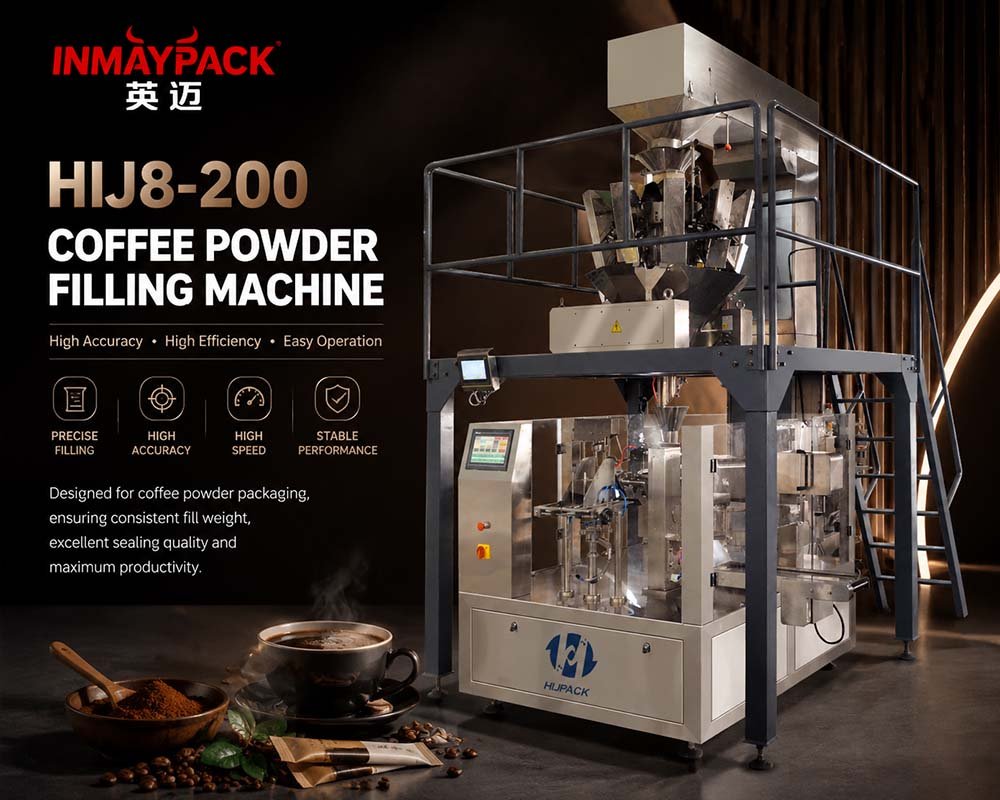
What is a powder pouch filling machine?
Bring measured powder into a supplied pouch.
A powder pouch filling machine receives finished empty bags, opens the selected pouch, introduces a measured powder dose, prepares the top sealing area, seals and discharges the package. An auger or another approved dosing device works with the pouch-handling equipment.
Start with the powder and the complete pouch drawing. The filling outlet must fit the opening, the bag must hold the intended dose, and the closing area must remain suitable for the agreed seal checks.
This page focuses on supplied premade bags. Compare powder filling systems for other package routes, or roll-film doypack machines when the pouch is formed on the machine.
From product behavior to a working system
Different powders. A product-matched filling route.
The same bag shape can contain powders with very different filling behavior. Approve each recipe rather than relying on a general material list.
01 · Retail food powders
Seasoning, milk and drink mixes
Review flow, dust, compaction and changes between recipes. Supply actual powder and the retail pouch for the fill and seal assessment.
02 · Nutrition products
Protein and supplement blends
Include all formulas, portions, product-separation requirements and cleaning tasks. Compare the pouch route with your separate portion-pack requirements.
03 · Coffee and other applications
Select by material behavior
Define ground or instant coffee, tea powder, cosmetic powder or another proposed material. Product-contact, cleaning and dust requirements need their own review.
Working with fine or dusty powder? Use the fine powder filling guide to review flow, refill and dust handling alongside the premade-pouch requirements.
Several recipes in the same pouch family?
Send the complete SKU list so dosing parts, cleaning and changeover can be assessed together.
Powder pouch machine selection
Rotary production or a compact packing cell.
Select the pouch handler and powder filler together. The two machine routes have different bag windows, operating arrangements and source speed references.
HIJ8-200 · Rotary reference
Coordinate several pouch-handling stations.
The supplied powder project combines a rotary premade-pouch machine with a separate powder filling system. Review pouch feeding, opening, filling, bottom settling, powder removal, top preparation and sealing as an integrated sequence.
- W80–200 × L100–400 mm pouch reference
- 20–60 pouches/min machine reference
- 100–1,000 g powder-system project reference
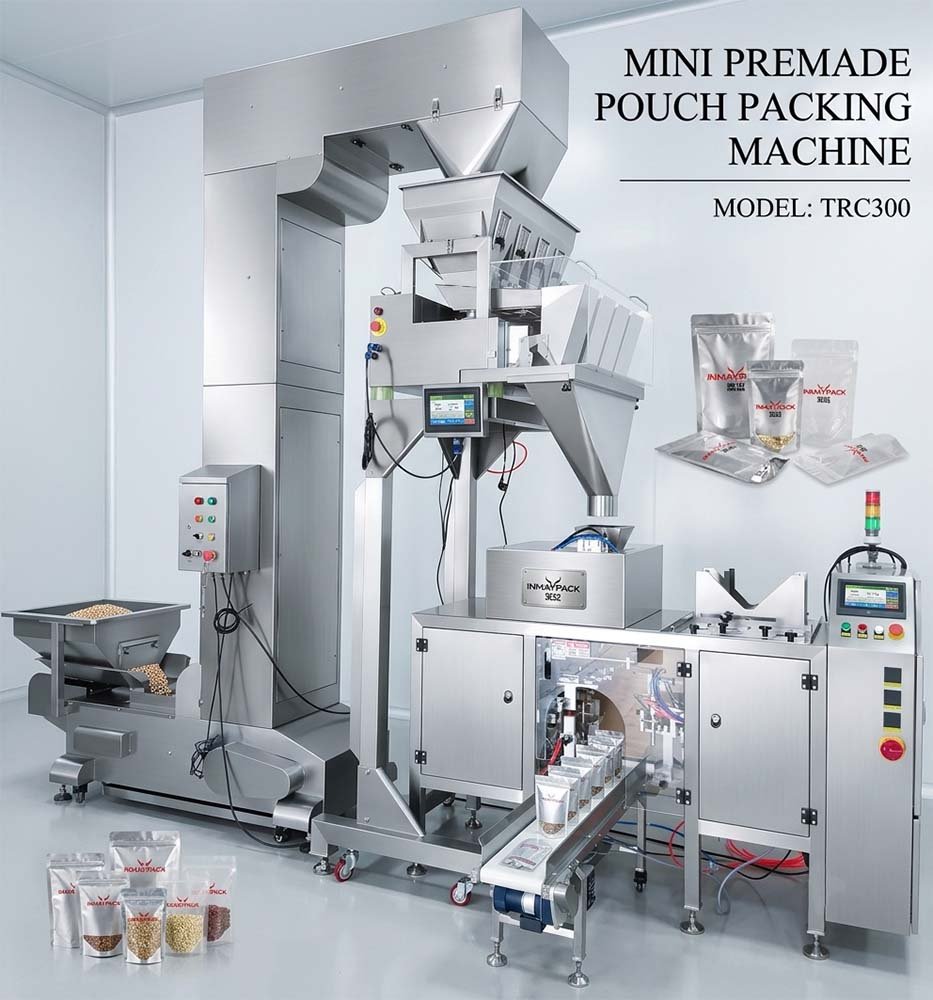
TRC-300 / TRC-430 · Compact route
Assess a compact pouch-handling cell.
The TRC document includes powder applications and an optional auger feeder. Choose between the two length windows, then define the selected filler, product feed, zipper handling and complete operating layout.
- 6–15 bags/min machine reference
- TRC-300: W90–300 × L100–300 mm
- TRC-430: W100–300 × L100–430 mm
The TRC photograph shows a machine-family configuration with accessories, not an approved powder-auger installation. Machine photos do not establish every supplied module.
Source-based model references
Compare the pouch handler and powder system separately.
HIJ8-200 values follow the supplied powder project. TRC values follow the compact premade-bag document.
| Selection item | HIJ8-200 | TRC-300 | TRC-430 |
|---|---|---|---|
| Pouch supply | Finished premade pouches | Finished premade pouches | Finished premade pouches |
| Width × length reference | 80–200 × 100–400 mm | 90–300 × 100–300 mm | 100–300 × 100–430 mm |
| Machine speed reference | 20–60 pouches/min | 6–15 bags/min | 6–15 bags/min |
| Powder filling scope | 100–1,000 g powder system in supplied project; approve each recipe | Optional auger feeder; dose confirmed with selected filler | Optional auger feeder; dose confirmed with selected filler |
| Dimensions L × W × H | 1890 × 1830 × 1430 mm | 1750 × 510 × 1300 mm | 1750 × 510 × 1650 mm |
| Air reference | ≥0.6 m³/min; pressure to be confirmed | 0.5 m³/min at 0.65 MPa | 0.5 m³/min at 0.65 MPa |
| Machine electrical / weight | 3.3 kW / 1400 kg machine reference | Confirm complete build and selected modules | Confirm complete build and selected modules |
HIJ8-200 lists a general 10–2,500 g filling reference, dependent on product. The supplied powder-system project is 100–1,000 g; these are different scopes. A separate auger table lists 40–120 filling actions/min, which is not the finished-pouch output. Do not combine maximum bag size, dose and speed into one guaranteed operating point. Add feeder, hopper, platform, conveyor and service space to the main-machine dimensions. Swipe inside the table on a phone.
Powder pouch filling and sealing
Stand-up and zipper bags. Define every handling feature.
The sealant layer, laminate thickness and finished construction belong in the pouch brief. Test real production bags, not just a nominal width and length.
01 · Stand-up retail pouch
Approve the bottom and usable cavity
Send the finished width, height, gusset, top opening and seal bands. Check that the intended dose fits below the closing area after filling and the selected settling process.
02 · Zipper retail pouch
Coordinate opening and the final top seal
Identify zipper position, opening force, fill access and the top-seal band. Include zipper opening and closing functions in the proposal rather than assuming them from the bag name.
Concept drawings explain pouch features; they are not approved customer packs or tooling dimensions. Flat and three-side-sealed premade pouches need their own sample review. Spouted liquid packaging is a separate application.
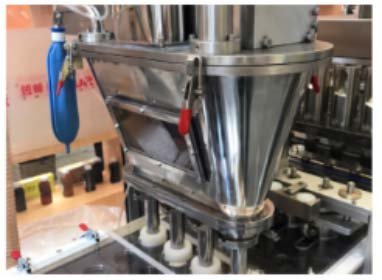
Auger dosing for the actual recipe
Stable product supply. A tested powder portion.
The supplied HIJ8-200 project includes an auger conveyor and auger filler for 100–1,000 g powder doses. Assess screw selection, hopper arrangement and delivery into the bag using representative material.
- Describe bulk density, flow, dust and storage condition
- Include every dose and permitted weight variation
- Check startup, normal filling, refill and restart
- Define the weight-check method and sampling plan
The project document also lists weighing equipment for granules. That does not make a multihead weigher and a powder auger interchangeable. Compare auger filling systems when defining the selected dosing module.
Dust handling and seal preparation
Review the powder path all the way to the closure.
Coordinate the filling outlet, selected settling, powder removal and top preparation with the pouch material and accepted output.
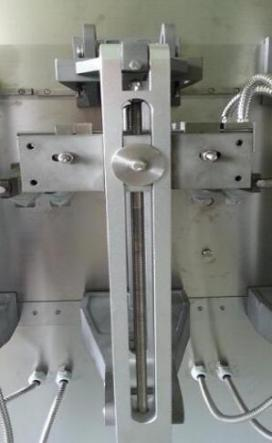
Pouch handling detail
Keep the opening ready for the fill.
Match the bag magazine, gripping, opening and filling outlet to the actual pouch. Inspect opening failures, fill delivery and the top alignment before approving the run.
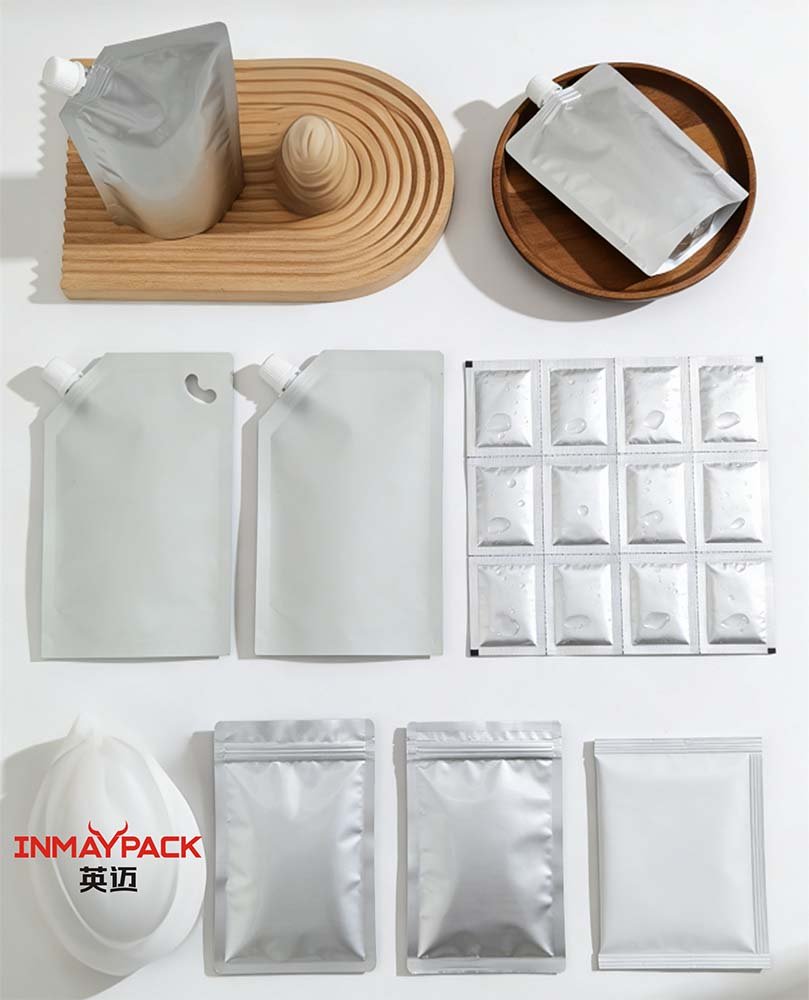
Finished-package samples
Reserve a clear sealing band.
Check the available opening and usable cavity, zipper position, headspace and intended filled appearance. Powder residue in the closing area belongs in the agreed inspection plan.
The supplied rotary project names a powder duster and lists a vacuum cleaner as optional. Confirm the selected dust-removal function, extraction connections and disposal arrangements. Air exhaust is not proof of vacuum-packed product or validated oxygen reduction.
How powder pouch filling works
Coordinate the complete cycle. Count the accepted pouch.
The HIJ8-200 project describes eight working stations. The compact route has its own arrangement; confirm the actual sequence and supplied functions in the layout.
Present and open
Feed production pouches, open the top and required bottom features, and confirm the ready-to-fill state.
Meter and deliver
Supply the powder to the selected filler and transfer the measured portion into the available pouch opening.
Prepare and seal
Apply the specified settling and powder-control steps, align the top and seal under the agreed material conditions.
Discharge and inspect
Release the finished pouch, carry out selected weight and package checks, and manage rejects and collection.
No-pouch and failed-opening responses appear in the TRC document. Ask for demonstration of the selected machine’s detection and response during the trial. Inspection devices and rejection systems require an itemized equipment scope.
Premade powder pouches vs roll-film pouches
Choose the package supply route before comparing equipment.
Both routes need a product-matched filler and a finished-package trial. Buying premade bags and forming from roll film are different production arrangements.
| Review point | Premade-pouch filling | Roll-film HFFS |
|---|---|---|
| Packaging supply | Finished empty pouches are loaded | Pouches are formed from a specified film web |
| Format review | Magazine, opening, zipper and pouch geometry | Web, forming tools, seals and selected pouch features |
| Powder filling | Filler and outlet coordinated with the supplied opening | Filler coordinated with the forming and filling process |
| Changeover brief | Each purchased pouch SKU, recipe and selected parts | Each film, tool, dose and recipe change |
| Trial basis | Production pouches, actual powder and finished-pack criteria | Production film, actual powder and finished-pack criteria |
Compare horizontal form fill seal machines or roll-film zipper pouch packing if your project requires bags formed on the machine. Complete cost depends on the actual equipment, packaging supply and production schedule.
Production beyond the first bag
Include the next recipe and the complete packing cell.
Powder recipes
Plan emptying and cleaning
Define product separation, contact-part access, cleaning method, inspection and reassembly between recipes. Request the selected auger and hopper change parts.
Pouch and dose changes
Identify the adjustments
List every bag, zipper position and fill weight. Confirm magazine, grips, opening settings, filling tools and sealing adjustments needed for the approved range.
Line interfaces
Include the work around packing
Define refill, dust extraction, coding, weight checks, rejection and collection. State which modules are supplied and which utility or control connections are buyer-provided.
Product and pouch acceptance trial
Verify the filled pouch. Then agree production output.
Approve the run duration, sampling, permitted variation, seal-check method and supplied modules before the test.
Use production materials
Representative powder, actual pouches, all doses and intended storage or refill conditions.
Run the agreed configuration
Record normal operation, opening failures, refill, stops, restarts and scheduled SKU changes.
Inspect released packages
Measure portions, check seal areas, zipper and appearance, and record rejects by reason.
Agree the handover basis
Document accepted output, run duration, settings, change parts and selected training scope.
Powder pouch filling machine price
Request a matched quote for the complete working scope.
Compare proposals using the same powder, pouch samples, doses, output, changeovers and acceptance brief.
01 · Packing equipment
Pouch handler and tooling
Define the selected model, bag formats, zipper functions, coding, sealing tools, guarding and change parts.
02 · Powder system
Feed, filler and dust scope
Itemize the auger, hopper, supply equipment, selected dust removal and powder-contact parts for the approved recipes and portions.
03 · Connected production
Inspection and project delivery
Name conveying, weight checks, rejection, collection, layout, factory trial, installation and operator training in the current proposal.
Price the pouch handler and powder modules together.
Ask for core equipment, selected options and change parts as separate items.
Historical quotations are not current offers. Use turnkey project planning when the scope includes upstream supply or secondary packaging.
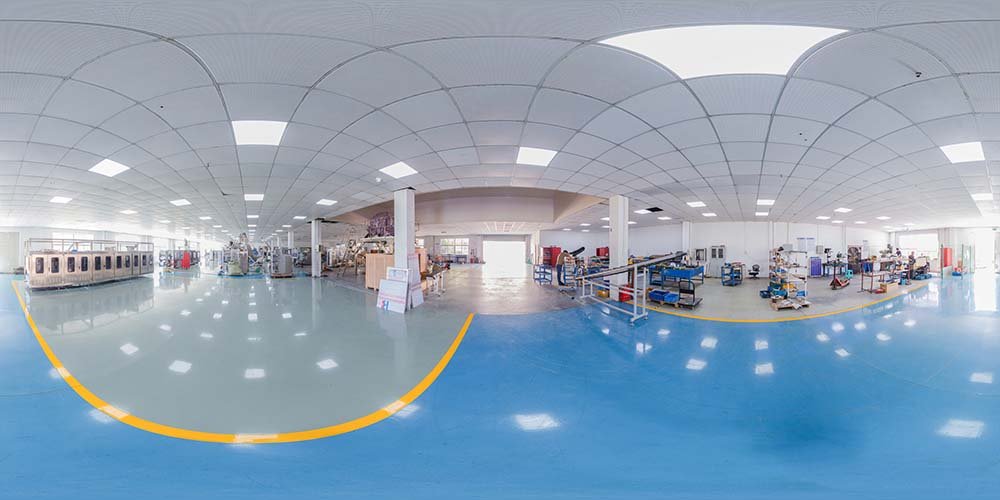
Work with INMAYPACK
Bring the powder, pouch and production plan together.
Start with the finished package your customer will receive. INMAYPACK can review the powder-handling equipment, premade-pouch platform and selected line modules for your application.
Send the launch recipes and future formats together. A clearer proposal identifies the approved range, operator tasks, cleaning access and evidence needed for the finished-pack trial.
Buyer questions
Powder pouch filling machine FAQ.
What is a powder pouch filling machine?
It combines powder metering with premade-pouch presentation, opening, filling, top preparation, sealing and discharge. The selected filler, bag handler and powder-control functions must suit the actual product and finished pouch.
Can the system fill premade zipper bags?
The HIJ8-200 project includes zipper opening, and the TRC document lists zipper bags and a zip opener reference. Confirm zipper position, opening and closing functions, top-seal geometry and the actual samples for the selected build.
Which machine routes should I compare?
Compare HIJ8-200 rotary pouch handling with TRC-300 and TRC-430 compact handling. Review their separate pouch windows, source speed ranges, filler, operating arrangement and product trial. A main-machine figure is not a complete-cell specification.
What powder fill weights are documented?
The supplied HIJ8-200 powder system is specified for 100–1,000 g. Its main machine lists a wider general 10–2,500 g reference, dependent on product. TRC dose limits are determined with the selected filler; do not transfer one project’s auger range to every model.
Does 120 auger fills per minute mean 120 finished pouches?
No. The separate auger table lists 40–120 filling actions/min, while the HIJ8-200 main-machine reference is 20–60 pouches/min. Accepted output depends on the integrated filling, pouch handling, top preparation, sealing and inspection cycle.
What needs extra attention when filling very fine powder into pouches?
Review powder aeration, settling, bridging, dribble and dust around the filling point. Trial the supply and auger settings through refill and restart, then inspect fill weight, headspace and the pouch sealing area. The product sample and finished pouch determine the selected configuration.
How should powder around the pouch seal be handled?
Assess the fill outlet, usable cavity, settling, powder removal, top alignment and selected extraction with actual materials. The rotary project includes a powder duster and lists a vacuum cleaner as optional. Agree the supplied function and package checks.
Does air exhaust mean vacuum powder packaging?
No. Air exhaust in the project sequence does not establish a vacuum-packed product or an oxygen specification. Define any atmosphere requirement separately and request the selected equipment and a measured acceptance test.
What should I send for a powder pouch filling machine quote?
Start with your powder, target fill weight, pouch type and required finished-pouch output. Include the destination and any photos or drawings you have. Recipe changes, cleaning, dust handling, inspection, utilities and sample-trial details can be refined during the equipment review.
Continue your equipment review
Related machines and powder applications.
Start your powder pouch project
Send the powder and bag.
Get a matched filling and sealing proposal.
Tell us your powder, fill weight, pouch type and required output. Include your destination and any photos or drawings available; detailed cleaning, dust and inspection requirements can follow.