04 / Production process
Connect film, filling and sealing to one production scope
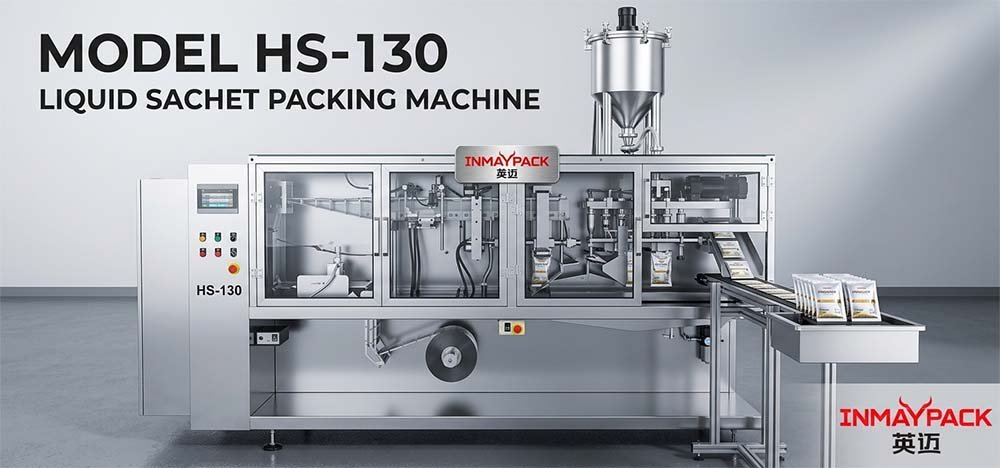
The HS-130 reference uses horizontal form-fill-seal operation with intermittent pouch transport and one filling station. Specify the actual station sequence, filler and discharge arrangement on the project layout. Mechanical cycles, packs discharged and accepted finished sachets are different measures.
Prepare the roll film
Review reel access, web tracking, print registration and the forming arrangement for the approved sachet. Agree splice, reel-change and startup handling so printed repeats and cut positions remain under control.
Form the flat sachet
Coordinate the fold or web arrangement with the required perimeter seals. Confirm seal width, tooling clearance and product opening. Retain an approved drawing and sample so operators have one defined format reference.
Meter and fill
Match the dose and product feed to the available filling window. Observe refill, settling, drips, foam or dust as applicable. Confirm that product remains clear of the area needed for the final seal.
Complete sealing and cutting
Set the operating conditions using the real film and product. Review seal appearance, contamination, print registration, tear feature and separation. Record the approved settings and the checks used to accept the finished pack.
Discharge and inspect
Define how sachets leave the machine and where coding, weight inspection, reject handling or pack collection occur. Confirm presentation and handoff to any downstream conveyor or secondary-packaging operation.
Recover and change format
Review starts, stops, fault recovery and material refills. Define the tools, format parts, cleaning steps and operator tasks for each included SKU. Agree what is demonstrated at FAT and what remains for site acceptance.
Define the required tools and operator sequence using the pouch machine changeover guide. Retain the approved settings and first-acceptable-pack checks for each included format.
Define the line boundary before equipment is ordered
Identify who supplies the product tank, transfer equipment, filler, coding, inspection, conveyors and secondary packing. State the control handoffs, reject responsibilities and response to upstream starvation or downstream blocking. The HS-130 proposal lists a tank, simple outlet conveyor, hot-ribbon printer and tear-notch system in its quotation example; inclusion must be confirmed in the current bill of equipment.
Specify destination, voltage, frequency, phase, compressed-air conditions, installation space and service access. Keep the machine footprint separate from the complete operating envelope needed for reels, cleaning and maintenance. Supply site constraints before the layout is frozen. Discuss turnkey packaging integration when the project includes connected equipment beyond the sachet machine.
Choose a different architecture when the requirement changes
If accepted-output targets lead to multiple simultaneous sachets, compare the duplex flat-bag route or multi-lane sachet route on their own web, filler and acceptance basis. For a narrow stick with a back seal, review the stick pack machine. These are separate configuration decisions, not automatic options on every HS-130 quotation.