Packaging systems configured around your application Defined project scope

Share your requirements • sales@ewpackmachinery.com

Combination weighing · pouch-line integration

Multihead Weigher Packing Machine for Pouches

Configure one accepted system for product feeding, combination weighing, discharge timing, pouch filling, sealing and downstream inspection—using the real product and finished pack as the test basis.

Snacks & granulesCandy & gummiesFrozen piecesHFFS or premade pouches
Compare Pouch Routes
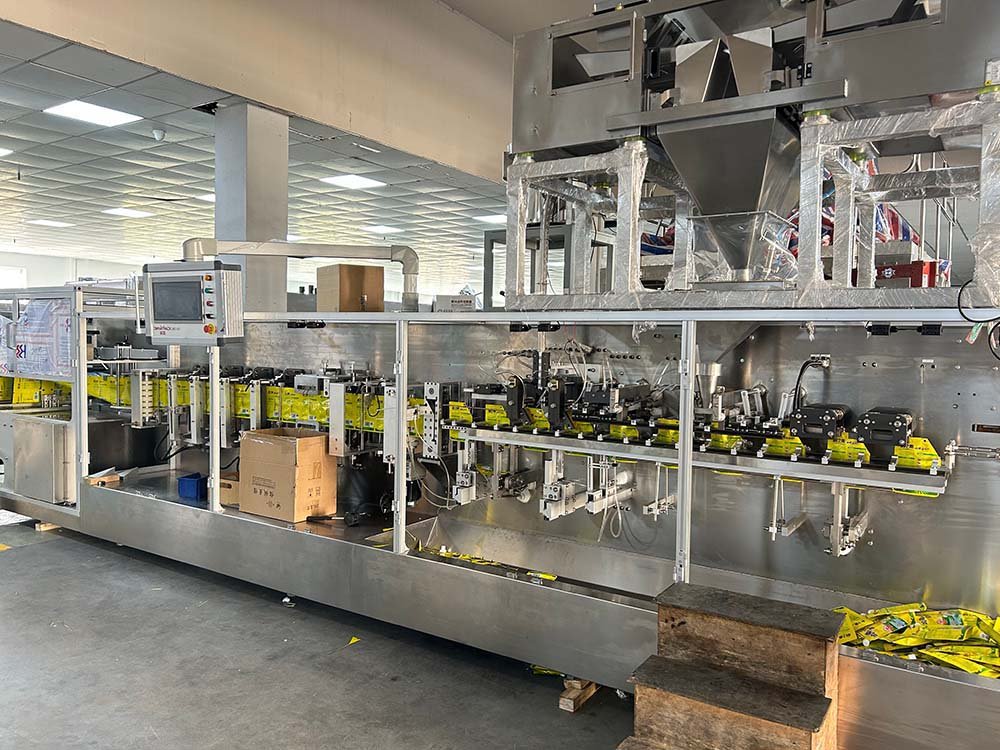
INMAYPACK pouch packing line integrated with a multihead weigher

Quick answer

The weigher is one timed part of the packing line

A multihead weigher packing machine combines portion weighing with the package-making or pouch-handling system.

The useful purchase is not a fast scale beside an unrelated bagger. Product distribution, hopper choice, discharge timing, bag opening, filling, sealing and inspection must be tested as one line.

Scope boundary

This page covers combination-weigher integration for discrete solid and granular products going into flexible pouches. It does not represent a universal filler for powders, liquids, pastes, bottles, trays or bulk sacks. Those applications require a different metering and packaging review.

One controlled chain

Define every handoff before fixing output

A stable combination weight is useful only when the product reaches the weigher consistently and the downstream machine accepts every discharge without contaminating or missing the pouch.

1Product supplyBulk condition, refill method, piece size, oil, frost, stickiness and breakage.
2ElevationFeed conveyor or bucket elevator sized for the product and refill demand.
3DistributionTop cone and radial feeding that keep weigh hoppers supplied without damage.
4CombinationTarget weight, hopper selection, tolerance logic and product giveaway.
5DischargeChute, timing and product path matched to the pouch opening and cycle.
6Pack acceptanceSeal quality, net-weight checks, rejects, counts and recorded FAT evidence.

Documented INMAYPACK reference

Use project data as a starting point—not a universal promise

14-head, 1.6 L combination-weigher reference

The values below come from a reviewed HMK420 pouch-line proposal. A new project must reconfirm the product, target weight, weigher, platform, elevator, pouch machine and acceptance method.

Source-backed example
Head / hopper reference14 heads · 1.6 L
Source weighing range30–1,000 g
Theoretical weigh speed120 weighments/min
Theoretical accuracy0.5–1.0 g

Important: the source itself states that actual speed varies by product and actual accuracy varies with product characteristics and target weight. Weigher values do not equal accepted finished-pouch output or finished-pack accuracy.

Product fit

Start with behavior, not the product name

Send samples from the hardest expected condition. A dry, free-flowing sample can hide problems that appear with oil, seasoning, frost, fines, static, broken pieces or an unstable refill process.

When a simpler weighing route is also being quoted, use the multihead weigher vs linear weigher guide to compare product flow, target weight, giveaway, output and FAT evidence on the same basis.

Free-flowing pieces

Candy, nuts, beans, cereal pieces and many dry snacks may suit combination weighing when piece size, fragility and target dose are compatible with the selected hoppers and feed system. For kibble, review the complete dry dog food packaging route, including feed, discharge, pouch opening, breakage and final-pack acceptance.

Sticky or coated products

Gummies, seasoned snacks and oil-coated products can bridge or cling. Confirm contact surfaces, feeder motion, hopper discharge, cleaning access and recovery after short stops.

Frozen and moist pieces

Frost, free water, clumping and temperature change can alter feeding and weighing. Review washdown, drainage, dwell time and the condition used during the acceptance test.

Fragile products

Chips and brittle pieces need controlled drop heights, gentle distribution and a defect definition that records breakage as well as net weight.

Mixed products

A blend is not automatically stable. Define component ratios, segregation limits, presentation to the weigher and how the finished mix will be sampled.

Use another filler when

Fine powder, liquid, paste or a product that cannot discharge repeatably may need an auger, cup, piston or rotor-pump route instead of a standard combination weigher.

Packaging route

Match the discharge to the package architecture

The same weigher can require different chutes, timing, access and line controls when the downstream machine changes. Quote the complete route, not a disconnected list of components.

HFFS Doypack line

Roll film is formed into a stand-up pouch. Coordinate discharge timing with pouch formation, opening, fill access and seal-area control.

Review HFFS systems

Premade pouch line

Finished pouches are picked, opened and presented before filling. Confirm pouch stiffness, opening success, zip handling and product drop.

Review premade pouch systems

Application-specific line

Frozen food, gummies and fragile snacks need different product-contact, transfer and acceptance rules even when the basic weighing principle is similar.

Compare food applications

Selection variables

Choose the weigher around the real operating window

DecisionWhat to provideWhy it changes the configuration
Product conditionPhotos, samples, temperature, moisture, oil or seasoning, fragility, fines and worst-case batch.Changes feeding, contact finish, hopper behavior, cleaning and achievable cycle.
Target weightNominal weight, legal tolerance, giveaway target and sampling rule.Changes hopper size, combination availability and accepted accuracy.
PackagePouch drawing, material, opening dimensions, zipper, filled shape and physical samples.Controls chute access, discharge timing, contamination risk and sealing recovery.
OutputGood packs per minute or hour, operating period, refill method and allowable rejects.Determines the slowest required station and buffer strategy.
CleaningAllergen change, washdown method, chemicals, inspection points and allowed downtime.Changes surfaces, access, removable parts, drainage and changeover scope.
IntegrationUpstream delivery, downstream equipment, coding, inspection, reject and line signals.Defines interfaces, permissives, faults, restart logic and FAT evidence.

Accepted output

Compare good finished packs—not isolated weighments

The line result is limited by its slowest proven handoff. Product refill, hopper recovery, missed pouches, seal contamination, rejects and planned checks belong in the same test record.

Accepted good packs/hour= the slowest proven rate across product feed, weighing, discharge, pouch handling, filling, sealing and inspection × the agreed acceptance rate

Record during the trial

  • Product batch and operating condition
  • Target weight and actual sampled results
  • Refill events and hopper starvation
  • Product damage, fines and rejected packs
  • Missed or incompletely opened pouches
  • Seal contamination and seal defects
  • Planned stops, faults and restart losses
  • Test duration and accepted-good output

Controls and interfaces

Make the weigher and pouch machine behave as one system

A complete line needs more than a shared start button. Agree the conditions that allow each station to run, the signals that stop or starve it, and the sequence used to recover without releasing an incomplete or unverified pack.

Run permissives

Define ready, run, hold and stop states between elevator, weigher, pouch machine, coder, inspection and downstream equipment. A missing pouch or unavailable downstream station should have one agreed response.

Recipe ownership

State which settings belong to the product recipe, who may change them and how the selected pouch program stays aligned with target weight, discharge timing and inspection limits.

Fault recovery

Test hopper starvation, product bridging, missed discharge, incomplete pouch opening, seal fault and downstream stop. Record whether product or pouches must be cleared before restart.

Counting and reports

Separate weigh cycles, pouch cycles, good packs and rejects. Confirm which counter controls production reporting and how a rejected or missing pouch affects the total.

Inspection interface

Define the checkweigher, metal detector or other inspection boundary, including reject confirmation, reject-bin status and the action when the inspection device is unavailable.

Future downstream scope

If cartoning, case packing or collection will be added, reserve the physical handoff, signal list, accumulation rule and accepted discharge condition before freezing the line layout.

Cleaning and changeover

Define what must be cleaned, removed and verified

Product-contact design and cleaning access should follow the actual food, allergen, coating and operating environment. A short nominal changeover time is not useful unless the approved cleaning work and restart checks are included.

Changeover evidence

  • Parts removed and tools required
  • Hopper, feeder and chute access
  • Dry clean, wipe-down or wash method
  • Allergen or recipe-change verification
  • Drainage and drying where water is used
  • Recipe, target and pouch setup checks
  • First-off weight and seal approval
  • Time measured from last good pack to next good pack

Quotation inputs

Send the information that changes the line

01 · Product

Real samples

Piece dimensions, bulk density, surface condition, temperature, fragility, recipe extremes and refill method.

02 · Weight

Acceptance rule

Nominal dose, permitted deviation, giveaway objective, sample frequency and reject logic.

03 · Pouch

Controlled format

Drawing, material, size range, zipper, opening, target fill level, artwork and physical samples.

04 · Output

Good-pack target

Required output, shift pattern, test duration, allowable stops, rejects and downstream condition.

05 · Hygiene

Cleaning boundary

Food-contact requirements, allergen plan, washdown method, access and changeover interval.

06 · Utilities

Site conditions

Voltage, frequency, compressed air, room height, floor loading, access and environmental limits.

07 · Controls

Line interfaces

Signals, recipes, permissives, faults, coding, inspection, reject confirmation and data needs.

08 · Evidence

FAT deliverables

Samples, video, records, checks, open-item closure, manuals and training requirements.

Factory acceptance

Approve the integrated system with one written test basis

Before the run

Freeze the product, target weight, pouches, recipe, equipment boundary, staffing, refill method, test duration and defect definitions.

During the run

Record weigh performance and finished-pack performance separately. Include stops, refills, damage, rejects, seal checks and restart behavior.

Before shipment

Close deviations, confirm the issued configuration and collect approved records, videos, drawings, manuals, spare-parts scope and handover actions.

Frequently asked questions

Questions buyers should close before ordering

What products can a multihead weigher pack?

Combination weighers are commonly evaluated for discrete solids and granules such as snacks, candy, gummies, nuts, beans, cereal pieces, pet-food kibble and some frozen pieces. Suitability still depends on real product flow, stickiness, fragility, temperature, piece size, target weight and cleaning requirements.

Does a 120 weighments/min reference mean 120 finished pouches/min?

No. The documented 120 value is theoretical weigher speed for one reviewed 14-head reference. Accepted pouch output is limited by product supply, weighing, discharge, pouch handling, filling, sealing, inspection, stops and the agreed acceptance rate.

Should I use an HFFS or premade-pouch machine?

Use the finished package and operating priorities to decide. HFFS forms the pouch from roll film; a premade-pouch machine handles supplied finished pouches. Compare film or pouch cost, format, zipper and opening requirements, changeover, output and accepted finished-pack evidence.

Can one weigher handle sticky and fragile products?

Possibly, but not by assumption. Hopper surfaces, feeder motion, drop height, discharge path and cleaning may need different configuration. Test the hardest product condition and define acceptable damage before confirming the model.

Is a checkweigher the same as a multihead weigher?

No. A multihead combination weigher portions product before it enters the package. A checkweigher inspects a finished or filled pack against an acceptance rule. Their results and responsibilities should be recorded separately.

What should I send for a useful quotation?

Send product samples and condition, target weight and tolerance, pouch drawings and samples, required good-pack output, refill method, cleaning plan, utilities, line interfaces and the FAT evidence you expect before shipment.

Project inquiry

Let the real product select the weighing and pouch line

Send INMAYPACK the product, target weight, pouch, good-pack output, cleaning boundary and FAT basis. We will review the weigher, feed system, discharge path and pouch machine as one configured project.

Contact INMAYPACK
  • Product photos and physical samples
  • Target weight and tolerance
  • Pouch drawing and samples
  • Required good packs/hour
  • Cleaning and allergen plan
  • Utilities and room limits
  • Upstream/downstream interfaces
  • FAT test and evidence requirements

Tell Us About Your Packaging Project

Send your product and package details. INMAYPACK will review the application before recommending a machine configuration.

✓ Application reviewed before recommendation

✓ Project details stay private

✓ Configuration-specific technical reply