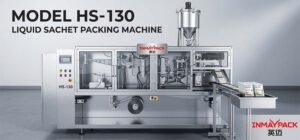
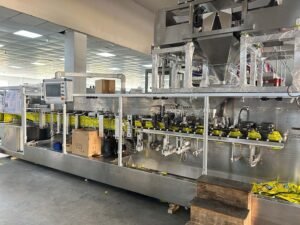
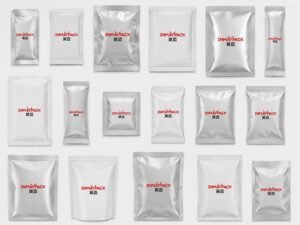
For a small powder batch, choose the packing route first—not the smallest machine. Match your bags, available operators and recipe changes, then compare how long each setup takes to deliver the complete order of accepted, sealed packs.
This guide covers short runs in sachets, sticks and premade pouches. For the equipment families, start with the powder filling systems overview. For a practical shortlist, use your current packing situation below.
Your starting point
- 01Already have a sealer?
- Compare adding a dosing station with a complete packing system. Include the person presenting, moving and sealing every pack—not just the filling cycle.
- 02Buying finished pouches?
- Review a compact premade-pouch platform with a matched powder filler. Test your pouch opening, fill and seal together.
- 03Making packs from film?
- Review a sachet or stick-pack route. Count film setup and recipe changes against the actual short order, rather than choosing by portion size alone.
Separate a small dose from a small production batch
A small portion is a dosing requirement. A small order is a scheduling requirement. A narrow factory space is a layout requirement. A limited purchase budget is a commercial constraint. They can occur together, but none tells the supplier enough to select a machine on its own.
A small-dose product may need sustained high output, while a larger retail pouch may be packed in short runs with frequent recipe changes. Avoid describing both as “a small powder machine.” State the constraint that would make an otherwise workable offer unacceptable.
- Product and dose: each recipe, target fill weight, relevant powder condition and agreed weight-check method.
- Order pattern: accepted packs per recipe, typical run frequency, peak orders and required completion window.
- Package: a supplied pouch or roll-film pack, with drawings, closure details and actual materials.
- Resources: available operators, refill method, cleaning arrangements and the complete working space.
- Growth: confirmed future requirements separated from possibilities that do not yet justify equipment.
Build a row for each product-and-package combination. Do not average different recipes into one daily volume: that can hide the changeovers that determine whether a short-run schedule is practical. Keep trial-supported figures separate from estimates and leave unknowns visible.
Choose the package route before choosing the machine size
A dosing unit meters powder into a package; a complete packing system must also handle the package and deliver a sealed pack. Compare offers at the same boundary. The right level of automation depends on the work you can already do reliably and the tasks that constrain your order.
On a phone, scroll the table sideways to compare the routes. Confirm the available configuration with the supplier.
| Route to compare | Work that must be accounted for | Decision before ordering |
|---|---|---|
| Dosing station with separately handled packs | Package presentation, filling, transfer to sealing, checks and collection, with named operator duties. | Can the actual staffing and existing sealing equipment complete the order? Confirm supply availability separately. |
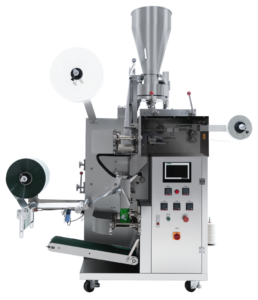
| Compact premade-pouch system | Loading finished bags, opening them, coordinating the selected powder filler, sealing and discharge. | Do the pouch samples work reliably, and does the complete filler/feeder layout fit? |
| Roll-film sachet or stick system | Film setup, forming, dosing, sealing, cutting and material clearance between jobs. | Does the selected format justify its setup, tooling and film requirements at your batch size? |
| Higher-output packing system | Product supply, package supply, collection, inspection and any additional staffing around the faster packer. | Does it shorten the complete required schedule, rather than only the steady filling stage? |
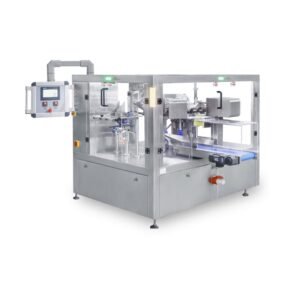
For supplied retail bags, compare the TRC compact premade-pouch platform with a product-matched filling arrangement. The pouch handler is not a powder dosing specification. Review the powder pouch filling route for the product path and closure requirements.
Choose roll film or supplied bags around package function, presentation, available materials and the production sequence. Once the route fits, check the selected model's specifications on its product page. A supplier offering a compact pouch system is not necessarily offering a standalone tabletop filler.
Calculate whether the whole batch fits the available window
Start the scheduling comparison when the packing equipment and crew become occupied by the job. Finish when the accepted pack count is complete and the agreed clean-down or next-job handover is finished. State those boundaries in every comparison; otherwise one supplier may time only the filling period while another includes setup.
Use a simple time record with separate entries for setup and first-off approval, the observed packing window, and the non-overlapping work needed to reach the agreed handover state. The packing window should already include the normal refill, minor-stop and inspection events that occurred during the trial.
- 01 / PREPARESetup → first accepted pack
Load the recipe and tooling, bring materials to the line and complete first-off approval.
- 02 / PACKFirst → last accepted pack
Include normal refills, checks and interruptions inside the observed packing window.
- 03 / HAND OVERFinish → ready for the next job
Record the remaining clean-down, material clearance and agreed handover work.
Accepted packs per occupied hour = accepted pack count ÷ total occupied hours. Add the non-overlapping time across these stages; count simultaneous tasks only once.
This is a planning calculation, not a machine rating. Keep a separate staffing record: two people working during the same hour consume two labor-hours, even though only one hour passes on the schedule. A faster packer can shorten elapsed time while still requiring more labor around replenishment and inspection.
For several recipes, place the jobs in the intended sequence. Include only the preparation and cleaning appropriate to each transition. Do not assume that the shortest change between similar recipes represents a difficult product change. Compare the total occupied schedule with the time actually available for packing, leaving unresolved timing assumptions marked as provisional.
If demand is uncertain, test the schedule using your own smaller and larger plausible orders. A preference that changes with a modest change in order size needs better operating evidence. Do not purchase extra automation solely on a sales forecast that has not been separated from confirmed orders.
Check the last powder in the system, not only the first good pack
A short batch can end while powder remains in the feeder, hopper, dosing tooling or transfer path. Ask what quantity is needed to start and maintain the proposed process, what happens as the level falls and how remaining material is removed. A large hopper is not automatically useful when the available trial batch is small.
Trace the material through the complete trial: powder issued, powder in accepted packs, powder in rejected packs, retained samples, recoverable remainder and recorded loss. Agree how each quantity is measured. Keep an unexplained balance difference visible rather than treating it as acceptable loss.
Recovery is a product-quality decision, not a machine feature. The buyer's approved procedure determines whether remaining powder can be returned, segregated, held or discarded. The equipment proposal should identify access and containment, but should not promise that every residue is reusable.
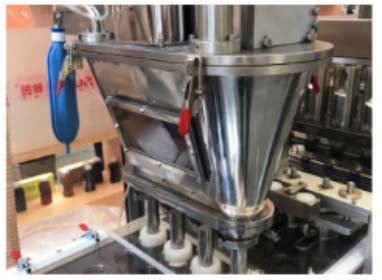
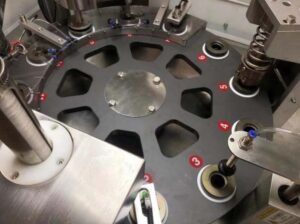
This existing INMAYPACK hopper detail illustrates the access question: where can powder remain, which parts come off, and how will the operator inspect them?
Reference equipment detail—not a cleaning-time or output test. Confirm the access arrangement on your selected configuration.Include removal, cleaning, drying where required, inspection, reassembly and first-off checks in the changeover record. Confirm which parts are handled, where they are taken and which tools or additional sets are required. A quick-release connection can simplify access without proving the full cleaning process is quick or effective.
For the general method, use the pouch-machine changeover guide. Here, the additional purchasing question is whether that verified changeover fits the small batch's material budget and completion window.
Map the operator's complete job and the occupied floor area
Ask the trial team to name the person responsible for every recurring task: bringing powder, refilling, loading pouches or film, checking weights, checking seals, collecting packs and managing rejected material. Observe which duties occur at the same time. An operator cannot continuously supervise two separated tasks just because each is described as occasional.
Draw the actual movement between these positions. Include safe access to the hopper and contact parts, storage for incoming materials, the sealer or inspection station where separate, rejected-pack containment and space for cleaned components. Do not use the main frame's width as the footprint of the working packing cell.
Record the proposed services and connections on the same layout: electricity, air where needed, powder supply and the assessed dust-control arrangement. A small machine does not remove the need for product-specific dust, hygiene and workplace-safety review. The appropriate technical team should confirm those requirements before the layout is accepted.
Procurement check: when one operator is the stated plan, ask for a representative trial using that staffing plan. Extra people assisting with refill, bag loading or collection must remain visible in the record; otherwise the demonstration cannot support the claimed labor arrangement.
Keep investment and running-cost comparison in the powder filling machine price and cost guide. Use the trial's elapsed time, labor-hours, material disposition and accepted count as inputs. Do not compare a bare dosing-unit quote with a complete pouch system or calculate savings from an untested peak speed.
Run one complete short job and the relevant next change
A continuous demonstration can establish useful filling behavior without answering the small-batch scheduling question. Agree a trial that represents the intended order, including startup, an ordinary replenishment event where applicable, the end of the batch and the relevant recipe or format transition. Where the sample quantity is insufficient, label the missing evidence explicitly.
| Trial stage | Record | Use in the purchase decision |
|---|---|---|
| Setup and first-off | Recipe, tooling, material lot, operator count, setup tasks, elapsed time and first accepted pack. | Establish the preparation burden for each real job. |
| Normal packing | Individual weight checks, seal checks, accepted count, rejects, refill events and interruptions. | Test the actual product/pack combination and packing window, not empty cycles. |
| End of batch | Low-level behavior, last accepted pack, remaining powder and its recorded disposition. | Check whether the required order can be completed with the available material. |
| Transition to the next job | Removal, cleaning, inspection, tooling changes, reassembly and new first-off approval. | Compare the relevant transition rather than assuming all changes take the same time. |
| Complete job review | Occupied hours, labor-hours, accepted packs, material balance and unresolved conditions. | Check the order deadline and staffing basis before choosing the configuration. |
Set weight, seal and cleanliness requirements with your product and quality team before testing. Keep settings, material details and staffing beside every result. The record above is a proposed comparison method; project acceptance limits come from your requirements.
Shortlist the setup when it meets the complete order window, package-quality requirements and agreed staffing, with the material balance and changeover recorded.
Resolve the constraint first when the job misses its window or needs unplanned help. Identify whether filling, sealing, replenishment or cleaning caused the shortfall before buying a faster machine.
Choose the least complex configuration that satisfies the documented workload. Keep future expansion separate: list modules that can be retained, additions required and the tests that must be repeated. That gives you a usable upgrade plan rather than an open-ended promise of scalability.
Questions before buying a small powder filling machine
Is a small machine the same as a low-dose powder filler?
No. Physical size, portion weight and order quantity are separate requirements. Confirm the tooling and powder behavior for the dose, then confirm the complete packing route and batch schedule. Neither a narrow frame nor a low minimum fill figure establishes the other capabilities.
Should a startup choose semi-automatic or automatic equipment?
Compare actual duties and staffing for the same accepted order. A semi-automatic route may be appropriate when package presentation and sealing can be handled reliably within the schedule. An automatic route may be appropriate when those tasks constrain the job. Availability and suitability of each proposed arrangement require confirmation; startup status alone is not a selection rule.
Can a compact premade-pouch machine use an auger?
The TRC equipment route allows review of a separately selected powder filling arrangement. Confirm the feeder, auger, dose, bag opening, cleaning access and controls together. The pouch-handling platform and its photograph do not establish the powder accuracy or accepted output of the configured system.
What should I ask about future expansion?
Ask which existing modules can be retained, what additional tooling or controls would be required and what must be re-tested. Put that scope in the proposal. Do not assume every compact unit can become a high-output line without replacing equipment or changing the layout.
Equipment terminology reference: All-Fill's automatic and semi-automatic auger filler range. This is an external classification reference, not an INMAYPACK product offer.
Find the route that fits your next powder batch
Start with your powder, fill weight, bag type and packs per order. Add your available operators and completion window if known. INMAYPACK can review the flexible-pack route and identify the samples and configuration details needed for a quotation.
You do not need a finished equipment specification to start. Package drawings, recipe sequence and details of existing equipment can follow during the review.