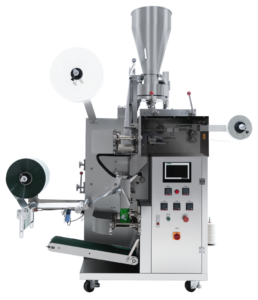
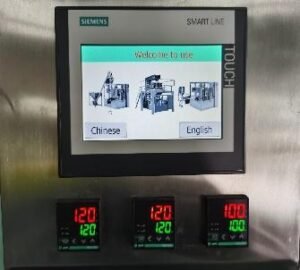
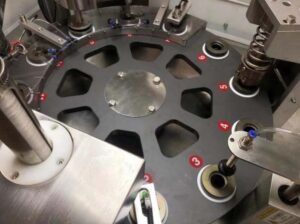
Choose a salt stick pack machine around the actual salt, target net weight and finished pack—not the lane count alone. The trial must show that each lane meters consistently, clears the sealing area and produces a portion that opens and pours as intended. Fine dry salt, coarse crystals and seasoning blends should not share an untested equipment assumption.
This guide is for food manufacturers and portion-pack suppliers comparing small salt sticks with flat salt sachets. It provides a proposed sample-review and acceptance framework, not a report of a completed INMAYPACK salt installation. Start with the stick pack machine range for the equipment family; use the checks below to define what a salt-specific proposal must demonstrate.
If your project is a retail salt bag rather than an individual portion, use the salt packaging machine for retail bags and pouches to review the bag route, dosing, moisture exposure and salt-contact material scope. The guide below remains focused on small sticks and flat sachets.
Define the salt before selecting the filler
“Salt” is not a complete material specification. Send a representative production sample and identify the grade, crystal-size distribution, fines, bulk density and current storage conditions. Include additives or blended ingredients, where applicable. A fine table salt and an irregular coarse crystal can behave differently through the same hopper outlet and filling tube.
State whether the sample was freshly opened, held in a production hopper or recovered from a humid storage area. Compare conditions that genuinely occur in your factory; do not condition samples to an arbitrary extreme and call that normal production. Record the packaging-room temperature and humidity during the trial so a later result can be compared on the same basis.
- Product: grade, supplier, batch, crystal range, fines and any blend composition.
- Portion: target net mass, agreed acceptance limits and every planned SKU.
- Package: drawing, opening method, print layout and finished-pack sample.
- Production: required accepted output, shifts, refill method, changeovers and downstream collection.
This guide excludes bulk sacks, salt blocks, liquids and medical oral-rehydration formulations. Those require different equipment or validation decisions. Do not use a food-salt review to imply pharmaceutical suitability.
Choose the package around use and filling access
A narrow stick suits a controlled pouring task, but the opening, dose and crystal size must work together. A flat sachet offers a different shape for meal kits or catering packs. Neither format is automatically the better machine purchase. Compare the actual filled samples: can the user tear them cleanly, release the salt and avoid trapping a substantial portion inside?
The pack drawing should identify seal widths, cut position, tear feature, printed area and usable product space. The outside dimensions alone do not establish filling-tube clearance or the volume available after sealing. Review the smallest portion and the most difficult crystal grade, not only the easiest sample.
INMAYPACK's supplied DXD family reference distinguishes DXD-750 stick-bag equipment from DXD-900 sachet equipment. This distinction is a starting point for a machine-family discussion, not evidence of salt-specific dosing, corrosion resistance or accepted output. Do not transfer a flat-sachet specification to a narrow stick because both use multiple lanes. The stick pack versus sachet comparison explains the broader format decision.
Compare the dosing result, not the filler label
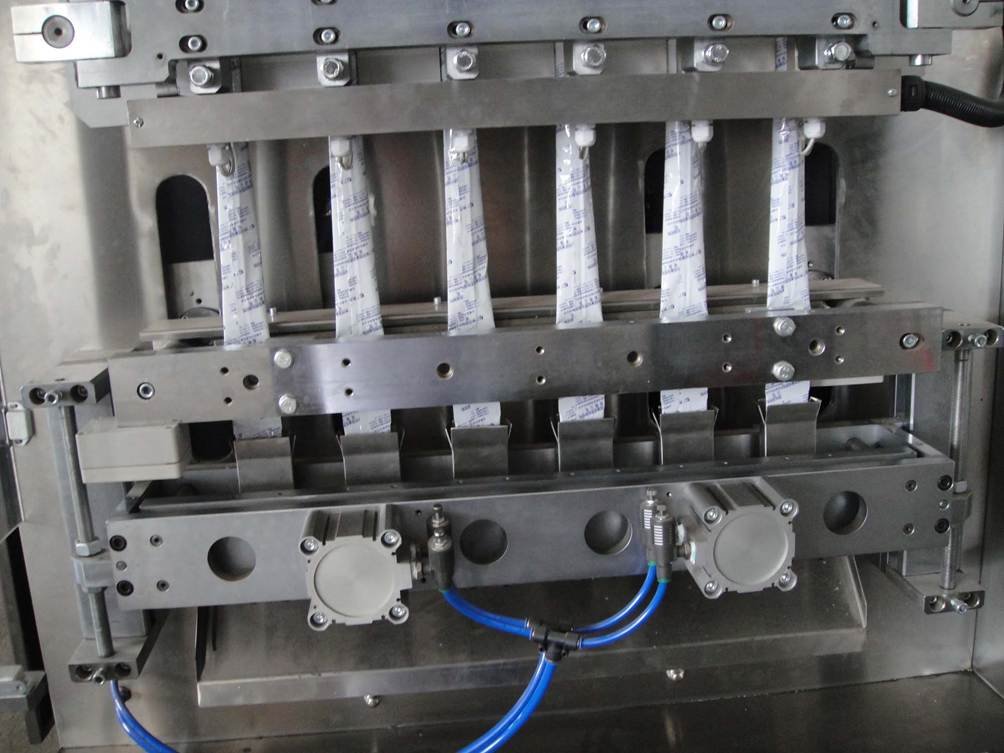
Ask the supplier to name the proposed metering principle and explain why it matches the sample. Free-flowing granular products may be reviewed with volumetric systems; blends or less predictable flow can require a different approach. A familiar filler name is not acceptance evidence. Universal Pack's seasoning equipment overview illustrates product-dependent dosing selection; its configurations are not specifications for INMAYPACK equipment.
For a volumetric proposal, changing the amount of product occupying the same metering volume can change the delivered mass. Compare actual net weights after refilling and as the hopper level falls. Ask whether adjustment is common to all lanes or individual, and how the operator detects and isolates a poor lane. Do not pool all lanes into one average: an acceptable overall mean can hide underfilled and overfilled streams.
Keep the sample identity intact
Label samples by lane, time and operating event before they are mixed in a collection bin. Use a suitable verified balance and a defined tare method. Keep the individual readings, sample count, mean and spread for each group. Agree the limits and sampling plan before the demonstration; this guide does not prescribe a universal gram tolerance or substitute for the buyer's applicable quantity-control requirements.
Separate empty cycling speed from filled output. Report conforming finished sticks over the agreed elapsed test period, while identifying startup waste, rejects, samples and stoppages separately. A demonstration with selected lanes disabled must say so.
Review moisture exposure and cleaning together
If the production salt cakes or bridges after exposure, the buying question is where that change occurs: storage, transfer, an open hopper, a dosing chamber or a pause in production. Record the actual sequence and inspect retained material after the run. Ask for a controlled feed and pause trial before treating vibration, agitation or a larger outlet as a complete remedy.
Map the product-contact and nearby deposit-prone surfaces. Include hopper seams, removable tooling, fasteners, guards and areas beneath the discharge. Identify material grades and finishes component by component. “Stainless steel machine” does not describe every surface or establish suitability for salt residues and the proposed cleaning chemicals.
Outokumpu's stainless steel corrosion-resistance explanation describes the importance of the alloy and exposure conditions, including chloride-containing environments. It is background for a qualified materials review, not an approval of a particular packaging machine. Require the supplier to assess the actual exposure and cleaning method; do not assume that a single stainless designation resolves every corrosion risk.
Procurement note: Separate cleaning access from cleaning validation. Ask which parts can be removed, which areas must remain dry, how residues are removed and how equipment is released after cleaning. Wet cleaning, washdown protection and clean-in-place are not interchangeable capabilities. They must be explicitly included and demonstrated where required.
Specify the film, seal area and opening check
Send the film specification and production roll sample with the salt, not after the machine is selected. Discuss the moisture-protection requirement with the packaging supplier using your intended storage and distribution conditions. A satisfactory machine trial alone does not prove shelf life, and this guide does not assign a universal barrier value or laminate structure.
During filling, look for grains or fines on the seal path, product trapped at the cut and damaged packs after separation. Retain both passing and failing samples with their lane and time labels. The agreed seal and leak methods should reflect the film and pack design; a clean-looking seal is not a substitute for the selected integrity test.
Check opening and pouring after the agreed storage or handling challenge. A pack that seals on the machine can still be inconvenient to tear, retain salt in corners or become damaged during collection. Record these as separate acceptance questions rather than increasing machine speed until the defects become difficult to inspect. Use the stick-pack film specification guide to prepare the roll and drawing information.
Agree a lane-by-event acceptance record
The following matrix is a proposed purchasing tool. Set the run duration, sampling frequency, permitted adjustments and acceptance criteria with the supplier before testing. Keep the same production salt and film identity throughout each comparison, and record any change instead of quietly restarting the evidence.
On a narrow screen, scroll the table horizontally. Keyboard users can focus the table area and use the arrow keys.
| Operating event | What to retain | Decision before acceptance |
|---|---|---|
| Stable operation | Individual net weights by lane; filled-pack and seal samples; recorded settings. | Each active lane meets the agreed dose and finished-pack criteria. |
| Hopper refill and falling level | Before/after samples, refill time, salt batch and any operator adjustment. | Define the permitted refill procedure and whether recovery material is rejected. |
| Normal stop and restart | Pause duration, restart sequence, first-pack identities and retained residue observations. | Identify release criteria and how unaccepted packs stay out of collected product. |
| Agreed product or dose change | Change parts, cleaning steps, settings, elapsed changeover and first accepted samples. | Confirm the included SKU range and operator responsibilities. |
| Collection and handling | Accepted/rejected/sample counts, damaged packs and opening/pouring results. | Reconcile saleable output with the condition of the finished portions. |
Run ID · salt batch and condition · film batch · lane ID · target dose · tare method · sample time · individual net weights · seal/appearance result · disposition · settings or intervention.
Keep dose failures, sealing failures and handling damage distinguishable. The same pack may fail more than one check; do not add defect totals together and mistake them for a unique rejected-pack count.
Make the final report useful for handover: include the approved recipe, permitted operating conditions, training scope, spare and change-part list, cleaning instructions and unresolved exclusions. A short video can show the sequence, but it cannot replace identifiable weight records or prove a long-run rate by itself.
Questions before ordering a salt stick pack machine
Can one machine pack both fine salt and coarse sea salt?
Only within an explicitly reviewed product and format range. Compare crystal size, fines, flow, tube clearance, dose and the filled-pack opening. A successful fine-salt run does not establish compatibility with larger or irregular crystals.
Can the filler setting be specified in millilitres for a gram target?
A volume setting is not a guaranteed net mass. Establish the relationship using the actual salt and verify weights under the agreed hopper and operating conditions. Keep a mass-based acceptance record for a mass-labelled portion.
Does adding lanes guarantee more saleable output?
No. Product distribution, dosing time, film handling, seal condition and collection also constrain the result. Compare accepted packs over the same defined test period and retain per-lane evidence.
Is there a standard salt machine price or guaranteed accuracy?
Not in this guide. A current proposal needs the salt sample, dose range, pack drawing, film, materials and cleaning requirements, included inspection and accepted-output target. Price and performance must belong to that defined configuration and trial.
Turn the trial requirements into a comparable quotation
Request separate identification of the primary packer, product feed, metering system, format tooling and selected inspection or collection equipment. Identify buyer-supplied film, utilities and environmental controls. List which salt grades and doses are included, which need additional tooling and which remain untested.
For a useful first review, send your salt specification or sample, all target net weights, a finished-pack drawing or sample, production-film details, required accepted output and cleaning constraints. The packaging machine RFQ builder can help organize the wider equipment scope.
Planning salt sticks or small salt sachets? Share the product and package brief with INMAYPACK so the equipment route and required sample checks can be reviewed. No salt-specific performance is assumed before that review.