
INMAYPACK · HS-130 horizontal packaging
Liquid Sachet Packing Machine
Roll-film portion packs for liquids and pastes.
Explore the HS-130 HFFS route for flat liquid sachets. Match the filling arrangement, product-contact parts and sealing process to your sauce, honey, shampoo or other liquid portion.
- Horizontal form fill seal
- 3-side / 4-side flat sachets
- Piston filling reference
- Product-matched configuration
Send product condition, every fill volume, pack drawing, film and target accepted output.
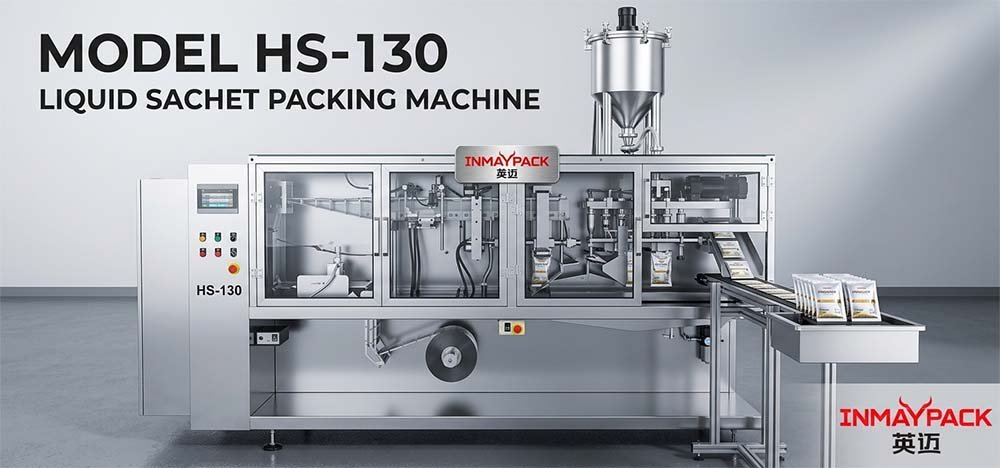
HS-130 document references. Maximum size, volume and speed are not a combined production guarantee; approve the package drawing and sample run.
Liquid sachet packing machine explained
From roll film to a filled liquid portion.
A liquid sachet packing machine forms small packs from film, doses liquid or paste, seals the pack and discharges finished sachets. Horizontal and vertical routes use different film paths, filling arrangements and package tooling.
The HS-130 is a horizontal form fill seal platform with intermittent pouch transport. The supplied liquid configuration lists a piston pump, one filling station and a 30 L product hopper. Select the liquid path and finished sachet together.
Still deciding the final package? Compare liquid packaging machine routes or return to the sachet packing machine range.
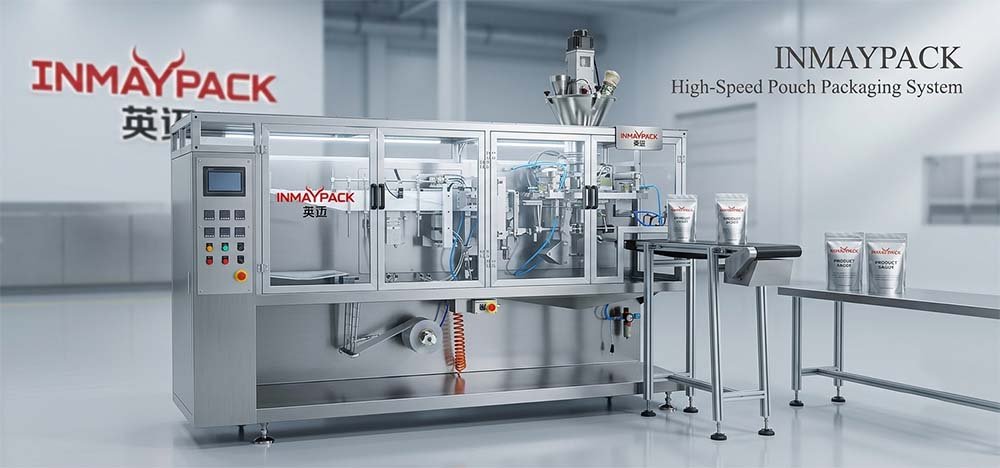
See the liquid sachet platform
Coordinate forming, filling and final sealing.
The horizontal route presents formed sachets for filling before the closing sequence. Package making, metering and sealing are coordinated by the machine controls.
- Roll-film flat sachet forming
- Product-matched liquid or paste dosing
- Selected opening and coding features
- Finished-pack collection and agreed inspection
Confirm both the product handling and package tooling when changing the dose or sachet size.
HS-130 liquid sachet packing machine specifications
A clear specification for the liquid sachet project.
Technical references from the supplied HS-130 document. Final settings, pack dimensions, output and utilities follow the approved configuration.
| Parameter | HS-130 document reference |
|---|---|
| Machine route | Horizontal form fill seal (HFFS), roll-film forming |
| Pouch transport | Intermittent |
| Listed packaging speed | 50–90 bags/min; confirm with actual product, dose and film |
| Listed sachet dimensions | Minimum 60 × 80 mm; maximum 140 × 180 mm |
| Listed maximum volume | 160 ml; approve usable fill volume for the sachet |
| Filling station | 1 station |
| Liquid filling reference | Piston pump for paste; selected to the product |
| Product hopper reference | 30 L in the supplied liquid configuration |
| Film roll diameter | 400 mm reference |
| Film web width | 440 mm reference |
| Roll core | 76 mm reference |
| Machine dimensions | 2850 × 970 × 1300 mm reference |
| Machine weight | 1000 kg reference |
| Electrical consumption | 5.0 kW reference |
| Air consumption | 100 L/min at 0.6 MPa reference |
| Electrical supply | Document lists 200–415 V / 50–60 Hz / N+G; specify destination supply |
| Frame / mechanisms | SUS304 appearance; listed internal parts include SUS304 and aluminium alloy |
| Product-contact material | Liquid quotation lists SUS316L; technical table lists SUS316L / SUS304. Confirm every wetted component in the proposal |
The document does not label the orientation of both dimension pairs consistently; use the controlled sachet drawing to confirm width and length. Allow for the hopper, access, connected equipment and maintenance space in the layout.
Electrical component references in the HS-130 document
The document lists Mitsubishi controls, Panasonic sachet-pulling servo and motion control, Schneider frequency control, Weinview HMI, Fuji temperature control, SICK sensing, SKF / IGUS bearings and Festo pneumatic components. Confirm current brands, models and any agreed substitutions in the quotation.
Safety and compliance requirements belong to the supplied configuration and destination. Request the applicable documents with the proposal.
Products for application review
Choose the liquid path around the formulation.
These are application categories for review, not approvals for every formulation on one build.
Thin liquids
Oil, vinegar & liquid portions
Review viscosity, density, foaming and fill temperature. Confirm the dosing method, valve response and nozzle cutoff for small portions.
Viscous pastes
Honey, syrup & thicker sauces
Send viscosity at the actual fill temperature and check product transfer, fill time, cutoff and residue at the seal area.
Food emulsions
Ketchup, mayonnaise & dressings
Describe separation, shear sensitivity and any particles. Review supply, the wetted path and cleaning between recipes.
Personal care
Shampoo, gel & lotion samples
Review foaming, stringing, contact materials and changeover cleaning. Explore cosmetic packaging routes →
Lubricant portions
Oil & selected technical liquids
Send compatibility and handling information before material and filling selection. Explore lubricant oil packaging →
Other liquid products
Your formulation & portion
Send a representative sample and the required handling conditions. Product suitability and any special hygiene or validation scope need project review.
Viscosity is only the starting point.
Also state particle size and concentration, temperature range, foaming, corrosiveness, settling, shear sensitivity and refill conditions. This information helps select the feed arrangement, wetted materials, valves and nozzle.
Liquid sachet filling system
Match the pump, valve and nozzle to the product.
The HS-130 liquid quotation includes piston filling. Other pump choices need their own product and configuration review.
Metering and product supply
Piston filling reference
Review the dose range, product transfer and filling time with the actual liquid or paste. The quotation should name the hopper or tank, supply arrangement, pump, valve and product-contact material.
- All target volumes and product temperature
- Product viscosity and any solid particles
- Stable refill and product level conditions
- Agreed dosing method and acceptance tolerance
Clean filling and cutoff
Protect the closing area
Specify nozzle access, fill timing and the selected cutoff or anti-drip arrangement. Stringing, foam or splashing can place product near the closing area and should be reviewed in the sample run.
- Nozzle reach and clearance for the sachet
- Product release, cutoff and bag movement
- Handling of foam, residue and particles
- Dose and seal checks during stops and restarts
Confirm accuracy as an agreed tolerance under named test conditions. A pump cycle rate is not the accepted finished-sachet output.
Look inside the process
Equipment details behind a liquid sachet project.
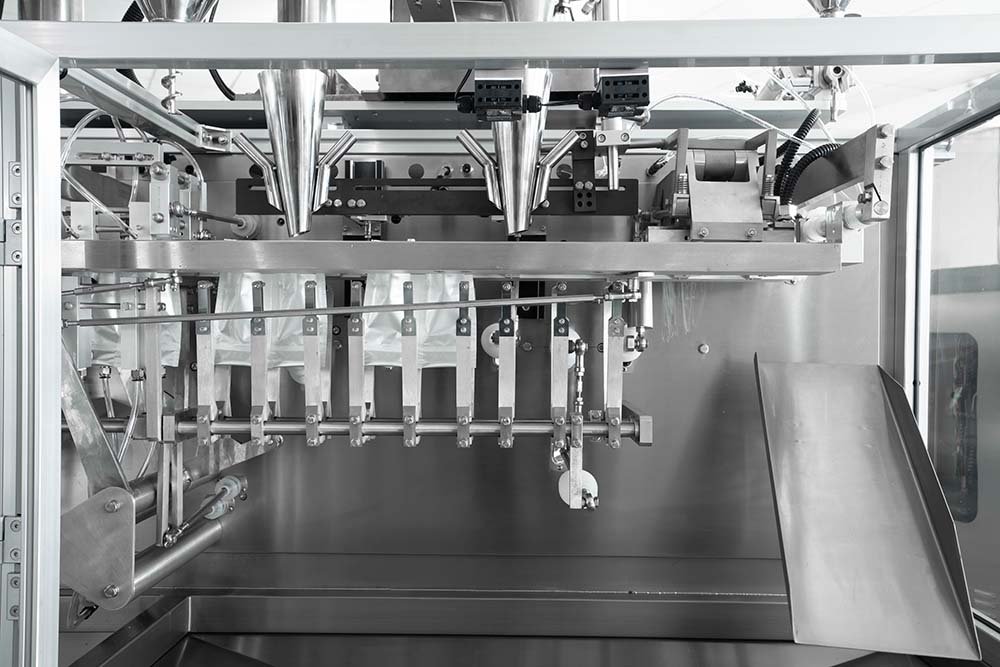
Machine-family photographs illustrate review points. They do not establish the exact components or number of heads supplied on HS-130.
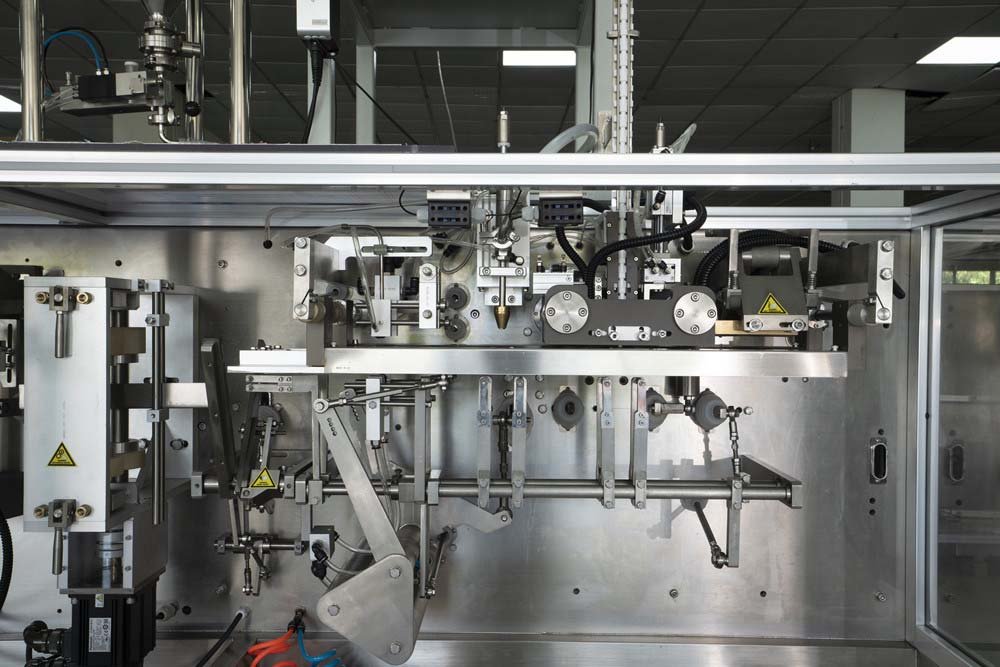
Filling arrangement
Reference photo from the supplied image list. Confirm the pump, wetted path and actual filling layout in the quoted liquid configuration.
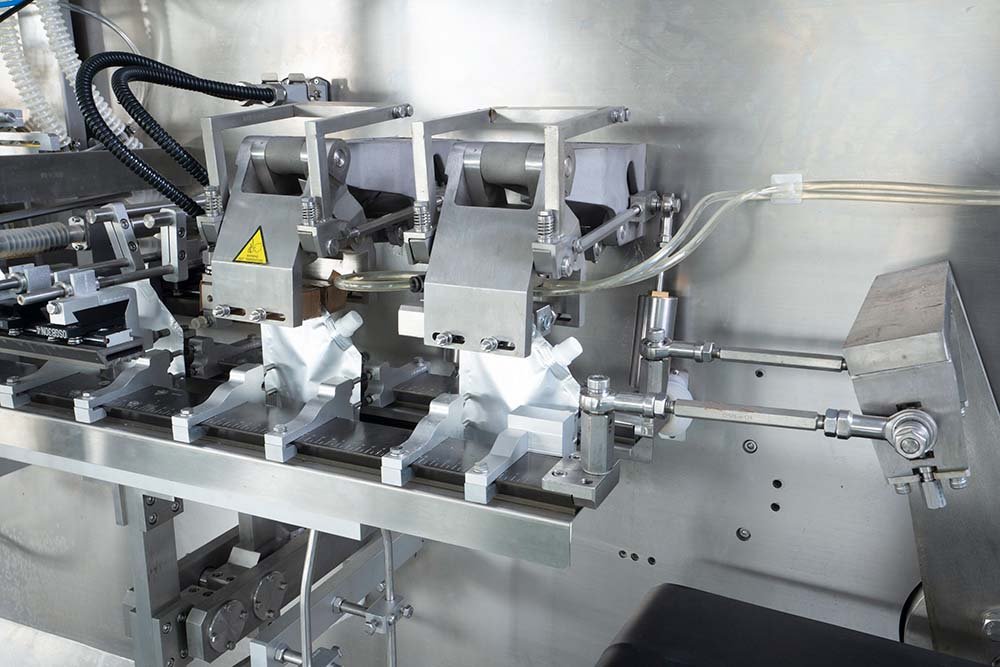
Sachet presentation
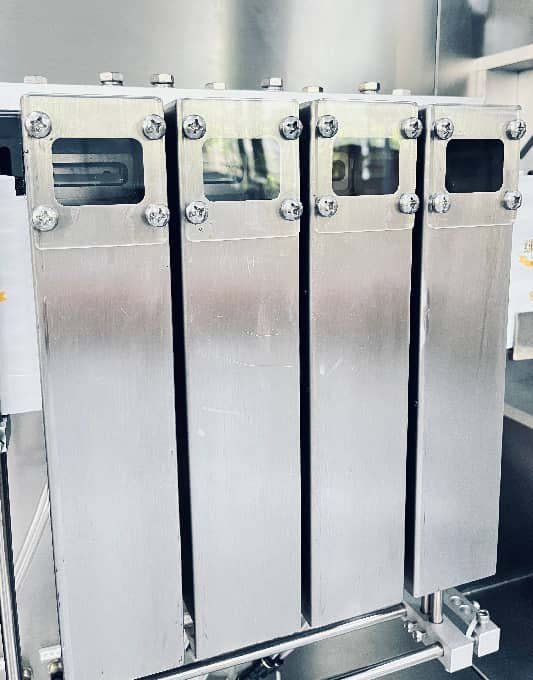
Review pouch gripping, opening and filling access with the approved dimensions and film.
Seal-area control
Review the actual product residue, seal geometry, temperature, pressure and dwell with production film.
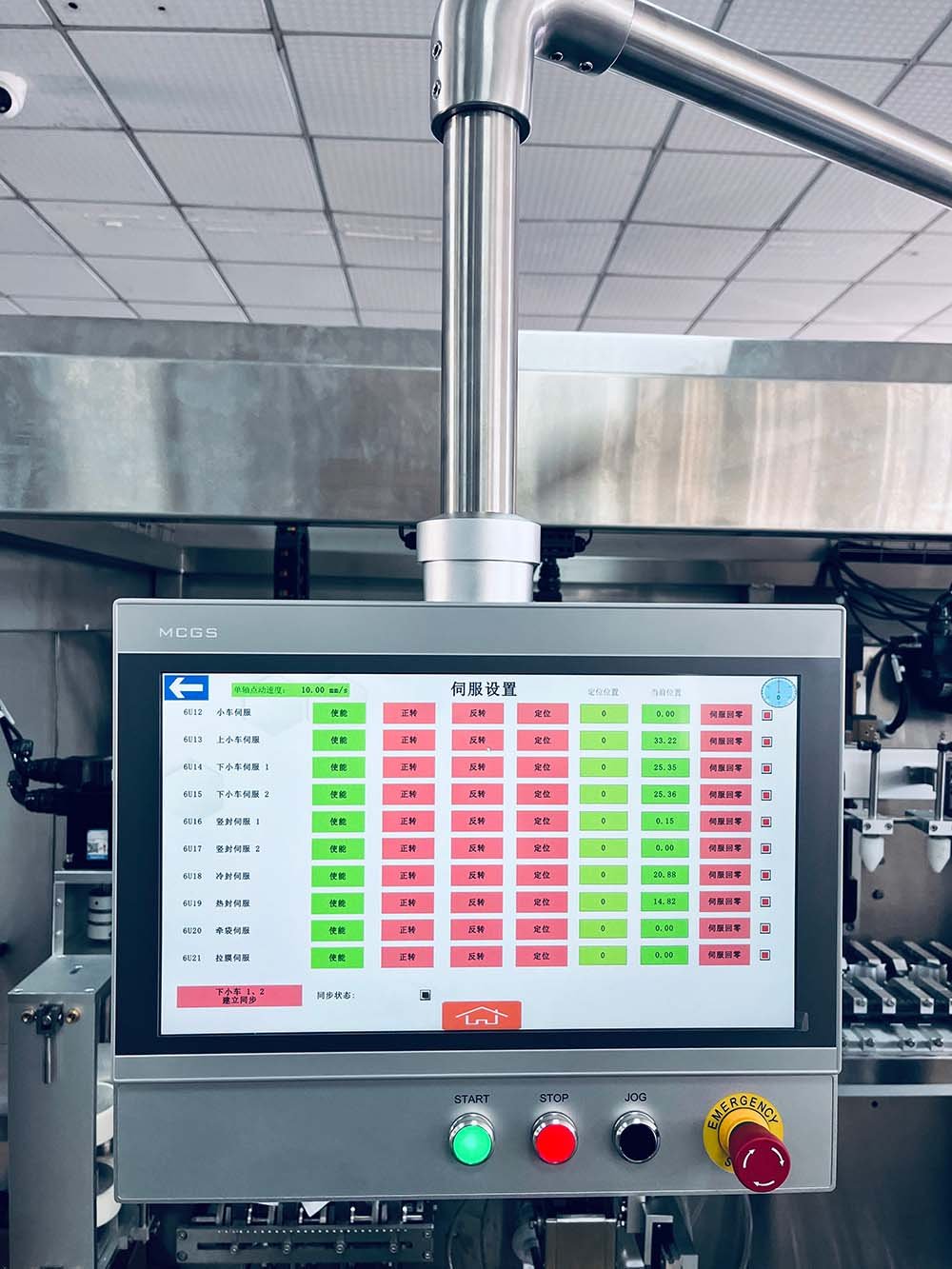
Controls and changeover
Specify recipes, operating access and format setup in the selected build. This photo is a family control-panel reference.
Liquid sachet formats
Define the flat sachet before selecting the tools.
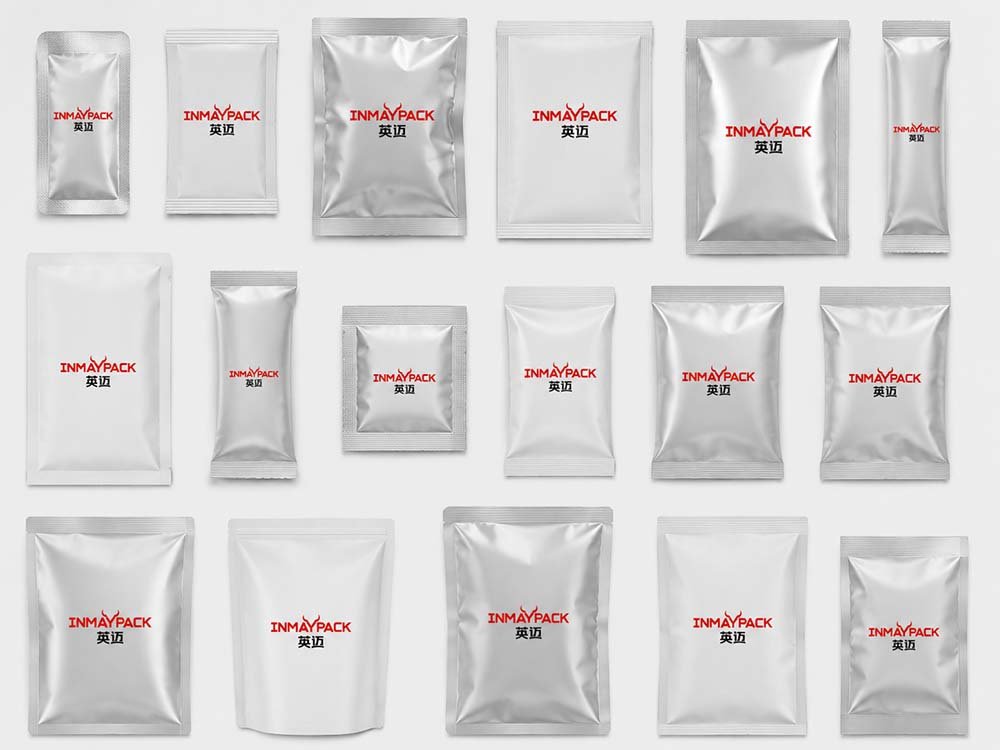
Concept illustrations show the package families, not final tooling dimensions.
A folded edge with the selected sealed perimeter
3-side seal flat sachets
Confirm the folded edge, sachet drawing, print position, fill access and opening feature with the chosen film.
A defined sealed perimeter around the portion
4-side seal flat sachets
Confirm finished dimensions, seal widths, tear notch, graphic position and the required separation or collection.
Review the 3-side / 4-side seal machine route and seal-format comparison with the drawing. Stick packs, spout flat bags and stand-up pouches use separately matched configurations.
Production film and pack drawing
Approve the laminate and the liquid portion.
Specify the laminate structure, thickness, seal layer, winding direction and print repeat. The film should suit the product, forming sequence and required package life.
- Finished dimensions, seal width and cut style
- Web width, roll diameter, core and winding
- Eye mark, print repeat and coding area
- Actual production film for the product trial
The 160 ml reference is not the usable volume of every pack size. Review fill level, headspace and the closing area together.
How the liquid sachet machine works
Connect six stages in the approved packing sequence.
Unwind & register
Guide production film and coordinate the print repeat, marks and intended forming layout.
Form the flat sachet
Create the approved 3-side or 4-side format with the matched tools and film.
Present & fill
Coordinate pouch access, the selected liquid path and release of the target portion.
Close & heat seal
Complete the closing sequence with the approved material and sealing settings.
Code & separate
Add the selected date code, opening feature and cutting or separation arrangement.
Inspect & collect
Review dose, appearance and seal checks with the specified discharge and downstream handoff.
Liquid sachet seal integrity
Review filling and sealing as one process.
Product on the closing area, wrinkles or a mismatched seal setting can affect pack integrity. Test the film and liquid together, including normal refill, stops and restarts.
- Clean closing area after filling and cutoff
- Agreed temperature, pressure and dwell
- Approved appearance and seal-integrity method
- Retained samples under named test conditions
Use the flexible-pack seal integrity guide to prepare the material and closure review. Define pack-specific methods and limits in the test plan.
Liquid path and recipe changes
Plan cleaning before approving the filler.
Product-contact scope
Name every wetted part
List the hopper or tank, pump, valves, pipes, seals and nozzle. Confirm material grades and compatibility for the formulation.
Cleaning arrangement
Choose the cleaning method
Specify disassembly, flushing and any requested CIP boundary. Confirm drainage, access and how the cleaning result will be checked.
Recipe changeover
Release the next recipe
Define residual-product handling, reassembly, first-off checks and the target changeover procedure. Use the actual recipes for planning.
SUS316L is listed in the liquid quotation, while the technical table allows SUS316L / SUS304. Do not assume every wetted component or an automatic CIP system is included in the base machine.
Liquid sachet equipment scope
Specify the modules around the primary packer.
Before the filler
Product supply
Name the selected hopper or tank, refill, product conditioning and feed connection. Confirm level control and response to supply interruptions.
At the primary pack
Code & inspection
Define coding and selected weight, dose or seal checks. Agree inspection access, rejection and the evidence required from the run.
After the packer
Collection & handoff
Define counting, conveying, accumulation and any secondary packing. Review stop signals and downstream capacity.
For connected equipment, use turnkey packaging solutions and identify supplied modules, utilities and buyer-supplied connections.
Product trial and factory acceptance
Test the liquid portion with your production film.
Agree the test scope and acceptance criteria before the run.
Approve the inputs
Name the product batch, fill volumes, fill temperature, film, drawing and required trial duration.
Run normal events
Include startup, product refill, stops, restarts and selected format or recipe changes.
Measure the packs
Agree dose variation, pack dimensions, print and code checks, appearance and seal-integrity criteria.
Record accepted output
Separate conforming sachets, rejects and startup waste. Preserve the settings and retained samples.
Liquid sachet packing machine price
Get an itemized quote for the complete configuration.
Price depends on the liquid path, pack tooling, machine functions and selected project scope.
Machine and product scope
Define the supplied equipment
- Named model and approved flat-sachet formats
- Selected piston filling or reviewed pump arrangement
- Hopper or tank, valves, nozzle and contact materials
- Tooling, coding, tear features and guarding
Options and handover
Define the project requirements
- Selected inspection, rejection and collection
- Cleaning, changes, utilities and layout
- Product trial and acceptance evidence
- Documents, commissioning, training and service terms
Send one brief for a comparable proposal.
Product · viscosity and fill temperature · particles and foam · all volumes · sachet drawing · film · accepted output · cleaning · coding and inspection · line connections · destination.
Prepare the inquiry with the packaging machine RFQ brief builder and sachet packing machine quotation guide.
Your INMAYPACK liquid sachet project
Connect the product review to the machine proposal.
Start with the formulation, finished pack and required output. INMAYPACK can review the horizontal sachet route, selected filling arrangement and project options for your inquiry.
- Product and film reviewed with the pack format
- Itemized filling, machine and option scope
- Agreed trial and handover requirements
- Destination supply and documentation requirements
Installation, lead time, warranty and support scope belong in the current quotation. Request the destination-specific safety and compliance documentation for the supplied build.
Before choosing your liquid sachet machine
Liquid sachet packing machine FAQ.
What is a liquid sachet packing machine?
What speed does the HS-130 document list?
What sachet dimensions and volumes are listed?
Can it pack honey, ketchup or shampoo?
Which filler is in the HS-130 liquid quotation?
Is there a fixed filling accuracy for every liquid?
Are all product-contact parts SUS316L?
Does the base machine include anti-drip filling and CIP?
Which film information is required?
Can I use the HS-130 for stick packs or spout pouches?
What should the product trial check?
How do I request the liquid sachet packing machine price?
Build your liquid portion-pack project
Send your product and sachet. Get a matched proposal.
Review the HS-130 route, filling, film and project scope with INMAYPACK.