
INMAYPACK · Dry rice retail packaging
Rice Packaging Machine
Weigh the rice. Control the transfer. Finish the pouch.
Plan a rice bag packing system around your grain, fill weight and retail pouch. Review premade and roll-film routes, weighing, grain handling and sealing with representative rice and packaging samples.
Start with your rice specification, target net weight and bag drawing. The selected configuration and trial establish the approved range.
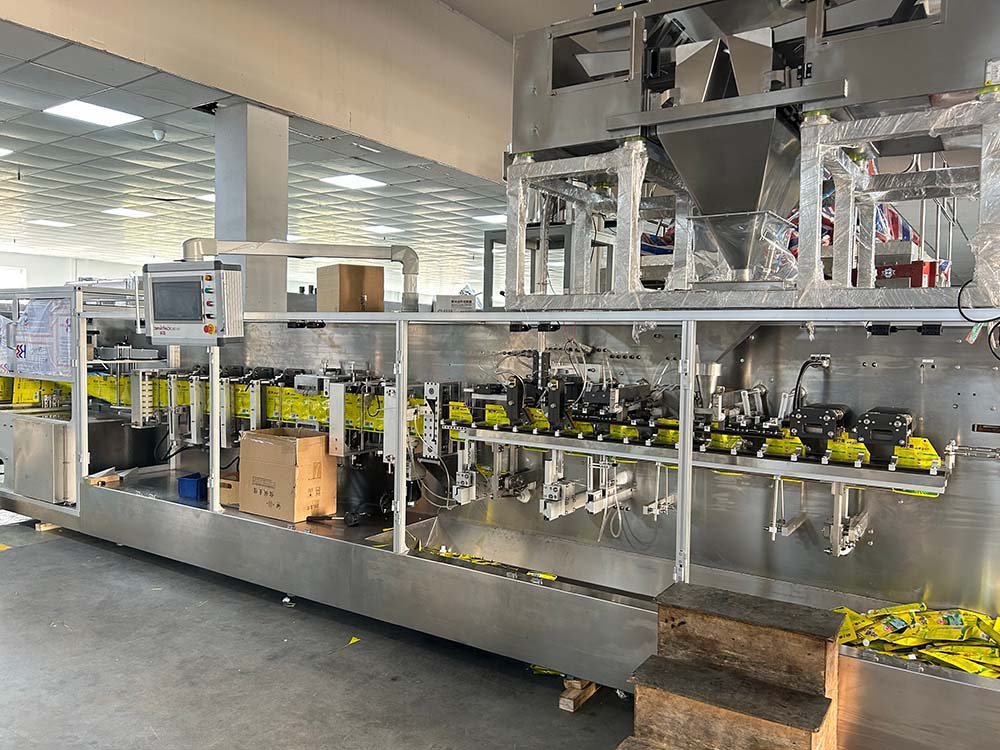
Define the rice and the finished retail pack first
A rice packaging machine brings product feeding, portion measurement, pouch handling and sealing into one controlled sequence. INMAYPACK assesses this application through its granular-product weighing and flexible-pouch equipment families. A useful proposal identifies the rice condition and the finished package before naming a model.
Submit production samples of the dry rice you intend to sell: for example, long-grain polished rice, short-grain rice, brown rice or dry parboiled rice. Identify the variety, grain-size distribution, incoming broken-grain fraction and loose material. These are review inputs, not a claim that every rice and bag combination is already approved.
This application covers prepared dry rice in flexible retail pouches. Milling, polishing, drying, sorting and product treatment remain upstream unless expressly included. Cooked rice, wet products, retort processing, open-mouth sacks, woven bulk bags and vacuum brick packs require separate equipment and process evidence.
Define the deliverable: an accepted filled pouch must meet the agreed weight, grain-condition, seal, appearance and output requirements together. A satisfactory weighing result alone does not demonstrate a complete rice packing line.
Use a rice sample matrix that challenges the line
Select samples that represent the limits of your actual product range. Keep the lot identity, incoming condition and handling history with each sample. Ask the supplier to explain which sample changes the feeder, weighing recipe, discharge path or pouch setup.
On small screens, scroll horizontally to read all three columns.
| Representative sample | Question to resolve | Evidence to keep |
|---|---|---|
| Longest grain and largest whole-grain fraction | Does the complete path through gates, chutes and the open bag pass the rice without trapping or excessive impact? | Discharge observations, retained grain and matched incoming/packed samples. |
| Short-grain or a different bulk condition | Can the selected feeder and weighing settings control the portion and filled height for this SKU? | Individual net weights, recipe, pouch headspace and filled-pack shape. |
| Highest approved broken-grain and fines fraction | Does the flow change during refill or low hopper level, and does loose material reach the sealing band? | Samples by run stage, feed condition, residue locations and seal checks. |
| Smallest and largest proposed retail portions | Are weighing, discharge time, pouch opening and support suitable at both ends? | Separate results for each portion, including handling after sealing. |
| Change between visibly different varieties or grades | Where can the previous rice remain, and what is required before releasing the next product? | Cleanout record, recovered residue and first accepted pouches of the new batch. |
Include a rice blend only if it is part of the purchase. Where ingredient proportions matter, define those proportions separately from total pack weight. A general rice-and-grain assortment and a controlled recipe are different dosing tasks.
Choose premade bags or roll-film pouches deliberately
Premade retail pouches
A premade bag packaging machine for rice handles supplied bags, opens them, receives the weighed portion and closes the top. This route is relevant when an approved printed pouch, zipper or retail presentation already defines the project.
Check pickup, usable opening, gusset expansion, grain clearance and the clear sealing band with production-equivalent empty bags. Use the premade pouch machine family to review platforms; the proposal must identify the selected opening, filling and closure configuration.
Retail pouches formed from roll film
A roll-film stand-up pouch route combines forming with filling and sealing. Its specification must coordinate film construction, bag geometry, registration, portion release and the available settling time.
Review the doypack machine range with the intended film and filled-pack sample. Different bag architectures require different equipment; a film-fed reference does not establish compatibility with every vertical or pillow-bag format.
Compare both routes against the same rice, pouch specification, accepted output and operating schedule. Include material purchasing, format changes, setup waste and support requirements. A lower empty-bag or film cost does not establish the lower cost of producing accepted packs.
Specify net weight and usable pouch volume together
The target weight does not select the bag dimensions by itself. Measure a representative sample fill and record the loose condition, filled height, gusset shape and clearance below the zipper or top seal. Review each proposed portion rather than scaling an approved small pack by weight alone.
A multihead weigher packing system is one weighing route to assess. A linear weighing arrangement may also be proposed. Compare feed control, hopper capacity, discharge behavior, space and changeover with the same product and acceptance basis; the multihead versus linear weigher guide explains the equipment decision.
If volumetric cups are proposed, ask how the agreed variation in bulk condition will be checked against net weight. Repeating a volume does not prove that every rice lot produces the same mass. Whichever method is selected, verify individual finished pouches with the agreed tare and measurement procedure.
- Pouch drawing: external dimensions, usable opening, gusset, zipper and seal locations.
- Material: construction, thickness range, sealing guidance and production samples from the bag or film supplier.
- Dose range: nominal weight, acceptance basis and the priority SKUs to demonstrate.
- Presentation: filled height, standing shape and handling condition after the package leaves the line.
Published ranges on a machine or weighing page belong to their stated configuration. They are not an approved rice-line range until the product, bag, filler and transfer arrangement are evaluated together.
Trace the grain from loading to the open pouch
Review loading, elevation, distribution, weighing and final discharge as one path. Identify free-fall points, changes of direction, constrictions and surfaces where rice can collect. The support platform, access for refill and room height can affect the arrangement as much as the pouch machine footprint.
Compare incoming and packed grain on the same basis
Agree how whole grain, broken grain and fines will be classified before running the trial. Retain incoming samples from the same lot and packed samples from identified run stages. Keep the sampling and separation method consistent so pre-existing breakage is not attributed to the machine, and new damage is not hidden by a change of method.
Use those results to review feed settings, transfer geometry and discharge timing. A generic description such as gentle handling is not a measurable acceptance result. Request evidence at the proposed portion and operating condition, including the product remaining near the end of a batch.
Coordinate refill and discharge permissions
Specify how low-level supply, refill, an unavailable pouch and a stopped downstream station are handled. The selected controls must coordinate the portion with a ready bag. Record held product and restart rejects in the trial; do not remove them from the output calculation without an agreed rule.
Keep rice and dust clear of the closing area
Review the filled pouch at the moment sealing begins. An individual grain, wrinkle or fold across the seal band can create a local defect even when the package looks filled correctly. Check filling height, release timing, pouch support and any proposed settling step under the actual production condition.
Settling or vibration is a configuration choice to evaluate, not an automatic inclusion. Confirm where it acts, how it affects filled height and whether it introduces unwanted grain damage or delays. The result should leave the approved sealing area clear while supporting the required package presentation.
Define seal inspection and any required strength or leak method with the package specification. The food packaging seal integrity guide connects test selection with the failure being controlled. There is no universal temperature or pass value for every rice pouch laminate.
Barrier performance, storage life and protection of an aromatic rice grade require product-and-material evidence. Heat sealing, vacuum pickup of an empty bag and vacuum packaging of a filled pack are different functions; none should be substituted for another in the quotation.
Plan variety changes, cleanout and inspection responsibilities
Specify the product sequence, especially when moving between rice varieties, grades or mixed ingredients. Map retained-product locations in the infeed, elevator, distribution surface, weighing hoppers and discharge chute. Agree how those points will be accessed, emptied and checked before the next batch is released.
Record the outgoing product, recovered residue, parts or recipes changed and the first accepted pouches of the new rice. The buyer's quality procedure should define acceptable carryover and any relevant ingredient or allergen controls. Stainless-steel appearance alone does not establish a washdown rating or the approved cleaning method.
Incoming rice preparation and foreign-material control also need named owners. If checkweighing, metal detection, coding or another inspection function is requested, identify the equipment, validation method, reject handling and line interface. Do not assume that an inspection option is part of every primary pouch machine.
Accept a rice packing line by finished-pack evidence
Write the factory acceptance protocol before comparing supplier output claims. Identify the rice lots, approved bags or film, selected configuration, priority portions, run duration and defect rules. Challenge a representative refill, stop and restart, and the agreed product or format change.
On small screens, scroll horizontally to compare records.
| Decision | Evidence to request | Comparison boundary |
|---|---|---|
| Net-weight control | Individual filled-pack measurements, tare method, approved range and reject disposition. | Use the same measurement procedure for each rice and portion. |
| Grain condition | Matched incoming and packed samples, classification method and run-stage labels. | Distinguish initial broken grain from changes across the packing process. |
| Seal and pouch quality | Opening, filled height, seal-area inspection, agreed tests, code and handling results. | Approve the actual filled pouch, including its material and closure. |
| Accepted output | Accepted pouches, elapsed time, rejects, refill events and stops. | State planned exclusions; do not compare empty cycles with saleable output. |
| Batch change and recovery | Retained-product check, setup changes, restart disposition and first accepted packs. | Use the change sequence that matters to the production schedule. |
Keep signed open-item records, approved samples, recipes and drawings with the handover. Define what will be rechecked at the customer's site using the installed utilities, operators and connected equipment. Acceptance limits and sampling frequency must come from the agreed project specification.
Compare rice packaging machine price against a complete scope
Request separate scope lines for rice feeding, weighing, support structure, pouch forming or handling, sealing, change parts, coding, inspection and discharge equipment. Mark included items, options, customer-supplied items and exclusions. Different supply boundaries can explain a price difference without indicating a better or worse machine.
Installation and handover
Provide the layout, ceiling height, loading access, utilities, cleaning access and downstream connection. Confirm drawings, manuals, training, initial spares, commissioning responsibilities and service arrangements in the current offer.
Operating cost
Keep product giveaway, spillage, retained rice and rejected product separate. Add package material, setup waste, refill labor, cleaning, changeover and routine consumables using the same accepted-pouch quantity and operating period.
A rice packaging machine price is meaningful only for the specified rice, bag range, configuration and acceptance requirement. No universal price, savings percentage, delivery period or service-response time is stated here. Use the packaging machine RFQ builder to organize the inputs that change the proposal.
Rice packaging machine questions
Can one system pack different rice varieties?
Potentially, if the approved range is demonstrated. Compare grain dimensions, flow, broken-grain fraction, target portion, filled volume and cleanout. Document the recipe or parts required for each SKU instead of assuming that one successful run covers every variety.
Should rice use a multihead or linear weigher?
Select by product behavior, portion, required accepted output, available space and the proposed discharge arrangement. Compare candidates with the same rice and pouch. Head count or an isolated maximum weighing rate does not establish the best complete line.
Do you offer a premade bag packaging machine for rice?
INMAYPACK reviews dry-rice applications through its existing weighing and premade-pouch equipment families. Send the intended rice, fill weight, pouch drawing and empty samples so opening, filling, settling and closure can be specified for the proposal.
Does this page cover vacuum rice bricks or bulk sacks?
No. Filled-pack vacuum processing and bulk-sack bagging need different confirmed equipment and tests. The equipment reference here does not establish vacuum level, residual oxygen, large-sack capacity or a storage-life result.
Can a rice line guarantee no broken grains?
A zero-breakage guarantee is not stated. Define the incoming condition and the agreed comparison method, then inspect matched samples through the proposed handling path. The accepted change in grain condition must be agreed for the actual product and operating conditions.
What information is needed for a rice packing machine quotation?
Send the rice varieties and specifications, representative samples, portion range, pouch drawings and samples, required accepted output, layout, cleaning expectations and inspection needs. Identify the priority SKUs and the evidence required before approving the equipment.
Build the proposal around your rice and retail pouch
Share the rice specification, target weight, bag drawing and required accepted output. INMAYPACK can review the equipment route, identify the sample checks and define a project-specific proposal.
The equipment scope follows INMAYPACK's granular-product packaging systems and the linked weighing and pouch families. The rice matrix and acceptance workflow are proposed engineering checks, not published customer trial results. Model, compatibility and performance are confirmed for the agreed configuration and representative samples.