
INMAYPACK · Nut pouch packaging systems
Nuts Packaging Machine
Define the portion. Protect the product. Verify the pouch.
Build a nuts weighing and pouch-packing system around whole kernels, pieces, coatings and mixed recipes. Compare premade bags and roll-film pouches with the actual nut condition, fill weight, seal area and required accepted output.
Start with nut photos, target weight and a pouch sample. The proposed configuration and performance basis are confirmed for your project.
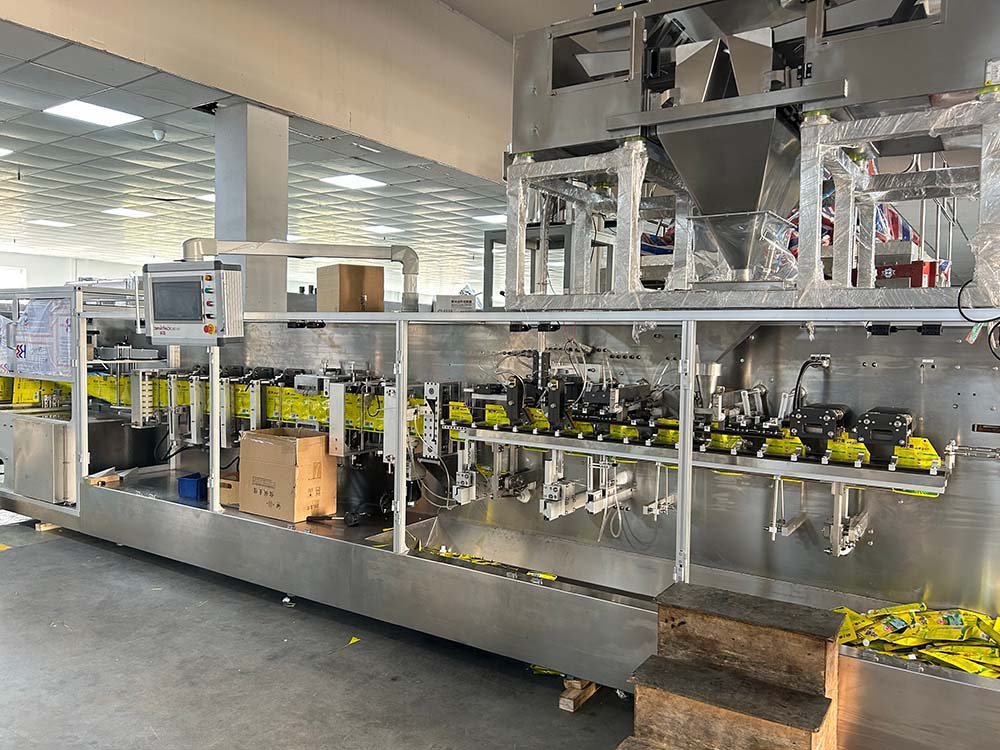
Select the line for the nuts you actually sell
A nuts packaging machine combines controlled feeding, portioning and bag filling with pouch closing and the specified inspection. A multihead weigher is a candidate for discrete nuts, but the product name alone does not determine hopper size, contact surfaces, transfer geometry or bagging route.
This application page covers flexible retail pouches for products such as peanuts, almonds, cashews, pistachios and nut mixtures, subject to sample evaluation. Nut butter, nut flour, cans, jars, bulk sacks and individually wrapped nut bars need different equipment reviews. Roasting, seasoning and food-safety processing are not implied parts of the packaging supply.
The purchase decision: agree which product condition, package and output must pass together. A good net weight does not establish acceptable whole-kernel appearance, mixture composition, clean seals or shelf life.
Turn the nut range into a configuration brief
Submit the most difficult expected saleable condition as well as the normal product. Record the smallest fragments, largest pieces, surface oil, loose seasoning and temperature at the filler. A convenient dry sample may not represent the SKU that determines the final configuration.
On small screens, scroll the table horizontally to compare each requirement.
| Product condition | Configuration question | Trial evidence |
|---|---|---|
| Whole kernels, including fragile grades | How will the elevator, distribution pans, hopper doors and discharge chute limit avoidable impacts? | Compare incoming and packed product using one agreed definition of broken kernels and fines. |
| Roasted, salted or oil-coated nuts | Will coating collect on contact surfaces or reach the pouch mouth? How will access and cleanout be handled? | Inspect retention, seasoning loss, seal-area contamination and restart after the agreed stop. |
| Chopped nuts and irregular pieces | Do small fragments remain in transfer points while larger pieces pass through? | Record retained material, finished-pack weights and the size distribution of representative samples. |
| Mixed nuts or nuts with other inclusions | Is the recipe premixed upstream or does it require separately controlled component feeds? | Check component proportions in finished packs, not only total net weight. |
| In-shell nuts or unusually large pieces | Can the selected hoppers, chute and open pouch pass the largest expected geometry? | Challenge the route with representative extremes; check jams, pouch damage and incomplete discharge. |
These are review conditions, not a statement that one machine handles every listed product. An approved configuration for plain peanuts must not automatically be extended to coated cashews or a nut-and-fruit mix.
Choose premade nut pouches or roll-film packaging
Supplied premade pouches
Evaluate this route when the purchased retail bag, zipper or presentation determines the pack. Confirm bag stiffness, opening width, zipper behavior, filling access and the clean top-seal area with real pouches.
The premade pouch machine family owns the machine-specific choices. Request the selected size range and change parts in the proposal; zipper opening and other accessories are not assumed standard.
Roll-film stand-up pouches
Evaluate HFFS when the intended pouch should be formed from reel material before filling and sealing. Film construction, gusset formation, opening and product settling must suit the nut portion.
Use the doypack packing machine range for the forming route. Compare film requirements, changeover, waste during setup and accepted packs under the same test basis.
Choose on the total finished-pack requirement, not an assumption that reel material always makes the cheaper project. Material supply, package quality, change frequency, tooling and operator work can change the comparison. This page does not assign a universal bag size, dose or speed to nuts.
Match the pouch opening and fill volume to the portion
Start with the filled pouch, not only its flat width. The same target weight of whole kernels and chopped nuts can occupy different volumes. Request a sample fill using the actual product, then agree the fill level, presentation and clear space below the closure. Do not choose a bag from weight alone.
| Input | What to confirm | Why it changes the configuration |
|---|---|---|
| Bag geometry | External width and height, gusset, usable internal space, zipper and top-seal positions. | The flat bag dimensions do not describe the available filling opening or filled-pack volume. |
| Product access | Largest pieces, chute outlet, opening during filling and required clearance. | The portion must enter without bridging, clipping the bag mouth or scattering seasoning into the seal area. |
| Packaging material | Supplier specification, sealant layer, thickness range, stiffness and representative samples. | Material selection affects pouch handling and the sealing conditions to be demonstrated. |
| Format range | Smallest and largest pouch/portion combinations, named recipes and planned change frequency. | Confirm which changes use settings and which require mechanical parts or a separate configuration. |
| Finished-pack presentation | Fill level, headspace, coding area, zipper access and the expected packed appearance. | Usable output must meet the retail specification as well as the weight target. |
For roll film, include reel and print-registration requirements in the machine review. For supplied pouches, identify the bag supplier and allowable variation. Keep the approved material sample with the machine acceptance record so a later bag change is not mistaken for an unchanged packaging condition.
Specify weighing and the complete product-transfer path
Evaluate the multihead weigher packing system together with its feeder, support platform, discharge chute and pouch machine. That page retains the documented equipment reference and its limits; its component figures are not transferred here as nuts-line performance.
- Supply: define where the packaging system receives the nuts, the refill method and whether product arrives continuously or in batches.
- Distribution and weighing: match hopper loading and feed behavior to piece size, portion weight and surface condition. Agree how changes between recipes are controlled.
- Discharge: review the actual fall path into the pouch. Show transfer heights and access on the layout instead of describing the whole system only as “gentle.”
- Package readiness: define when the pouch is ready to receive a portion, what happens if opening fails and how held product is handled after a stop.
- Sealing and inspection: include settling, seal-area clearance, coding, agreed checks and reject handling in the accepted-output test.
Fit the proposed line into the available site
Provide a layout with ceiling height, access doors, service aisles, product inlet and discharge positions. Check the full envelope of the weigher, support structure and refill equipment, including access for cleaning and maintenance. A bagger footprint alone is not a complete installation layout.
Request project-specific utility and interface schedules: electrical supply, compressed air, gas if specified, upstream stop/hold signals and downstream availability. Assign responsibility for supports, utility connections, product loading, pack discharge and removal of rejects. These are proposal inputs, not fixed utility ratings for every nuts machine.
If a simpler weighing route might meet the requirement, compare multihead and linear weighing using the same nut samples and pouch conditions. Head count alone does not select the more useful system.
Keep mixture accuracy separate from total pack weight
For mixed nuts, state whether the commercial requirement is an approximate premixed assortment or a controlled amount of each ingredient. A portion can meet total weight while containing an unacceptable balance of expensive and lower-cost components.
For an upstream premix, agree how samples are taken during normal feed, refill, low hopper level and restart. For controlled component dosing, ask engineering to define separate feeds, recipe control, space and the sampling method before accepting a quotation. Dedicated mixing capability is a project question, not an automatic feature of a standard multihead arrangement.
Use one agreed basis for the mixture check: component mass, count or another product specification. Define how broken pieces and attached seasoning are assigned. Do not combine results from different definitions into one reported “mix accuracy.”
Define package protection without promising shelf life
Nut condition and packaging protection must be reviewed together. The Almond Board of California explains that oxygen exposure and processing affect almond oxidation, with storage conditions also contributing to quality changes. Its almond oxidation guidance supports the need for a product-specific protection brief; it does not establish an INMAYPACK machine result or a shelf-life claim for every nut.
Ask the packaging supplier to define the required barrier and seal construction for the product and distribution conditions. If nitrogen flushing is requested, specify the gas-supply boundary, measurement method, sampling time and acceptance criterion in the project. Confirm equipment provision rather than assuming gas flushing is included.
A zipper is a reclosure feature, not a substitute for verifying the initial top seal. Keep kernels, salt and loose seasoning out of the sealing interface, and evaluate the finished pouch with the agreed seal or leak method. Shelf-life release remains a separate product-and-package validation task.
Accept finished nut packs with traceable evidence
Agree the product lot, recipe, pouch material, target dose, test duration and reject definitions before FAT. Record the settings and sample labels so a result can be traced to the material and operating condition that produced it.
| Check | What to preserve | Decision it supports |
|---|---|---|
| Weight and giveaway | Finished-pack net weights, tare method, accepted range and rejects. | Whether the approved portion is achieved at the stated operating rate. |
| Kernel damage and fines | Incoming and packed samples from the same lot, identical classification method and relevant transfer settings. | Whether additional damage through the packaging route is acceptable. |
| Mixture composition | Component results by pack or agreed sampling unit, with run stage and refill labels. | Whether the required assortment is maintained independently of total weight. |
| Package and seal | Fill level, pouch-mouth condition, zipper behavior, seal results and packaging material identity. | Whether acceptable nuts are delivered in acceptable pouches. |
| Stops, cleanout and recovery | Held-product disposition, restart rejects, residue locations and changeover observations. | Whether the proposed operating and cleaning procedures are practical. |
Breakage comparison rule: first define “broken” for the grade being sold. Compare incoming and packed fractions on the same mass or count basis. Preserve the incoming baseline so the line is not blamed for fragments already present, and do not treat a short trial as a guaranteed commercial loss rate.
Count accepted finished pouches over the agreed period, with rejects and stops recorded separately. No generic pieces-per-minute, accuracy or breakage figure replaces this application test.
Agree how factory results are carried into site acceptance
Request an evidence pack containing the approved product and pouch specifications, equipment configuration, trial settings, labeled samples, inspection records and open-item list. A short video is useful context, but it does not replace the weight, damage, composition and seal records agreed for release.
Define which checks must be repeated after installation with the customer's utilities, operators and connected equipment. Assign an owner and closure criterion to each open item. Confirm manuals, training, change-part identification and spare-part references in the contract rather than assuming they are included by a generic “turnkey” label.
Close cleaning, quotation and delivery boundaries
Cleaning and recipe change
List the nuts, coatings and other ingredients that share the line. Your quality team should define changeover and verification requirements. Review contact-part access, removable components, residue traps and the approved cleaning method with the equipment supplier.
Do not assume the entire system is suitable for washdown because one component is removable. Request the limits for electrical areas, weigh assemblies, contact parts and drying before restart.
Scope and commercial comparison
Separate the feeder, weigher, platform, bagger, tooling, gas provision, inspection and downstream handling in the quote. Identify supplied, optional, customer-provided and excluded items, including utilities and installation interfaces.
Confirm FAT materials, documentation, delivery terms, commissioning, training, spare parts and service responsibility in the issued proposal. Price and lead time depend on this scope; this page does not publish an unsupported starting price or delivery promise.
For an initial review, send product photos, normal and difficult samples, target weight range, pouch drawings, accepted output, mix-ratio requirements and the upstream/downstream boundary. The packaging machine RFQ builder can organize the shared project inputs.
Compare costs per accepted pouch, not purchase price alone
Ask each supplier to price the same product range, pouch formats, inspection boundary and acceptance requirement. A lower base-machine price is not comparable if feeding, the weighing platform, necessary change parts or site work are excluded. Keep equipment price and expected operating costs as separate parts of the decision.
Product yield and giveaway
Track extra product placed in accepted packs separately from breakage, spillage, retained material and rejected product. Agree which rejects can be recovered and which must be discarded; count each loss once. For a planning comparison, multiply measured average giveaway per accepted pouch by the forecast accepted-pouch quantity and the relevant product cost.
For mixed nuts, use the agreed recipe cost and separately examine expensive-component overfill. Total net weight alone can hide a commercially important composition difference. Do not convert a brief supplier trial into a guaranteed annual saving.
Materials, labor and changeovers
Include purchased pouches or film, setup waste, gas if used, operator tasks, cleaning time, replacement parts and the expected production schedule. Compare how frequently the real SKU plan requires a bag or recipe change, not just the time needed to change one machine setting.
Use the same accounting period and cost boundary for all proposals. Divide the included operating costs by accepted pouch output for that period; do not use empty machine cycles as the denominator. Keep assumptions visible where production data is not yet available.
What this comparison can show: which cost items need evidence before purchase. It is a buyer's calculation framework, not an INMAYPACK payback promise. Confirm the final investment case using your product costs, shifts, material supply and accepted-run results.
Nuts packaging machine questions
Can one line pack peanuts, almonds and cashews?
Potentially, but each approved product and recipe needs a defined operating window. Compare piece size, fragility, coating, target weight, pouch opening and cleaning requirements. The smallest portion and most difficult coated or fragile SKU may change the selected equipment.
Does a multihead weigher control the ratio in mixed nuts?
Not automatically. A net-weight portion from a premix does not establish each ingredient's proportion. Define the required mixture result and sampling rule; controlled component dosing requires a specifically confirmed feeding and control arrangement.
Should I buy a nuts packing machine with nitrogen flushing?
First define product protection and packaging requirements with the responsible quality and packaging teams. If gas flushing is part of that specification, request a configured system and an agreed measurement procedure. Nitrogen provision alone does not demonstrate shelf life.
How can the supplier demonstrate low breakage?
Use incoming and finished-pack samples from the same representative lot. Agree the broken-piece definition, mass or count basis, sampling points and acceptance criteria. Include the proposed feeder and full transfer path in the trial, not only the weigher.
How much does a nuts packaging machine cost?
A useful quotation separates product feeding, weighing, pouch format, change parts, optional gas provision, inspection, installation and acceptance scope. Send the product and package brief first so proposals describe comparable equipment and responsibilities.
What determines the pouch size and filling range?
Use the actual nut bulk condition, largest pieces, target portion and required fill level, together with the usable bag opening, gusset and closure position. Submit the smallest and largest planned combinations for review. A generic weight range or flat bag width alone does not demonstrate that every SKU fits.
Does this solution include roasting or seasoning equipment?
Not by default. This page addresses weighing and flexible-pouch packaging. Define the handoff from processing and cooling, and identify any upstream or downstream equipment separately in the project scope.
Bring the nuts, pouch and acceptance criteria into one review
Share the product condition, portion, pouch and required good-pack output. INMAYPACK can review the weighing and packaging route, identify sample checks and define a project-specific supply boundary.
Scope note: the equipment photo and linked INMAYPACK machine pages are configuration references, not published nuts performance records. The product matrix and acceptance record above are a proposed buying framework, not a customer case study or a claim of completed trials.